
You’re probably tired of choosing between fresh air and energy efficiency. What if you didn’t have to? Energy recovery ventilators can transform your indoor environment while keeping your utility bills in check. But not all models perform equally—and finding the right one for your space requires understanding what actually matters.
| Heat Recovery Ventilator with WiFi Remote Control | 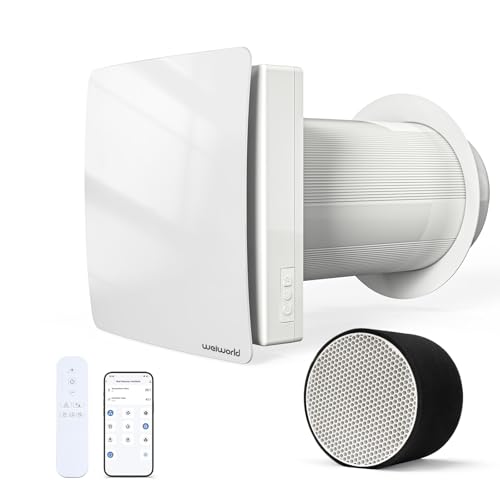 | Best Smart Control | Heat Recovery Efficiency: Up to 90% | Airflow Capacity: 630 CC/min | Installation Type: Wall-mounted, 150 mm duct | CHECK ON AMAZON | Read Our Analysis |
| Aprilaire V22BEC Energy Recovery Ventilator System |  | Best Whole-House | Heat Recovery Efficiency: 72% SRE | Airflow Capacity: 120 CFM | Installation Type: Wall, ceiling, or floor bracket | CHECK ON AMAZON | Read Our Analysis |
| Pioneer ECOasis 150 Ductless Wall-Mounted Ventilator | 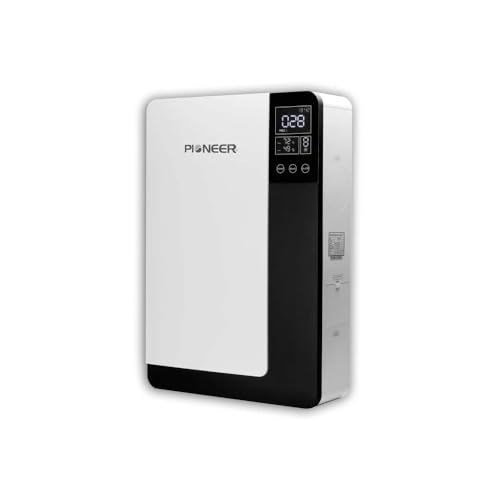 | Best Air Purification | Heat Recovery Efficiency: 82% | Airflow Capacity: Suitable for rooms up to 500 sq ft | Installation Type: Wall-mounted ductless | CHECK ON AMAZON | Read Our Analysis |
| VENTS-US Frigate ERV 120s Energy Recovery Ventilator |  | Best Cold Climate | Heat Recovery Efficiency: Up to 65% ASE | Airflow Capacity: Up to 162 CFM | Installation Type: Ceiling-mounted with brackets | CHECK ON AMAZON | Read Our Analysis |
| VENTS-US TwinFresh Comfo RB1-50 Ductless Ventilation Fan |  | Budget-Friendly Pick | Heat Recovery Efficiency: Up to 88% | Airflow Capacity: 30 CFM | Installation Type: Through-wall ductless | CHECK ON AMAZON | Read Our Analysis |
| VENTS-US Frigate ERV 150 Ventilation System | 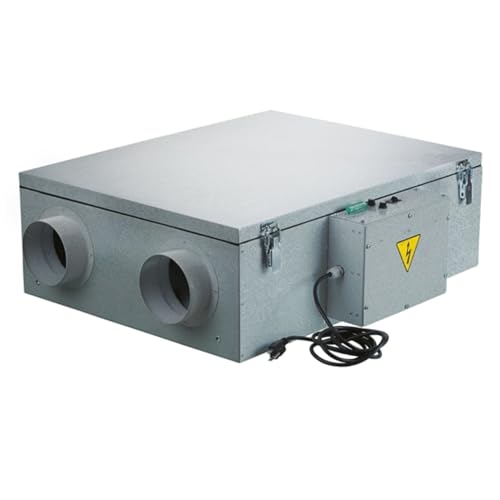 | Best Compact Design | Heat Recovery Efficiency: Not specified | Airflow Capacity: Not specified | Installation Type: Not specified | CHECK ON AMAZON | Read Our Analysis |
More Details on Our Top Picks
Heat Recovery Ventilator with WiFi Remote Control
Are you struggling with stale indoor air while your heating bills climb? The Weiworld VT501-WF Heat Recovery Ventilator solves both problems simultaneously. This wall-mounted unit recovers up to 90% of heat energy from exhaust air, dramatically reducing heating costs while continuously supplying fresh air. You’ll appreciate its whisper-quiet 28 dB operation and powerful EC motor delivering 630 CC/min airflow at just 9 watts. Control it effortlessly via the Tuya App or included remote—managing three modes (Fresh Air, Exhaust, Recirculation) from anywhere. Its magnetic front panel ensures easy maintenance, and the ceramic heat exchanger guarantees long-lasting efficiency for your bedroom, basement, or home office.
- Heat Recovery Efficiency:Up to 90%
- Airflow Capacity:630 CC/min
- Installation Type:Wall-mounted, 150 mm duct
- Noise Level:Approximately 28 dB
- Smart Controls:WiFi app and remote control
- Filtration System:G4 filter
- Additional Feature:Ceramic heat exchanger core
- Additional Feature:Magnetic front panel cleaning
- Additional Feature:Single-room wall-mounted design
Aprilaire V22BEC Energy Recovery Ventilator System
The Aprilaire V22BEC is an excellent choice if you’re looking to ventilate a home up to 6,000 square feet without sacrificing energy efficiency. This 120 CFM split-system ERV replaces stale indoor air with fresh outdoor air while recovering 72% of heating and cooling energy through its core. You’ll maintain balanced moisture and temperature year-round, making it ideal for any climate. The unit’s push-button controls let you adjust airflow and fan speed easily, while compatibility with select Aprilaire thermostats enables smart integration and humidity lockouts. Weighing just 50 pounds with a compact 27.5″ × 9″ × 23.125″ profile, it installs on walls, ceilings, or floors in minutes.
- Heat Recovery Efficiency:72% SRE
- Airflow Capacity:120 CFM
- Installation Type:Wall, ceiling, or floor bracket
- Noise Level:53 dB
- Smart Controls:Push-button controls; compatible with select Aprilaire thermostats
- Filtration System:Not specified
- Additional Feature:Whole-house 6,000 sq ft
- Additional Feature:Thermostat smart integration compatible
- Additional Feature:One-person installation recommended
Pioneer ECOasis 150 Ductless Wall-Mounted Ventilator
If you’re seeking a compact, wall-mounted solution that doesn’t require ductwork, Pioneer’s ECOasis 150 delivers impressive air quality management for spaces up to 500 sq ft. This ductless ERV features 99% purification efficiency through its 4-stage filtration system, capturing dust, smoke, and odors while supplying fresh outdoor air. You’ll benefit from an 82% efficient heat exchanger that recovers energy from outgoing air, reducing heating and cooling costs. The built-in PM2.5 sensor and CO2 monitor enable an 8-speed fan that automatically adjusts to your air quality needs. Smart WiFi connectivity, smartphone app control, and ultra-quiet operation at 23–37.9 dB(A) make this an ideal bedroom or living area upgrade.
- Heat Recovery Efficiency:82%
- Airflow Capacity:Suitable for rooms up to 500 sq ft
- Installation Type:Wall-mounted ductless
- Noise Level:23–37.9 dB(A)
- Smart Controls:WiFi app, touch screen, wireless remote
- Filtration System:4-stage filtration (OA/RA primary, PM2.5, Activated Charcoal HEPA H10)
- Additional Feature:Built-in PM2.5 sensor
- Additional Feature:CO2 monitor included
- Additional Feature:Auto-adjusting 8-speed fan
VENTS-US Frigate ERV 120s Energy Recovery Ventilator
You’ll find the VENTS-US Frigate ERV 120s Energy Recovery Ventilator an ideal choice if you’re seeking reliable fresh air exchange in cold climates without sacrificing energy efficiency. This HVI-certified unit delivers balanced ventilation while its electronic anti-frost protection safeguards the core during freezing conditions. The three-speed control lets you adjust performance from a minimal 19 watts on LOW to 162 CFM maximum airflow. Its enthalpy core recovers up to 65% of heat and moisture, stabilizing your home’s temperature and humidity. Installation’s straightforward with standard 5-inch ducts and ceiling mounting brackets, while washable MERV 6 filters keep maintenance simple.
- Heat Recovery Efficiency:Up to 65% ASE
- Airflow Capacity:Up to 162 CFM
- Installation Type:Ceiling-mounted with brackets
- Noise Level:Not specified
- Smart Controls:Three-speed built-in switch
- Filtration System:Washable MERV 6 for supply and exhaust
- Additional Feature:Electronic anti-frost protection system
- Additional Feature:HVI certified whole-house exchange
- Additional Feature:Washable MERV 6 filters
VENTS-US TwinFresh Comfo RB1-50 Ductless Ventilation Fan
For homeowners seeking efficient, single-room ventilation without extensive ductwork, VENTS-US’s TwinFresh Comfo RB1-50 delivers a compact solution with impressive performance. This ductless ERV operates through your wall with 30 CFM airflow, recovering up to 88% of heat and cooling energy. You’ll appreciate the whisper-quiet operation at just 0.2 sones and three adjustable power levels controlled via wireless remote. The humidity sensor automatically optimizes ventilation based on moisture levels, while the MERV 8 filter captures dust, pollen, and odors. Drawing only 7 watts, it suits rooms up to 500 square feet—bedrooms, basements, and home offices included. Installation’s straightforward through walls 6–20 inches thick, with a corrosion-resistant stainless steel exterior hood protecting your investment.
- Heat Recovery Efficiency:Up to 88%
- Airflow Capacity:30 CFM
- Installation Type:Through-wall ductless
- Noise Level:As low as 0.2 sones
- Smart Controls:Humidity sensor and wireless remote
- Filtration System:MERV 8
- Additional Feature:Through-wall ductless installation design
- Additional Feature:Humidity-sensing automation adjustment
- Additional Feature:Stainless steel exterior hood
VENTS-US Frigate ERV 150 Ventilation System
The VENTS-US Frigate ERV 150 stands out as an ideal choice for homeowners who need balanced ventilation in tight spaces without sacrificing energy efficiency. Its enthalpy core recovers heat and moisture, substantially reducing your conditioning load while requiring no drain. You’ll appreciate the slim 9.6″ depth, allowing installation in compact areas. The steel housing with aluminum-zinc coating resists corrosion, ensuring durability. Operating at just 1.9 sones, it runs quietly thanks to dynamically balanced fans. Automatic frost protection prevents core freezing, while included MERV 6 washable filters maintain air quality effortlessly.
- Heat Recovery Efficiency:Not specified
- Airflow Capacity:Not specified
- Installation Type:Not specified
- Noise Level:1.9 sones
- Smart Controls:Not specified
- Filtration System:Washable MERV 6 for supply and exhaust
- Additional Feature:Automatic frost protection defrost
- Additional Feature:Slim 9.6″ depth casing
- Additional Feature:Aluminum-zinc coating corrosion resistance
Factors to Consider When Choosing Energy Recovery Ventilators for Fresh Air Without the Heat Loss
When you’re selecting an energy recovery ventilator, you’ll need to evaluate your home’s airflow capacity requirements and the unit’s heat recovery efficiency ratings to guarantee ideal performance. You should also assess your installation space constraints, noise level tolerance, and whether smart control features align with your needs. These factors combined will help you choose an ERV system that maximizes fresh air delivery while minimizing energy loss.
Airflow Capacity Requirements
How do you know what airflow capacity your space actually needs? You’ll want to match CFM requirements to your room’s size and occupancy levels. For compact spaces or bedrooms up to 500 square feet, you’ll find that 30–60 CFM typically suffices. However, if you’re installing a whole-house system for 2,000–6,000 square feet, you’ll need 100–150+ CFM to maintain balanced ventilation and adequate air changes per hour.
Beyond square footage, you should consider your climate zone, noise tolerance, and desired recovery efficiency. Higher CFM units deliver more fresh air but consume more energy and generate increased noise. Balance your ventilation goals with these practical constraints to select an ERV that meets your needs without unnecessary operational strain.
Heat Recovery Efficiency Ratings
Once you’ve determined your CFM requirements, you’ll want to evaluate how efficiently your ERV actually recovers heat from exhausted air. Most units report heat recovery efficiency as a percentage of heat energy transferred from exhaust to incoming air, typically ranging from 65% to 90%.
You’ll encounter two main performance metrics. Standard sensible relative efficiency (SRE) generally falls between 72% and 82%, measuring how effectively the unit tempers incoming fresh air. Enthalpy-core designs recover both heat and moisture, achieving around 65% apparent sensible effectiveness. Higher-performance models can reach approximately 82% efficiency, while specialized through-the-wall or ductless configurations claim up to 88% recovery.
Comparing these ratings helps you select an ERV that minimizes heating and cooling losses while maintaining adequate ventilation.
Installation Space Constraints
Before selecting an ERV model, you’ll need to assess your available installation space, since physical constraints often determine which units are feasible for your home. Verify that you’ve got adequate mounting clearance for wall, ceiling, or floor installation, plus room for service access and duct connections. Standard ducts run 4–6 inches, so plan accordingly and minimize sharp bends for best performance. Check your structural support capacity for wall or ceiling mounting, ensuring brackets can handle the unit’s weight. If interior space is tight, consider through-wall or compact ceiling installations. You’ll also want clearance for service panels, filter access, and airflow paths. Confirm that exterior hood and intake/exhaust terminations meet local building codes.
Noise Level Tolerance
Selecting an ERV that fits your comfort means understanding how noise levels affect different spaces in your home. In quiet rooms, you’ll notice sounds above 40 dB(A), while 23–38 dB(A) remains barely audible. For bedrooms, target 0.2 sones for near-silent operation that won’t disturb sleep. Larger living areas tolerate 1.9–2.0 sones without becoming objectionable.
Consider your home’s layout when evaluating noise specifications. Night hours demand quieter units since background sounds seem louder. Look for ERVs with electronically commutated (EC) motors and PWM control, which reduce noise at lower speeds by adjusting airflow intelligently. This technology balances fresh air delivery with acoustic comfort, ensuring your ventilation system enhances rather than compromises your living environment.
Smart Control Features
Managing your ERV’s performance shouldn’t require constant manual adjustments or guesswork. Smart control features streamline operation by letting you monitor and adjust humidity and temperature in real-time through a smartphone app or dedicated remote. You’ll access multiple operating modes—supply, exhaust, and recirculation—plus adjustable speeds from anywhere with Wi-Fi connectivity.
For convenience without relying on devices, an onboard touch screen panel lets you select modes and customize settings locally. You can schedule operations automatically, ensuring best air quality on your timeline. Integration with your smart home system enables seamless automation routines and thermostat compatibility, creating a cohesive indoor climate management strategy. These capabilities transform your ERV from a static appliance into a responsive system that adapts to your household’s needs effortlessly.
Filtration System Quality
How effective is your ERV’s filtration system at capturing indoor air pollutants? You’ll want to evaluate multi-stage designs that combine primary OA/RA filters with dedicated PM2.5 filters and activated charcoal. This layered approach targets dust, smoke, and odors simultaneously.
Look for systems offering high-90s percent PM2.5 capture efficiency. Activated charcoal paired with particulate filters provides both chemical and odor filtration beyond basic dust removal. Consider washable or reusable MERV-rated filters (typically MERV 6–8), which reduce replacement costs over time while maintaining performance.
Filtration quality directly impacts your indoor air quality, so prioritize units with transparent purification claims and quantifiable particle removal rates. Superior filtration transforms your ERV into a thorough air-cleaning solution.
Climate Compatibility Considerations
Does your climate swing between extreme temperatures and humidity levels? You’ll want an ERV with enthalpy or moisture recovery cores that temper incoming air year-round. These cores transfer both heat and moisture, maintaining stable indoor conditions regardless of outdoor extremes.
If you live in cold climates, prioritize systems with electronic anti-frost protection or automatic defrost features. These prevent core freezing and guarantee reliable winter operation. For humid or dry regions, humidity locks and moisture transfer mechanisms improve comfort greatly.
Look for balanced ventilation systems that provide equal fresh and exhaust airflow. This design preserves your indoor climate across diverse outdoor conditions, whether you’re battling scorching summers, freezing winters, or both. Energy-efficient cores prove particularly valuable for climates with dramatic seasonal swings.
Frequently Asked Questions
How Often Should Energy Recovery Ventilator Filters Be Replaced?
You should replace your energy recovery ventilator filters every three to six months, depending on usage and air quality. You’ll want to check them monthly so you can replace them sooner if they’re visibly dirty.
What Is the Average Installation Cost for an ERV System?
You’ll typically spend $1,500 to $3,500 installing an ERV system in your home. Costs vary based on your home’s size, ductwork complexity, and local labor rates. You’re looking at professional installation for best performance.
Can ERVS Reduce Allergy and Asthma Symptoms Indoors?
Yes, you can substantially reduce allergy and asthma symptoms with ERVs. They’ll filter incoming air, remove pollutants, and maintain humidity levels that discourage dust mites and mold growth, helping you breathe easier indoors.
Do Energy Recovery Ventilators Work in Extremely Cold Climates?
Yes, you can successfully use ERVs in extremely cold climates. They’re specifically designed to preheat incoming cold air using outgoing warm air, so you’ll maintain indoor comfort while recovering energy efficiently.
What Noise Levels Can Homeowners Expect From ERV Operation?
You’ll typically experience 40-50 decibels during ERV operation—similar to a refrigerator’s hum. Higher-end models operate quieter at 35-40 decibels, while budget units may reach 55 decibels. You can reduce noise by installing vibration dampeners and ensuring proper ductwork insulation.


Leave a Reply