
You’re likely weighing options for a home battery that won’t quit after a few years, and the market’s shifted toward LiFePO4 units that promise 3,000‑6,000 cycles with solid capacity retention. Models like the EF ECOFLOW DELTA 3 Ultra Plus and BLUETTI Elite 200 V2 deliver high surge power, rapid multi‑source charging, and modular expandability—all backed by robust BMS safety and multi‑year warranties. The next sections break down each system’s specs and why they stand out, so you can pinpoint the one that fits your power needs and budget.
| EF ECOFLOW DELTA 2 Portable Power Station 1024Wh |  | Best Overall | Battery Capacity (Wh): 1024 Wh | Continuous Power Output (W): 1800 W | Peak / Surge Power (W): 1800 W (no surge specified) | CHECK ON AMAZON | Read Our Analysis |
| Anker SOLIX C1000 Gen 2 Portable Power Station (2000W) |  | Fast Charge Leader | Battery Capacity (Wh): 1024 Wh | Continuous Power Output (W): 2000 W | Peak / Surge Power (W): 3000 W | CHECK ON AMAZON | Read Our Analysis |
| Jackery HomePower 3000 Portable Power Station with Solar Panels |  | High Capacity Pro | Battery Capacity (Wh): 3072 Wh | Continuous Power Output (W): 3600 W | Peak / Surge Power (W): 7200 W | CHECK ON AMAZON | Read Our Analysis |
| EF ECOFLOW DELTA 3 Ultra Plus Portable Power Station (8 words) |  | Expandable Powerhouse | Battery Capacity (Wh): 3072 Wh | Continuous Power Output (W): 3600 W | Peak / Surge Power (W): 7200 W | CHECK ON AMAZON | Read Our Analysis |
| EF ECOFLOW Smart Home Panel 2 – Whole‑Home Backup Solution |  | Whole‑Home Solution | Battery Capacity (Wh): N/A (panel only) | Continuous Power Output (W): N/A (panel only) | Peak / Surge Power (W): N/A (panel only) | CHECK ON AMAZON | Read Our Analysis |
| Jackery 5000 Plus Portable Power Station 5040Wh 7200W AC Output | 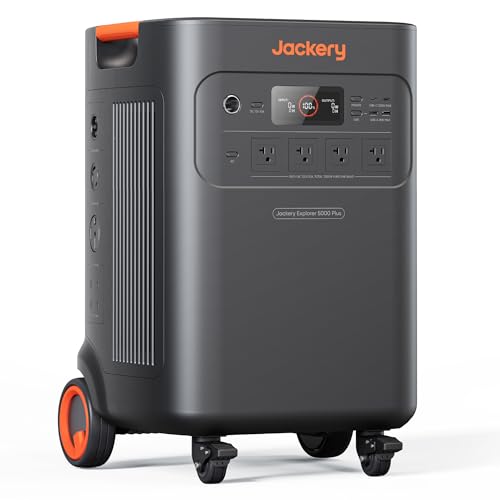 | Ultra‑High Output | Battery Capacity (Wh): 5040 Wh | Continuous Power Output (W): 7200 W | Peak / Surge Power (W): 14,400 W (expandable) | CHECK ON AMAZON | Read Our Analysis |
| BLUETTI Elite 200 V2 Portable Power Station (2073.6Wh) |  | Compact Power | Battery Capacity (Wh): 2073.6 Wh | Continuous Power Output (W): 2600 W | Peak / Surge Power (W): 3900 W | CHECK ON AMAZON | Read Our Analysis |
| ECO-WORTHY 48V 314Ah LiFePO4 Energy Storage System |  | Professional Grid‑Ready | Battery Capacity (Wh): 16,100 Wh (usable) | Continuous Power Output (W): 10,000 W (inverter) | Peak / Surge Power (W): 10,000 W (continuous, no separate surge) | CHECK ON AMAZON | Read Our Analysis |
| BLUETTI Portable Power Station AC180 1152Wh LiFePO4 Battery Backup |  | Portable UPS | Battery Capacity (Wh): 1152 Wh | Continuous Power Output (W): 1800 W | Peak / Surge Power (W): 2700 W | CHECK ON AMAZON | Read Our Analysis |
| BLUETTI Apex 300 Solar Generator with 3 200W Panels and LFP Battery |  | Solar‑Optimized Elite | Battery Capacity (Wh): 2764.8 Wh | Continuous Power Output (W): 3840 W | Peak / Surge Power (W): 7680 W | CHECK ON AMAZON | Read Our Analysis |
Product availability last checked: October 2026
Which Battery Backup Fits Your Home?
- Fridge, lights and Wi-Fi through a night: 1 to 2 kWh units: Anker SOLIX C1000 Gen 2, BLUETTI AC180 or BLUETTI Elite 200 V2.
- A full day or more, with automatic switchover: Jackery HomePower 3000 or EcoFlow DELTA 3 Ultra Plus (expandable to 11 kWh).
- Whole-home systems: EcoFlow Smart Home Panel 2 (a hub for DELTA Pro Ultra batteries) or ECO-WORTHY 16 kWh (needs professional installation).
How Long Will It Run Your Essentials?
Tick what you want to keep running and add anything else in watts.
Total load: –
| Battery | Capacity / max output | Runtime | |
|---|---|---|---|
| Anker SOLIX C1000 Gen 2 | 1,024 Wh / 2,000 W | – | View on Amazon |
| BLUETTI AC180 | 1,152 Wh / 1,800 W | – | View on Amazon |
| BLUETTI Elite 200 V2 | 2,074 Wh / 2,600 W | – | View on Amazon |
| BLUETTI Apex 300 | 2,765 Wh / 3,840 W | – | View on Amazon |
| Jackery HomePower 3000 | 3,072 Wh / 3,600 W | – | View on Amazon |
| EcoFlow DELTA 3 Ultra Plus | 3,072 Wh / 3,600 W | – | View on Amazon |
| ECO-WORTHY Powermega | 16,100 Wh / 10,000 W | – | View on Amazon |
Assumes about 85% of the rated capacity is usable after inverter losses. A fridge cycles on and off; its startup surge is higher than the average shown.
More Details on Our Top Picks
EF ECOFLOW DELTA 2 Portable Power Station 1024Wh
If you need reliable, portable power for home backup or outdoor adventures, the EcoFlow Delta 2 stands out as the overall top performer. Its 1024 Wh LiFePO4 battery delivers 3000+ cycles, lasting six times longer than typical packs. You can charge from 0‑80 % in just 50 minutes or 0‑100 % in 80 minutes via AC, and solar panels up to 500 W keep you green off‑grid. With 1800 W AC output, 15 outlets—including a 100 W USB‑C—you’ll run about 90 % of household appliances. The unit weighs 27 lb, measures 15.7 × 8.3 × 11.3 in, and expands to 3 kWh with extra batteries. A built‑in BMS guarantees safety, and a five‑year warranty backs you.
- Battery Capacity (Wh):1024 Wh
- Continuous Power Output (W):1800 W
- Peak / Surge Power (W):1800 W (no surge specified)
- Charging Speed (0‑80% or 0‑100%):0‑80 % in 50 min (AC)
- Solar Input Capability (W):up to 500 W
- Number of AC Outlets / Ports:15 total outlets (incl. 100 W USB‑C)
- Additional Feature:7x faster AC charging
- Additional Feature:Expandable up to 3 kWh
- Additional Feature:5‑year manufacturer warranty
Not ideal if you need it now; it was showing out of stock when we last checked.
Anker SOLIX C1000 Gen 2 Portable Power Station (2000W)
The Anker SOLIX C1000 Gen 2 shines for anyone needing reliable, high‑power backup, and its ultra‑fast HyperFlash charging makes it the fast‑charge leader in portable storage. You get 2,000 W continuous, 3,000 W peak output and a 1,024 Wh LiFePO4 battery that powers up to ten devices at once—perfect for emergencies, RV trips, or off‑grid cabins. HyperFlash restores full charge in 49 minutes at 1,600 W, while 600 W solar panels refill it in about 1.8 hours. The unit is 14 % smaller and 11 % lighter than rivals, with under‑10 ms UPS switchover and TOU mode via the Anker app. Its LiFePO4 cells retain 80 % capacity after 4,000 cycles, promising a decade of daily use. The package includes AC and car cables, a quick‑start guide, and warranty card.
- Battery Capacity (Wh):1024 Wh
- Continuous Power Output (W):2000 W
- Peak / Surge Power (W):3000 W
- Charging Speed (0‑80% or 0‑100%):0‑100 % in 49 min (AC)
- Solar Input Capability (W):up to 600 W
- Number of AC Outlets / Ports:10 ports (mixed AC/USB)
- Additional Feature:Under 10 ms UPS switchover
- Additional Feature:HyperFlash 1 600 W recharge
- Additional Feature:Time‑of‑Use (TOU) mode
Not ideal if you want to run big appliances for a day. 1,024 Wh covers essentials for hours, not days.
Jackery HomePower 3000 Portable Power Station with Solar Panels
Power outages demand reliable, high‑capacity backup, and the Jackery HomePower 3000 delivers just that. You’ll get 3600 W continuous, 7200 W surge power from a 3072 Wh LiFePO4 pack, enough to run a fridge, fan, Wi‑Fi router and lights for up to 15 hours, or keep a refrigerator alive for a couple of days. Its UL‑certified UPS switches in ≤20 ms, protecting security cameras, medical fridges and Zoom calls. ChargeShield 2.0 and AI boost charging speed and lifespan, with 4,000 cycles at 70 % capacity. Recharging takes 1.7 h via AC/DC, 2.2 h on AC alone, or 9 h with two 200 W SolarSaga panels. The unit is 47 % smaller and 43 % lighter than rivals, thanks to CTB technology and a honeycomb shell. Multiple ports—including dual 100 W PD USB‑C, AC, USB‑A, DC, and a TT‑30 RV outlet—cover home, RV and outdoor needs. The power station and panels ship separately.
- Battery Capacity (Wh):3072 Wh
- Continuous Power Output (W):3600 W
- Peak / Surge Power (W):7200 W
- Charging Speed (0‑80% or 0‑100%):0‑80 % in ~1.7 h (hybrid)
- Solar Input Capability (W):up to 400 W (2 × 200 W panels)
- Number of AC Outlets / Ports:Multiple AC outlets (exact count not specified)
- Additional Feature:ChargeShield 2.0 AI charging
- Additional Feature:Integrated TT‑30 RV port
- Additional Feature:47 % smaller, 43 % lighter
Not ideal if you need to carry it often. It weighs about 60 lb.
EF ECOFLOW DELTA 3 Ultra Plus Portable Power Station (8 words)
Ideal for off‑grid living and long outages, the EcoFlow Delta 3 Ultra Plus is an expandable powerhouse that scales from 3 kWh to 11 kWh with extra battery modules. You’ll get 3072 Wh of LiFePO4 energy out of the box, and you can add modules to reach 11 kWh for multi‑day blackouts or RV trips. Its 3600 W continuous and 7200 W surge output runs heavy appliances, power tools, and essential electronics without a hitch. Six charging options—including solar, car, and EV—let you refill in under an hour with X‑Stream fast charging. The <10 ms UPS switch protects sensitive gear, and the four outlets keep everything powered. At 24.1 × 12.9 × 15.6 in, it’s portable yet robust, backed by a five‑year warranty.
- Battery Capacity (Wh):3072 Wh
- Continuous Power Output (W):3600 W
- Peak / Surge Power (W):7200 W
- Charging Speed (0‑80% or 0‑100%):0‑80 % in <1 h (X‑Stream)
- Solar Input Capability (W):up to 400 W (panel delivered separately)
- Number of AC Outlets / Ports:4 outlets
- Additional Feature:X‑Stream 80 % < 1 h charge
- Additional Feature:<10 ms UPS automatic switch
- Additional Feature:4 total power outlets
Not ideal if you want something portable. The bundle weighs about 125 lb.
EF ECOFLOW Smart Home Panel 2 – Whole‑Home Backup Solution
If you need seamless, whole‑home backup without juggling multiple devices, EF ECOFLOW Smart Home Panel 2 delivers exactly that. You connect up to three DELTA inverters and stack 15 six‑kilowatt‑hour batteries for up to 36 kWh capacity, or three DELTA Pro 3 units with six extra batteries. The panel auto‑switches in 20 ms during outages, keeping lights and appliances running without you lifting a finger. It blends solar, gas generators (3‑12 kW) and the EcoFlow Smart Generator 4000, cutting electricity bills while ensuring continuous power. Smart‑home integration, four outlets, and a 3‑year warranty round out a robust, plug‑and‑play solution.
- Battery Capacity (Wh):N/A (panel only)
- Continuous Power Output (W):N/A (panel only)
- Peak / Surge Power (W):N/A (panel only)
- Charging Speed (0‑80% or 0‑100%):N/A (panel only)
- Solar Input Capability (W):N/A (panel only)
- Number of AC Outlets / Ports:4 outlets (panel hub)
- Additional Feature:20 ms automatic switchover
- Additional Feature:Controls up to three inverters
- Additional Feature:Smart home system compatible
Not ideal if you are buying your first battery. It is a control hub for EcoFlow DELTA Pro Ultra systems and stores no energy itself.
Jackery 5000 Plus Portable Power Station 5040Wh 7200W AC Output
For families that need nonstop electricity, the Jackery 5000 Plus delivers ultra‑high output with 7,200 W of AC power and a 5,040 Wh battery, keeping lights, appliances, and critical devices running through any outage. You will value its dual 120 V/240 V outputs, which handle everything from refrigerators to dryers and even RV charging. The unit’s Online UPS mode switches instantly—0 ms—to protect Wi‑Fi routers, computers, and aquariums. Through the Jackery App you can schedule off‑peak charging, adjust discharge rates, and enable peak‑shaving via a smart transfer switch. It runs under 30 dB, emits zero pollutants, and scales up to 60 kWh for up to 15‑day backup.
- Battery Capacity (Wh):5040 Wh
- Continuous Power Output (W):7200 W
- Peak / Surge Power (W):14,400 W (expandable)
- Charging Speed (0‑80% or 0‑100%):N/A (large system)
- Solar Input Capability (W):N/A (system)
- Number of AC Outlets / Ports:Multiple AC outlets (exact count not specified)
- Additional Feature:0 ms Online UPS response
- Additional Feature:Wi‑Fi/Bluetooth app control
- Additional Feature:Peak‑shaving smart transfer
Not ideal if you need it now; it was showing out of stock when we last checked. It also weighs about 135 lb.
BLUETTI Elite 200 V2 Portable Power Station (2073.6Wh)
The BLUETTI Elite 200 V2 delivers 2073.6 Wh of LiFePO4 power in a compact, 53‑pound package, making it perfect for campers and off‑grid households that need reliable, high‑capacity backup without sacrificing space. You’ll get 2600 W continuous AC and 3900 W surge, enough for up to nine devices—refrigerators, hair dryers, coffee makers—simultaneously. Its 6000‑plus charge cycles give a 17‑year lifespan, and low standby draw (10 W) saves energy. Charge fast: 0–80 % in 50 minutes via dual AC/DC, 1 hour with 1800 W turbo, or 2.4 hours with 1000 W solar. The steel‑aluminum frame, four outlets, and safety layers handle extreme temps, while the included cables and warranty round out a robust, portable home‑energy solution.
- Battery Capacity (Wh):2073.6 Wh
- Continuous Power Output (W):2600 W
- Peak / Surge Power (W):3900 W
- Charging Speed (0‑80% or 0‑100%):0‑80 % in 1 h (Turbo)
- Solar Input Capability (W):up to 1000 W
- Number of AC Outlets / Ports:4 AC outlets
- Additional Feature:Turbo‑Boost 0‑80 % in 1 h
- Additional Feature:AI‑optimized battery management
- Additional Feature:53.4 lb compact design
Not ideal if you need more than 2,600 W at once. That is its continuous output.
ECO-WORTHY 48V 314Ah LiFePO4 Energy Storage System
Powerful, compact, and professional grid‑ready, the ECO‑WORTHY 48V 314Ah LiFePO4 system delivers 10 kW of pure‑sine output for reliable home backup. You’ll get 16.1 kWh usable energy, a 10 kW hybrid inverter, and MPPT efficiency up to 99.9 % for solar harvest. The active‑balancing BMS includes a circuit breaker, fire‑suppression module, buzzer, and protections against over‑charge, over‑discharge, over‑current, short circuits, and temperature extremes. Communication runs over RS485, CAN, RS232, plus Bluetooth and Wi‑Fi for app monitoring. With over 9,000 cycles at 80 % DoD, it promises a decade of service, fits through 32.56×20.47×9.92 in, weighs 293 lb, and ships on a pallet with a 10‑year warranty.
- Battery Capacity (Wh):16,100 Wh (usable)
- Continuous Power Output (W):10,000 W (inverter)
- Peak / Surge Power (W):10,000 W (continuous, no separate surge)
- Charging Speed (0‑80% or 0‑100%):N/A (system)
- Solar Input Capability (W):N/A (system)
- Number of AC Outlets / Ports:Not specified (inverter)
- Additional Feature:10 kW hybrid inverter
- Additional Feature:RS485/CAN/RS232 communication
- Additional Feature:10‑year product warranty
Not ideal if you want plug-and-play. It is a 293 lb battery and hybrid inverter system that needs professional installation.
BLUETTI Portable Power Station AC180 1152Wh LiFePO4 Battery Backup
If you need a rugged, portable UPS that can keep your home running during outages, the BLUETTI AC180’s 1152 Wh LiFePO4 battery delivers 1800 W continuous power and a 2700 W peak boost, all in a compact, weather‑proof case. You’ll charge it in an hour with a 1440 W AC input, or hook up a 500 W solar panel for 2.8‑3.3 hour charging; combined AC and solar can still hit the one‑hour mark. The unit supplies eight outlets, supports a 20 ms UPS switchover, and lets you monitor output via the BLUETTI App. Accessories include AC, car, and solar cables, and you’re covered by a five‑year warranty.
- Battery Capacity (Wh):1152 Wh
- Continuous Power Output (W):1800 W
- Peak / Surge Power (W):2700 W
- Charging Speed (0‑80% or 0‑100%):0‑80 % in 1 h (AC)
- Solar Input Capability (W):up to 500 W
- Number of AC Outlets / Ports:8 power outlets
- Additional Feature:20 ms UPS switchover
- Additional Feature:BLUETTI App control
- Additional Feature:8 power outlets
Not ideal if you need to run several high-draw appliances together. It tops out at 1,800 W.
BLUETTI Apex 300 Solar Generator with 3 200W Panels and LFP Battery
Homeowners seeking reliable, solar‑optimized elite backup will love the Apex 300’s 2.8 kWh LiFePO4 battery and 3,840 W continuous output. Its 2764.8 Wh capacity delivers 3840 W steady power and 7680 W surge, letting you run ovens, AC units, and EV chargers simultaneously via six AC outlets and dual‑voltage (120 V/240 V) ports. Three 200 W panels charge the unit to 80 % in just 40 minutes, while dual MPPT handles up to 2400 W solar input. The second‑generation LiFePO4 cell lasts over 17 years and 6,000+ cycles, passing 33 extreme‑environment tests. You can parallel two‑three units for 5.5‑8.3 kWh or expand to 58 kWh with B300K modules, making it ideal for home backup, RVs, camping, or off‑grid living.
- Battery Capacity (Wh):2764.8 Wh
- Continuous Power Output (W):3840 W
- Peak / Surge Power (W):7680 W
- Charging Speed (0‑80% or 0‑100%):0‑80 % in 40 min (solar)
- Solar Input Capability (W):up to 2400 W (dual MPPT)
- Number of AC Outlets / Ports:6 AC outlets (dual‑voltage)
- Additional Feature:Dual‑voltage 120 / 240 V output
- Additional Feature:Parallel‑able up to 58 kWh
- Additional Feature:40‑minute 80 % solar charge.
Not ideal if you need it now or want to carry it. Stock is limited, and the bundle weighs about 158 lb.
What Else You Will Need

Lets solar panels sit in full sun while the battery stays indoors.

Connects standard MC4 solar panels to power station inputs.
Factors to Consider When Choosing the Most Reliable Home Energy Storage Systems
When you pick a home energy storage system, start by checking its battery life and cycle count to gauge long‑term durability. Next, compare charging speed, flexibility, and power output—especially surge capacity—to guarantee it meets your daily needs and occasional spikes. Finally, look for scalable expandability, robust safety features, and an intelligent management system that keeps everything running smoothly.
Battery Life and Cycle Count
Because cycle count directly reflects how many charge‑discharge rounds a battery can endure before its capacity drops, it’s the most reliable metric for judging long‑term durability. You’ll see LiFePO4 cells dominate the market, often delivering 3,000‑6,000 cycles while retaining 70‑80 % of their original capacity. That translates into years of dependable power and fewer replacements, cutting both ownership costs and waste. A robust battery management system further protects the pack by smoothing charge patterns and preventing deep‑discharge stress. When you compare models, focus on the advertised cycle life and the retained capacity after those cycles; higher numbers mean longer intervals between swaps and steadier performance throughout your home’s energy ecosystem.
Charging Speed and Flexibility
If you need power fast, a system that can hit 80 % charge in under an hour cuts downtime dramatically, especially when it accepts high‑power AC, solar, or hybrid inputs. Look for units that support both standard AC outlets and solar arrays; the ability to plug into a rooftop panel or a portable generator means you stay charged during outages or while off‑grid. Hybrid chargers that blend AC and DC inputs push energy into the battery faster and more efficiently, while MPPT‑compatible solar controllers maximize harvest from multiple panels. An advanced battery‑management system will throttle the charge rate to protect cell health, so rapid charging doesn’t shorten lifespan. Prioritizing these flexible, high‑speed options guarantees you’ll have reliable power when you need it most.
Power Output and Surge Capacity
Even with a fully charged battery, you’ll only get the power you need if the system’s continuous output and surge capacity match your home’s demands. Continuous power output tells you the maximum load the system can sustain without interruption, so you’ll want a rating that exceeds your average household consumption. Surge capacity is the short‑term burst you need to start high‑demand devices like pumps or compressors; a higher surge wattage prevents tripping breakers and protects appliances. Balance both specs to avoid overload and safeguard the battery. When you compare models, look at the continuous kilowatt rating alongside the peak surge figure, ensuring the former covers steady‑state use while the latter handles occasional spikes. This alignment keeps your home running smoothly and extends system lifespan.
Scalable Expandability Options
When you prioritize a home energy storage system, look for a modular design that lets you stack or link additional battery units, so you can grow capacity from a single‑kilowatt‑hour up to ten kilowatt‑hours or more as your power needs evolve. Choose a system that supports easy plug‑and‑play modules, allowing you to add capacity without rewiring or replacing the core unit. Verify that the controller can recognize new modules instantly and balance charge across them. Look for compatibility with both solar panels and generators, so added modules integrate smoothly with existing inputs. Make certain the enclosure permits vertical or horizontal stacking to fit your space constraints. Finally, check that the warranty covers expanded configurations, protecting your investment as you scale up.
Safety and Management System
Scalable expandability lets you grow capacity, but without advanced safety and management systems the added modules can become a liability. A robust Battery Management System (BMS) constantly monitors voltage, current, and temperature, preventing over‑charge, over‑discharge, short circuits, and thermal runaway. Look for built‑in circuit breakers, fire‑suppression modules, and audible alarms that trigger instantly when parameters exceed safe limits. Multi‑layer protection combined with AI‑driven algorithms extends battery life while keeping charging efficient. Seamless UPS integration is essential; automatic switchovers under 20 ms shield sensitive electronics during outages. Choose units that support real‑time monitoring via Bluetooth, Wi‑Fi, RS‑485, CAN, or RS‑232, enabling remote diagnostics and proactive alerts. These features together guarantee your home storage remains reliable, safe, and easy to manage.
Environmental Impact and Efficiency
If you prioritize sustainability, look for a system that pairs LiFePO4 cells with an advanced BMS, because the chemistry’s 3,000‑6,000‑cycle lifespan and the BMS’s protection against over‑charge, over‑discharge, and overheating dramatically cut waste and extend usable life. You’ll benefit from over‑99 % MPPT inverter efficiency, meaning almost every watt from your solar panels reaches the battery instead of heating up. Fast‑recharge capability lets you store surplus daylight quickly, reducing reliance on grid power during peak hours. Zero‑emission, silent operation replaces noisy gas generators, cutting air pollutants and community noise. Choosing a solar‑compatible, high‑efficiency unit also lowers your carbon footprint by maximizing renewable energy use while minimizing energy loss throughout the charging cycle.
Warranty and Support Terms
After weighing the environmental benefits of LiFePO4 cells and high‑efficiency MPPT inverters, your next focus should be the warranty and support package that backs the system. Look for a warranty that spans at least three to five years, covering batteries, inverters, and the management system so you’re protected against premature capacity loss and hardware failures. A solid support team should offer technical assistance and troubleshooting whenever issues arise, keeping reliability high. Check the return policy—most brands give a 30‑day window for a risk‑free trial, letting you verify performance before committing. Extra perks like firmware updates, remote monitoring, and proactive maintenance can extend lifespan and boost efficiency, making the whole package more valuable.
Frequently Asked Questions
How Do Temperature Extremes Affect Battery Lifespan?
You’ll see battery lifespan shrink when temperatures swing wildly; heat speeds up chemical reactions, causing faster degradation, while cold slows ion flow, reducing capacity and increasing internal resistance, both shortening overall life.
Can I Integrate These Units With Existing Solar Inverters?
You can hook them up to your solar inverter, but you’ll need a compatible AC‑coupled or DC‑coupled interface, proper wiring, and possibly a new controller to manage charge‑discharge cycles safely.
What Maintenance Schedule Is Recommended for Lifepo4 Systems?
You should inspect cell voltages, balance packs, and clean terminals every three months; perform a full capacity test and firmware update annually, and replace any faulty modules promptly to maintain peak performance.
Do Any Models Support Remote Monitoring via Smartphone Apps?
Yes, many models let you monitor charge, discharge, and health through dedicated smartphone apps; you’ll receive real‑time alerts, status dashboards, and remote control, so you stay informed without opening the system.
How Does Warranty Coverage Differ Between Portable and Whole‑Home Units?
You’ll find portable units typically offer one‑year parts and labor warranties, while whole‑home systems often extend to ten years for batteries and five years for inverters, covering defects and performance guarantees.