
When it comes to sun-powered cooking, you've got three top designs to choose from. Box-style solar cookers use an insulated box with a transparent lid, perfect for slow cooking and camping. Parabolic solar cookers feature a curved reflective surface, reaching high temperatures for versatile cooking methods. Panel solar cookers offer a portable option with flat reflective panels, ideal for on-the-go meals. Each design has its unique advantages, from the box-style's simplicity to the parabolic's intense heat and the panel's portability. Exploring these options will help you find the perfect solar cooker for your outdoor culinary adventures.
Box-Style Solar Cookers
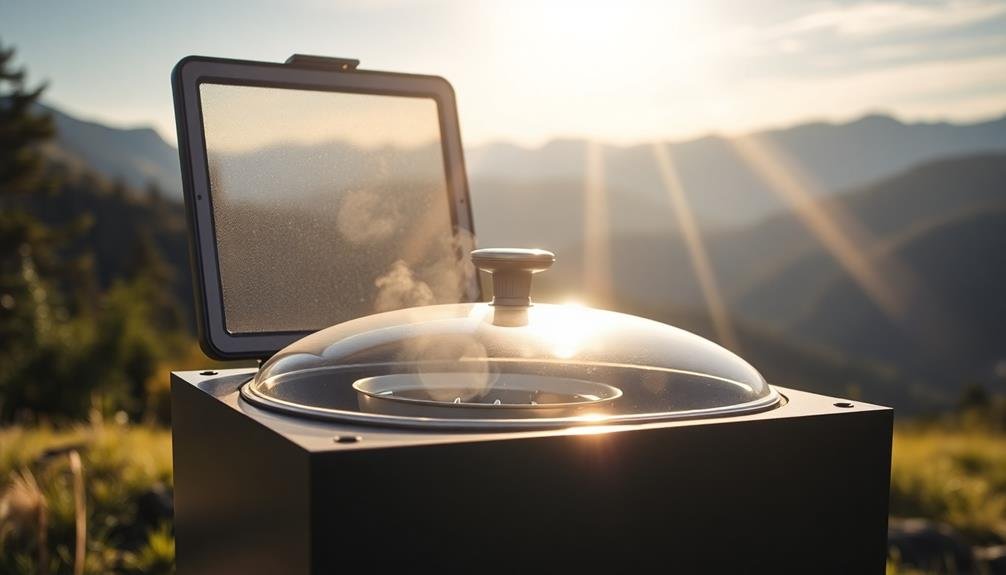
Box-style solar cookers harness the sun's energy to create a simple yet effective cooking solution. These cookers consist of an insulated box with a transparent lid, typically made of glass or plastic. The box's interior is lined with reflective material to maximize heat retention and cooking efficiency.
To use a box-style solar cooker, you'll place your food in dark-colored pots or containers inside the box. The transparent lid allows sunlight to enter, while the insulated walls trap heat. Reflective panels on the cooker's sides can be adjusted to direct more sunlight into the box, increasing its temperature.
You can cook a variety of dishes in these cookers, from stews and rice to baked goods. Cooking times are longer than conventional methods, but the process is energy-efficient and eco-friendly. Box-style cookers work best in direct sunlight and during peak sun hours.
These cookers are popular for their simplicity, durability, and ease of use. You can build them yourself using readily available materials or purchase pre-made models. They're ideal for outdoor cooking, camping, or as a sustainable alternative to traditional stoves in sunny regions.
Parabolic Solar Cookers
Parabolic solar cookers represent a highly efficient design in sun-powered cooking technology. These cookers use a curved, reflective surface to concentrate sunlight onto a focal point, where you'll place your cooking pot. The concentrated sunlight generates intense heat, allowing you to cook food quickly and at higher temperatures than box-style cookers.
You'll find that parabolic cookers offer several advantages:
- High temperatures: They can reach up to 400°C (752°F), enabling you to fry, grill, and even bake.
- Fast cooking times: Foods cook much quicker than in other solar cooker designs.
- Versatility: You can use various cooking methods, from boiling to roasting.
- Efficiency: They work well even in lower sunlight conditions.
However, parabolic cookers require more frequent adjustments to track the sun's movement. They're also typically more expensive and less portable than other solar cooker types.
When using a parabolic cooker, you'll need to take safety precautions due to the intense heat and light concentration. Always use protective eyewear and oven mitts when handling the cooker or cookware.
With proper use, you'll find parabolic solar cookers to be powerful and effective tools for sun-powered cooking.
Panel Solar Cookers
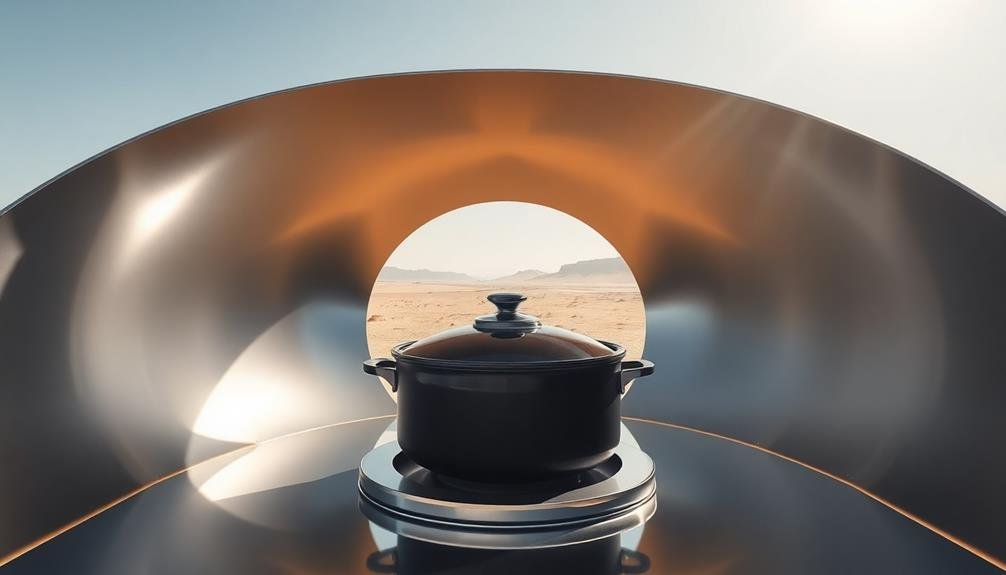
Panel solar cookers offer a simpler, more portable alternative to parabolic designs. These cookers use flat, reflective panels to direct sunlight onto a cooking pot, typically placed inside a clear plastic bag or under a glass lid to trap heat.
You'll find panel cookers easy to assemble, transport, and store, making them ideal for camping or emergency preparedness.
The most common panel cooker design is the CooKit, which uses a foldable reflector made from cardboard and aluminum foil. You can easily construct one yourself or purchase pre-made versions.
Other designs include the Fun-Panel and the Copenhagen Solar Cooker, each with unique folding patterns for improved efficiency.
When using a panel cooker, you'll want to place your pot on a raised platform or inside a second, larger pot to minimize heat loss. Dark-colored, thin-walled pots work best for absorbing and conducting heat.
You'll need to reposition the cooker every 30 minutes to follow the sun's movement. While panel cookers aren't as powerful as parabolic designs, they can still reach temperatures of 250°F (121°C), suitable for most cooking tasks.
Frequently Asked Questions
How Long Does It Take to Cook a Meal Using a Solar Cooker?
You'll find that cooking times vary with solar cookers. It typically takes 1-3 hours for most meals, depending on the sun's intensity, cooker design, and food type. You'll need patience, but it's worth the wait!
Can Solar Cookers Be Used in Cloudy or Overcast Conditions?
You can use solar cookers in cloudy conditions, but they'll be less effective. You'll experience longer cooking times and lower temperatures. It's best to plan for clear, sunny days when using your solar cooker for ideal results.
Are Solar Cookers Safe to Use Around Children?
Yes, solar cookers are generally safe for children when used properly. You'll want to supervise them, teach safety rules, and keep hot surfaces out of reach. Always use oven mitts and be cautious of steam and hot food.
What Materials Are Best for Constructing a DIY Solar Cooker?
You'll want to use reflective materials like aluminum foil or mylar for your DIY solar cooker. Cardboard or wood can form the base structure. Don't forget insulation materials, such as newspaper or straw, to retain heat effectively.
How Do You Store and Maintain a Solar Cooker Between Uses?
You'll want to store your solar cooker in a dry, cool place. Clean it after each use, protect reflective surfaces, and cover it to prevent dust buildup. Periodically check for damage and reapply reflective coatings if needed.
In Summary
You've now explored the three main types of solar cookers: box-style, parabolic, and panel designs. Each has its strengths, whether it's the simplicity of a box cooker, the high temperatures of a parabolic model, or the portability of a panel cooker. As you consider harnessing the sun's power for cooking, remember that your choice will depend on your specific needs, climate, and available resources. Whichever design you pick, you're taking a step towards sustainable, eco-friendly cooking.

Leave a Reply