When building your DIY solar cooker, consider these top insulation materials: reflective foil, wool, and foam board. Reflective foil efficiently mirrors radiant heat, creating a low-emissivity barrier. Wool, especially sheep's wool, offers excellent insulation and moisture resistance. Foam board provides lightweight thermal resistance and is easy to work with. Each material has unique properties that can enhance your cooker's performance. Reflective foil requires smooth installation, wool needs proper sealing, and foam board should be protected from direct heat. By understanding these materials' strengths and installation requirements, you'll be well-equipped to maximize your solar cooker's efficiency.
Reflective Foil Insulation

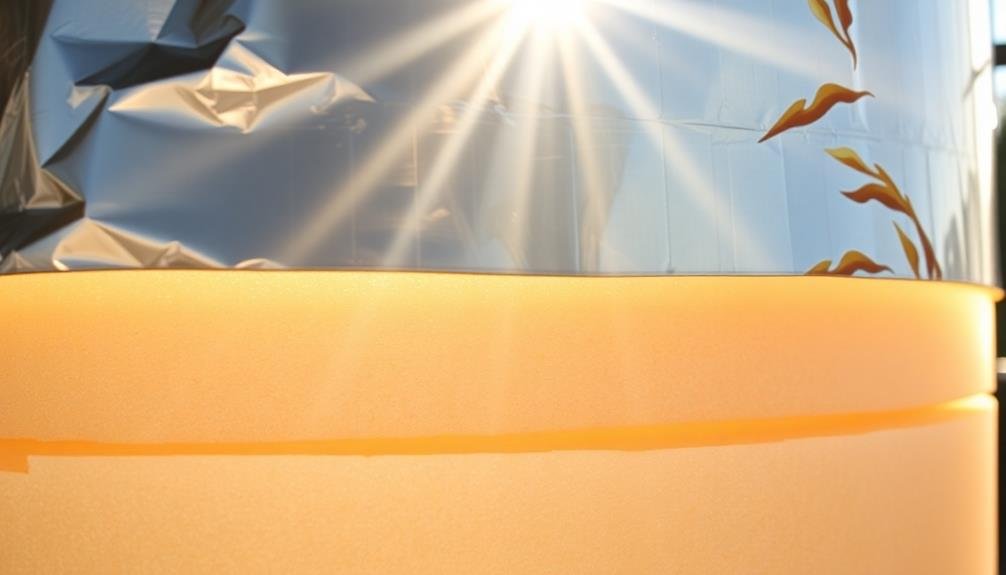
One of the most effective insulation materials for a DIY solar cooker is reflective foil insulation. This versatile material consists of thin aluminum foil bonded to a substrate, typically polyethylene or mylar.
It's lightweight, easy to work with, and highly efficient at reflecting radiant heat.
When you're building your solar cooker, you'll want to line the interior walls with reflective foil insulation. This creates a mirror-like surface that bounces sunlight and heat towards your cooking pot, maximizing energy efficiency.
The foil's low emissivity also helps prevent heat loss, keeping your cooker's temperature stable.
You can find reflective foil insulation at most hardware stores or online retailers. It's often sold in rolls, making it easy to cut to size for your project.
When installing, make sure you leave the shiny side exposed to reflect light effectively. For best results, create a smooth surface without wrinkles or air pockets.
Remember to handle the foil carefully, as it can tear easily. You might want to wear gloves to protect both your hands and the insulation.
With proper installation, reflective foil insulation will greatly boost your solar cooker's performance.
Wool Insulation Materials
For those seeking a natural and sustainable insulation option, wool materials offer an excellent choice for DIY solar cookers. Wool's natural properties make it an effective insulator, trapping air pockets to reduce heat transfer. It's also biodegradable and renewable, aligning with eco-friendly principles.
When selecting wool insulation for your solar cooker, you'll find various options available. Here's a comparison of common wool insulation materials:
| Type | R-value per inch | Moisture resistance |
|---|---|---|
| Sheep's wool | 3.5-3.8 | Excellent |
| Recycled wool | 3.0-3.5 | Good |
| Wool felt | 2.8-3.2 | Moderate |
Sheep's wool offers the highest insulation value and naturally repels moisture, making it ideal for solar cookers. Recycled wool provides a more affordable option while maintaining good insulating properties. Wool felt, though less effective, is easy to work with and can be useful for smaller projects.
To incorporate wool insulation into your solar cooker, you'll need to create a layer between the reflective surface and the cooking chamber. Use wool batting or loose fill to stuff gaps and guarantee complete coverage. Remember to seal the insulation to prevent moisture accumulation and maintain its effectiveness over time.
Foam Board Insulation
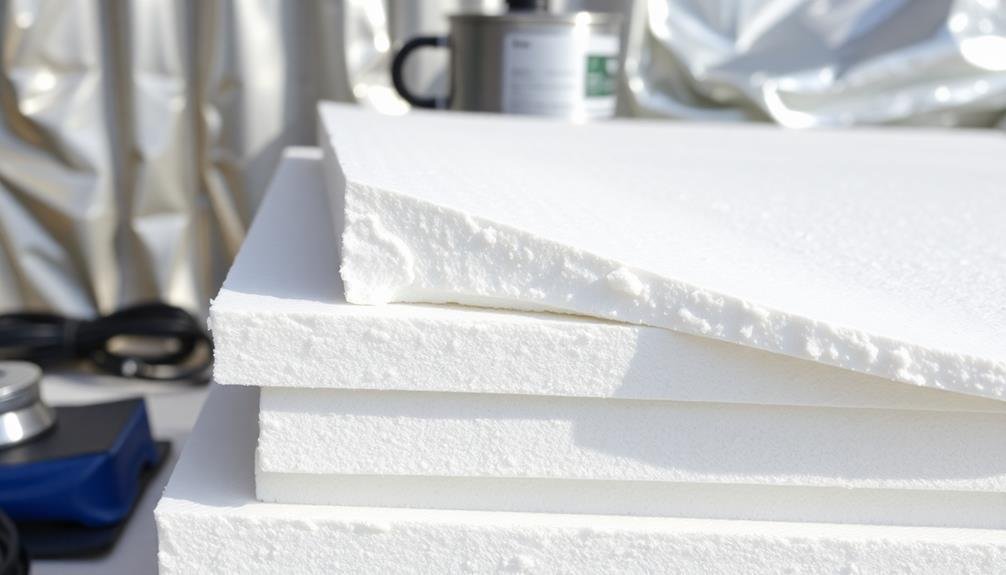
Moving from natural to synthetic options, foam board insulation stands out as a popular choice for DIY solar cookers. It's lightweight, easy to cut, and provides excellent thermal resistance. You'll find foam board insulation in various materials, including expanded polystyrene (EPS), extruded polystyrene (XPS), and polyisocyanurate (polyiso).
EPS is the most affordable option, offering decent insulation properties. It's easy to work with but less durable than its counterparts.
XPS, while pricier, provides better moisture resistance and higher R-value per inch. It's ideal for cookers that might be exposed to damp conditions.
Polyiso offers the highest R-value per inch but comes at a premium price.
When using foam board insulation in your solar cooker, you'll want to evaluate thickness and arrangement. Thicker boards provide better insulation but may reduce your cooker's internal space. You can layer multiple thin boards for increased effectiveness.
Remember to seal joints between boards to prevent heat loss. While foam board insulation is highly effective, it's crucial to recognize that it can degrade when exposed to high temperatures, so you'll need to protect it from direct contact with your cooker's heat-absorbing surfaces.
Frequently Asked Questions
How Do I Clean and Maintain My Solar Cooker Insulation?
You'll want to regularly clean your solar cooker's insulation with a dry brush or cloth. Avoid using water or harsh chemicals. Check for damage or wear periodically and replace insulation as needed to maintain efficiency. Store in a dry place when not in use.
Can I Use Recycled Materials for Insulating My Solar Cooker?
Yes, you can use recycled materials for insulating your solar cooker. Consider using old newspapers, cardboard, or even shredded paper. You'll save money and reduce waste while creating an effective insulation layer for your cooker. It's eco-friendly and efficient!
What's the Average Lifespan of Insulation in a Solar Cooker?
You'll find that insulation in a solar cooker typically lasts 3-5 years. However, its lifespan depends on usage, weather exposure, and maintenance. You'll need to inspect it regularly and replace it when it starts deteriorating for ideal performance.
Are There Any Eco-Friendly Alternatives to Traditional Insulation Materials?
You'll find several eco-friendly insulation alternatives for your project. Consider using recycled denim, cork, sheep's wool, or cellulose made from recycled paper. These options are sustainable, effective, and won't harm the environment. They're great choices for conscientious DIYers.
How Does Altitude Affect the Performance of Insulation in Solar Cookers?
At higher altitudes, you'll notice insulation in solar cookers performs better due to thinner air. You'll experience less heat loss and faster cooking times. However, you'll need to adjust cooking temperatures and times accordingly.
In Summary
You've now got the scoop on the top three insulation materials for your DIY solar cooker. Whether you opt for reflective foil, wool, or foam board, you'll be well on your way to creating an efficient, eco-friendly cooking solution. Don't forget to take into account factors like availability, cost, and ease of use when making your choice. With the right insulation, you'll be harnessing the sun's power and whipping up delicious meals in no time!


Leave a Reply