
When it comes to green radiant floor heating, you've got three outstanding options to evaluate. Solar-powered systems harness the sun's energy, using thermal collectors to warm your floors efficiently. Geothermal hydronic systems tap into the Earth's constant underground temperature, offering high energy efficiency and long-term savings. Biomass-fueled heating utilizes organic materials like wood pellets, providing a carbon-neutral solution with potentially lower fuel costs. Each option has its unique advantages, from improved air quality to reduced carbon footprints. While initial costs may be higher, these eco-friendly alternatives can lead to significant long-term benefits for both your wallet and the environment.
Solar-Powered Radiant Floors

Harnessing the sun's energy, solar-powered radiant floors offer an eco-friendly heating solution for your home. These systems use solar thermal collectors to capture sunlight and convert it into heat, which is then circulated through pipes embedded in your floor. You'll benefit from consistent, comfortable warmth while reducing your carbon footprint and energy bills.
To maximize efficiency, you'll need to install solar panels in a sunny location, typically on your roof. The collected heat is stored in a large, insulated water tank, allowing you to use the stored energy even when the sun isn't shining. This setup guarantees a steady supply of warmth throughout the day and night.
While the initial installation costs can be higher than traditional heating systems, you'll recoup your investment through long-term energy savings.
Solar-powered radiant floors work well with various flooring materials, including tile, concrete, and engineered wood. They're particularly effective in open-plan spaces and rooms with high ceilings.
You'll also appreciate the silent operation and improved air quality, as these systems don't circulate dust or allergens like forced-air heating.
For ideal performance, combine solar-powered radiant floors with proper insulation and energy-efficient windows.
Geothermal Hydronic Systems
Geothermal hydronic systems tap into the Earth's constant underground temperature to heat your home efficiently. These systems use a network of pipes filled with water or antifreeze solution, circulating it through the ground and your home's radiant floor system. As the fluid moves through the earth, it absorbs heat and transfers it to your living spaces.
You'll find that geothermal hydronic systems offer several advantages over traditional heating methods. They're highly energy-efficient, reducing your carbon footprint and utility bills. They also provide consistent, even heating throughout your home without the noise or drafts associated with forced-air systems.
Here's a comparison of geothermal hydronic systems with other heating options:
| Feature | Geothermal Hydronic | Forced-Air | Electric Baseboard |
|---|---|---|---|
| Efficiency | High | Moderate | Low |
| Installation Cost | High | Moderate | Low |
| Operating Cost | Low | Moderate | High |
| Lifespan | 25-50 years | 15-20 years | 20-30 years |
While the initial investment for a geothermal hydronic system can be substantial, the long-term savings and environmental benefits make it an attractive option for homeowners committed to sustainable living. You'll also appreciate the system's low maintenance requirements and quiet operation.
Biomass-Fueled Radiant Heating
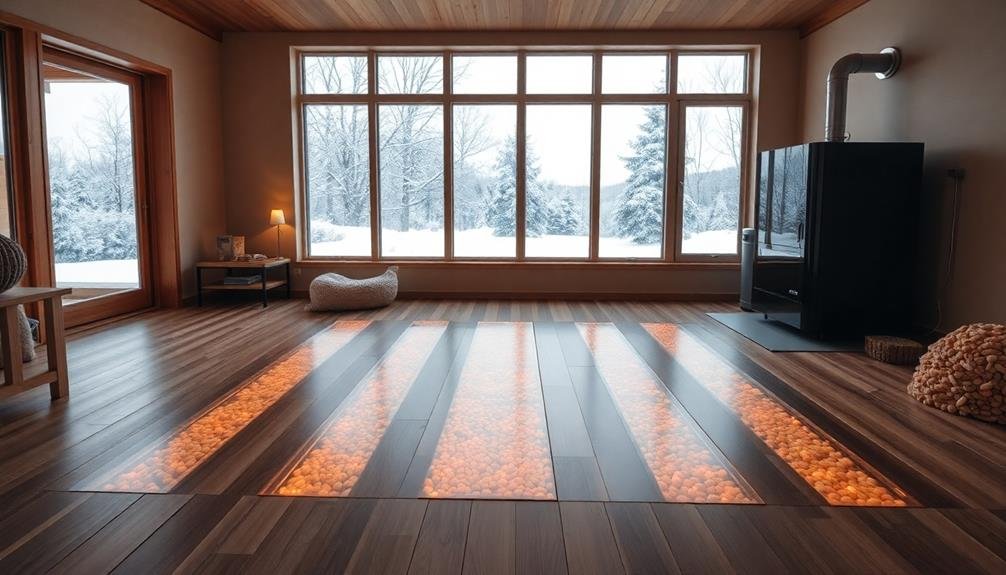
Biomass-fueled radiant heating offers a renewable alternative to traditional heating systems. This eco-friendly option uses organic materials like wood pellets, corn, or other plant-based fuels to generate heat for your radiant floor system.
You'll find that biomass boilers can efficiently burn these materials to heat water, which then circulates through your floor's tubing network.
One of the main advantages of biomass-fueled radiant heating is its carbon neutrality. The CO2 released during combustion is offset by the carbon absorbed during the biomass's growth cycle.
You'll also benefit from potentially lower fuel costs, especially if you have access to locally-sourced biomass materials.
When considering this option, you'll need to factor in the space required for fuel storage and the boiler system. Regular maintenance is vital to guarantee peak performance and longevity.
While initial installation costs may be higher than traditional systems, you'll likely see long-term savings on energy bills.
It's important to choose high-quality, sustainably-sourced biomass fuels to maximize environmental benefits.
You'll also want to check local regulations regarding biomass heating systems, as some areas may have restrictions or require specific permits.
Frequently Asked Questions
How Long Does a Typical Radiant Floor Heating System Last?
You can expect your radiant floor heating system to last 20-35 years, depending on maintenance and quality. With proper care, it'll serve you well for decades. Regular check-ups and addressing issues promptly will extend its lifespan considerably.
Can Radiant Floor Heating Be Installed in Existing Homes?
Yes, you can install radiant floor heating in existing homes. It's possible with both electric and hydronic systems. You'll need to remove existing flooring, but it's a viable option for renovations. Consider consulting a professional for the best approach.
What Are the Maintenance Requirements for Green Radiant Floor Heating Systems?
You'll find green radiant floor heating systems require minimal maintenance. You should regularly check for leaks, inspect the thermostat, and clean filters if present. It's wise to have a professional service the system annually for peak performance.
How Does Radiant Floor Heating Affect Indoor Air Quality?
You'll enjoy improved indoor air quality with radiant floor heating. It doesn't circulate dust or allergens like forced-air systems. There's no hot, dry air blowing around, and it reduces moisture issues, preventing mold growth.
Are There Any Health Concerns Associated With Radiant Floor Heating?
You'll be pleased to know that radiant floor heating generally doesn't pose significant health concerns. It's safe, doesn't circulate allergens, and can improve indoor air quality. However, guarantee proper installation to avoid potential moisture issues.
In Summary
You've now explored three eco-friendly radiant floor heating options. Whether you choose solar-powered, geothermal, or biomass-fueled systems, you're making a sustainable choice for your home. Each option offers unique benefits, from harnessing the sun's energy to tapping into Earth's heat or using renewable biomass. Consider your budget, local climate, and available resources when deciding. Remember, investing in green radiant floor heating will not only warm your home but also reduce your carbon footprint.



Leave a Reply