

For energy-saving underfloor heating, you've got three top options. Electric systems offer easy installation and precise control, ideal for retrofits. Hydronic solutions use water-filled pipes for efficient heat distribution, perfect for larger spaces. Geothermal systems tap into the Earth's constant temperature, providing eco-friendly heating and cooling year-round. While electric systems are cost-effective for smaller areas, hydronic and geothermal options offer lower long-term operating costs despite higher initial investments. Each system has its unique benefits, from zone heating capabilities to compatibility with renewable energy sources. Exploring these options further will help you make the best choice for your home's needs and budget.
Electric Underfloor Heating Systems
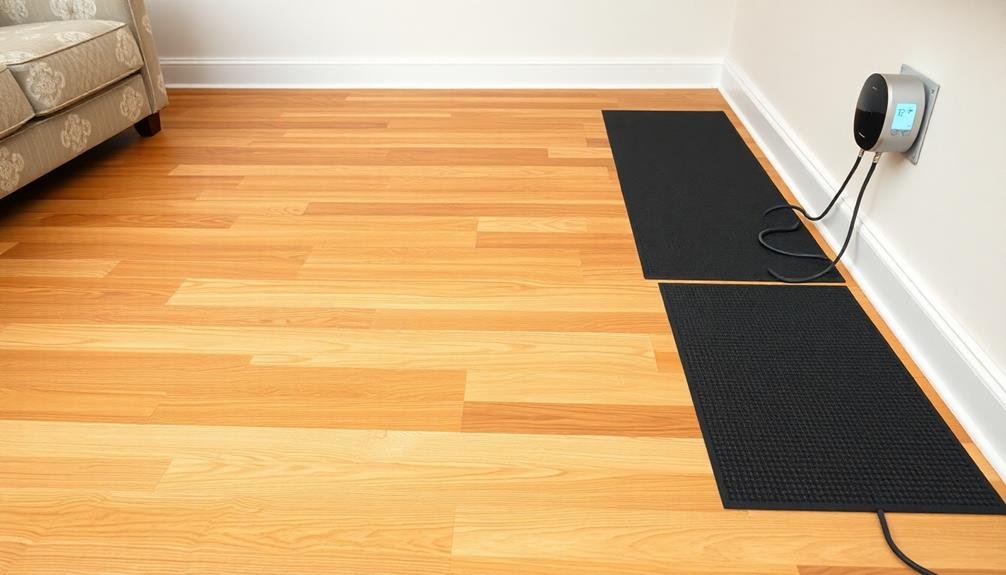
Electric underfloor heating systems have emerged as a popular choice for homeowners looking to heat their spaces efficiently. These systems use electric wires or mats installed beneath your flooring to provide radiant heat. You'll find they're particularly effective in bathrooms, kitchens, and other areas with tiled or stone floors.
One of the main advantages of electric underfloor heating is its ease of installation. It's a great option for retrofitting existing rooms or during renovations, as the systems are thin and don't require significant floor height adjustments.
You'll also appreciate the precise temperature control these systems offer, allowing you to heat specific zones independently.
While electric underfloor heating can be more expensive to run than some alternatives, it's highly energy-efficient when used strategically. You can program it to operate only when needed, reducing energy waste.
It's also maintenance-free, with no moving parts to wear out or replace.
To maximize energy savings, pair your electric underfloor heating with a smart thermostat. This will let you create custom heating schedules and control the system remotely, ensuring you're not wasting energy when you're away from home.
Hydronic Radiant Floor Solutions
Circulating warmth throughout your home, hydronic radiant floor systems offer an efficient and comfortable heating solution. These systems use a network of pipes embedded in your floor to distribute heated water, providing consistent warmth from the ground up.
You'll find that hydronic systems are highly energy-efficient, as water transfers heat more effectively than air. They're particularly well-suited for homes with high ceilings or large open spaces, where traditional forced-air systems struggle to maintain even temperatures.
Installation involves laying pipes beneath your flooring material, connected to a boiler or water heater. While the initial setup cost may be higher than other heating options, you'll benefit from lower long-term operating costs and increased energy savings.
Hydronic systems are compatible with various heat sources, including gas boilers, heat pumps, and solar thermal systems. This flexibility allows you to choose the most cost-effective and environmentally friendly option for your home.
You can control hydronic systems with smart thermostats, enabling zone heating and further improving efficiency. They're also silent and don't circulate dust or allergens, contributing to improved indoor air quality and a more comfortable living environment.
Geothermal Underfloor Heating Options
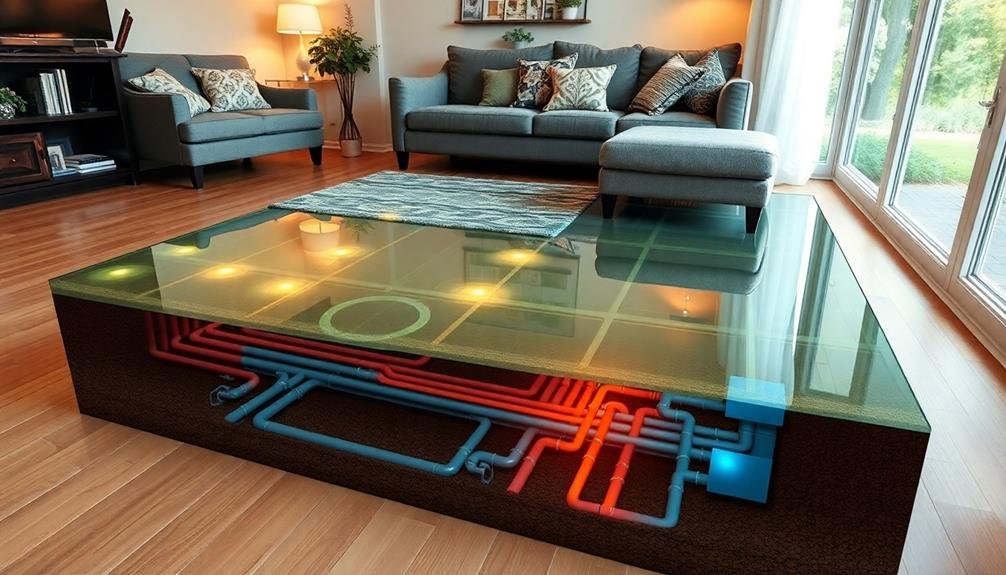
For those seeking an eco-friendly and highly efficient underfloor heating solution, geothermal systems offer a compelling option. These systems harness the Earth's constant underground temperature to heat your home, providing consistent warmth throughout the year. By utilizing a ground source heat pump, geothermal underfloor heating can greatly reduce your energy consumption and carbon footprint.
When considering geothermal underfloor heating, you'll benefit from:
- Long-term cost savings: Despite higher initial installation costs, geothermal systems can cut your heating bills by up to 70% annually.
- Minimal maintenance: With fewer moving parts than traditional heating systems, geothermal options require less upkeep and have longer lifespans.
- Versatility: These systems can also provide cooling in summer months, making them a year-round climate control solution.
To install a geothermal system, you'll need sufficient outdoor space for ground loops. These loops can be installed horizontally or vertically, depending on your property's layout.
While the upfront investment may be substantial, government incentives and rebates can help offset costs. You'll enjoy consistent, efficient heating while reducing your reliance on fossil fuels and contributing to a greener future.
Frequently Asked Questions
How Long Does Underfloor Heating Typically Last Before Needing Replacement?
You'll find that underfloor heating systems typically last 20-35 years before needing replacement. Electric systems often have a longer lifespan than water-based ones. Regular maintenance can extend their life, so don't neglect annual check-ups.
Can Underfloor Heating Be Installed in Existing Homes Without Major Renovations?
Yes, you can install underfloor heating in existing homes without major renovations. Electric systems are easier to retrofit, as they're thinner and don't require raising floor levels. You'll need to remove existing flooring, but it's generally a straightforward process.
What Maintenance Is Required for Underfloor Heating Systems?
You'll need minimal maintenance for underfloor heating systems. Regularly check for leaks, bleed radiators if necessary, and schedule annual inspections. Keep the system clean, guarantee proper water pressure, and address any issues promptly to maintain efficiency.
Are There Any Health Concerns Associated With Underfloor Heating?
You'll be glad to know there aren't major health concerns with underfloor heating. It's safe and comfortable. However, if you have circulation issues, consult your doctor. Also, ascertain proper installation to avoid any potential risks.
How Does Underfloor Heating Affect Home Insurance Premiums?
Underfloor heating generally doesn't increase your home insurance premiums. However, you'll need to inform your insurer about the installation. If it's professionally installed and maintained, it may even be viewed positively by some insurance companies.
In Summary
You've now explored three excellent energy-saving underfloor heating options for your home. Whether you choose electric, hydronic, or geothermal systems, you'll enjoy improved comfort and efficiency. Remember to reflect on your specific needs, budget, and home layout when making your decision. Don't forget to consult with professionals for installation and maintenance advice. With the right underfloor heating solution, you'll create a cozy, energy-efficient living space that'll keep you warm for years to come.


Leave a Reply