

You can create a stunning backyard oasis while keeping your bills low with eco-friendly water features. Consider installing a solar-powered fountain, rainwater harvesting system, or pondless waterfall for energy efficiency. Natural swimming pools and recycled glass water walls offer unique, sustainable alternatives. Bamboo water spouts and LED-lit bubble columns provide zen-like ambiance with minimal upkeep. Greywater irrigation features and eco-friendly koi ponds help conserve water while enhancing your landscape. These options not only reduce your environmental impact but also add beauty and tranquility to your outdoor space. Exploring these sustainable choices can transform your backyard into an eco-conscious retreat.
Solar-Powered Fountain
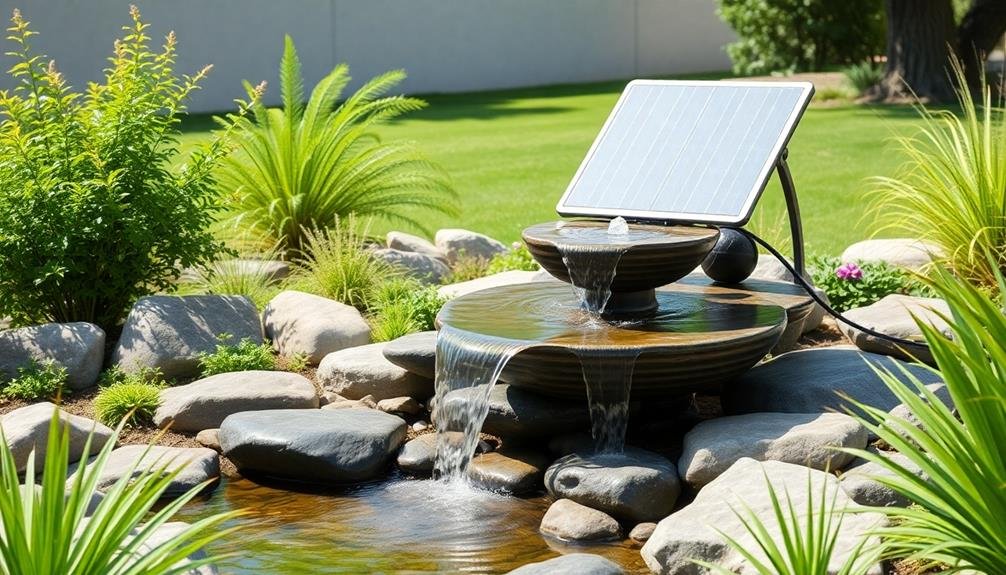
Harnessing the sun's energy, solar-powered fountains offer an eco-friendly and low-maintenance option for your backyard water feature. These fountains operate without electricity, relying on solar panels to power a small pump that circulates water. You'll save on energy costs while adding a soothing element to your outdoor space.
Installation is straightforward, as you don't need to worry about wiring or proximity to power outlets. Simply place the fountain in a sunny spot where it can receive direct sunlight for ideal performance. Many models come with battery backup, ensuring your fountain continues to run even on cloudy days or after sunset.
Solar-powered fountains come in various styles and sizes, from small tabletop versions to larger standalone designs. You can choose from traditional tiered fountains, modern sculptural pieces, or naturalistic rock formations. Some models even include LED lights for nighttime ambiance.
Maintenance is minimal, requiring only occasional cleaning and ensuring the solar panel remains unobstructed. During winter, you may need to store the fountain indoors to protect it from freezing temperatures.
With their eco-friendly design and low operating costs, solar-powered fountains are an excellent choice for environmentally conscious homeowners.
Rainwater Harvesting System
Another eco-friendly option for your backyard water feature is a rainwater harvesting system. This setup collects and stores rainwater from your roof, reducing your reliance on municipal water supplies and lowering your water bills.
You'll need gutters, downspouts, a storage tank, and a pump to create this system. Start by installing or modifying your gutters to direct water into downspouts. These downspouts will feed into a filtration system that removes debris before the water enters your storage tank.
Choose a tank size based on your local rainfall patterns and water needs. Underground tanks save space, while above-ground options are easier to maintain.
To use the collected water, you'll need a pump to distribute it to your water feature or for irrigation. Consider adding a UV filter or chlorination system to guarantee the water remains clean and safe. You can create a beautiful pond, waterfall, or stream using this harvested rainwater, providing a sustainable and cost-effective solution for your backyard oasis.
Remember to check local regulations regarding rainwater harvesting, as some areas have specific requirements or restrictions. Regular maintenance of your system will guarantee its longevity and efficiency.
Pondless Waterfall
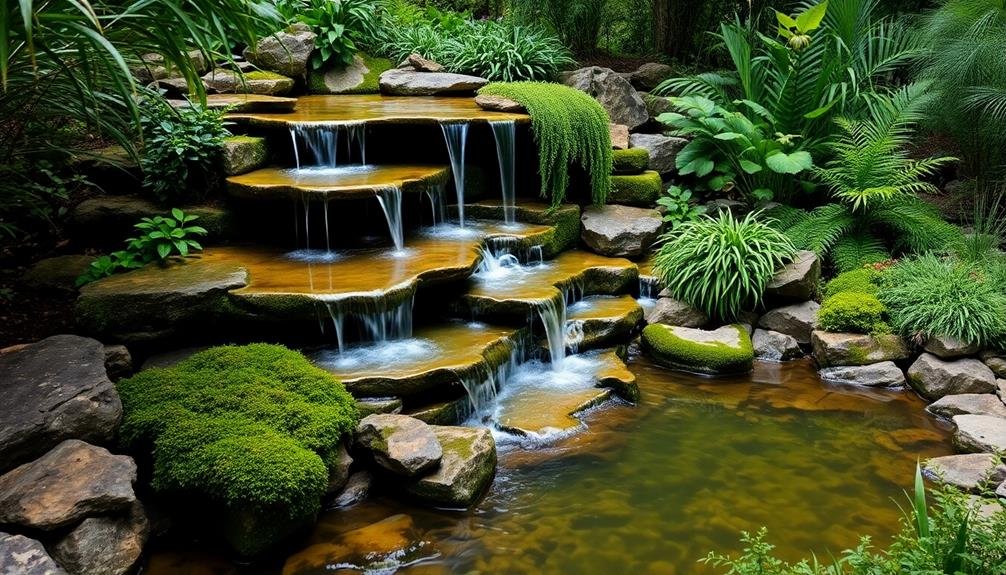
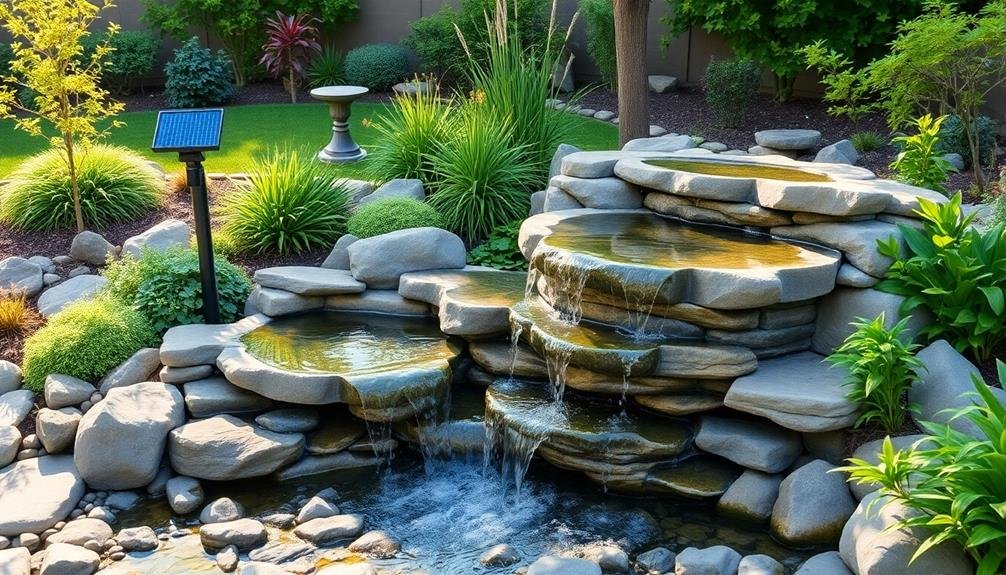
A pondless waterfall offers the soothing sound and visual appeal of flowing water without the maintenance demands of a traditional pond. This eco-friendly feature recirculates water through a hidden reservoir, creating a continuous flow that's both visually striking and energy-efficient.
You'll appreciate the pondless waterfall's versatility, as it can be scaled to fit any yard size. It's an excellent choice for small spaces or areas where safety is a concern, as there's no standing water. The system uses less water than a conventional pond, reducing your water consumption and bills.
To create your pondless waterfall, you'll need a pump, filter, reservoir, and decorative rocks. The pump circulates water from the underground reservoir to the top of the waterfall, where it cascades down over carefully arranged stones. This design minimizes evaporation and maintains water quality.
Maintenance is straightforward: periodically clean the filter, check the water level, and remove debris. You'll find that the pondless waterfall requires less upkeep than traditional water features, saving you time and effort while still enhancing your outdoor space with the tranquil sounds of flowing water.
Natural Swimming Pool
Natural swimming pools offer a chemical-free alternative to traditional pools, utilizing biological filtration systems.
You'll find these eco-friendly pools rely on native aquatic plants to purify the water naturally.
Chemical-Free Filtration System
For those seeking a chemical-free swimming experience, natural pools offer an eco-friendly alternative to traditional chlorinated ones.
These pools use biological filtration systems that mimic natural ecosystems to keep the water clean and clear. You'll enjoy swimming in water that's free from harsh chemicals while also creating a beautiful, sustainable feature in your backyard.
The filtration system in a natural pool typically consists of a regeneration zone filled with aquatic plants and beneficial microorganisms.
These work together to purify the water naturally. You'll need to dedicate about half of your pool's surface area to this zone, but it'll blend seamlessly with your landscaping.
Here's how a chemical-free filtration system works:
- Aquatic plants absorb excess nutrients from the water
- Beneficial bacteria break down organic matter
- Gravel and sand act as natural filters
- Water circulation guarantees even distribution of nutrients
Native Aquatic Plants
Native aquatic plants play an essential role in maintaining the health and beauty of your natural swimming pool. These plants not only provide aesthetic appeal but also contribute to the pool's ecosystem by filtering water, absorbing excess nutrients, and creating habitats for beneficial microorganisms.
When selecting native aquatic plants, consider your local climate and ecosystem. Choose a variety of species to create a diverse and balanced environment.
Floating plants like water lilies and duckweed help shade the water, reducing algae growth and maintaining cooler temperatures. Submerged plants such as hornwort and pondweed oxygenate the water and provide shelter for small aquatic life.
Marginal plants, including rushes and sedges, thrive along the pool's edges and help stabilize the soil. They also act as natural filters, removing pollutants from the water. To enhance their effectiveness, plant them in gravel-filled baskets or directly in a shallow shelf around the pool's perimeter.
Regularly maintain your aquatic plants by trimming overgrowth, removing dead foliage, and dividing them when necessary. This guarantees they continue to function at their best and prevents them from overwhelming your natural swimming pool's ecosystem.
Recycled Glass Water Wall
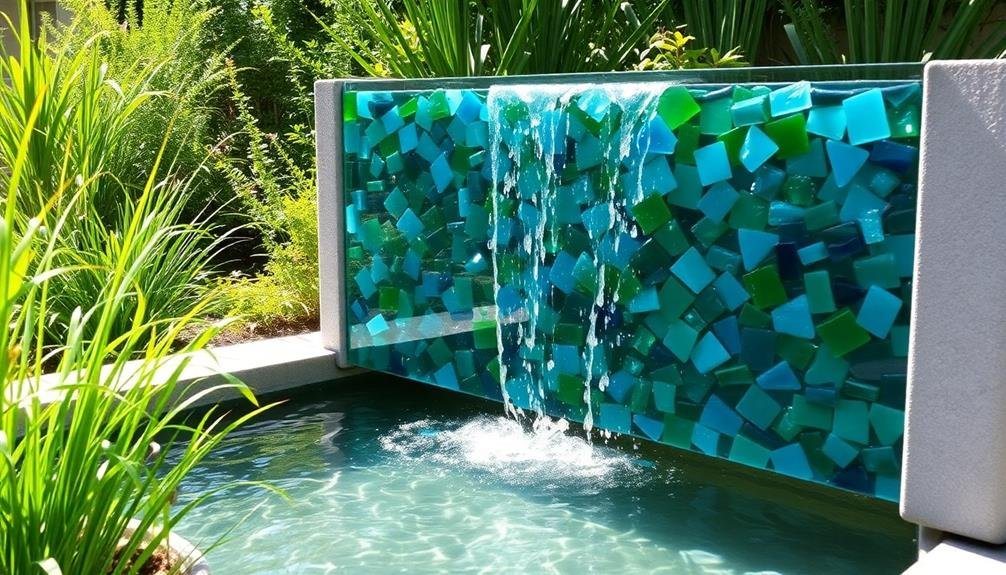
A stunning addition to any eco-conscious backyard, recycled glass water walls offer a unique and sustainable alternative to traditional water features. You'll create a mesmerizing focal point while repurposing materials that might otherwise end up in landfills.
These water walls use reclaimed glass pieces, often sourced from bottles, windshields, or other discarded glass products, to create a shimmering cascade of water.
To install a recycled glass water wall, you'll need:
- A sturdy frame or wall structure
- A water pump and reservoir system
- Recycled glass pieces in your chosen colors
- Waterproof adhesive to secure the glass
You can customize your water wall's size, shape, and color scheme to complement your backyard's aesthetic. The sound of water trickling over the glass creates a soothing atmosphere, while the reflective properties of the glass add depth and visual interest to your outdoor space.
Maintenance is relatively simple, requiring occasional cleaning and ensuring the pump remains in good working condition.
Wind-Powered Water Pump
Harnessing the power of the wind, a wind-powered water pump offers an eco-friendly and energy-efficient solution for your backyard water feature. This innovative system uses a small windmill to drive a pump that circulates water through your pond, fountain, or waterfall.
You'll find that wind-powered pumps come in various sizes and styles to suit different water feature needs. They're particularly effective in areas with consistent wind, but many models can operate in low-wind conditions too. The pump's capacity depends on wind speed, so you might want to take into account a hybrid system with solar backup for calm days.
Installing a wind-powered water pump is straightforward. You'll need to mount the windmill on a sturdy pole or tower, ensuring it's high enough to catch unobstructed wind. The pump itself is typically submerged in your water feature, connected to the windmill via a drive shaft or cables.
Maintenance is minimal, usually involving occasional lubrication and checking for debris. With no electricity costs and a long lifespan, a wind-powered water pump can greatly reduce your water feature's operating expenses while adding a unique, sustainable element to your backyard.
Bamboo Water Spout
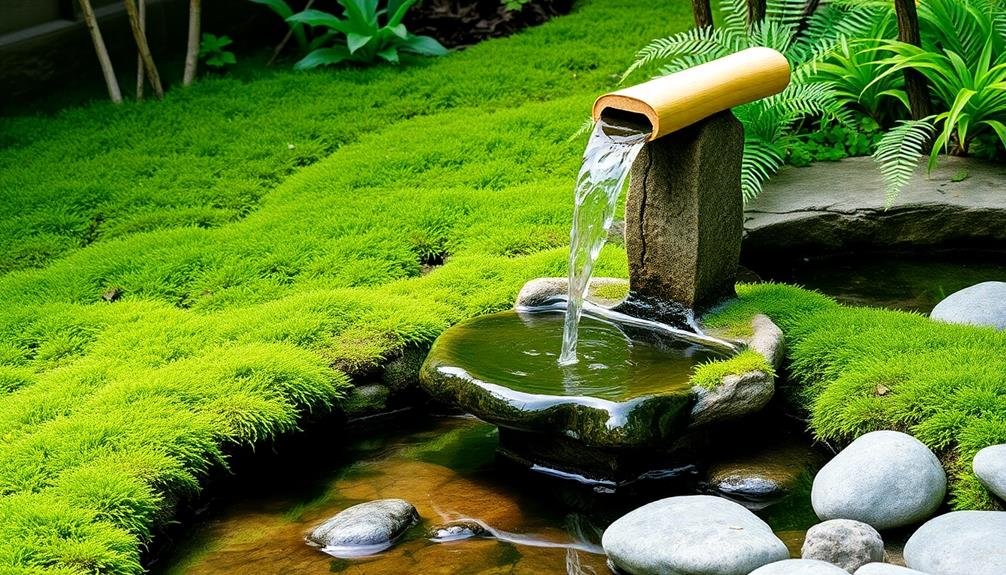
For a touch of zen-inspired elegance, consider incorporating a bamboo water spout into your eco-friendly backyard water feature. This natural and sustainable option adds a soothing sound and visual appeal while using minimal energy.
You'll find bamboo water spouts easy to install and maintain, making them perfect for DIY enthusiasts.
To create your bamboo water spout, you'll need:
- A bamboo pole
- A small submersible pump
- Flexible tubing
- A water basin or pond
Choose a bamboo pole with a diameter that complements your space. Hollow out one end to accommodate the tubing, which you'll connect to the submersible pump.
Place the pump in your water basin or pond, ensuring it's fully submerged. Position the bamboo spout at your desired angle and height, allowing water to flow gracefully back into the basin.
You can enhance your bamboo water spout by adding river rocks or plants around the base. This creates a more natural look and helps conceal the pump and tubing.
Remember to clean your spout regularly to prevent algae growth and maintain ideal water flow. With proper care, your bamboo water spout will provide a serene, eco-friendly focal point in your backyard for years to come.
LED-Lit Bubble Column
You'll love the tranquil ambiance created by an LED-lit bubble column in your backyard.
This energy-efficient feature illuminates your outdoor space at night while mesmerizing bubbles rise through the water, creating an enchanting visual display.
As a low-maintenance option, you won't need to worry about frequent upkeep, allowing you to simply enjoy the soothing atmosphere it provides.
Energy-Efficient Nighttime Illumination
LED-lit bubble columns offer a mesmerizing and energy-efficient solution for nighttime illumination in your backyard water feature.
These columns use low-wattage LED lights to create a stunning visual effect while consuming minimal energy. You'll enjoy the soothing ambiance they provide without worrying about high electricity bills.
To maximize energy efficiency and enhance the overall appeal of your LED-lit bubble column, consider the following tips:
- Use a timer to control when the lights turn on and off automatically
- Opt for color-changing LEDs to create different moods and atmospheres
- Install a dimmer switch to adjust the brightness as needed
- Choose solar-powered LED lights for even greater energy savings
Mesmerizing Bubbles Create Ambiance
Several LED-lit bubble columns can transform your backyard into an enchanting oasis. These mesmerizing features use minimal energy while creating a striking visual display. You'll find that bubble columns are surprisingly versatile, fitting seamlessly into various landscape designs.
LED-lit bubble columns work by pumping air through water-filled tubes, creating a constant stream of bubbles. The LED lights illuminate these bubbles, producing a hypnotic effect that's both calming and visually stunning. You can choose from a range of colors or opt for color-changing LEDs to suit your mood or occasion.
These eco-friendly water features are low-maintenance and cost-effective. They use less water than traditional fountains, as the water is continuously recycled within the column. You'll also appreciate their energy efficiency, as LED lights consume very little power.
Installing bubble columns is relatively simple. You can place them as standalone features or integrate them into existing ponds or water gardens. They're also great for small spaces, adding vertical interest without taking up much ground area.
With their soothing bubbling sound and striking visuals, LED-lit bubble columns offer a perfect blend of ambiance and eco-consciousness for your backyard retreat.
Low-Maintenance Water Feature
Building on the allure of LED-lit bubble columns, let's explore why they're an ideal low-maintenance water feature for your backyard.
These eco-friendly additions require minimal upkeep while providing a stunning visual element to your outdoor space. You'll appreciate their energy efficiency, as they use LED lights and a small pump to create a mesmerizing display.
LED-lit bubble columns are perfect for those who want a water feature without the hassle of traditional ponds or fountains. They're easy to install and can be placed almost anywhere in your yard.
You won't need to worry about frequent cleaning or water top-ups, as the sealed system prevents evaporation and keeps debris out.
Here's why LED-lit bubble columns are a low-maintenance dream:
- Sealed system requires infrequent water changes
- LED lights last for thousands of hours
- Small pump consumes minimal electricity
- No risk of algae growth or pest infestations
Greywater Irrigation Feature
A greywater irrigation feature offers an innovative way to recycle household water while maintaining a lush garden.
You'll be able to repurpose water from your washing machine, shower, and sinks to nourish your plants, reducing your overall water consumption and utility bills.
To set up a greywater system, you'll need to install a diverter valve on your home's plumbing to redirect water from approved sources.
You'll also want to create a distribution system in your garden, which can include mulch basins, swales, or subsurface drip irrigation.
When using greywater, it's essential to choose plant-friendly soaps and detergents that are free from harmful chemicals.
You'll also need to avoid using water from toilets or kitchen sinks, as these contain pathogens and grease that can harm your plants.
Eco-Friendly Koi Pond
While greywater systems focus on recycling household water, an eco-friendly koi pond offers a different approach to sustainable water features. You'll create a beautiful, living ecosystem that conserves water and energy while providing a serene backdrop to your outdoor space.
To build an eco-friendly koi pond, start by choosing a location that maximizes natural shade to reduce evaporation and algae growth.
Incorporate these elements for a sustainable koi pond:
- Solar-powered pump and filtration system
- Native aquatic plants for natural filtration
- Rainwater harvesting system to replenish water levels
- LED lighting for energy-efficient nighttime illumination
Use a pond liner made from recycled materials to prevent water loss through seepage. Install a bottom drain to make cleaning easier and more efficient.
Consider adding a small waterfall or stream to increase oxygenation naturally. Choose fish species that are well-suited to your local climate to minimize the need for additional heating or cooling.
Regularly test water quality to verify a healthy environment for your koi and other aquatic life. With proper planning and maintenance, your eco-friendly koi pond will become a sustainable, low-maintenance centerpiece in your backyard oasis.
Frequently Asked Questions
How Much Maintenance Do Eco-Friendly Water Features Typically Require?
You'll find eco-friendly water features generally require minimal maintenance. You'll need to clean them periodically, check water levels, and guarantee pumps are working. Some may need occasional algae removal or filter changes, but they're mostly low-maintenance.
Can These Features Be Installed in Small Urban Backyards?
Yes, you can install eco-friendly water features in small urban backyards. You'll find compact options like wall fountains, tabletop water gardens, or small pond kits that fit perfectly in limited spaces. They're designed to maximize impact in tight areas.
Are There Any Local Regulations to Consider Before Installing Water Features?
You'll need to check your local regulations before installing water features. They often vary by city or county. Contact your municipal planning office or homeowners' association to learn about permits, zoning laws, and water usage restrictions.
What's the Average Lifespan of Eco-Friendly Water Features?
You'll find that eco-friendly water features typically last 10-15 years with proper maintenance. However, some components may need replacement sooner. Solar pumps often last 2-5 years, while LED lights can function for 5-10 years.
How Do Eco-Friendly Water Features Impact Local Wildlife and Ecosystems?
Eco-friendly water features can positively impact local wildlife and ecosystems. You'll attract birds, butterflies, and beneficial insects. They provide drinking water and habitats for small animals. These features also help maintain moisture levels in your garden.
In Summary
You've now explored ten fantastic eco-friendly water features for your backyard. By choosing one of these options, you'll create a beautiful, sustainable oasis while keeping your water bills low. Whether you're drawn to the tranquility of a pondless waterfall or the practicality of a rainwater harvesting system, there's something here for every taste and budget. Don't wait – start planning your eco-friendly water feature today and transform your outdoor space into a green haven.




Leave a Reply