

Fuel cells offer reliable alternatives for home backup power. You'll find several types to evaluate: hydrogen fuel cells, solid oxide fuel cells (SOFCs), and methanol fuel cells. These options provide cleaner, more efficient power than traditional generators, with quiet operation and few moving parts. While initial costs can be high, fuel cells offer long-term savings and environmental benefits. They're safe when properly installed and maintained, with some types able to run on readily available fuels like natural gas or propane. As you explore these options, you'll discover how fuel cells can revolutionize your home's energy backup strategy.
Understanding Fuel Cell Technology
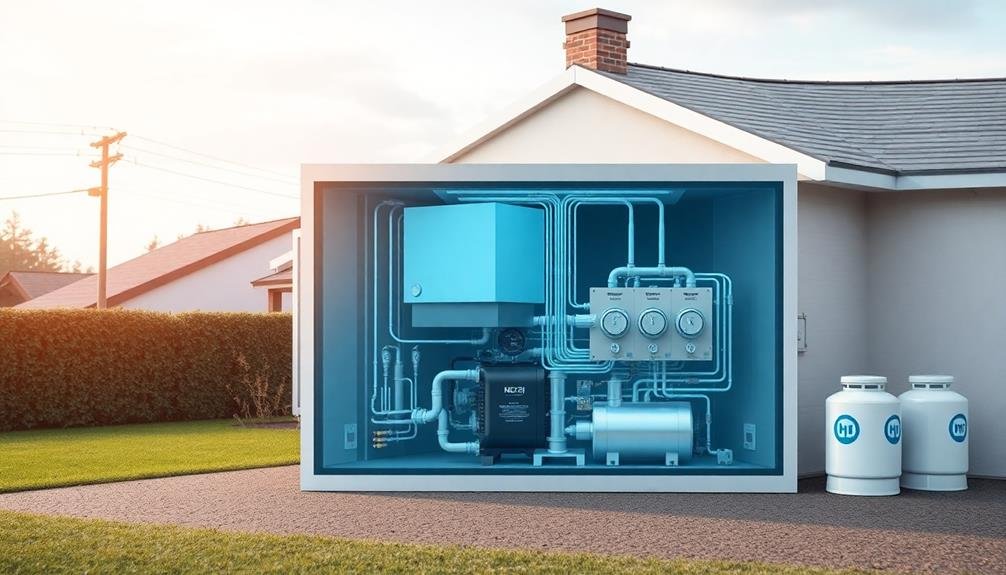
Innovation in energy technology has brought fuel cells to the forefront of home backup power solutions. These electrochemical devices convert chemical energy from fuel into electricity through a reaction with oxygen. Unlike traditional generators, fuel cells don't burn fuel, making them cleaner and more efficient.
You'll find various types of fuel cells, each using different electrolytes and fuels. The most common for residential use are Proton Exchange Membrane (PEM) fuel cells, which run on hydrogen. Solid Oxide Fuel Cells (SOFCs) can use natural gas or propane, making them more versatile for home applications.
Fuel cells offer several advantages over conventional backup power systems. They're quiet, have few moving parts, and can provide continuous power as long as fuel is supplied. They're also more environmentally friendly, producing only water and heat as byproducts when using hydrogen.
However, fuel cells aren't without challenges. Initial costs can be high, and fuel availability may be limited in some areas.
You'll need to take into account factors like power output, fuel type, and maintenance requirements when evaluating fuel cell options for your home backup needs.
Hydrogen Fuel Cells
When you're evaluating hydrogen fuel cells for home backup power, you're looking at one of the cleanest options available. These cells convert hydrogen into electricity through an electrochemical process, producing only water and heat as byproducts. They're efficient, quiet, and can provide continuous power as long as you have a hydrogen supply.
Hydrogen fuel cells offer several advantages for home backup:
- High energy density, allowing for longer runtime
- Quick refueling compared to battery recharging
- Scalable to meet various power needs
- Low maintenance requirements
- Potential for off-grid operation
You'll need to weigh the initial cost, which can be higher than traditional generators. However, operating costs may be lower over time. Safety is vital, as hydrogen is highly flammable. Proper storage and handling are essential.
You'll also need a reliable hydrogen source, which can be challenging in some areas. Despite these considerations, hydrogen fuel cells are gaining popularity for residential backup power.
They're particularly attractive if you're environmentally conscious and seeking a reliable, long-term solution. As technology advances and costs decrease, you may find hydrogen fuel cells becoming an increasingly viable option for your home backup needs.
Microbial Fuel Cells

Microbial fuel cells (MFCs) offer a unique approach to home backup power that you mightn't have considered. These devices harness the power of microorganisms to generate electricity from organic matter. In an MFC, bacteria break down waste materials, releasing electrons in the process. These electrons are then captured and used to produce an electrical current.
You'll find that MFCs have several advantages for home backup power. They're environmentally friendly, as they can use waste products as fuel. This means you're not only generating power but also reducing waste. MFCs operate silently and don't produce harmful emissions, making them ideal for residential use.
However, MFCs aren't without drawbacks. Their power output is currently lower than other fuel cell types, which limits their practical applications. You'll also need to maintain a stable bacterial culture, which can be challenging.
Despite these limitations, ongoing research is improving MFC efficiency and output. If you're interested in sustainable backup power, keep an eye on MFC developments.
While they're not yet widely available for home use, future advancements could make them a viable option for eco-conscious homeowners seeking reliable, clean energy alternatives.
Solid Oxide Fuel Cells
Solid oxide fuel cells (SOFCs) represent a robust and versatile option for home backup power. These high-temperature fuel cells operate at 600-1000°C, allowing them to use a variety of fuels, including natural gas, propane, and even biogas.
You'll find that SOFCs offer higher efficiency compared to other fuel cell types, with electrical efficiencies reaching up to 60%.
When considering SOFCs for your home backup system, keep in mind their key features:
- Long lifespan: SOFCs can operate continuously for up to 90,000 hours
- Fuel flexibility: They can run on multiple fuel sources
- High-quality waste heat: Ideal for cogeneration applications
- Low emissions: Produce considerably fewer pollutants than traditional generators
- Quiet operation: Perfect for residential areas with noise restrictions
SOFCs' ability to provide both electricity and heat makes them an attractive option for whole-house backup systems.
You'll benefit from their high efficiency and reliability during extended power outages. However, be aware that SOFCs have a longer start-up time compared to other fuel cell types, which may impact their suitability for immediate backup power needs.
Despite this limitation, their overall performance and versatility make them a compelling choice for homeowners seeking a dependable, long-term backup power solution.
Methanol Fuel Cells
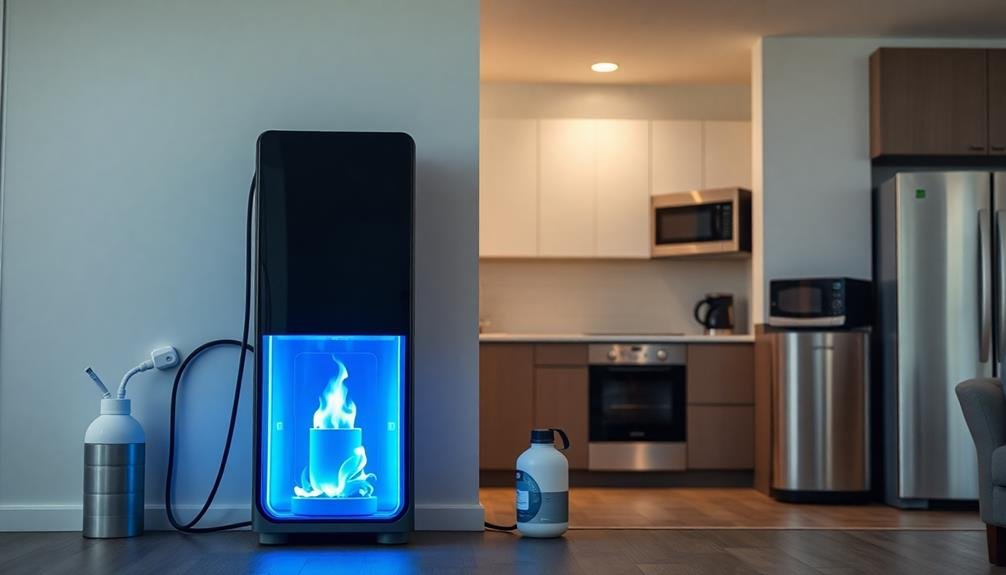
Methanol fuel cells offer a promising alternative for home backup power systems. These cells convert methanol directly into electricity through an electrochemical process, providing a reliable and efficient power source.
You'll find that methanol fuel cells have several advantages over other fuel cell types. One key benefit is the use of liquid methanol as fuel, which is easier to store and transport than hydrogen. This makes refueling and maintenance more straightforward for homeowners.
Methanol fuel cells also operate at lower temperatures than solid oxide fuel cells, reducing wear and tear on components. You can expect methanol fuel cells to provide consistent power output with quick start-up times.
They're also more compact and lightweight than many other fuel cell systems, making installation in your home easier. However, it's essential to recognize that methanol is toxic and flammable, so proper handling and storage are vital.
When considering methanol fuel cells for your home backup system, you'll need to weigh factors such as initial cost, fuel availability, and local regulations. While not as common as some alternatives, methanol fuel cells continue to improve in efficiency and affordability, making them an increasingly viable option for residential use.
Propane Fuel Cells
Another promising option for home backup power is propane fuel cells. These cells convert propane gas into electricity through an electrochemical process, offering a reliable and efficient power source for your home during outages.
Propane fuel cells are gaining popularity due to their clean operation and the widespread availability of propane.
When considering propane fuel cells for your home backup system, keep these key points in mind:
- They're more efficient than traditional generators, converting up to 45% of propane's energy into electricity
- Propane fuel cells operate quietly, making them ideal for residential areas
- They produce fewer emissions compared to diesel or gasoline generators
- You can connect them directly to your home's existing propane tank
- Most models provide continuous power output ranging from 1 to 5 kilowatts
Propane fuel cells offer several advantages over other backup power options. They're low-maintenance, have a long shelf life, and can operate continuously for extended periods.
You'll also appreciate their compact size and ease of installation. While initial costs may be higher than traditional generators, the long-term benefits and reliability make propane fuel cells an attractive choice for home backup power.
Natural Gas Fuel Cells
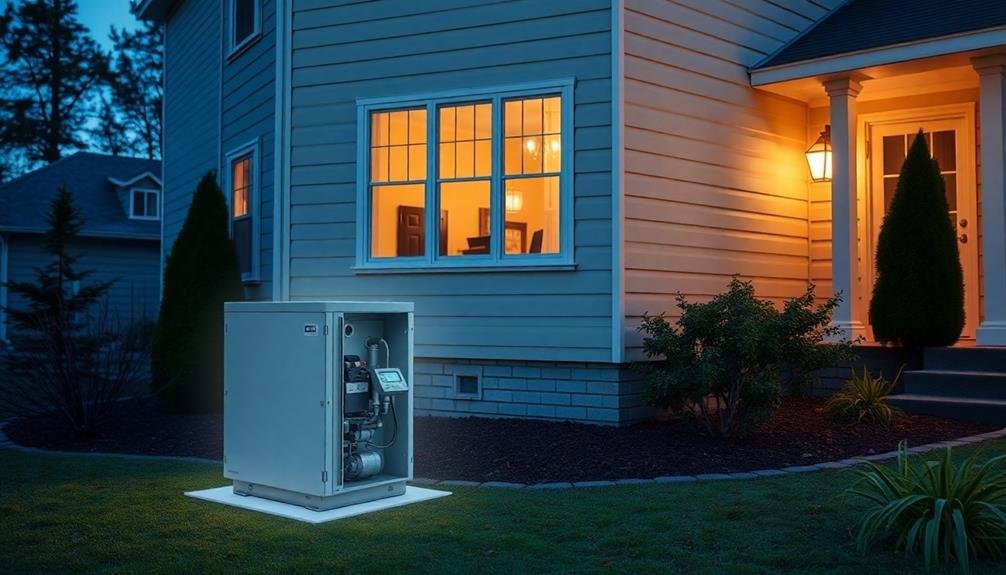
Natural gas powerhouses are gaining traction as reliable fuel cell alternatives for home backup systems. These fuel cells convert natural gas into electricity through an electrochemical process, providing a cleaner and more efficient energy source compared to traditional generators. You'll find that natural gas fuel cells offer several advantages for home backup power, including lower emissions, quieter operation, and reduced maintenance requirements.
When considering a natural gas fuel cell for your home, you'll want to evaluate its key features:
| Feature | Benefit | Consideration |
|---|---|---|
| Efficiency | Up to 60% conversion rate | Higher upfront cost |
| Emissions | Lower CO2 output | Natural gas availability |
| Reliability | Continuous operation | Professional installation |
Natural gas fuel cells can provide consistent power during outages, ranging from a few kilowatts for essential appliances to larger systems capable of powering entire homes. They're particularly suitable for areas with reliable natural gas infrastructure. You'll need to factor in the initial investment, which can be higher than traditional generators, but the long-term benefits often outweigh the costs. With proper maintenance, these fuel cells can operate efficiently for years, offering a dependable and eco-friendly solution for your home backup power needs.
Efficiency of Fuel Cell Systems
Efficiency stands at the forefront of fuel cell system benefits. When you're considering a backup power solution for your home, fuel cells offer impressive efficiency rates that surpass many traditional alternatives.
These systems convert chemical energy directly into electrical energy, bypassing the combustion process and reducing energy losses.
You'll find that fuel cell systems can achieve efficiency rates of up to 60% for electricity generation alone. When used in combined heat and power (CHP) applications, their overall efficiency can reach an astounding 85-90%.
This means you'll get more usable energy from your fuel source, leading to lower operating costs and reduced environmental impact.
Here are key efficiency advantages of fuel cell systems:
- Higher electrical efficiency compared to internal combustion engines
- Minimal energy loss during the conversion process
- Consistent performance across varying load conditions
- Quiet operation with no moving parts, reducing maintenance needs
- Potential for waste heat recovery in CHP applications
Cost Considerations for Home Installation

When considering fuel cell systems for home backup power, cost is a crucial factor to evaluate. You'll need to account for initial installation expenses, ongoing maintenance, and fuel costs. The upfront investment can be significant, typically ranging from $10,000 to $50,000, depending on the system's size and complexity.
Installation costs vary based on your home's existing infrastructure and the chosen fuel cell type. You may need to modify your electrical system or add fuel storage facilities. Ongoing expenses include regular maintenance, which can cost $200-$500 annually, and fuel costs, which depend on local prices and system efficiency.
Here's a breakdown of potential costs:
| Expense Type | Low-End | High-End |
|---|---|---|
| Installation | $10,000 | $50,000 |
| Annual Maintenance | $200 | $500 |
| Fuel (per kWh) | $0.10 | $0.30 |
To determine if a fuel cell system is cost-effective for your home, compare these expenses to your current energy costs and the price of alternative backup solutions. Consider factors like energy independence, reliability, and potential incentives or rebates that may offset initial costs.
Environmental Impact of Fuel Cells
When considering fuel cells for home backup power, you'll want to understand their environmental impact.
Fuel cells generally produce lower emissions than traditional generators, potentially improving local air quality.
However, you should also consider the resource consumption involved in fuel cell production and operation, including the sourcing and transportation of hydrogen or other fuels.
Emissions and Air Quality
Fuel cells stand out as an environmentally friendly option for home backup power, boasting notably lower emissions compared to traditional generators. They produce electricity through an electrochemical process, eliminating the need for combustion and greatly reducing harmful emissions.
When you choose a fuel cell for your home backup, you're contributing to improved air quality in your neighborhood.
Unlike gas or diesel generators, fuel cells emit only water vapor and a small amount of heat. This means you won't have to worry about:
- Carbon monoxide poisoning
- Particulate matter pollution
- Nitrogen oxide emissions
- Sulfur dioxide release
- Unpleasant odors
You'll notice a marked difference in air quality around your home when using a fuel cell. They're particularly beneficial in urban areas where air pollution is a concern.
Fuel cells also operate quietly, reducing noise pollution in your community. By choosing this clean energy alternative, you're not only ensuring your home's power supply but also protecting the environment and your neighbors' health.
Resource Consumption Considerations
Despite the clear advantages regarding emissions, fuel cells aren't without their environmental considerations. When evaluating fuel cells for home backup, you need to take into account their resource consumption, particularly water usage and the sourcing of hydrogen fuel.
Fuel cells require a steady supply of water to operate efficiently. While they don't consume as much water as traditional power plants, the water demand can still be significant, especially in areas prone to drought. You'll need to factor this into your decision, particularly if you live in a water-stressed region.
The production of hydrogen fuel also raises resource concerns. Currently, most hydrogen is derived from natural gas through a process called steam reforming, which consumes fossil fuels and produces carbon emissions. While green hydrogen production methods using renewable energy are emerging, they're not yet widely available or cost-effective for home use.
Additionally, take into account the materials used in fuel cell construction, such as platinum catalysts and specialized membranes. These components can be resource-intensive to produce and may pose challenges for recycling at the end of the fuel cell's life cycle.
Safety Measures for Home Use
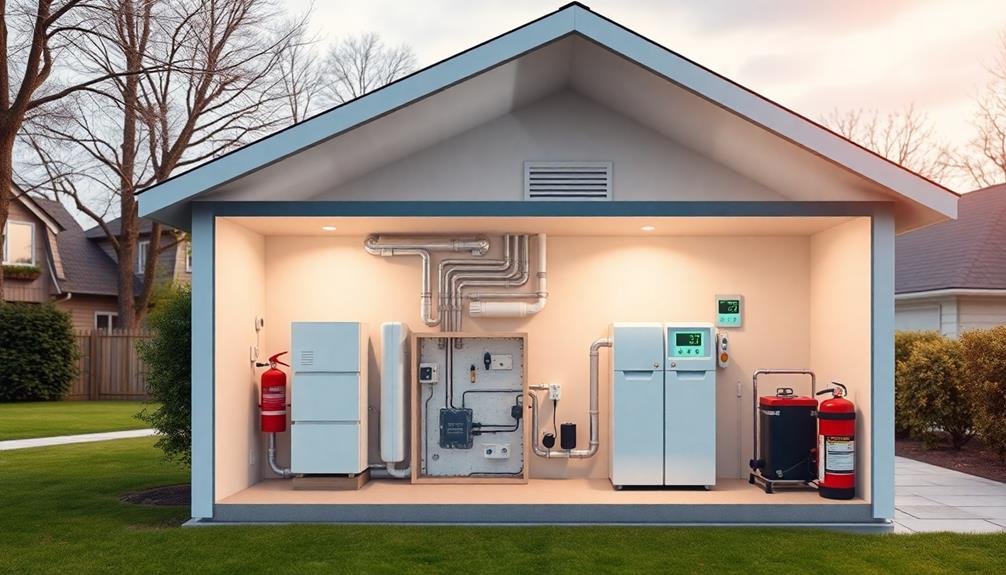
Safety consistently remains a top priority when integrating fuel cell alternatives into home backup systems. You'll need to follow strict guidelines and implement robust safety measures to guarantee the well-being of your household. Proper installation by certified professionals is vital, as they'll assure compliance with local building codes and safety standards.
Regular maintenance and inspections are essential to keep your fuel cell system operating safely. You should:
- Install carbon monoxide detectors near the fuel cell unit
- Secure proper ventilation in the area where the system is installed
- Keep flammable materials away from the fuel cell
- Have an emergency shut-off procedure in place
- Educate all household members on safety protocols
It's important to understand the specific safety requirements of your chosen fuel cell technology. For example, hydrogen fuel cells require special handling due to the flammable nature of hydrogen gas. You'll need to store hydrogen safely and have leak detection systems in place.
Solid oxide fuel cells, on the other hand, operate at high temperatures, necessitating proper insulation and cooling systems. By prioritizing safety and following manufacturer guidelines, you can confidently integrate fuel cell alternatives into your home backup system.
Comparing Fuel Cells to Generators
When comparing fuel cells to traditional generators for home backup power, you'll notice significant differences in noise levels and emissions.
Fuel cells operate quietly and produce minimal emissions, while generators can be noisy and release exhaust fumes.
You'll also find that fuel cells typically require less maintenance and have a longer lifespan than generators, potentially offering a more cost-effective solution in the long run.
Noise and Emissions
Noise pollution and harmful emissions are two major drawbacks of traditional generators that fuel cells effectively address.
When you're looking for a quieter, cleaner alternative for home backup power, fuel cells offer considerable advantages. Unlike generators, which can be loud and disruptive, fuel cells operate silently, making them ideal for residential areas with noise restrictions.
In terms of emissions, fuel cells produce only water vapor and heat as byproducts, greatly reducing your carbon footprint. Traditional generators, on the other hand, emit various pollutants, including carbon monoxide, nitrogen oxides, and particulate matter.
By choosing a fuel cell system, you'll contribute to better air quality and a healthier environment.
Here are key benefits of fuel cells regarding noise and emissions:
- Silent operation, suitable for any time of day or night
- Zero harmful emissions, only producing water vapor
- No risk of carbon monoxide poisoning
- Compliance with strict environmental regulations
- Reduced impact on local air quality
Maintenance and Longevity
Maintenance requirements and longevity are key factors to evaluate when choosing between fuel cells and traditional generators for home backup power.
Fuel cells typically require less maintenance than generators, as they've fewer moving parts. You'll find that fuel cells need periodic filter changes and occasional electrode replacements, usually every 5-10 years. In contrast, generators demand more frequent attention, including oil changes, filter replacements, and spark plug maintenance.
Longevity is another area where fuel cells often outperform generators. A well-maintained fuel cell can last 15-20 years or more, while most generators have a lifespan of 10-15 years. This extended lifespan can offset the higher initial cost of fuel cells. Additionally, fuel cells maintain their efficiency throughout their lifetime, whereas generators may experience decreased performance as they age.
When considering maintenance costs, fuel cells generally have lower long-term expenses. You won't need to store fuel or worry about it degrading over time, as is the case with generators.
However, it's important to factor in the cost of replacement parts for fuel cells, which can be more expensive than generator components.
Frequently Asked Questions
Can Fuel Cells Power an Entire Home During Extended Power Outages?
Yes, fuel cells can power your entire home during extended outages. They're reliable and efficient, providing continuous electricity as long as you have fuel. You'll need proper sizing and installation to guarantee they meet your home's energy demands.
Are There Any Government Incentives for Installing Fuel Cells in Homes?
Yes, you'll find government incentives for home fuel cells. You can benefit from federal tax credits, state rebates, and local programs. Check with your state energy office or utility company to learn about specific incentives in your area.
How Long Do Fuel Cells Typically Last Before Needing Replacement?
You'll find that fuel cells typically last 5-15 years before needing replacement. Their lifespan depends on factors like usage, maintenance, and type. With proper care, you can extend their life and maximize your investment in this technology.
Can Fuel Cells Be Integrated With Existing Solar Panel Systems?
Yes, you can integrate fuel cells with your existing solar panel system. They'll complement each other nicely, providing a reliable backup power source. You'll need to verify compatibility and proper installation for ideal performance and safety.
Are There Portable Fuel Cell Options for Camping or RV Use?
Yes, you'll find portable fuel cell options for camping and RV use. They're compact, quiet, and provide clean power. You can choose from various sizes and fuel types, including propane and methanol-powered models for your outdoor adventures.
In Summary
You've explored various fuel cell options for home backup power, from hydrogen to methanol systems. Each has its pros and cons regarding cost, efficiency, and environmental impact. As you consider your choices, weigh the installation expenses against long-term benefits. Don't forget to factor in safety measures and local regulations. While fuel cells offer promising alternatives to traditional generators, they're still evolving. Stay informed about new developments to make the best decision for your home's energy needs.

Leave a Reply