
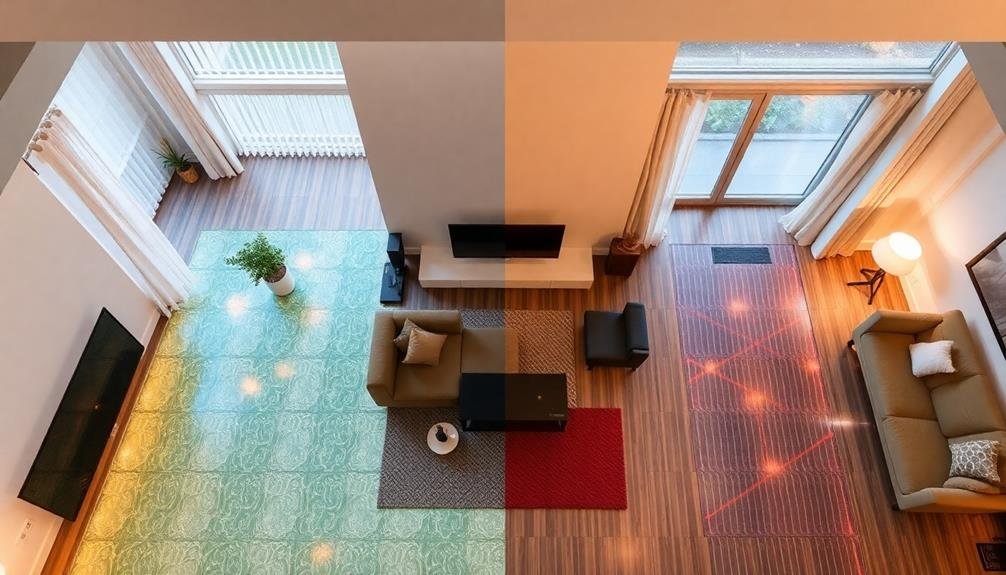
When choosing radiant floor heating, you'll find both hydronic and electric systems offer excellent options. Hydronic systems circulate heated water through pipes, ideal for larger spaces and new construction. They're energy-efficient and compatible with various heat sources. Electric systems use cables or mats, perfect for smaller areas or retrofits. They're easier to install but have higher operating costs. Your choice depends on factors like home size, budget, and energy costs. Consider tile, stone, or engineered hardwood for superior heat transfer. With proper zoning and controls, you can maximize comfort and efficiency. Exploring each option's pros and cons will help you make the best decision for your home.
Hydronic Radiant Floor Heating Systems
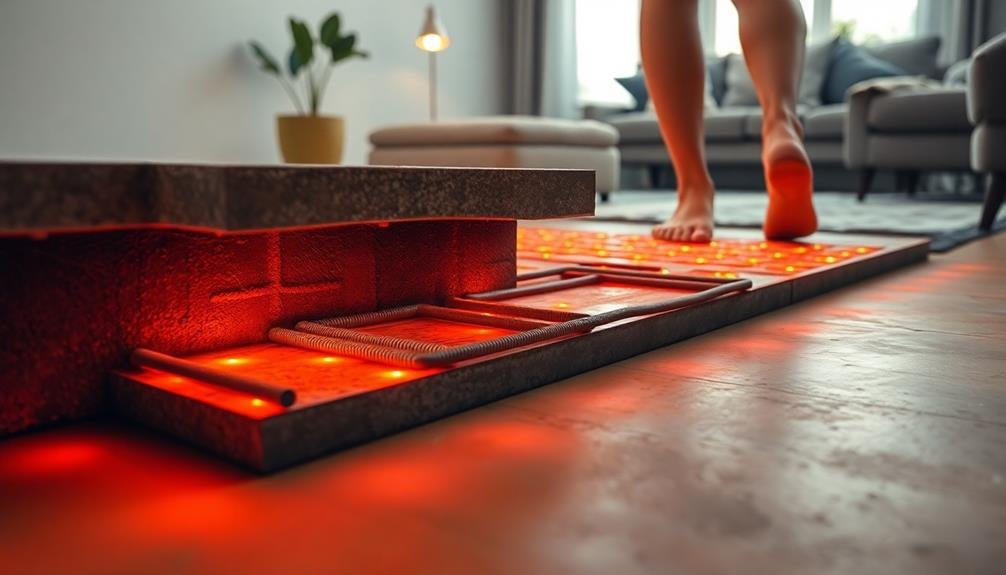
Hydronic radiant floor heating systems stand out as one of the most efficient and comfortable options for warming your home. They work by circulating heated water through a network of pipes installed beneath your floor. As the warm water flows, it radiates heat upward, creating an even and cozy temperature throughout the room.
You'll find that hydronic systems are highly energy-efficient, as water retains heat better than air. This means lower energy bills and a reduced carbon footprint. They're particularly well-suited for larger spaces or whole-house heating.
Installation can be more complex and costly upfront, but the long-term savings often outweigh initial expenses. These systems are compatible with various heat sources, including boilers, heat pumps, and solar water heaters.
This flexibility allows you to choose the most cost-effective or environmentally friendly option for your needs. Hydronic radiant heating also operates silently and doesn't circulate dust or allergens, making it ideal for those with respiratory sensitivities.
When considering hydronic radiant floor heating, factor in your home's structure, existing heating system, and local climate. While it's an excellent choice for many, professional assessment guarantees it's the right fit for your specific situation.
Electric Radiant Floor Heating Systems
Unlike their hydronic counterparts, electric radiant floor heating systems offer a simpler installation process and greater flexibility for targeted heating. These systems use electric cables or mats installed beneath your flooring to generate warmth.
You'll find they're particularly suitable for smaller areas or rooms you don't use frequently, like bathrooms or home offices.
Electric radiant heating is easier to install in existing homes, as it doesn't require the extensive piping of hydronic systems. You can often lay the heating elements directly over your existing subfloor.
However, be aware that operating costs for electric systems are typically higher than hydronic ones due to electricity prices.
One advantage of electric systems is their quick response time. You'll feel the warmth faster than with hydronic heating. They're also maintenance-free, with no boilers or pumps to service.
When choosing an electric system, consider the wattage per square foot to guarantee adequate heating for your space. Remember to factor in your local electricity rates when calculating long-term costs.
While the initial investment may be lower, higher operating expenses could offset this over time.
Installation Costs and Considerations
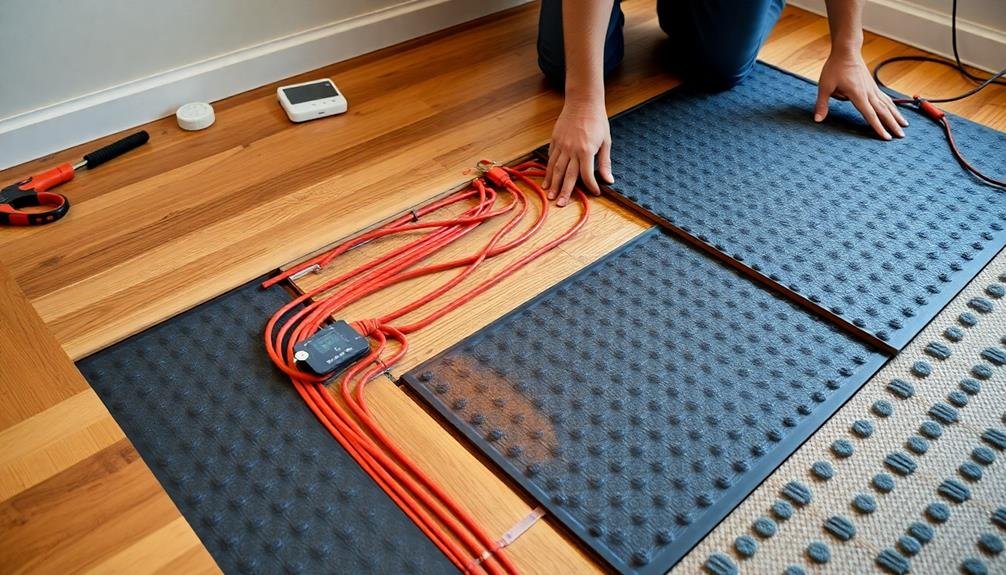
When considering radiant floor heating, installation costs and practicalities play a key role in your decision-making process.
Electric systems are generally less expensive to install, especially in smaller areas or during renovations. However, hydronic systems, while pricier upfront, can be more cost-effective for larger spaces or new construction.
Installation complexity varies between the two types. Electric systems are typically easier to install, often requiring less invasive work. Hydronic systems, on the other hand, need more extensive planning and may require a professional HVAC technician for installation.
Consider these factors when weighing your options:
- Floor height: Electric systems add minimal height, while hydronic systems may require more space.
- Subfloor compatibility: Verify your existing subfloor can support the chosen system.
- Energy costs: Compare local electricity and gas prices to determine long-term operating expenses.
- Home's insulation: Proper insulation is essential for maximizing efficiency in both systems.
Energy Efficiency Comparison
Both radiant floor heating systems offer impressive energy efficiency, but they differ in key aspects. Hydronic systems typically provide higher efficiency in larger spaces due to their ability to maintain consistent temperatures with less energy input. You'll find they're particularly effective when paired with high-efficiency boilers or heat pumps.
Electric systems, while generally less efficient overall, can be more cost-effective for smaller areas or spot heating. They're also easier to zone, allowing you to heat only occupied rooms. However, their operating costs may be higher in regions with expensive electricity.
Here's a comparison of key energy efficiency factors:
| Factor | Hydronic | Electric |
|---|---|---|
| Energy Source | Versatile | Electricity only |
| Heat Distribution | Even, consistent | Quick, localized |
| Operating Costs | Lower long-term | Higher in most cases |
| Zoning Capability | Limited | Excellent |
| Efficiency in Large Spaces | Superior | Less efficient |
When choosing between hydronic and electric radiant floor heating, consider your home's size, layout, and local energy costs. Both systems can greatly reduce your overall energy consumption compared to forced-air heating, but the best choice depends on your specific needs and circumstances.
Maintenance Requirements
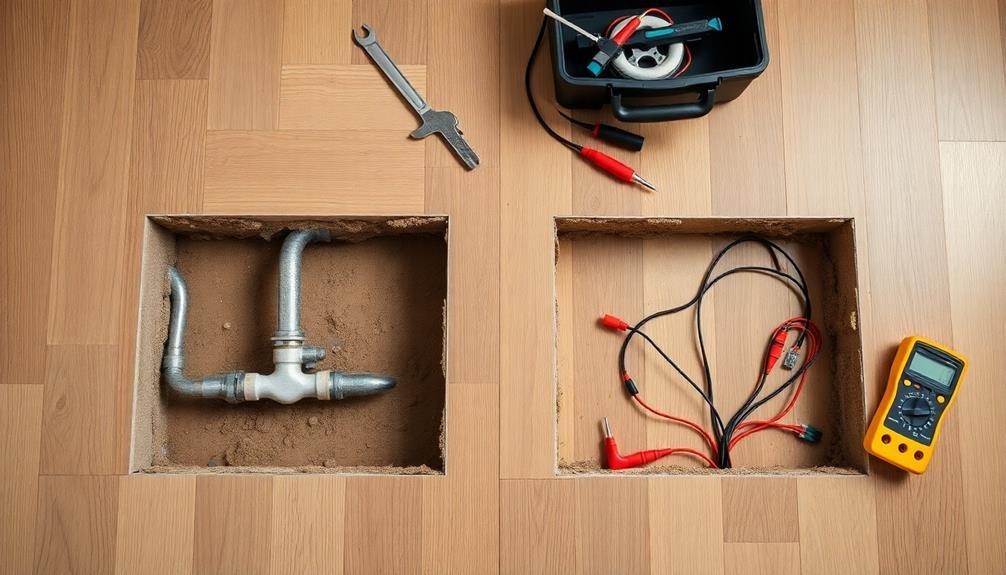
You'll find that radiant floor heating systems require minimal maintenance compared to traditional heating methods.
Regular cleaning of your floors and annual system inspections are typically sufficient to keep the system running smoothly.
It's important to follow manufacturer guidelines for routine cleaning procedures and schedule professional inspections to guarantee peak performance and longevity of your radiant heating system.
Routine Cleaning Procedures
How often should you clean your radiant floor heating system? While radiant floors require minimal maintenance, regular cleaning helps maintain efficiency and prolong the system's lifespan.
For both hydronic and electric systems, you'll want to keep the floor surface clean and free from debris that could interfere with heat distribution.
Here's a simple routine cleaning procedure for your radiant floor:
- Sweep or vacuum the floor surface weekly to remove dust, dirt, and debris.
- Mop the floor with a damp cloth or mop monthly, using a mild, non-abrasive cleaner suitable for your specific flooring material.
- Inspect visible components of the system, such as thermostats or manifolds, quarterly for signs of damage or wear.
- Schedule an annual professional inspection to verify all components are functioning correctly and to address any potential issues.
For hydronic systems, you'll also need to check the boiler pressure and bleed air from the system as needed, typically once a year.
Electric systems don't require these additional steps.
Remember to avoid using harsh chemicals or abrasive cleaning tools that could damage your flooring or the heating elements beneath.
System Inspection Frequency
Regular system inspections are essential for maintaining the efficiency and longevity of your radiant floor heating system.
For hydronic systems, you should schedule professional inspections annually. During these checks, a technician will examine the boiler, pump, valves, and tubing for signs of wear or damage. They'll also test the system's pressure and guarantee proper fluid levels.
Electric radiant floor heating systems typically require less frequent inspections. You can often perform visual checks yourself every two to three years, looking for any signs of damage to the floor surface or heating elements. However, it's wise to have a professional electrician inspect the system every five years to confirm all electrical components are functioning correctly.
For both types of systems, you should monitor your energy bills and heating performance regularly. If you notice unexpected increases in energy consumption or decreases in heating efficiency, it may be time for an unscheduled inspection.
Compatibility With Flooring Materials
When considering radiant floor heating, you'll need to choose flooring materials that work well with the system.
Different flooring types have varying levels of compatibility and heat conductivity, which can affect the overall efficiency of your radiant heating.
You should carefully evaluate options like tile, stone, hardwood, and laminate to guarantee they align with your heating goals and aesthetic preferences.
Suitable Flooring Types
Compatibility is key when choosing flooring for radiant heat systems. You'll want to select materials that conduct heat efficiently and won't warp or crack under temperature changes.
Generally, hard surfaces work best with radiant heating, as they allow for better heat transfer and distribution throughout your space.
Here are four suitable flooring types for radiant heat systems:
- Tile and stone: These materials are excellent conductors of heat and can withstand temperature fluctuations.
- Polished concrete: It's a durable option that pairs well with radiant heating and offers a sleek, modern look.
- Engineered hardwood: Unlike solid hardwood, engineered wood is less prone to shrinking and expanding with temperature changes.
- Luxury vinyl plank (LVP): A cost-effective choice that's compatible with radiant heat and offers various design options.
While these flooring types work well, you should avoid thick carpets or rugs, as they can insulate the floor and reduce heat transfer.
If you're set on carpet, opt for low-pile varieties and use them sparingly.
Always consult with your radiant heating installer and flooring manufacturer to verify compatibility and proper installation techniques for your specific system.
Material Compatibility Considerations
In light of the various flooring options available, it's crucial to take into account material compatibility when installing radiant floor heating. Different materials react differently to heat, so you'll need to choose wisely to guarantee peak performance and longevity.
For hydronic systems, you'll find that most flooring types work well. Ceramic and porcelain tiles are excellent conductors of heat and can withstand temperature fluctuations. Natural stone, like marble or slate, also performs admirably.
Engineered hardwood is a good choice, but you should avoid solid hardwood as it's prone to warping.
With electric systems, you've got more flexibility. They work well with tile, stone, and laminate flooring. Carpet can be used, but it's less efficient as it acts as an insulator.
Vinyl flooring is compatible, but verify it's rated for use with radiant heating to prevent discoloration or off-gassing.
For both systems, always check the manufacturer's guidelines for maximum temperature ratings. Some materials, like certain types of vinyl or engineered wood, may have specific temperature limits.
Zoning and Temperature Control Options

Zoning and temperature control options bring out the best in radiant floor heating systems. They allow you to customize heating for different areas of your home, maximizing comfort and energy efficiency.
With both hydronic and electric systems, you can create separate zones controlled by individual thermostats. This lets you heat only the rooms you're using and maintain different temperatures in various parts of your house.
Advanced control systems offer even more flexibility:
- Smart thermostats learn your habits and adjust temperatures automatically
- Wi-Fi-enabled controls allow you to manage your heating remotely
- Programmable timers let you set different temperatures for day and night
- Occupancy sensors detect when a room is in use and adjust heating accordingly
For hydronic systems, you can use mixing valves to regulate water temperature, providing precise control over heat output.
Electric systems often come with built-in temperature sensors in each heating mat or cable, allowing for accurate room-by-room control.
Some systems also integrate with home automation platforms, giving you seamless control over your entire home's climate.
Frequently Asked Questions
Can Radiant Floor Heating Be Installed in Existing Homes?
Yes, you can install radiant floor heating in existing homes. It's possible with both electric and hydronic systems. You'll need to remove existing flooring, add insulation, and lay the heating elements before reinstalling the floor covering.
How Long Does Radiant Floor Heating Typically Last Before Needing Replacement?
You'll be pleased to know that radiant floor heating systems are incredibly durable. With proper maintenance, they can last 20-35 years. Electric systems often outlast hydronic ones, but both offer long-term heating solutions for your home.
Are There Any Health Concerns Associated With Radiant Floor Heating Systems?
You'll be pleased to know that radiant floor heating systems don't pose significant health risks. They're safe, clean, and don't circulate dust or allergens. However, guarantee proper installation to avoid potential electrical or water-related issues.
Can Radiant Floor Heating Be Used as the Sole Heating Source?
Yes, you can use radiant floor heating as your sole heat source. It's efficient and comfortable, but you'll need to guarantee proper insulation and system sizing. Consider your climate and home's specific needs when making this decision.
Is Radiant Floor Heating Suitable for Homes in Extremely Cold Climates?
Yes, radiant floor heating can be suitable for extremely cold climates. You'll need a well-insulated home and a properly designed system. It's efficient and provides consistent warmth, but you may want a backup heat source for extreme conditions.
In Summary
You've explored the top radiant floor heating options, considering both hydronic and electric systems. You're now equipped to weigh installation costs, energy efficiency, maintenance needs, and compatibility with your flooring. Don't forget to factor in zoning capabilities and temperature control features. Whether you choose hydronic or electric, you'll enjoy the comfort of warm floors. Consider your specific needs and budget to make the best choice for your home's radiant heating system.


Leave a Reply