

Choosing the right micro-hydro turbine is vital for maximizing your clean energy production and cost savings. It guarantees you harness your water resource efficiently, whether you have high head with low flow or vice versa. The correct turbine type will optimize power output, reduce maintenance needs, and minimize environmental impact. It's important to take into account site-specific factors, local regulations, and integration with existing power systems. By selecting the appropriate turbine, you'll achieve a faster return on investment and long-term reliability. Understanding the nuances of different turbine types and their applications can greatly enhance your micro-hydro system's performance and sustainability.
Understanding Micro-Hydro Power Systems

Many homeowners and communities are turning to micro-hydro power systems as a sustainable energy solution. These systems harness the power of flowing water to generate electricity, offering a reliable and eco-friendly alternative to traditional power sources. Unlike large-scale hydroelectric dams, micro-hydro systems are designed for smaller waterways and can be implemented on a local level.
To understand micro-hydro power, you'll need to grasp a few key concepts. First, the system relies on the flow rate and head (vertical drop) of water to determine its potential power output. You'll also need to take into account the turbine type, generator, and control systems.
Micro-hydro systems typically produce between 5 and 100 kilowatts of electricity, making them suitable for powering individual homes or small communities.
When properly designed and installed, these systems can provide a continuous source of clean energy with minimal environmental impact. They're often more cost-effective than solar or wind power in suitable locations, as they can operate 24/7 and require less maintenance.
Assessing Your Water Resource
To choose the right micro-hydro turbine, you'll need to assess your water resource thoroughly.
Start by measuring the water flow rate and determining the available head, which are essential factors in turbine selection.
Don't forget to evaluate seasonal variations in your water source, as these can notably impact your system's performance throughout the year.
Measure Water Flow Rate
When evaluating your water resource for a micro-hydro system, accurately measuring the flow rate is vital. You'll need to determine the volume of water passing through a specific point in your stream or river over a given time period.
There are several methods you can use to measure flow rate, depending on the size of your water source and available equipment. For smaller streams, you can use the bucket method. Simply time how long it takes to fill a container of known volume.
Alternatively, the float method involves measuring the time it takes for a buoyant object to travel a set distance downstream. For larger water sources, you might need more sophisticated tools like a flow meter or weir.
It's important to measure flow rate during different seasons, as it can vary greatly throughout the year. Take multiple measurements over several months to get a thorough understanding of your water resource's potential.
Don't forget to account for environmental factors like rainfall patterns and drought periods. By accurately measuring your water flow rate, you'll be better equipped to choose the right micro-hydro turbine and estimate your system's potential power output.
Determine Available Head
The next essential step in evaluating your water resource is determining the available head. Head refers to the vertical distance between your water source and the turbine location. It's a significant factor in calculating potential power output and selecting the right turbine type.
To measure head, you'll need to use one of several methods. The simplest is the water-filled tube method, where you use a long, clear hose filled with water to measure elevation change. For more accurate results, consider using a surveyor's transit or laser level. If you're tech-savvy, GPS devices or smartphone apps can also provide reasonably accurate measurements.
Remember, the greater the head, the more potential energy your system can harness. High-head systems (over 100 feet) can generate significant power with relatively low flow rates, while low-head systems (under 10 feet) require higher flow rates to produce the same output.
Don't forget to account for pipe friction losses when calculating your net head. Longer pipe runs and smaller diameters will reduce your available head, so factor this into your calculations to guarantee accurate power estimates and proper turbine selection.
Evaluate Seasonal Variations
Throughout the year, your water resource's flow rate can fluctuate dramatically. To choose the right micro-hydro turbine, you'll need to assess these seasonal variations. Start by collecting flow data for at least one full year, ideally longer. This will help you understand your stream's behavior during different seasons and weather conditions.
Pay close attention to periods of low flow, typically during dry seasons or droughts. These times will determine your system's minimum power output. Conversely, note high flow periods, often during spring runoff or rainy seasons. This information will help you size your turbine and design overflow systems to protect your equipment.
Don't forget to contemplate extreme events like floods or prolonged droughts. These can impact your system's performance and longevity. If possible, consult local weather records or speak with long-time residents to gain insight into historical patterns.
Types of Micro-Hydro Turbines
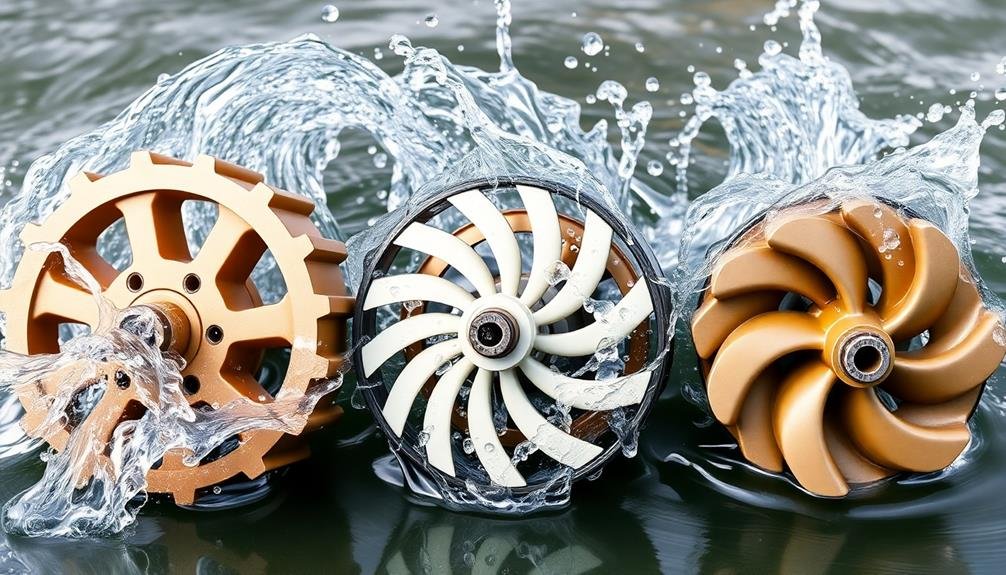
When selecting a micro-hydro turbine, you'll encounter three main types: impulse turbines, reaction turbines, and crossflow turbines.
Each type has unique characteristics that make it suitable for different water flow conditions and head heights.
Understanding these turbine types will help you choose the most efficient option for your specific micro-hydro project.
Impulse Turbines
Impulse turbines, a popular choice for micro-hydro systems, harness the kinetic energy of fast-moving water to generate electricity.
These turbines are ideal for high-head, low-flow sites, making them perfect for many residential and small-scale applications. You'll find that impulse turbines are efficient, reliable, and require minimal maintenance, which is why they're often the go-to option for micro-hydro enthusiasts.
When considering an impulse turbine for your system, you'll encounter three main types:
- Pelton wheel: Best for high-head, low-flow sites
- Turgo turbine: Suitable for medium-head sites with higher flow rates
- Cross-flow turbine: Ideal for low-head, high-flow situations
Each type has its unique advantages, so you'll need to choose based on your specific site conditions.
Impulse turbines work by directing a jet of water onto specially designed buckets or blades, which spin a shaft connected to a generator. This simple yet effective design guarantees high efficiency and reliability.
You'll appreciate the turbine's ability to handle variations in water flow, making it adaptable to changing conditions throughout the year.
Reaction Turbines
Reaction turbines stand out from their impulse counterparts in the world of micro-hydro power generation. These turbines operate by utilizing the pressure of flowing water, rather than the water's kinetic energy. As water passes through the turbine's curved blades, it causes them to spin, converting hydraulic energy into mechanical power.
You'll find reaction turbines are best suited for sites with lower head heights but higher flow rates. They're typically more efficient than impulse turbines in these conditions, making them ideal for rivers or streams with a gradual slope.
The most common types of reaction turbines you'll encounter are Francis, Kaplan, and propeller turbines.
Francis turbines are versatile and can handle a wide range of head heights and flow rates. Kaplan turbines, with their adjustable blades, excel in low-head, high-flow situations. Propeller turbines are simpler and less expensive but have fixed blades, limiting their efficiency across varying flow conditions.
When choosing a reaction turbine, you'll need to evaluate your site's specific characteristics, including head height, flow rate, and seasonal variations. These factors will help you determine which type of reaction turbine will provide the best performance and efficiency for your micro-hydro system.
Crossflow Turbines
Crossflow turbines, also known as Banki-Michell turbines, offer a unique solution for micro-hydro power generation. These turbines are designed to handle a wide range of flow rates and head heights, making them versatile for various site conditions.
You'll find that crossflow turbines are particularly effective in low-head situations, typically between 3 and 200 meters.
One of the key advantages of crossflow turbines is their self-cleaning design. As water passes through the turbine blades twice, debris is often flushed out, reducing maintenance needs. You'll appreciate this feature if you're dealing with water sources that carry sediment or small particles.
When considering a crossflow turbine for your micro-hydro project, keep these points in mind:
- Efficiency: Crossflow turbines maintain high efficiency across a broad range of flow rates.
- Durability: Their simple design makes them less prone to wear and tear.
- Cost-effectiveness: They're often more affordable than other turbine types, especially for small-scale projects.
You'll find that crossflow turbines are an excellent choice for community-based projects or remote locations where simplicity and reliability are essential.
Their ability to operate effectively with partial flows also makes them suitable for seasonal water sources.
Calculating Power Output Potential
A micro-hydro system's potential power output is essential to determine before selecting a turbine. You'll need to calculate the available power based on two key factors: head (vertical drop) and flow rate. The formula for theoretical power output is:
Power (watts) = Head (meters) x Flow (liters/second) x Gravity (9.81 m/s²) x Efficiency
Efficiency typically ranges from 60% to 90%, depending on the turbine type and system design. To accurately measure head, use a topographic map or altimeter. For flow rate, employ a flow meter or estimate using the float method in a stream section.
Here's a quick reference table for estimating power output:
| Head (m) | Flow (L/s) | Efficiency | Power (W) |
|---|---|---|---|
| 5 | 10 | 70% | 343 |
| 10 | 20 | 75% | 1,472 |
| 15 | 30 | 80% | 3,533 |
| 20 | 40 | 85% | 6,669 |
| 25 | 50 | 90% | 11,036 |
Site-Specific Considerations
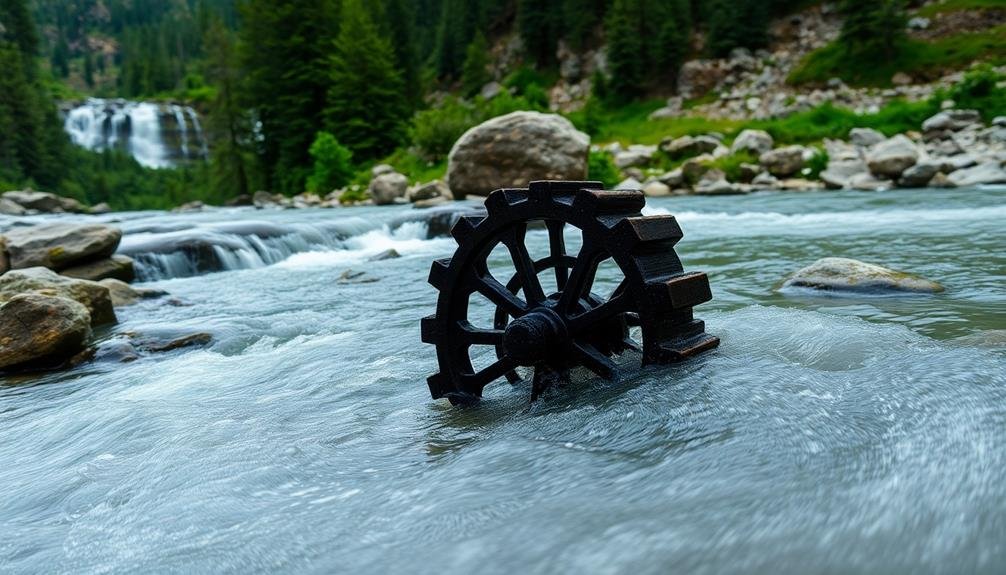
When selecting a micro-hydro turbine, you'll need to contemplate several site-specific factors that can greatly impact your system's performance and longevity.
First, consider the water source's characteristics, including flow rate, head height, and seasonal variations. These elements will determine the type and size of turbine that's most suitable for your location.
Next, evaluate the terrain and accessibility of your site. You'll want to assess:
- The distance between the water source and your power house
- Any obstacles or elevation changes along the pipeline route
- The ease of transporting equipment and materials to the installation site
Don't forget to factor in environmental considerations. You'll need to comply with local regulations and minimize the impact on aquatic ecosystems. This may involve installing fish screens or ensuring a minimum flow rate downstream.
Lastly, think about your energy needs and future expansion plans. Choose a turbine that can meet your current demand while allowing for potential growth.
Environmental Impact and Regulations
While micro-hydro turbines are generally regarded as a clean energy source, they can still have environmental impacts that you'll need to address. You'll have to take into account effects on local aquatic ecosystems, water quality, and sediment transport. Be prepared to conduct environmental assessments and obtain necessary permits before installation.
Regulations vary by location, but you'll typically need to comply with local, state, and federal laws. These may include water rights, fish passage requirements, and environmental protection standards. It's essential to research and understand these regulations early in your planning process.
Here's a quick overview of common environmental considerations:
| Impact Area | Potential Issues | Mitigation Strategies |
|---|---|---|
| Fish | Migration disruption | Fish ladders, screens |
| Water Quality | Temperature changes | Monitoring, flow management |
| Erosion | Altered sediment flow | Sediment bypasses, bank stabilization |
Cost and Return on Investment

Three key factors influence the cost and return on investment for a micro-hydro turbine system: initial installation expenses, ongoing maintenance costs, and energy output potential.
When considering the financial aspects of your micro-hydro project, you'll need to weigh these factors carefully.
Initial installation costs can vary widely depending on your site's characteristics and the turbine type you choose. You'll typically spend between $1,000 and $5,000 per kilowatt of capacity.
However, don't let this deter you; micro-hydro systems often have a faster payback period compared to other renewable energy sources.
To maximize your return on investment, focus on:
- Optimizing your site's potential by carefully evaluating water flow and head
- Choosing a turbine that best matches your site's characteristics
- Implementing regular maintenance to guarantee long-term efficiency
Installation and Maintenance Requirements
Installing and maintaining a micro-hydro turbine system involves several key steps. First, you'll need to assess your site's water flow and head to determine the ideal turbine size and type.
Once you've chosen your turbine, you'll have to prepare the site by constructing a water intake, penstock, and powerhouse. The turbine installation itself requires careful alignment and connection to your electrical system.
Regular maintenance is vital for your micro-hydro system's longevity and efficiency. You'll need to inspect the intake regularly to remove debris and prevent clogging.
Check the penstock for leaks and damage, and verify the turbine blades are clean and free from wear. The generator and electrical components should be inspected for signs of overheating or damage.
You'll also need to monitor water levels and adjust the system accordingly during seasonal changes. Lubricating moving parts, tightening connections, and replacing worn components are essential tasks.
It's important to keep detailed maintenance records and follow the manufacturer's guidelines for servicing intervals. While some maintenance can be done yourself, you may need to hire a professional for more complex issues or annual servicing to guarantee your system operates safely and efficiently.
Integrating With Existing Power Systems
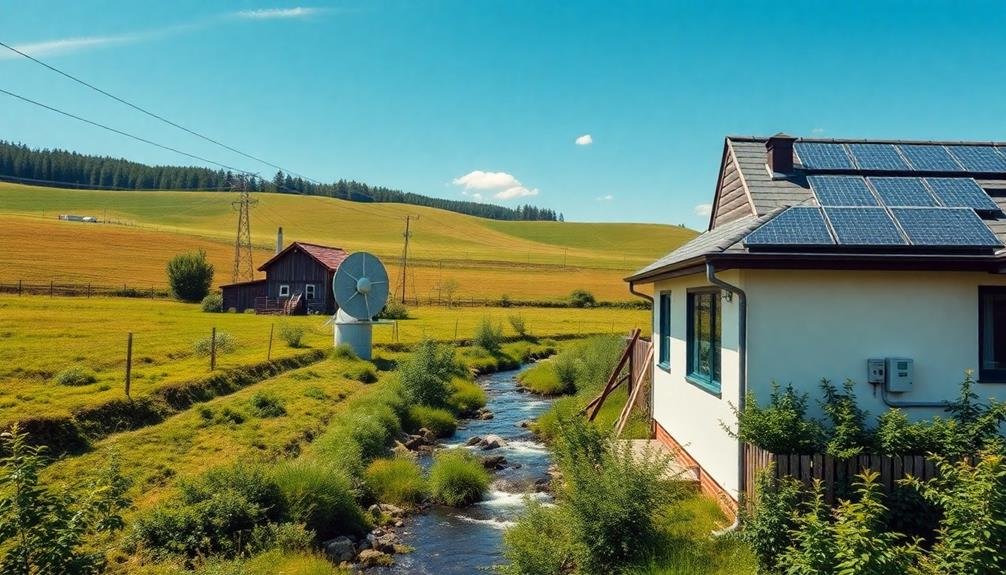
Integrating your micro-hydro turbine with an existing power system can considerably enhance your energy independence and reliability.
You'll need to carefully consider how your new turbine will interact with your current setup, whether it's grid-connected or off-grid. For grid-tied systems, you'll require an inverter that meets your utility's standards and can synchronize with the grid's frequency and voltage.
When integrating your micro-hydro system, keep these key points in mind:
- Safety systems: Install proper disconnects and protection devices to guarantee safe operation and prevent backfeeding into the grid during outages.
- Load management: Implement a smart control system to balance power distribution between your turbine, grid, and other renewable sources if applicable.
- Energy storage: Consider adding batteries to store excess energy for use during low-flow periods or peak demand times.
You'll also need to decide whether you want to use your micro-hydro system as a primary power source, backup, or supplement to your existing setup.
This choice will affect how you configure your integration and what additional equipment you might need. Remember to consult with a qualified electrician or renewable energy specialist to guarantee your integration is safe, efficient, and compliant with local regulations.
Frequently Asked Questions
Can Micro-Hydro Turbines Work in Saltwater Environments?
Yes, you can use micro-hydro turbines in saltwater environments, but you'll need to choose corrosion-resistant materials. You'll also face challenges like marine growth and increased maintenance. It's essential to select turbines specifically designed for saltwater applications.
How Long Does It Typically Take to Install a Micro-Hydro System?
Installation time for a micro-hydro system varies, but you'll typically need 1-3 weeks. It depends on your site's complexity, turbine size, and permitting requirements. You'll save time if you've done thorough planning and preparation beforehand.
Are There Any Government Incentives for Installing Micro-Hydro Turbines?
Yes, you'll find various government incentives for micro-hydro installations. These can include tax credits, grants, and rebates. Check with your local and federal energy departments to explore available options that'll help offset your investment costs.
Can Micro-Hydro Turbines Be Used in Conjunction With Other Renewable Energy Sources?
Yes, you can combine micro-hydro turbines with other renewable sources. You'll often see them paired with solar panels or wind turbines. This creates a more reliable and diverse energy system, especially in off-grid applications.
What Happens to Micro-Hydro Systems During Periods of Drought or Low Water Flow?
During droughts or low water flow, your micro-hydro system's power output will decrease. You'll need to rely on backup energy sources or reduce your electricity consumption. It's crucial to plan for these periods when designing your system.
In Summary
You've learned about micro-hydro turbines and their potential for clean energy. Now it's time to make your choice. Consider your water resource, power needs, and site conditions carefully. Don't forget environmental regulations and long-term costs. With the right turbine, you'll harness nature's power efficiently and sustainably. Remember, a well-chosen system can provide years of reliable energy. Take your time, do your research, and you'll soon be generating your own clean electricity.


Leave a Reply