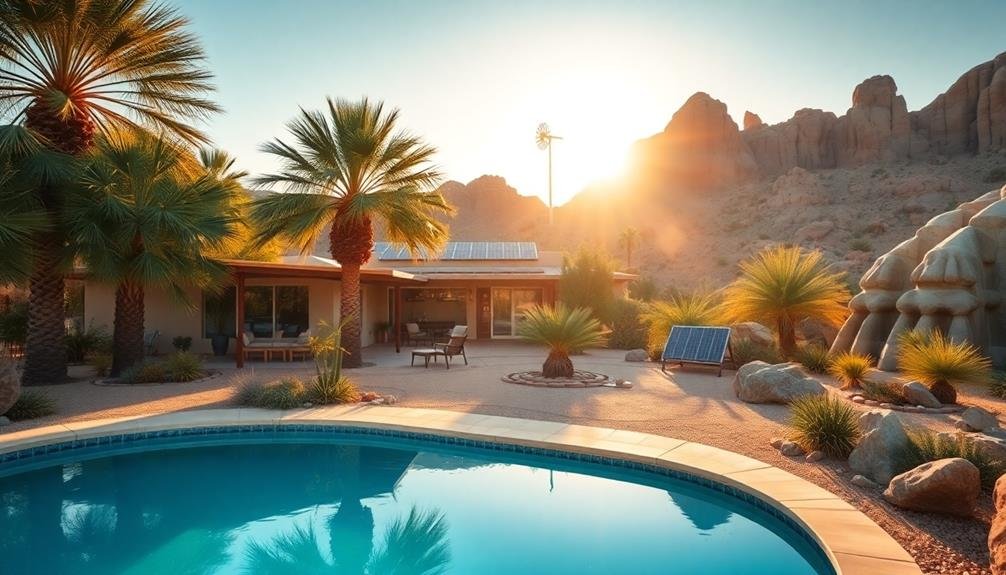
Creating a cool oasis through strategic landscaping can greatly reduce your energy costs. Start by understanding your property's microclimates and positioning trees for ideal shade. Plant deciduous trees on the south and west sides for summer cooling and winter sun exposure. Install windbreaks with evergreens to cut heating costs. Incorporate water features like fountains or ponds for natural cooling. Consider green roofs or vertical gardens for added insulation. Use drought-tolerant plants and efficient irrigation systems to conserve water. Don't forget to create outdoor living spaces with shade structures. By implementing these strategies, you'll transform your landscape into an energy-saving paradise.
Understanding Microclimates in Landscaping
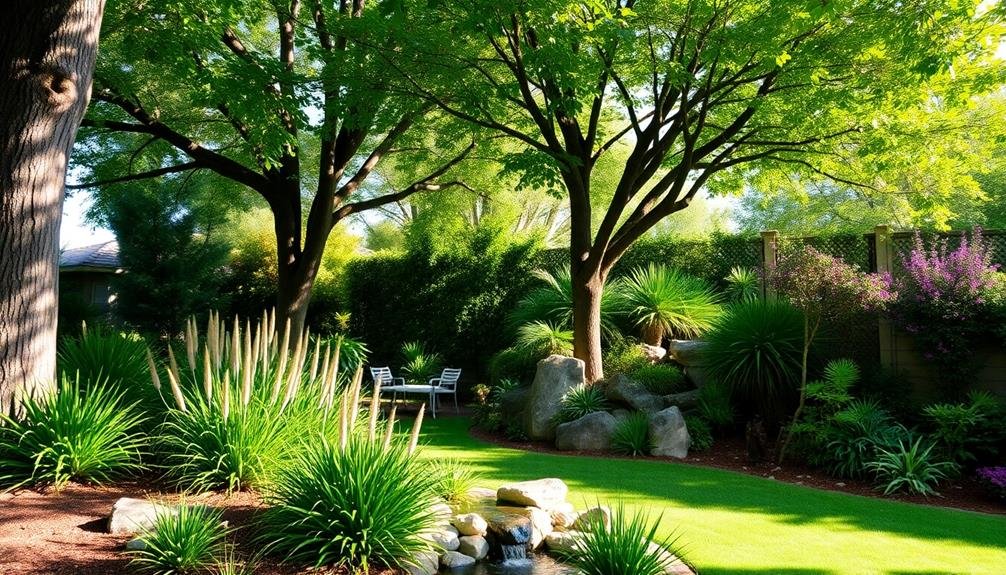
In the domain of landscaping, understanding microclimates is essential for creating a successful oasis. Microclimates are small-scale climate patterns that differ from the surrounding area. They're influenced by factors like topography, structures, and vegetation. By recognizing these variations, you can strategically design your landscape to maximize comfort and energy efficiency.
To identify microclimates in your yard, observe sun exposure, wind patterns, and temperature fluctuations throughout the day. Note areas that receive full sun, partial shade, or full shade. Pay attention to wind tunnels created by buildings or fences, and spots where cold air settles. These observations will guide your plant selection and placement decisions.
You can manipulate microclimates to your advantage. Use trees and shrubs to create shade, reducing cooling costs in summer. Plant windbreaks to deflect cold winter winds. Install water features to increase humidity and provide evaporative cooling.
Utilize hardscaping materials that absorb or reflect heat as needed. By working with your property's natural microclimates and creating new ones, you'll develop a more comfortable and energy-efficient outdoor space.
Strategic Tree Placement for Shade
Strategic tree placement is a cornerstone of creating a cool oasis landscape. When planning your yard, consider the sun's path throughout the day and year to maximize shade benefits.
Place deciduous trees on the south and west sides of your home to block summer sun while allowing winter warmth. These trees will shed leaves in colder months, letting sunlight through when you need it most.
For eastern exposures, use smaller trees or large shrubs to provide morning shade without blocking too much light. In hot climates, prioritize shading air conditioning units to improve their efficiency.
Don't forget to shade outdoor living spaces like patios and decks for comfort. Choose trees with broad canopies for maximum coverage. Fast-growing species like maples or poplars can provide quicker results, but consider their mature size and root systems.
Evergreens work well as windbreaks on the north side of your property, reducing heating costs in winter. Remember to keep trees at a safe distance from your home's foundation and avoid planting under power lines.
With strategic placement, you'll create a cooler microclimate that enhances your outdoor space and reduces energy costs.
Windbreaks and Energy Conservation
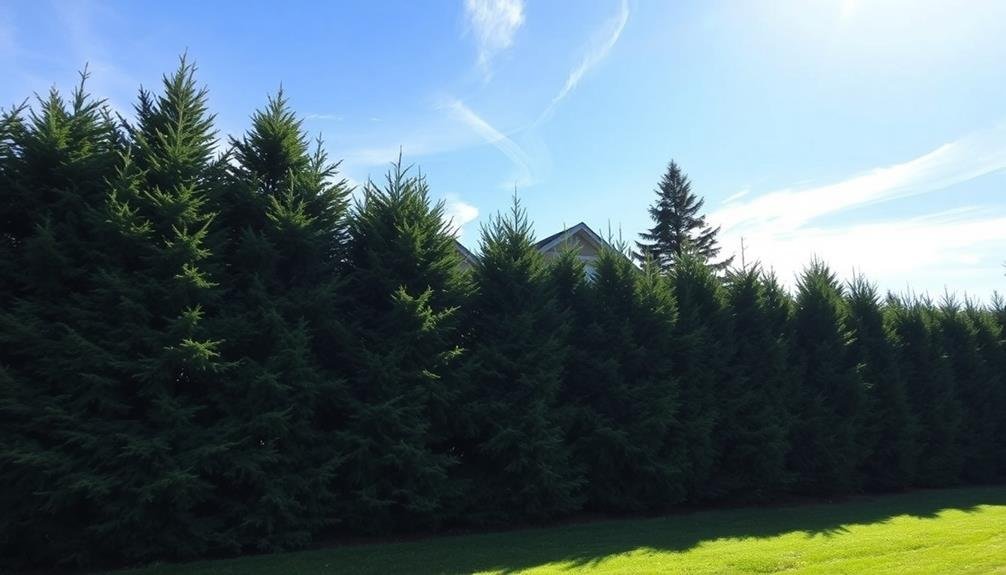
When creating windbreaks for energy conservation, you'll need to carefully select your plants and strategically place them.
You can choose from a variety of natural windbreak options, including evergreen trees, dense shrubs, or a combination of both.
Natural Windbreak Plant Selection
Selecting the right plants for a natural windbreak is essential for effective energy conservation. You'll want to choose species that are well-suited to your climate, soil type, and available space. Evergreen trees and shrubs are ideal for year-round protection, while deciduous plants can provide seasonal benefits.
Consider the mature height and spread of your chosen plants to guarantee they'll create an effective barrier without outgrowing their space. Dense, multi-layered plantings work best, combining tall trees with shorter shrubs and ground cover. This arrangement helps deflect wind at various heights and creates a more robust barrier.
When selecting plants for your windbreak, keep these factors in mind:
- Native species: They're adapted to local conditions and require less maintenance
- Growth rate: Fast-growing plants provide quicker results, but may be shorter-lived
- Drought tolerance: Choose plants that can thrive with minimal watering once established
Remember to space your plants properly to allow for healthy growth and air circulation.
With careful selection and placement, your natural windbreak won't only conserve energy but also enhance your landscape's beauty and biodiversity.
Windbreak Placement Strategies
Effective windbreak placement is essential for maximizing energy conservation benefits. When positioning your windbreak, consider the prevailing wind direction in your area. Plant your windbreak perpendicular to the main wind flow, typically on the north and west sides of your property in most regions.
For ideal protection, create an L-shaped or U-shaped windbreak design. This configuration provides more thorough coverage and reduces wind tunneling effects. Place your windbreak at a distance of 2 to 5 times the mature height of the tallest trees from the area you want to protect. This spacing allows for maximum wind reduction without causing snow drifts or interfering with sunlight.
Layer your windbreak plants, with the tallest trees on the windward side, followed by shorter trees and shrubs. This graduated approach helps deflect wind upward and creates a more effective barrier.
Don't forget to leave some gaps in your windbreak to allow for controlled airflow, which prevents stagnant air pockets. By strategically placing your windbreak, you'll create a microclimate that reduces heating and cooling costs while enhancing your outdoor living space.
Water Features for Cooling Effects
You can notably cool your outdoor space by incorporating water features.
Consider installing fountains and misting systems, which not only provide a revitalizing atmosphere but also add a soothing ambiance to your landscape.
Alternatively, ponds and water walls offer larger-scale cooling effects while serving as stunning focal points in your cool oasis design.
Fountains and Misting Systems
Within the domain of cool oasis landscapes, fountains and misting systems stand out as rejuvenating water features that can dramatically lower temperatures and create a soothing atmosphere.
These water elements not only add visual appeal but also serve a practical purpose in cooling your outdoor space.
Fountains, whether freestanding or wall-mounted, can reduce ambient temperatures by up to 10 degrees Fahrenheit. As water cascades and splashes, it releases tiny droplets into the air, increasing humidity and creating a cooling effect through evaporation.
You'll find that the sound of flowing water also adds a calming ambiance to your oasis.
Misting systems, on the other hand, offer a more direct cooling approach. By releasing a fine spray of water into the air, they can cool surrounding areas by up to 20 degrees Fahrenheit.
You can install these systems along pergolas, patio edges, or even around your outdoor seating areas for maximum comfort.
Consider these options for incorporating fountains and misting systems:
- A tiered fountain as a focal point in your garden
- Wall-mounted fountains for space-saving elegance
- Portable misting fans for targeted cooling
Ponds and Water Walls
Ponds and water walls offer another dimension to your cool oasis landscape, providing both visual appeal and practical cooling benefits.
These water features act as natural air conditioners, absorbing heat and releasing cool moisture into the surrounding air.
When designing a pond, consider its size and location carefully. A larger pond will have a more significant cooling effect, but even a small one can make a difference.
Place it where prevailing winds can carry the cooled air towards your outdoor living areas. Include aquatic plants to enhance oxygenation and provide shade, further cooling the water.
Water walls are vertical structures that create a thin sheet of flowing water. They're excellent for smaller spaces and can be incorporated into existing walls or freestanding features.
The constant movement of water increases evaporation, cooling the air more effectively than still water.
Both ponds and water walls can be enhanced with lighting for nighttime enjoyment. LED lights use minimal energy while creating a stunning ambiance.
Remember to use pumps and filtration systems to keep the water clean and circulating, maximizing the cooling effect and maintaining a healthy ecosystem.
Green Roofs and Vertical Gardens
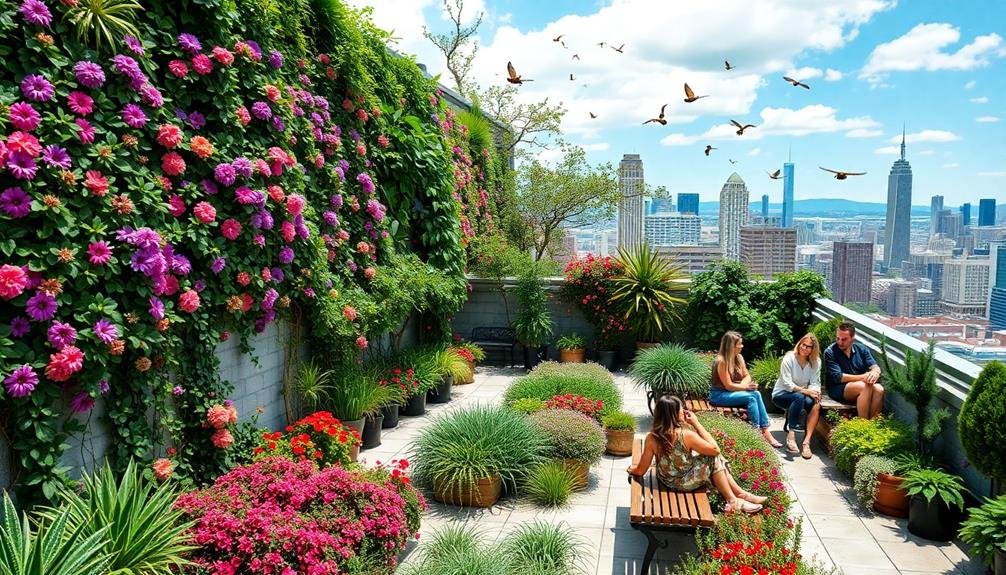
In addition to traditional landscaping elements, green roofs and vertical gardens are revolutionizing urban spaces. These innovative solutions not only enhance the aesthetic appeal of buildings but also contribute greatly to energy savings and environmental benefits.
Green roofs act as natural insulators, reducing heat absorption and lowering cooling costs in summer. They also absorb rainwater, decreasing stormwater runoff and improving urban water management. You'll find that installing a green roof can extend your roof's lifespan and provide a habitat for local wildlife.
Vertical gardens, on the other hand, transform bare walls into lush, living tapestries. They offer excellent insulation properties, reducing heat gain and lowering energy consumption. You can create a vertical garden using a variety of plants, from succulents to herbs, depending on your climate and preferences.
Both options offer numerous advantages:
- Improved air quality by filtering pollutants
- Reduced urban heat island effect
- Enhanced biodiversity in urban environments
Heat-Resistant Hardscaping Materials
When designing a cool oasis landscape, you'll want to ponder heat-resistant hardscaping materials. These elements can greatly impact your outdoor space's temperature and energy efficiency. Opt for materials that reflect sunlight and absorb less heat, creating a cooler environment around your home.
Reflect on these heat-resistant options for your hardscaping:
| Material | Heat Resistance |
|---|---|
| Light-colored concrete | High |
| Permeable pavers | Moderate |
| Natural stone | Varies |
| Composite decking | High |
Light-colored concrete reflects sunlight effectively, keeping surfaces cooler than dark alternatives. Permeable pavers allow water to seep through, promoting evaporative cooling. Natural stone's heat resistance varies depending on color and type, with lighter stones typically performing better. Composite decking materials are engineered to resist heat absorption, making them ideal for pool decks and patios.
When selecting materials, factor in both aesthetics and functionality. You'll want to balance the visual appeal with heat-resistant properties. Don't forget to reflect on the material's durability and maintenance requirements as well. By choosing the right hardscaping materials, you'll create a more comfortable outdoor space and reduce your home's cooling needs.
Native Plants for Low Maintenance
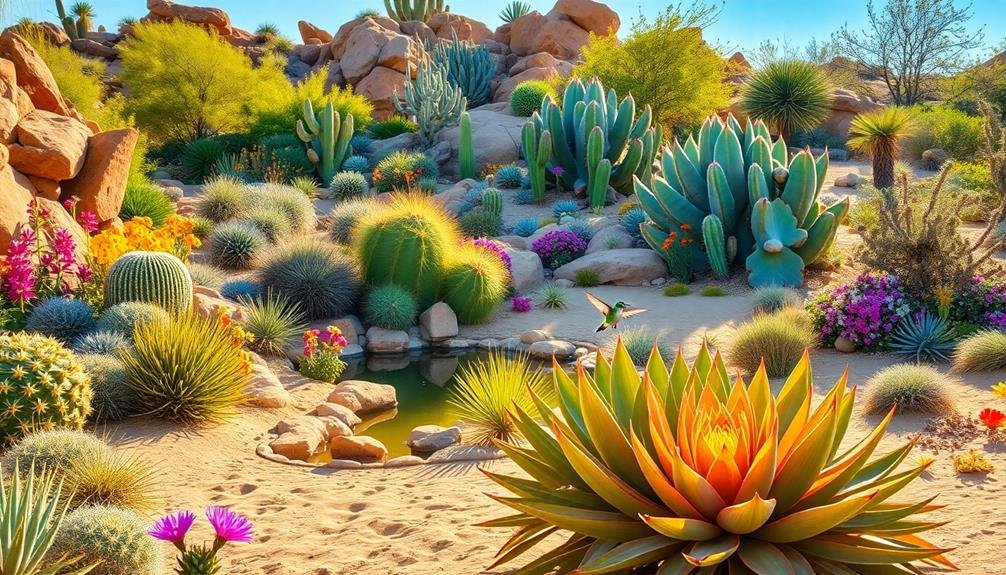
Native plants play an essential role in creating a low-maintenance cool oasis landscape. They're adapted to your local climate, requiring less water and care than non-native species. By choosing plants native to your region, you'll reduce the need for frequent watering, fertilizing, and pest control. This not only saves you time and effort but also contributes to energy conservation and a more sustainable landscape.
When selecting native plants for your cool oasis, consider their water requirements, growth habits, and sun exposure needs. Look for species that thrive in your specific microclimate and soil conditions. You'll find that native plants often attract beneficial insects and wildlife, further enhancing your garden's ecosystem.
Some benefits of incorporating native plants include:
- Increased drought tolerance
- Better resistance to local pests and diseases
- Support for native pollinators and wildlife
To get started, research native plant nurseries in your area or consult with local gardening experts. They can recommend species that will thrive in your landscape while contributing to your cool oasis design.
Drought-Tolerant Landscaping Techniques
Beyond native plants, implementing drought-tolerant landscaping techniques is vital for creating a sustainable cool oasis.
Start by grouping plants with similar water needs together, a practice known as hydrozoning. This allows you to water efficiently and prevents overwatering drought-resistant plants.
Incorporate permeable hardscaping materials like gravel, porous pavers, or decomposed granite to reduce runoff and allow water to seep into the soil.
Create berms and swales to direct and retain water where it's needed most. Use mulch generously around plants to retain moisture, suppress weeds, and regulate soil temperature.
Install a drip irrigation system or soaker hoses to deliver water directly to plant roots, minimizing evaporation.
Consider rainwater harvesting techniques, such as rain barrels or cisterns, to collect and store water for dry periods.
Replace water-hungry lawns with drought-tolerant groundcovers or artificial turf.
Utilize xeriscaping principles by designing your landscape to thrive with minimal supplemental water. Incorporate rocks, boulders, and dry creek beds for visual interest without increasing water demand.
Regularly maintain your landscape by pruning, removing dead growth, and adjusting irrigation as needed to guarantee ideal water efficiency.
Proper Irrigation for Energy Efficiency
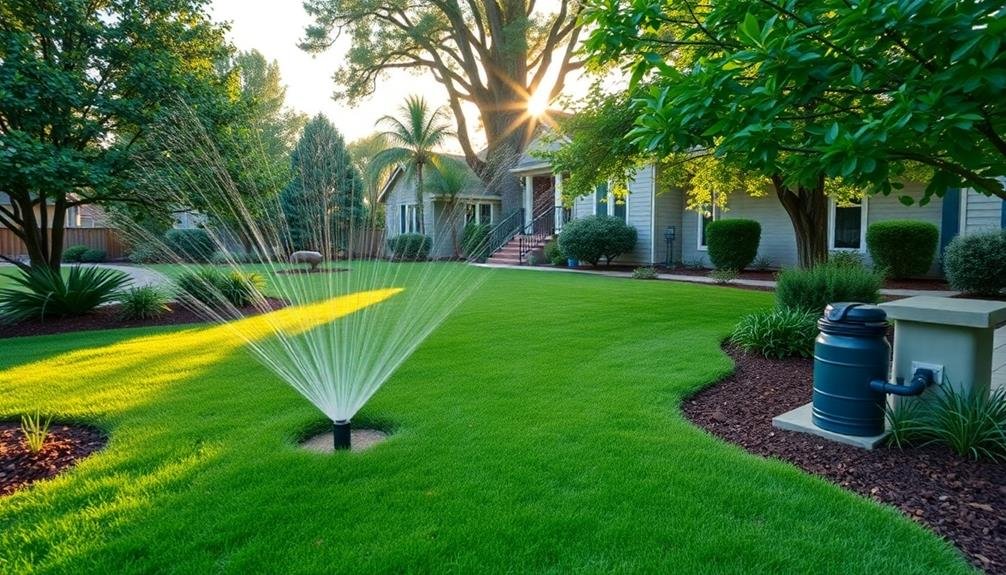
You'll maximize water conservation and energy efficiency with smart watering systems that adjust to weather conditions and soil moisture levels.
Efficient sprinkler placement guarantees even coverage, minimizing water waste and reducing your utility bills.
Smart Watering Systems
Smart watering systems are revolutionizing how we irrigate our landscapes, offering both water and energy efficiency. These systems use advanced technology to monitor soil moisture, weather conditions, and plant needs, automatically adjusting watering schedules and amounts. By installing a smart irrigation controller, you'll eliminate overwatering and reduce your water consumption by up to 50%.
Smart watering systems typically include:
- Soil moisture sensors
- Weather-based controllers
- Flow sensors and master valves
You'll save energy by reducing the workload on your irrigation pump and minimizing unnecessary watering cycles. These systems can be controlled remotely via smartphone apps, allowing you to make adjustments even when you're away from home. They also detect leaks and malfunctions, preventing water waste and potential landscape damage.
To maximize efficiency, pair your smart watering system with drought-resistant plants and proper landscaping techniques. Group plants with similar water needs together and use mulch to retain soil moisture.
Consider installing drip irrigation or micro-sprinklers for targeted watering. By combining these strategies with a smart watering system, you'll create a water-wise landscape that's both beautiful and energy-efficient, helping you save money and reduce your environmental impact.
Efficient Sprinkler Placement
While smart watering systems offer advanced control, efficient sprinkler placement is key to maximizing their effectiveness. You'll need to strategically position your sprinklers to guarantee uniform coverage and minimize water waste.
Start by mapping your landscape, identifying different zones based on plant types, sun exposure, and soil conditions.
Place sprinklers in a way that allows for slight overlap in their coverage areas, typically about 50% overlap. This guarantees consistent watering and prevents dry spots. Adjust the spray patterns to avoid watering sidewalks, driveways, or other non-landscaped areas.
For slopes, position sprinklers at the top and use a lower flow rate to prevent runoff.
Consider using different types of sprinklers for various areas. Rotary sprinklers work well for large, open spaces, while spray heads are better suited for smaller, irregularly shaped areas. Drip irrigation is ideal for flower beds and vegetable gardens, delivering water directly to the plant roots.
Don't forget to account for wind direction when placing sprinklers. In windy areas, use low-angle nozzles or consider installing windproof sprinklers to reduce water loss through evaporation.
Regularly inspect and adjust your sprinklers to maintain peak performance and efficiency.
Drip Irrigation Benefits
As water conservation becomes increasingly essential, drip irrigation stands out as an exceptionally efficient method for landscape watering. This system delivers water directly to plant roots, minimizing evaporation and runoff. You'll save water and energy while promoting healthier plant growth.
Drip irrigation offers several benefits for your cool oasis landscape:
- Precision: Water is applied exactly where it's needed, reducing waste and preventing overwatering.
- Versatility: It works well for various plants, from trees and shrubs to flower beds and vegetable gardens.
- Automation: You can easily integrate drip systems with timers for hands-off operation.
By installing a drip irrigation system, you'll use up to 50% less water compared to traditional sprinklers. This translates to lower water bills and reduced energy consumption for pumping.
You'll also minimize weed growth and soil erosion, as water isn't sprayed indiscriminately.
Drip irrigation allows for more frequent, lighter watering, which is ideal for maintaining consistent soil moisture. This approach encourages deeper root growth, making plants more resilient to drought and temperature fluctuations.
You'll create a more sustainable landscape that requires less maintenance and contributes to overall energy efficiency in your outdoor space.
Outdoor Living Spaces and Insulation
Creating outdoor living spaces that seamlessly blend with your home's interior can greatly enhance your overall living experience. These areas act as extensions of your home, providing additional living space while also serving as natural insulation. By incorporating elements like pergolas, shade sails, and strategically placed trees, you'll create cool, comfortable spaces that reduce your home's heat absorption.
Consider these outdoor living spaces and their insulation benefits:
| Space Type | Insulation Method | Energy-Saving Impact |
|---|---|---|
| Patio | Retractable awning | Blocks direct sunlight |
| Deck | Overhead pergola | Creates shade, reduces heat |
| Garden | Dense foliage | Natural air conditioning |
You can further enhance insulation by using materials like light-colored pavers or composite decking, which reflect heat rather than absorb it. Additionally, installing outdoor curtains or screens can provide extra protection from the sun's rays.
Don't forget about vertical surfaces. Green walls or climbing vines on trellises can insulate your home's exterior walls, reducing heat transfer. By thoughtfully designing your outdoor living spaces, you'll create a cool oasis that not only expands your usable area but also contributes to energy savings.
Lawn Alternatives for Energy Savings
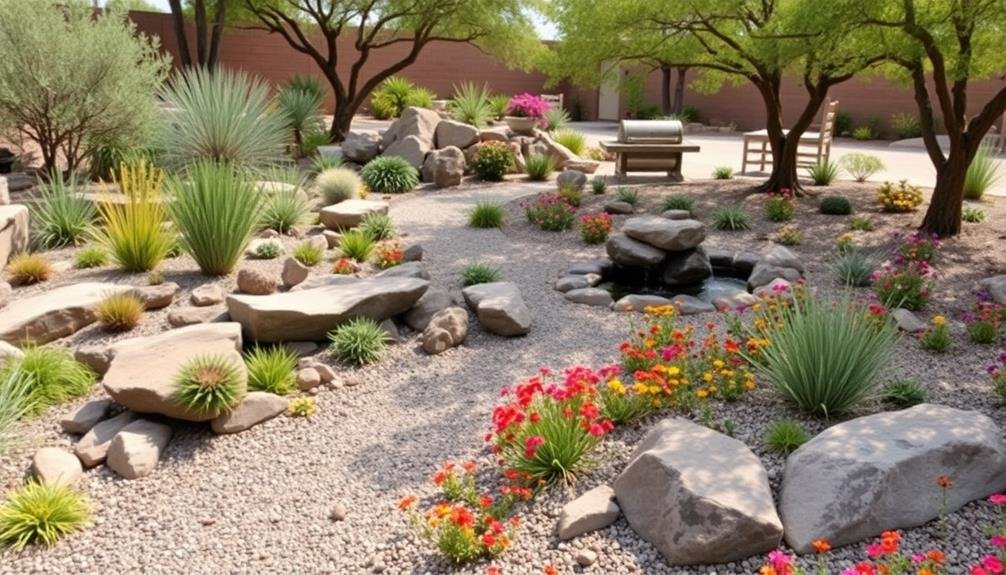
Many homeowners are turning away from traditional lawns in favor of energy-saving alternatives.
These options not only reduce water consumption but also minimize the need for energy-intensive maintenance. You'll find that replacing your lawn with native plants, groundcovers, or xeriscaping can greatly lower your home's energy footprint.
Consider drought-resistant plants that thrive in your local climate. They'll require less watering and upkeep, saving both water and the energy needed to maintain them.
Groundcovers like clover or creeping thyme can create a lush, green appearance while demanding far less resources than traditional grass.
Xeriscaping, a landscaping method that uses plants adapted to arid environments, is another excellent option. It dramatically reduces water usage and eliminates the need for gas-powered lawn equipment.
You can also incorporate hardscaping elements like gravel, rocks, or permeable pavers to create attractive, low-maintenance outdoor spaces.
Here are some benefits of lawn alternatives:
- Reduced water consumption and lower utility bills
- Decreased need for mowing, trimming, and chemical treatments
- Improved biodiversity and support for local ecosystems
Seasonal Landscaping Considerations
Throughout the year, your landscape's needs and appearance will change dramatically. To maintain an energy-efficient oasis, you'll need to adapt your landscaping strategies to each season.
In spring, focus on planting and preparing your garden for the warmer months ahead. Choose native, drought-resistant plants that thrive in your climate and require less water and maintenance.
As summer approaches, it's essential to protect your home from intense heat. Install awnings or plant deciduous trees on the south and west sides of your house to provide shade during the hottest parts of the day. These natural sunblocks will help keep your home cooler and reduce air conditioning costs.
In autumn, prepare your landscape for the colder months by pruning trees and shrubs. Remove dead branches that could fall during winter storms and damage your property. Plant evergreen trees or shrubs on the north side of your home to create a windbreak, reducing heat loss during chilly winter months.
Winter is the time to focus on maintenance. Remove snow from branches to prevent breakage, and apply mulch to protect plant roots from freezing temperatures.
Frequently Asked Questions
How Much Can Landscaping for Energy Savings Reduce Annual Energy Bills?
You can considerably reduce your annual energy bills through strategic landscaping. Depending on your climate and property, you'll potentially save 15-50% on cooling costs and up to 25% on heating expenses with well-planned landscaping techniques.
Are There Tax Incentives for Implementing Energy-Saving Landscaping Features?
You'll find tax incentives for energy-saving landscaping vary by location. Check with your local government or tax professional for specific programs. Some areas offer property tax reductions, rebates, or credits for implementing energy-efficient landscape features.
How Long Does It Take to See Noticeable Energy Savings From Landscaping?
You'll start seeing energy savings within a year, but it may take 3-5 years for trees to mature and provide maximum benefits. You'll notice immediate improvements in comfort and aesthetics, though. Be patient; it's worth the wait!
Can Energy-Saving Landscaping Techniques Increase Property Value?
Yes, energy-saving landscaping can boost your property value. You'll see increased curb appeal, reduced utility costs, and improved sustainability. Buyers often pay more for homes with efficient landscaping, making it a smart investment for your future.
What Are the Best Energy-Saving Landscaping Options for Small Urban Spaces?
For small urban spaces, you'll maximize energy savings with vertical gardens, green roofs, and shade-providing trees. Don't forget window boxes with trailing plants, container gardens, and reflective surfaces. These options cool your space efficiently while conserving energy.
In Summary
You've learned how to create an energy-saving oasis through smart landscaping. By understanding microclimates, strategically placing trees, and using windbreaks, you'll reduce your home's energy needs. Don't forget water features, green roofs, and efficient irrigation. Consider outdoor living spaces, lawn alternatives, and seasonal changes. With these techniques, you'll not only save energy but also create a beautiful, sustainable landscape. It's time to put your knowledge into action and transform your outdoor space.




Leave a Reply