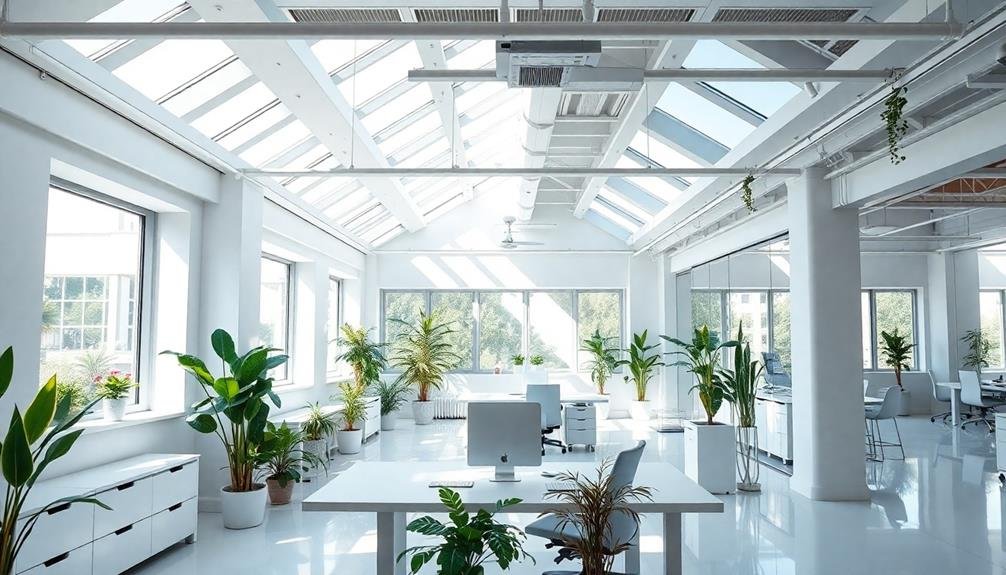
Boost your office lighting without increasing energy bills by harnessing natural light and implementing smart design strategies. Start by optimizing window placement and using light-colored walls to maximize light reflection. Add reflective surfaces and mirrors to bounce light into darker areas. Consider installing skylights or solar tubes to bring sunlight into interior spaces. Use glass partitions to allow light flow in open offices. Implement light shelves and louvers to redirect natural light deeper into rooms. Smart automated blinds can dynamically adjust to sunlight intensity throughout the day. These techniques not only enhance illumination but also create a more productive work environment. Discover even more ways to brighten your office efficiently.
Strategic Window Placement
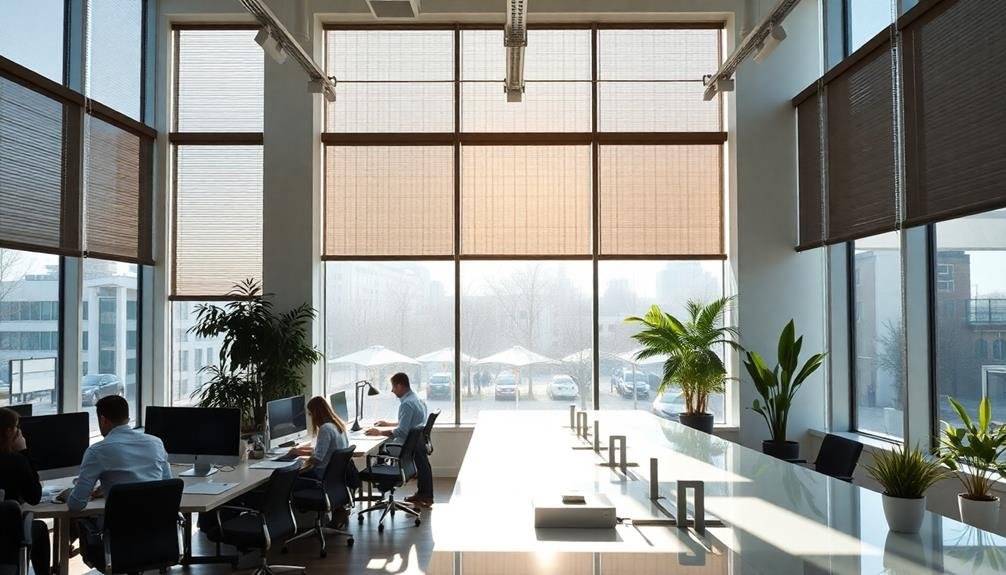
Office design's secret weapon for boosting natural light is strategic window placement. You can maximize daylight by carefully considering window size, positioning, and orientation. Large windows on the north and south sides of your building allow for consistent, glare-free light throughout the day.
East-facing windows provide morning light, while west-facing ones offer afternoon illumination.
You'll want to place workstations near windows to take full advantage of natural light. Consider using glass partitions or low cubicle walls to allow light to penetrate deeper into the office space.
Clerestory windows, which are high windows above eye level, can bring light further into the building's core without compromising privacy or creating glare on computer screens.
Don't forget about skylights, which can flood interior spaces with natural light. Light tubes or solar tubes are another option, channeling sunlight from the roof to interior rooms.
Light-Colored Interior Walls
Painting your office walls in light colors can greatly boost the overall brightness of your workspace.
You'll benefit from increased light reflection, as pale hues bounce more light around the room compared to darker shades.
Additionally, light-colored walls create a space-enlarging visual effect, making your office feel more open and airy.
Increased Light Reflection
Light-colored walls serve as natural illumination boosters in office spaces. They reflect more light than darker surfaces, effectively increasing the overall brightness of your workspace without adding extra lighting fixtures. You'll find that white, cream, or pale gray walls can greatly amplify both natural and artificial light sources.
To maximize light reflection, consider using semi-gloss or glossy paint finishes. These surfaces bounce light more effectively than matte finishes, further enhancing the illumination in your office.
Don't forget about the ceiling – painting it white can create a powerful reflective surface that distributes light evenly throughout the room.
You can also strategically place mirrors or reflective surfaces to redirect light into darker corners. This technique works particularly well when positioned opposite windows or light sources.
Additionally, incorporating metallic accents or glass elements in your office decor can contribute to increased light reflection.
Remember that increased light reflection isn't just about aesthetics; it can also improve employee productivity and well-being. Better-lit spaces reduce eye strain and fatigue, creating a more comfortable work environment.
Space-Enlarging Visual Effect
An illusion of spaciousness can be achieved through the strategic use of light-colored interior walls in your office. When you paint your walls in lighter shades, you're not just changing the color; you're manipulating the perception of space.
Light hues reflect more light, making rooms appear larger and more open. This optical trick can be particularly beneficial in smaller offices or workspaces with limited natural light.
You'll find that pale colors like off-white, light gray, or soft beige create a sense of expansiveness. They push the walls outward visually, giving the impression of a more generous floor plan.
This effect isn't limited to walls alone; consider extending the light color scheme to ceilings and trims for a cohesive, space-enhancing look.
Reflective Surfaces and Mirrors
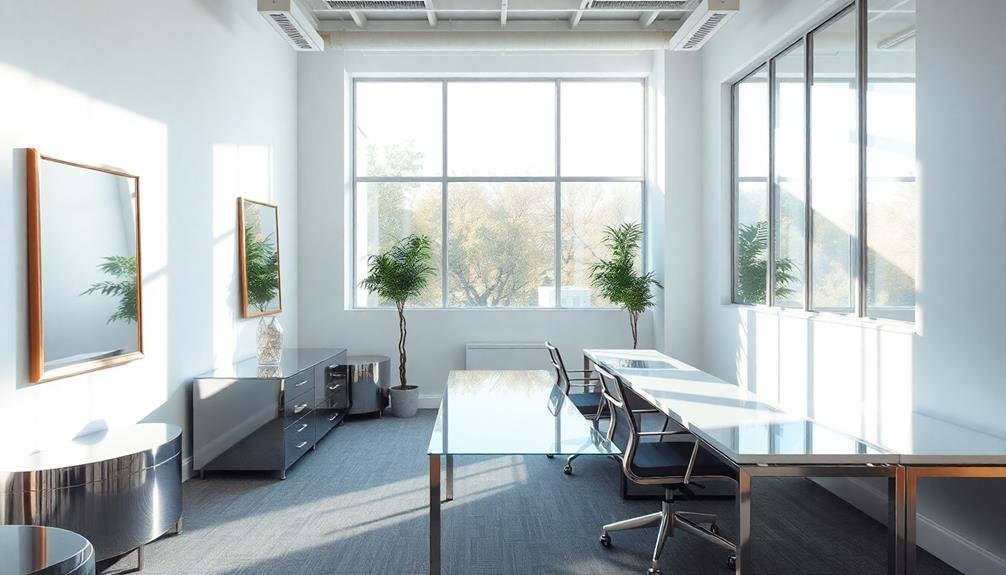
Reflective surfaces and mirrors can greatly amplify the natural light in your office space.
You'll want to position mirrors strategically to bounce light into darker areas, especially across from windows or light sources.
Consider adding reflective elements like glass-topped furniture, metallic accents, or glossy finishes to further enhance light distribution throughout the room.
Maximize Natural Light Reflection
Harnessing the power of reflection can greatly brighten your workspace without touching the light switch. By strategically placing reflective surfaces and mirrors, you'll amplify existing light sources and create a more luminous environment.
Consider using glossy or metallic finishes on walls, ceilings, and furniture to bounce light around the room. Light-colored paint and materials will also help maximize natural light reflection.
To optimize your office's brightness, focus on these key areas:
- Windows: Install reflective window films or use light-colored blinds to redirect sunlight deeper into the room.
- Floors: Choose light-colored, polished flooring materials like hardwood or tiles to reflect light upwards.
- Desk surfaces: Opt for light-colored or glass desktops to reflect overhead lighting.
- Decorative elements: Incorporate mirrors, metallic picture frames, and shiny accents to create additional light-reflecting surfaces.
Don't forget about the ceiling – it's often an overlooked surface that can greatly impact light distribution.
Paint it a bright white or install reflective ceiling tiles to bounce light downwards. By maximizing natural light reflection, you'll create a brighter, more energizing workspace while keeping energy costs in check.
Strategic Mirror Placement Tips
Five key strategies can maximize the impact of mirrors and reflective surfaces in your office. First, place large mirrors opposite windows to reflect natural light deeper into the room. Second, use mirrored tiles on walls adjacent to windows to scatter light across the space. Third, install reflective ceiling tiles to bounce light downward. Fourth, position smaller mirrors strategically to illuminate dark corners. Finally, incorporate reflective decorative elements like metallic picture frames or glass-topped furniture.
To optimize mirror placement, consider these factors:
| Location | Mirror Size | Effect |
|---|---|---|
| Opposite windows | Large | Doubles natural light |
| Adjacent to windows | Medium | Scatters light sideways |
| Dark corners | Small | Brightens specific areas |
| Ceilings | Multiple small | Reflects light downward |
When implementing these strategies, make certain mirrors don't create glare on computer screens or in employees' eyes. Angle mirrors slightly upward to reflect ceiling light rather than direct sunlight. Don't overdo it; too many mirrors can create a disorienting effect. Instead, focus on key areas where additional light will have the most impact on productivity and comfort.
Skylights and Solar Tubes
Natural illumination offers a powerful solution for brightening your workspace without increasing energy costs. Skylights and solar tubes are excellent options for harnessing daylight and reducing your reliance on artificial lighting.
Skylights are windows installed on the roof, allowing sunlight to flood into your office space. They're particularly effective in large, open areas or top-floor offices.
Solar tubes, also known as sun tunnels, are smaller and more versatile. They use reflective tubing to channel sunlight from the roof to interior spaces, even those without direct roof access.
When considering skylights or solar tubes for your office, keep these benefits in mind:
- Improved mood and productivity among employees
- Reduced eye strain and headaches associated with artificial lighting
- Lower electricity costs due to decreased reliance on artificial lighting
- Enhanced overall aesthetics of your workspace
To maximize the effectiveness of skylights and solar tubes, place them strategically in areas that receive the most sunlight throughout the day.
Consider installing light sensors or dimmers to automatically adjust artificial lighting based on the amount of natural light available. This integration guarantees ideal illumination while minimizing energy consumption, creating a brighter, more efficient workspace for your team.
Glass Partitions for Open Spaces
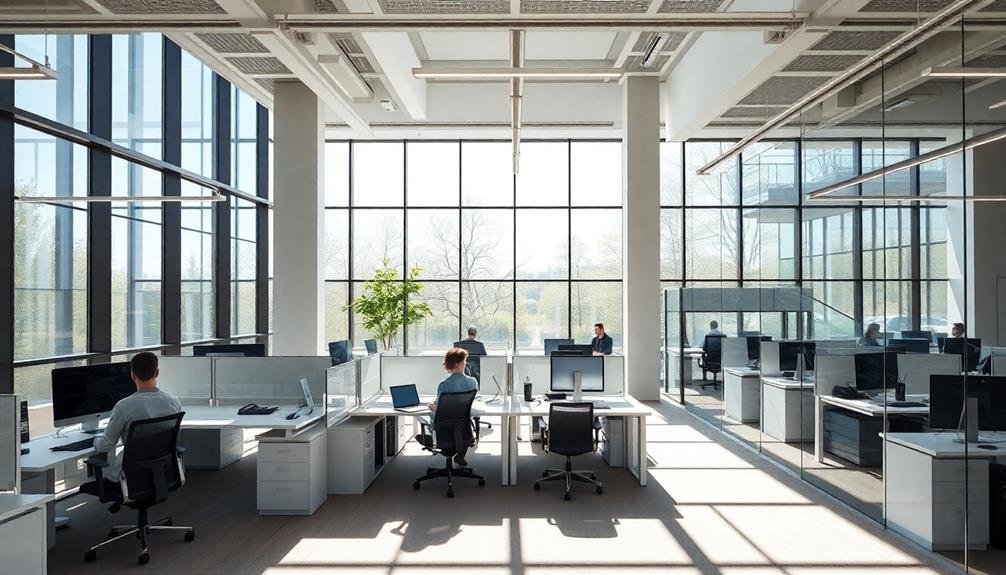
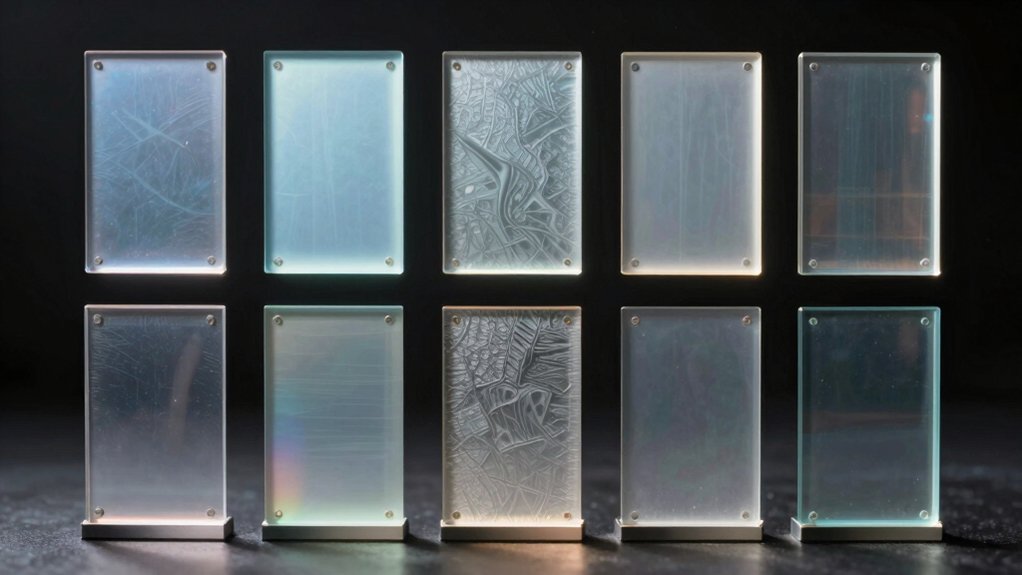
While natural light sources like skylights and solar tubes can brighten your office, glass partitions offer another way to maximize light distribution in open spaces. These transparent dividers allow light to flow freely throughout your workspace, creating a more open and airy atmosphere.
You'll find that glass partitions come in various styles and configurations to suit your office needs:
| Type | Light Transmission | Privacy Level |
|---|---|---|
| Clear | High | Low |
| Frosted | Medium | Medium |
| Tinted | Medium-Low | Medium-High |
| Patterned | Variable | Variable |
| Smart Glass | Adjustable | Adjustable |
By choosing the right type of glass partition, you can balance light distribution with privacy requirements. Clear glass maximizes light flow but offers minimal privacy, while frosted or tinted options provide more seclusion.
Glass partitions also help reduce energy costs by decreasing the need for artificial lighting. They're easy to clean and maintain, contributing to a more hygienic work environment. Additionally, these partitions can be customized with company logos or designs, enhancing your office's aesthetic appeal while still allowing light to permeate the space.
Light Shelves and Louvers
Harnessing the power of architectural design, light shelves and louvers offer innovative solutions for redirecting natural light deeper into your office space.
These features work by reflecting sunlight off their surfaces and bouncing it towards the ceiling, effectively illuminating areas far from windows.
Light shelves are horizontal projections installed above eye level, either on the interior or exterior of windows. They're particularly effective in south-facing windows, where they can block direct sunlight while still allowing diffused light to enter.
Louvers, on the other hand, are adjustable slats that can be angled to control light penetration and glare.
When implementing these solutions, consider:
- Material choices: Reflective surfaces like aluminum or white paint maximize light redirection
- Placement: Install shelves and louvers strategically to enhance light distribution
- Seasonality: Adjust angles to account for changing sun positions throughout the year
- Integration with existing systems: Combine with automated blinds or shades for superior control
Smart Automated Blinds
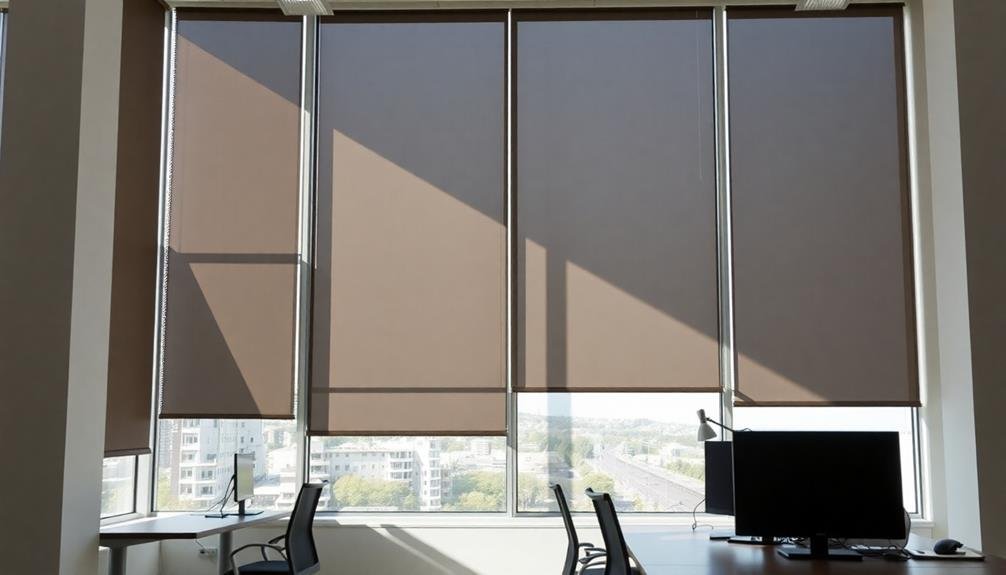
Building on the concept of adaptable light control, smart automated blinds offer a high-tech solution for optimizing office illumination. These advanced window treatments use sensors and motorized systems to adjust their position throughout the day, maximizing natural light while minimizing glare and heat gain.
You'll find that smart blinds can be programmed to respond to various factors, including sunlight intensity, time of day, and occupancy. They'll open to allow more light during overcast conditions and close partially during bright sunlight to prevent excessive glare. This dynamic adjustment guarantees a comfortable working environment while reducing the need for artificial lighting.
The energy-saving potential of smart blinds is significant. By intelligently managing daylight, they can decrease your reliance on electric lighting and lower cooling costs. Some systems even integrate with your building's HVAC and lighting controls for thorough energy management.
You'll appreciate the convenience of these blinds, too. They can be controlled via smartphone apps or voice commands, allowing easy adjustments without interrupting your work.
While the initial investment may be higher than traditional blinds, the long-term energy savings and improved comfort make smart automated blinds a worthwhile consideration for modern offices.
Frequently Asked Questions
How Do Different Light Bulb Types Affect Office Lighting Quality?
You'll notice different light bulb types greatly impact office lighting quality. LEDs offer crisp, energy-efficient illumination. Fluorescents provide broad coverage but can cause eye strain. Incandescents give warm light but aren't energy-efficient. Halogen bulbs offer bright, focused light.
Can Plants Improve Office Lighting While Reducing Energy Consumption?
You can improve office lighting with plants while reducing energy use. They reflect and diffuse light, making spaces brighter. Plus, they purify air and boost mood. Place them strategically near windows or light sources for best results.
What Role Does Office Layout Play in Maximizing Natural Light?
You'll maximize natural light by strategically arranging workspaces near windows. Open floor plans, glass partitions, and light-colored surfaces help distribute sunlight. Position desks perpendicular to windows and use reflective materials to bounce light deeper into the office.
How Does Desk Placement Impact Individual Workspace Lighting?
You'll maximize your workspace lighting by positioning your desk near windows. Face the window or place it perpendicular to maximize natural light. Avoid blocking light sources with screens or tall objects on your desk.
Are There Health Benefits to Using Specific Lighting Temperatures in Offices?
Yes, there are health benefits to specific lighting temperatures in offices. You'll find cooler, blue-toned light can boost alertness and productivity during the day. Warmer, yellow-toned light in the evening can improve sleep quality and reduce eye strain.
In Summary
You've got plenty of options to brighten your office without spiking energy costs. By strategically placing windows, using light colors, and adding reflective surfaces, you'll maximize natural light. Don't forget about skylights and solar tubes for overhead illumination. Glass partitions can spread light in open spaces, while light shelves and louvers help direct it. Finally, smart blinds can adjust automatically, ensuring you're always making the most of available daylight. Implement these solutions, and you'll see the difference.

Leave a Reply