
Ditch the campfire and embrace solar cooking with these five innovative hacks. You can create a parabolic solar cooker using reflective materials to concentrate sunlight. Build a box-style solar oven from cardboard and foil for slower cooking. Harness the power of a Fresnel lens for quick, high-heat cooking. Assemble a portable solar tube oven for efficient, on-the-go meals. Finally, construct a folding panel solar cooker that's perfect for backpacking. These methods let you prepare hot meals without fire, smoke, or fuel. They're eco-friendly, safe, and surprisingly effective. Curious about how to make these solar cookers? There's more to explore in the world of flameless outdoor cooking.
Parabolic Solar Cooker Design
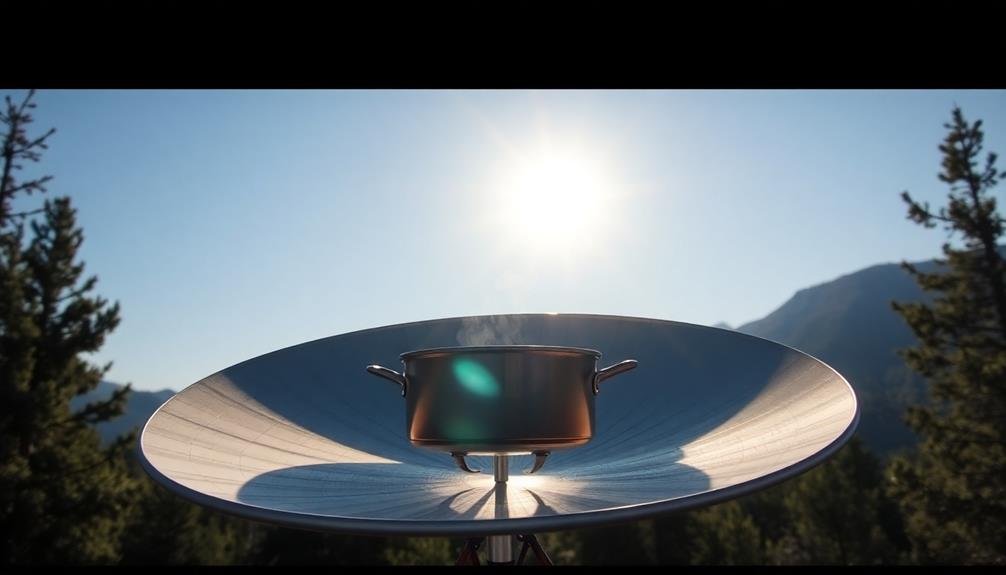
Two key components make up a parabolic solar cooker: a reflective dish and a cooking surface. The dish, typically shaped like a satellite antenna, concentrates sunlight onto a single focal point.
You'll need to create this dish using a reflective material like aluminum foil or mylar sheets. For the frame, consider using an old umbrella, cardboard, or even a large salad bowl.
The cooking surface is where you'll place your pot or pan. It should be dark-colored to absorb heat efficiently and positioned at the focal point of the reflector. You can use a small grill grate or a custom-made stand to hold your cookware.
To build your cooker, start by constructing the parabolic frame. Cover it with your reflective material, ensuring a smooth surface for maximum sunlight reflection.
Next, create a sturdy stand for your cooking surface, positioning it at the focal point. Adjust the angle of your cooker to face the sun directly for peak performance.
Box-Style Solar Oven Construction
Box-style solar ovens are frequently easier to construct than parabolic cookers. You'll need a cardboard box, aluminum foil, black paint, clear plastic wrap, and insulation materials like newspaper or foam board.
Start by lining the inside of the box with reflective foil, making sure it's smooth and wrinkle-free. Paint the bottom of the box black to absorb heat effectively.
Create a hinged lid slightly larger than the box opening, lining its underside with foil. Cut a window in the lid and cover it with plastic wrap to trap heat. For added insulation, build a slightly larger outer box and fill the gap between boxes with crumpled newspaper or foam board.
To use your solar oven, place food in dark-colored, shallow containers. Position the oven facing the sun, adjusting it every 30 minutes for best exposure.
Cooking times will vary based on sunlight intensity and food type, but expect longer cooking times compared to conventional methods. Remember to use oven mitts when handling hot containers and always monitor food temperatures to guarantee safety.
Fresnel Lens Cooking Technique
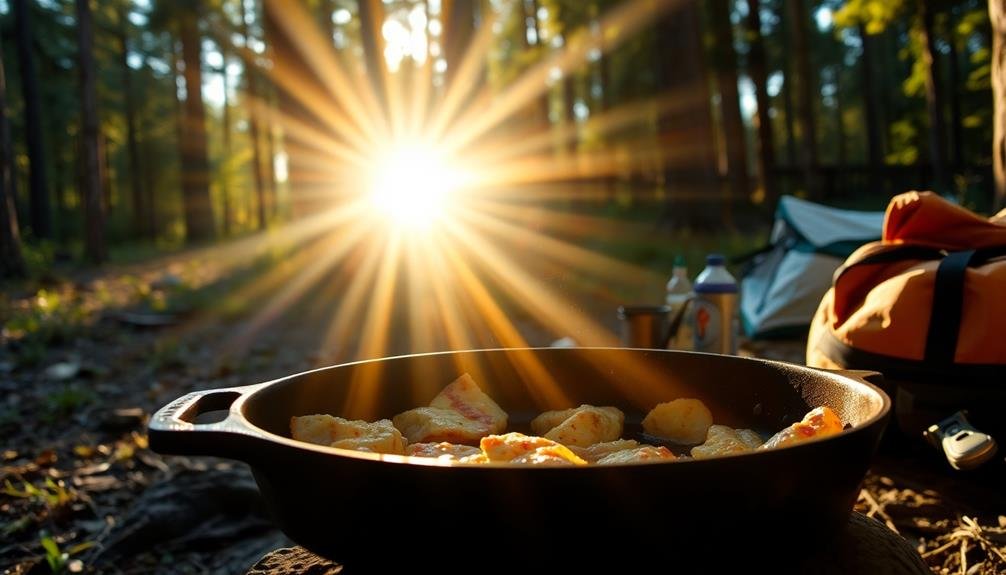
While solar ovens offer a gentle cooking approach, the Fresnel lens technique provides a more intense heat source for outdoor cooking. You'll need a large Fresnel lens, typically found in old projection TVs or purchased online. This lens concentrates sunlight into a powerful beam, capable of reaching temperatures over 1000°F.
To use the Fresnel lens, position it perpendicular to the sun's rays. Adjust the distance between the lens and your cooking surface to focus the light into a small, intense spot. Be cautious, as this concentrated beam can cause severe burns or start fires if mishandled.
| Food Type | Cooking Time | Temperature |
|---|---|---|
| Eggs | 2-3 minutes | 300-400°F |
| Bacon | 3-4 minutes | 400-500°F |
| Steak | 5-7 minutes | 500-600°F |
This method works best for quick-cooking foods like eggs, bacon, or thin cuts of meat. You'll need to constantly monitor and adjust the lens as the sun moves. While it's an impressive technique, it requires more attention and care than other solar cooking methods. Always wear protective eyewear and keep flammable materials away from the focal point.
Solar Tube Oven Assembly
After exploring intense solar cooking methods, let's turn our attention to a more portable and efficient option: the solar tube oven. This innovative device harnesses the sun's power to cook meals without fire or fuel.
To assemble your solar tube oven, you'll need a few key components. Start with a reflective, insulated tube made of materials like mylar or aluminized plastic. Next, acquire a cooking sleeve, typically made of heat-resistant glass or food-grade plastic. You'll also need end caps to seal the tube and a stand to position it correctly.
Begin by unrolling the reflective tube and securing it with the end caps. Insert the cooking sleeve into the center of the tube. Place your food inside the sleeve, then seal it tightly.
Position the tube on its stand, angling it towards the sun for maximum exposure. The oven works by concentrating sunlight onto the cooking sleeve, creating a greenhouse effect. This trapped heat cooks your food slowly and evenly.
You can prepare various dishes, from stews to baked goods, with temperatures reaching up to 300°F (149°C).
Folding Panel Solar Cooker
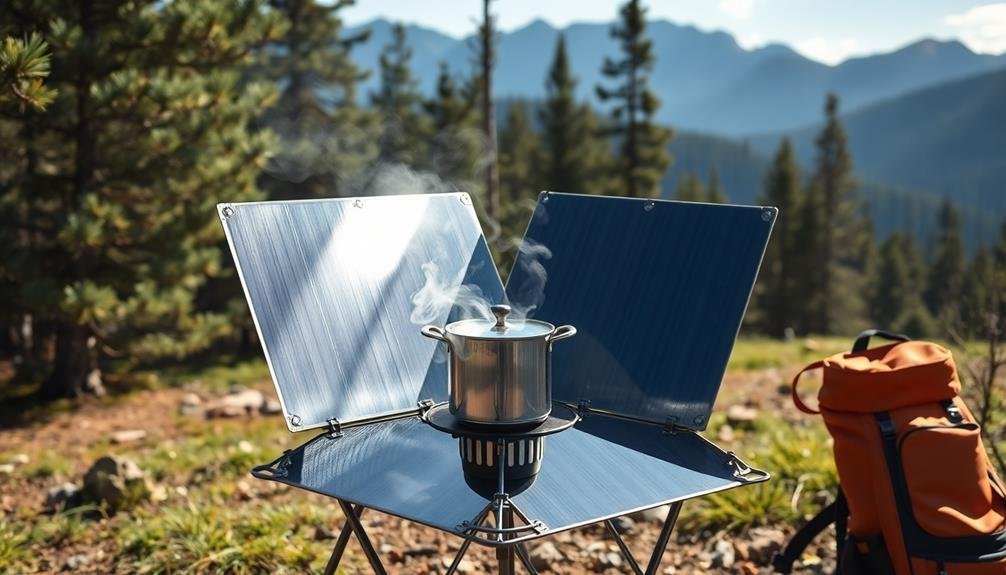
Unlike the tube oven, a folding panel solar cooker offers a more compact and versatile solution for outdoor cooking.
You'll find this design easy to transport and set up, making it ideal for camping trips or emergency preparedness.
To create a folding panel solar cooker, you'll need reflective materials like aluminum foil or mylar, cardboard, and a clear plastic bag.
Start by cutting the cardboard into four panels, then cover each with the reflective material.
Attach the panels using tape or hinges, allowing them to fold flat for storage.
When you're ready to cook, unfold the panels and arrange them in a diamond shape.
Place your cooking pot in the center, covered by the clear plastic bag to trap heat.
Angle the panels towards the sun for maximum efficiency.
This cooker works best for slow-cooking meals like stews, rice, or beans.
You can expect temperatures to reach 200-300°F on a sunny day.
Remember to rotate the cooker every 30 minutes to follow the sun's path.
With practice, you'll master this eco-friendly cooking method and enjoy hot meals even in remote locations.
Frequently Asked Questions
How Effective Are Solar Cookers on Cloudy or Overcast Days?
Solar cookers aren't very effective on cloudy days. You'll find their efficiency drops considerably without direct sunlight. They'll still work, but cooking times will be much longer, and you might not reach high temperatures for certain dishes.
What Are the Best Foods to Prepare Using Solar Cooking Methods?
You'll find solar cooking ideal for slow-cooked dishes. Try rice, beans, stews, and soups. Baked goods like bread and casseroles work well too. Don't forget vegetables and fruits – they'll cook nicely in the solar heat.
Can Solar Cookers Be Used for Water Purification While Camping?
Yes, you can use solar cookers for water purification while camping. They'll heat water to boiling temperatures, killing harmful microorganisms. You'll need to let the water cool before drinking. It's an eco-friendly way to guarantee safe hydration outdoors.
How Do You Clean and Maintain Solar Cooking Equipment?
You'll want to clean your solar cooker after each use. Wipe it down with mild soap and water, dry thoroughly, and store in a cool, dry place. Regularly check for damage and replace any worn parts as needed.
Are There Any Safety Precautions Specific to Using Solar Cookers Outdoors?
When using solar cookers outdoors, you'll need to be cautious. Always wear sunglasses and sunscreen, use oven mitts, and keep children away. Don't leave the cooker unattended, and be aware of weather changes that could affect performance.
In Summary
You've now discovered five ingenious ways to cook outdoors without fire. Whether you're using a parabolic cooker, box-style oven, Fresnel lens, solar tube, or folding panel cooker, you're harnessing the sun's power for your meals. These methods aren't just eco-friendly; they're perfect for areas with fire restrictions. Next time you're camping, give one of these solar cooking techniques a try. You'll be amazed at how efficiently you can prepare delicious meals using only sunlight.


Leave a Reply