
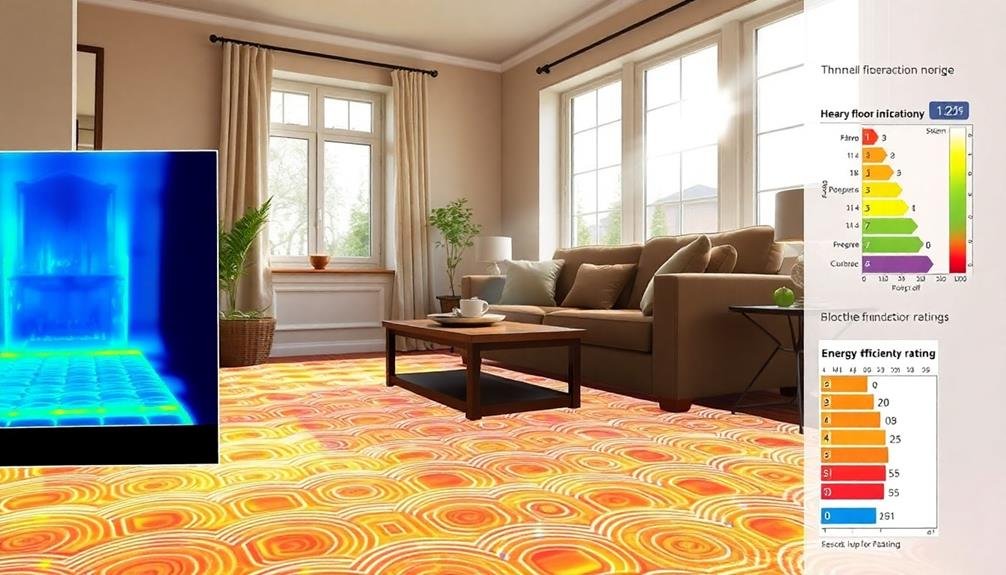
When comparing the three best radiant floor heating systems, you'll find varying levels of energy efficiency. Electric systems offer quick heating and precise control, ideal for small spaces. They're versatile but can be costly to operate. Hydronic systems, using hot water circulation, are more energy-efficient for larger areas and whole-house heating. They provide consistent temperatures and can use various heat sources. Air-heated systems are less expensive to install but have efficiency limitations in open spaces. They integrate well with existing forced-air systems but require more maintenance. Understanding these differences will help you choose the most suitable option for your home.
Electric Radiant Floor Systems

Electric radiant floor systems warm up your home from the ground up, providing a cozy and efficient heating solution.
These systems use electric heating cables or mats installed beneath your flooring to generate heat. They're versatile, working well with various floor types, including tile, hardwood, and laminate.
You'll find electric radiant heating particularly suitable for smaller spaces or room-by-room installations. They're easy to retrofit in existing homes and don't require extensive renovations.
Installation is relatively straightforward, with thin heating elements that don't greatly raise floor height.
One of the main advantages of electric systems is their quick response time. They heat up faster than hydronic systems, allowing for more precise temperature control.
However, they can be more expensive to operate in larger areas due to electricity costs.
You'll appreciate the zoning capabilities of electric radiant heating, enabling you to heat specific rooms independently. This feature can lead to energy savings by allowing you to heat only occupied spaces.
Maintenance is minimal, as there are no moving parts or boilers to service.
While electric systems are highly efficient at converting energy to heat, their overall efficiency depends on your local electricity rates and the efficiency of your home's insulation.
Hydronic Radiant Floor Systems
While electric systems have their merits, hydronic radiant floor systems offer a different approach to warming your home. These systems use hot water circulated through a network of pipes beneath your floor to provide heat. You'll find that hydronic systems are often more energy-efficient and cost-effective for larger areas or whole-house heating.
Hydronic systems typically rely on a boiler or water heater to warm the water, which is then pumped through PEX tubing installed under your flooring. You can choose from various heat sources, including gas, oil, solar, or even geothermal options. This flexibility allows you to select the most efficient and economical option for your specific needs.
One of the main advantages of hydronic systems is their ability to maintain consistent temperatures. They're also silent and don't dry out the air like forced-air systems.
However, installation can be more complex and costly upfront compared to electric systems. You'll need to take into account factors such as floor height requirements, boiler placement, and potential maintenance needs.
Despite these considerations, many homeowners find that the long-term energy savings and comfort benefits make hydronic radiant floor heating a worthwhile investment.
Air-Heated Radiant Floor Systems

Air-heated radiant floor systems represent a less common but still viable option for home heating. These systems use a furnace to heat air, which is then circulated through channels in the floor. While they're not as energy-efficient as hydronic systems, they can be a good choice in certain situations.
Here are some key points about air-heated radiant floor systems:
- Installation is typically less expensive than hydronic systems
- They can be combined with your home's existing forced-air heating system
- Air-heated systems warm up and cool down faster than hydronic ones
- They're less efficient in large or open spaces due to air's lower heat capacity
You'll find these systems work best in smaller, well-insulated spaces. They're also a good option if you're looking to retrofit an existing forced-air system.
However, you should be aware that air-heated systems may require more frequent maintenance due to the potential for dust and debris accumulation in the air channels.
When considering an air-heated radiant floor system, it's essential to consult with a heating professional. They can help you determine if this type of system is suitable for your home's specific needs and layout.
Frequently Asked Questions
How Long Does It Take to Install a Radiant Floor Heating System?
You'll find that installing a radiant floor heating system typically takes 1-3 days for a single room. However, for larger areas or whole-house systems, it could take up to a week or more to complete the installation.
Can Radiant Floor Heating Be Used With All Types of Flooring Materials?
You can use radiant floor heating with most flooring materials. It works well with tile, stone, and concrete. It's also compatible with hardwood, laminate, and carpet, but you'll need to check with manufacturers for specific recommendations.
What Maintenance Is Required for Radiant Floor Heating Systems?
You'll find radiant floor heating systems require minimal maintenance. Regularly check for leaks, bleed air from the system, and inspect the boiler or heat source annually. It's wise to have a professional perform a thorough check every few years.
How Does Radiant Floor Heating Affect Indoor Air Quality?
Radiant floor heating improves your indoor air quality. You'll notice less dust circulation and allergens in the air. It doesn't dry out the air like forced-air systems, maintaining comfortable humidity levels and reducing static electricity.
Are There Any Health Concerns Associated With Radiant Floor Heating?
You'll be pleased to know that radiant floor heating doesn't pose significant health concerns. It's safe, doesn't dry out the air, and won't stir up allergens. However, if you've got circulation issues, consult your doctor first.
In Summary
You've explored the top three radiant floor heating options. Electric systems offer easy installation but can be costly to operate. Hydronic systems are energy-efficient and ideal for whole-home heating. Air-heated systems are rare but can be integrated with your HVAC. Consider your budget, home layout, and energy goals when choosing. Don't forget to factor in installation complexity and long-term operating costs. Whichever you pick, you'll enjoy cozy, evenly distributed warmth underfoot.


Leave a Reply