
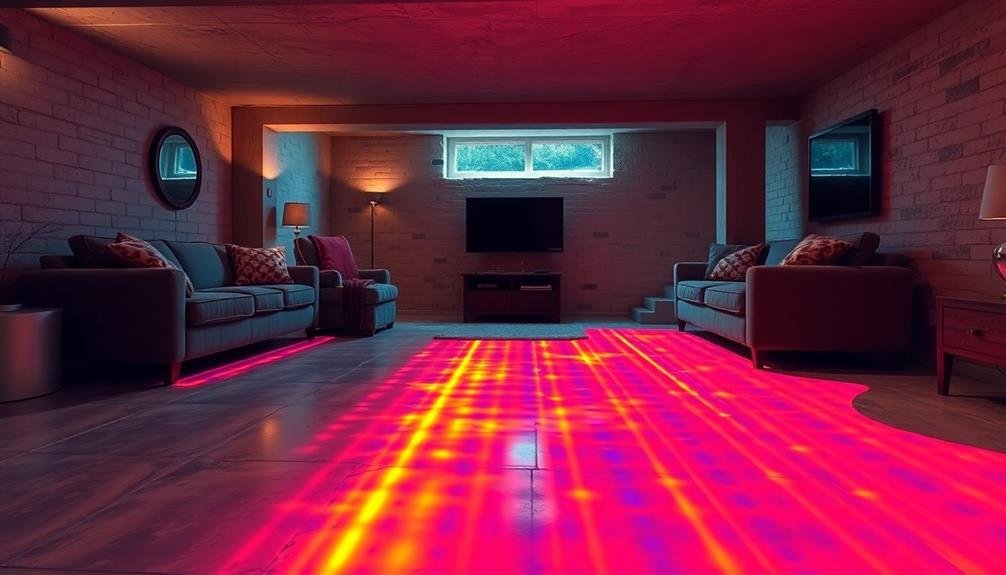
Radiant floor heating for basement upgrades is a modern solution that transforms your cold basement into a warm, cozy space. It works by installing pipes or electric elements beneath your floor, which heat the room from the ground up. You'll enjoy consistent warmth without drafts, improved air quality, and silent operation. This system is energy-efficient, compatible with various flooring materials, and can be integrated with smart home technology for ideal control. While installation costs vary, the long-term benefits often outweigh the initial investment. Discover how this innovative heating method can revolutionize your basement's comfort and functionality.
Understanding Radiant Floor Heating Basics
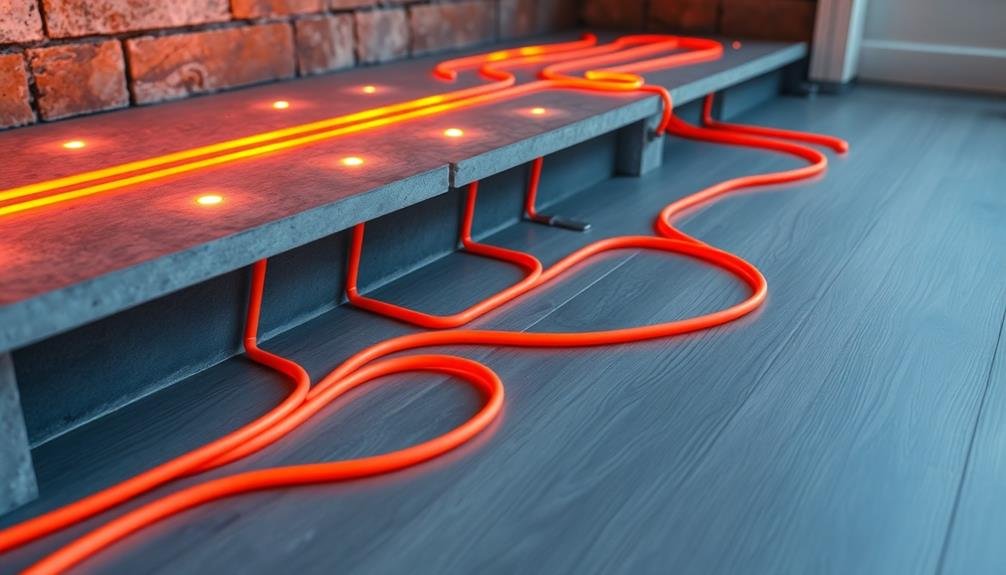
Three key components make up radiant floor heating systems: a heat source, a distribution system, and the floor itself. The heat source is typically a boiler or water heater that warms the fluid circulating through the system. This fluid can be water or a mixture of water and antifreeze.
The distribution system consists of a network of pipes or electric heating elements installed beneath your basement floor. These pipes or elements distribute heat evenly across the floor surface.
Your floor acts as a large radiator, emitting warmth upward into the room. This method of heating is highly efficient, as it doesn't rely on forced air circulation, which can lead to heat loss. You'll find that radiant floor heating provides consistent warmth from the ground up, eliminating cold spots and drafts common with traditional heating systems.
Radiant floor heating can be installed in various floor types, including concrete, tile, and even some carpeted surfaces. It's particularly well-suited for basements due to their naturally cooler temperatures.
Types of Basement Radiant Systems
When considering radiant floor heating for your basement, you'll encounter two main types of systems: hydronic and electric. Hydronic systems use heated water circulating through pipes beneath your floor, while electric systems employ a network of heating cables or mats.
Hydronic systems are often more energy-efficient for larger areas and can be integrated with your home's existing boiler or water heater. They're ideal for new construction or major renovations, as installation requires more extensive work.
Electric systems, on the other hand, are easier to install and perfect for smaller spaces or retrofit projects.
Both types offer unique advantages:
- Comfort: They provide consistent, even heat distribution throughout your basement.
- Energy efficiency: Radiant systems can be more efficient than forced-air heating, potentially lowering your energy bills.
- Versatility: They work well with various flooring materials, including tile, hardwood, and carpet.
When choosing between hydronic and electric systems, consider factors like your basement's size, your home's existing heating infrastructure, and your budget.
Consulting with a professional can help you determine which system best suits your specific needs and guarantees proper installation for maximum performance.
Benefits for Basement Upgrades
Upgrading your basement with radiant floor heating can transform this often-neglected space into a cozy, inviting area of your home. You'll enjoy consistent warmth throughout the room, eliminating cold spots and drafts. Unlike forced-air systems, radiant heating doesn't circulate dust or allergens, improving indoor air quality.
Energy efficiency is another key benefit. Radiant systems operate at lower temperatures than traditional heating methods, potentially reducing your energy bills. They're also silent, enhancing the comfort of your basement living space.
Here's a quick overview of the benefits:
| Comfort | Efficiency | Health |
|---|---|---|
| Even heat distribution | Lower energy costs | Reduced allergens |
| No cold spots | Zoned heating options | Improved air quality |
| Silent operation | Compatible with various energy sources | No dry air issues |
| Comfortable floor temperature | Minimal heat loss | Reduced mold growth |
| Versatile design options | Long-lasting system | Safer for children and pets |
Installation Process and Costs
You'll find that installing radiant floor heating in your basement involves several key steps, from preparing the subfloor to laying the heating elements and connecting the system to a power source.
The costs can vary considerably depending on factors like your basement's size, the type of system you choose, and whether you opt for professional installation or a DIY approach.
If you're considering tackling this project yourself, weigh the potential savings against the complexity of the installation and the importance of proper setup for ideal performance.
Step-By-Step Installation Guide
Curious about installing radiant floor heating in your basement? Let's walk through the step-by-step process to help you understand what's involved.
First, you'll need to prepare the basement floor by cleaning and leveling it.
Next, install a vapor barrier to prevent moisture from seeping through.
Then, lay down insulation boards to improve heat retention.
After that, it's time to install the heating elements. For hydronic systems, you'll connect a network of pipes, while electric systems require laying down heating mats or cables.
Once the heating elements are in place, you'll need to:
- Connect the system to its power source (boiler for hydronic, electrical panel for electric)
- Install a thermostat and any necessary sensors
- Test the system to verify it's working properly
Material and Labor Costs
Radiant floor heating's installation costs can vary widely depending on several factors. The type of system you choose, the size of your basement, and your location all play a role in determining the final price. Generally, electric systems are less expensive to install but costlier to operate, while hydronic systems have higher upfront costs but lower long-term operating expenses.
For a typical basement, you can expect to pay between $6 to $20 per square foot for materials and labor. Here's a breakdown of potential costs:
| Item | Electric System | Hydronic System |
|---|---|---|
| Materials | $5-$7/sq ft | $6-$8/sq ft |
| Labor | $2-$4/sq ft | $3-$6/sq ft |
| Thermostat | $100-$300 | $200-$500 |
| Boiler (hydronic only) | N/A | $1,500-$3,000 |
| Total (1,000 sq ft basement) | $7,000-$11,300 | $10,700-$17,500 |
DIY Vs Professional Installation
When it comes to installing radiant floor heating in your basement, you're faced with an essential decision: DIY or professional installation.
DIY can save you money, but it requires technical skills, time, and careful planning. Professional installation guarantees expert workmanship but comes at a higher cost.
If you're considering DIY, you'll need to:
- Research and understand the installation process thoroughly
- Purchase all necessary materials and tools
- Allocate sufficient time for the project, which can take several days
Professional installation offers peace of mind and typically includes system design, proper insulation, and expert placement of heating elements.
Pros can complete the job more quickly and efficiently, often in just 1-2 days. They'll also handle any unexpected issues that may arise during installation.
Cost-wise, DIY can save you 30-50% on labor, but you risk costly mistakes.
Professional installation may cost more upfront but can prevent expensive repairs down the line.
Ultimately, your decision should depend on your skill level, available time, and budget constraints.
Consider consulting a professional for advice before making your final choice.
Energy Efficiency Considerations
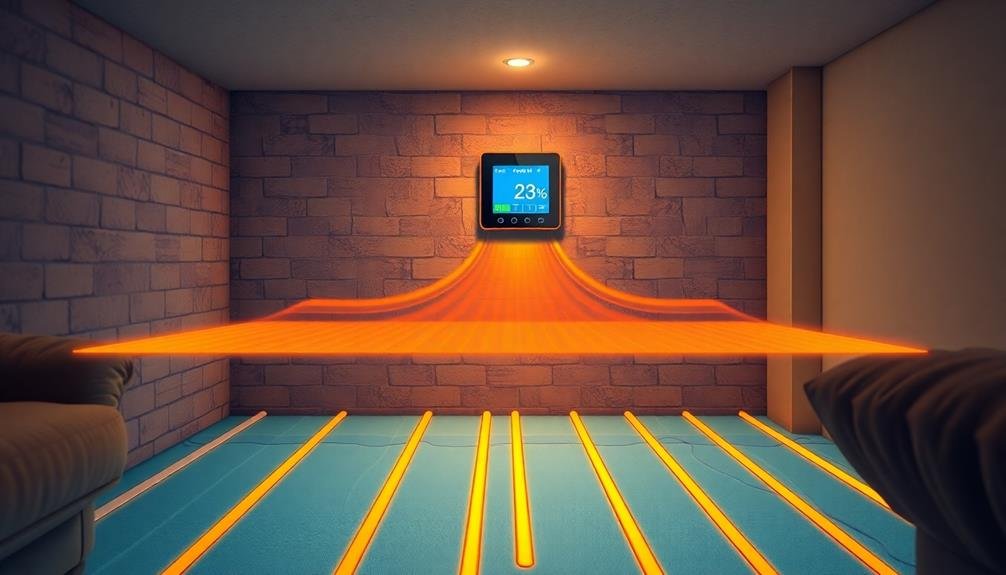
Energy efficiency is a significant factor when considering radiant floor heating for your basement. Radiant systems can be more efficient than traditional forced-air heating, as they distribute heat evenly across the floor surface. This even distribution reduces heat loss and eliminates the need for ductwork, which can be a source of energy waste.
When selecting a radiant floor heating system, opt for high-efficiency boilers or water heaters to maximize energy savings. Insulation plays an essential role in efficiency; make sure your basement floor and walls are well-insulated to prevent heat loss to the surrounding soil.
Programmable thermostats can help you control energy consumption by adjusting temperatures based on your schedule. Consider zoning your radiant floor system to heat only occupied areas of your basement, further reducing energy use.
Hydronic systems tend to be more energy-efficient than electric ones, especially if you have access to natural gas. However, if you're using renewable energy sources like solar or geothermal, electric systems can be equally efficient.
Moisture Control in Basement Installations
When installing radiant floor heating in your basement, you'll need to address moisture control to protect your investment.
Start by implementing proper vapor barriers and insulation techniques to prevent water intrusion and condensation.
You may also want to take into account adding a dehumidification system to maintain ideal humidity levels and further safeguard your basement's environment.
Vapor Barriers
Protecting your basement from moisture is vital when installing radiant floor heating. A vapor barrier is an important component in this process, acting as a shield between the concrete slab and the surrounding soil. It prevents water vapor from seeping through the concrete and into your living space, which can lead to mold growth and structural damage.
When installing a vapor barrier for your radiant floor heating system, consider these key points:
- Material selection: Choose a high-quality polyethylene sheet with a thickness of at least 6 mil. This guarantees durability and effective moisture protection.
- Proper installation: Overlap seams by at least 6 inches and seal them with tape designed for vapor barriers. Extend the barrier up the foundation walls to create a continuous moisture barrier.
- Integration with insulation: Place the vapor barrier beneath the insulation layer to prevent condensation between the two materials.
Proper Insulation Techniques
Proper insulation goes hand in hand with vapor barriers to create an effective moisture control system for your basement's radiant floor heating.
When installing radiant floor heating in your basement, you'll need to use insulation materials specifically designed for below-grade applications. These typically include rigid foam boards or spray foam insulation.
Start by insulating the walls and rim joists of your basement. Use extruded polystyrene (XPS) or closed-cell spray foam for best results. These materials provide excellent moisture resistance and thermal insulation properties.
For the floor, place a layer of rigid foam insulation beneath the radiant heating system. This prevents heat loss to the ground and improves the system's efficiency.
Don't forget to insulate any exposed pipes or ductwork in your basement. This helps prevent condensation and heat loss.
When installing insulation, make certain there are no gaps or voids where moisture can accumulate. Seal all seams and joints with appropriate tape or foam sealant.
Dehumidification Systems
Controlling moisture is essential for the longevity and efficiency of your basement's radiant floor heating system. Excess humidity can lead to mold growth, wood rot, and damage to your heating components. To combat this, you'll need an effective dehumidification system.
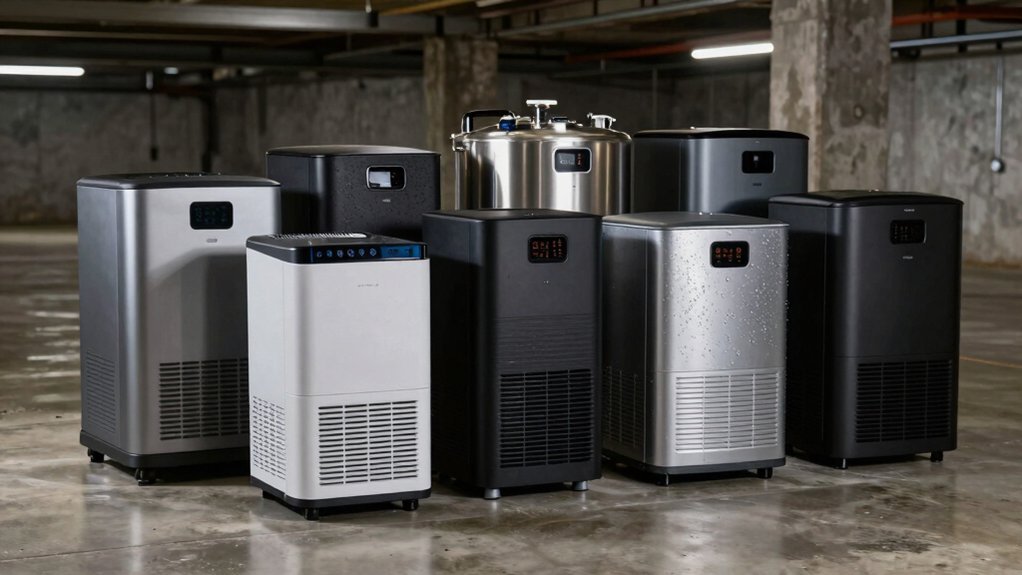
A standalone dehumidifier is often sufficient for most basements. Choose a unit with the appropriate capacity for your space, typically measured in pints of water removed per day. Place it in a central location and guarantee proper drainage. For larger or particularly damp basements, consider a whole-house dehumidifier integrated into your HVAC system.
To maximize your dehumidification efforts:
- Seal any cracks or gaps in your basement walls and floor
- Install a vapor barrier beneath your radiant heating system
- Maintain proper ventilation throughout your home
Monitor your basement's humidity levels regularly, aiming for a range between 30% and 50%.
If you notice condensation on windows or pipes, musty odors, or damp spots on walls, it's time to reassess your moisture control strategy. By keeping humidity in check, you'll protect your radiant floor heating investment and create a more comfortable living space.
Compatibility With Flooring Materials
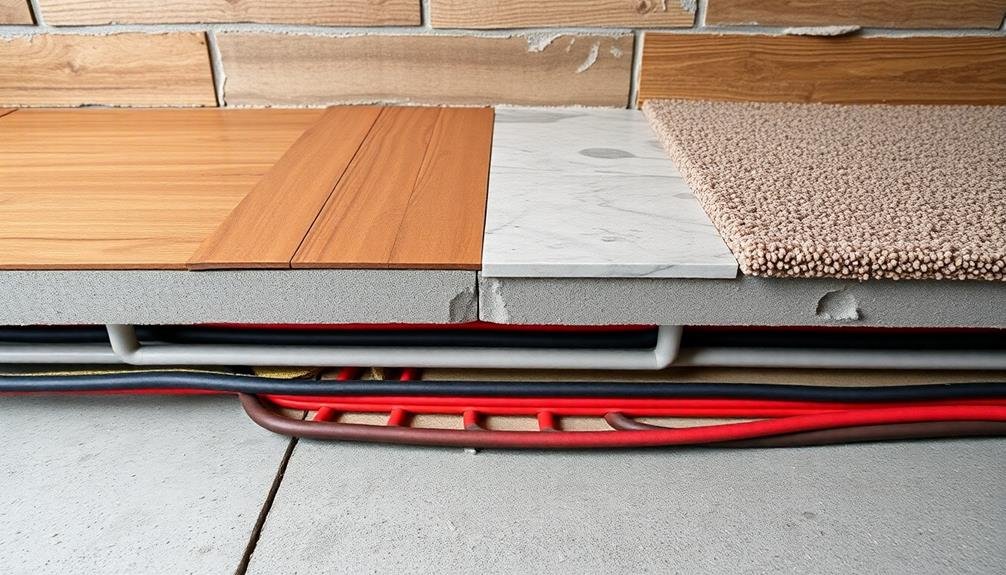
Radiant floor heating systems work seamlessly with a variety of flooring materials, but some options are more efficient than others.
You'll want to choose flooring that conducts heat well to maximize your system's performance. Ceramic tile, natural stone, and concrete are excellent choices, as they efficiently transfer heat and retain it for longer periods.
If you prefer a softer feel underfoot, engineered hardwood is a good option. It's more stable than solid hardwood and can withstand temperature changes better. Luxury vinyl plank (LVP) and vinyl tile are also compatible with radiant heating, offering durability and moisture resistance.
Carpet can work with radiant heating, but it's not ideal. Thick carpets and padding act as insulators, reducing heat transfer. If you must use carpet, opt for a low-pile variety with thin padding.
Avoid using solid hardwood, as it's prone to warping and cracking due to temperature fluctuations. Similarly, laminate flooring isn't recommended, as its composition can be affected by heat.
When selecting your basement flooring, consult with your radiant heating installer to verify compatibility and peak performance. They'll help you choose the best material for your specific system and needs.
Zoning Options for Basements
Efficient zoning is a key consideration when installing radiant floor heating in your basement. By dividing your basement into separate heating zones, you'll have greater control over temperature management and energy efficiency.
Zoning allows you to heat only the areas you're using, reducing unnecessary energy consumption and lowering your utility bills.
When planning your basement's radiant floor heating zones, consider the following factors:
- Room layout and usage
- Insulation variations
- Natural light exposure
You can create zones based on individual rooms or group similar areas together. For example, you might have separate zones for a home office, entertainment area, and guest bedroom. Each zone can be controlled independently with its own thermostat, allowing you to set different temperatures based on occupancy and preferences.
Modern radiant floor heating systems often come with smart controls that enable you to manage zones remotely via smartphone apps. This feature lets you adjust temperatures on the go, ensuring your basement is comfortable when you need it and energy-efficient when you don't.
Maintenance and Longevity
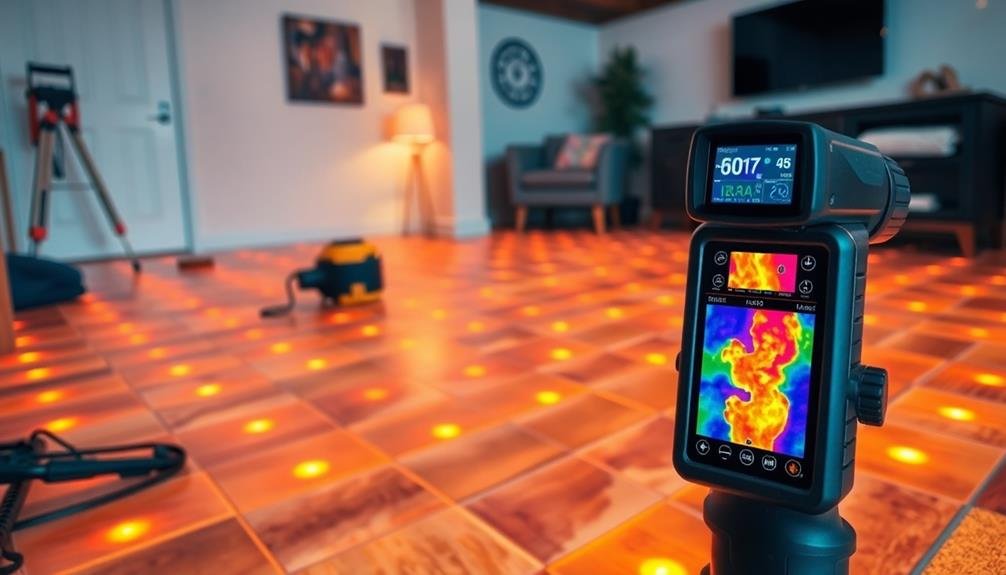
While proper zoning enhances your radiant floor heating system's performance, maintaining it guarantees its longevity and continued efficiency. Regular maintenance is essential for preserving your system's effectiveness and extending its lifespan. You'll need to perform annual checks and occasional servicing to keep everything running smoothly.
Here's a quick guide to maintaining your radiant floor heating system:
| Task | Frequency | Importance |
|---|---|---|
| Check system pressure | Monthly | High |
| Inspect for leaks | Annually | Critical |
| Clean air vents | Bi-annually | Medium |
It's important to monitor your system's pressure regularly and address any drops promptly. Leaks can cause significant damage if left unchecked, so annual inspections are crucial. Don't forget to clean air vents to prevent dust buildup and maintain ideal airflow.
With proper care, your radiant floor heating system can last 20-35 years. However, you may need to replace components like pumps or valves every 10-15 years. By following a consistent maintenance schedule, you'll guarantee your basement remains comfortable and energy-efficient for years to come.
Comparing to Traditional Heating Methods
When you're weighing radiant floor heating against traditional methods for your basement, energy efficiency is a key factor to evaluate.
You'll find that radiant systems often outperform forced-air regarding energy use, potentially lowering your utility bills.
Additionally, radiant heating offers superior comfort and frees up wall space, allowing for more flexible room layouts compared to baseboard or forced-air systems.
Energy Efficiency Comparison
Radiant floor heating systems offer three key advantages over traditional heating methods in basements. They're more energy-efficient, provide consistent warmth, and eliminate the need for bulky radiators or ductwork.
When it comes to energy efficiency, radiant floor heating outperforms traditional methods in several ways:
- Lower operating temperatures: Radiant systems can maintain comfort at lower temperatures than forced-air systems, reducing energy consumption.
- Reduced heat loss: With radiant heating, you'll lose less heat through walls and ceilings compared to conventional systems.
- Zoning capabilities: You can easily create heating zones, allowing you to heat only occupied areas and further reduce energy use.
Radiant floor heating typically uses 25-30% less energy than forced-air systems. This efficiency stems from the even distribution of heat from the floor up, eliminating cold spots and reducing the need for higher thermostat settings.
Additionally, you won't lose heat through leaky ducts or poorly insulated pipes, which is common in traditional heating systems. The consistent warmth provided by radiant heating also means your heating system won't need to cycle on and off as frequently, further improving energy efficiency and reducing wear on the system.
Comfort and Space Utilization
The comfort and space utilization benefits of radiant floor heating in basements are significant when compared to traditional heating methods.
You'll experience even heat distribution throughout your basement, eliminating cold spots and drafts common with forced-air systems. The warmth radiates from the floor up, creating a cozy environment that's particularly pleasant for bare feet on typically cold basement surfaces.
Unlike bulky radiators or baseboard heaters, radiant floor heating is completely hidden, freeing up wall and floor space for furniture placement and decor.
This invisible heating solution allows you to maximize your basement's usable area without compromising on comfort. You won't have to worry about arranging your room around visible heating elements or maintaining clearance for safety.
The silent operation of radiant floor heating adds to the comfort level, as you won't hear the noise of a furnace kicking on or air rushing through vents.
This quiet heating method is ideal for basement living spaces, home offices, or entertainment areas where a peaceful environment is desired.
Additionally, the lack of moving air reduces dust circulation, potentially improving indoor air quality and benefiting allergy sufferers.
Design Considerations for Basements
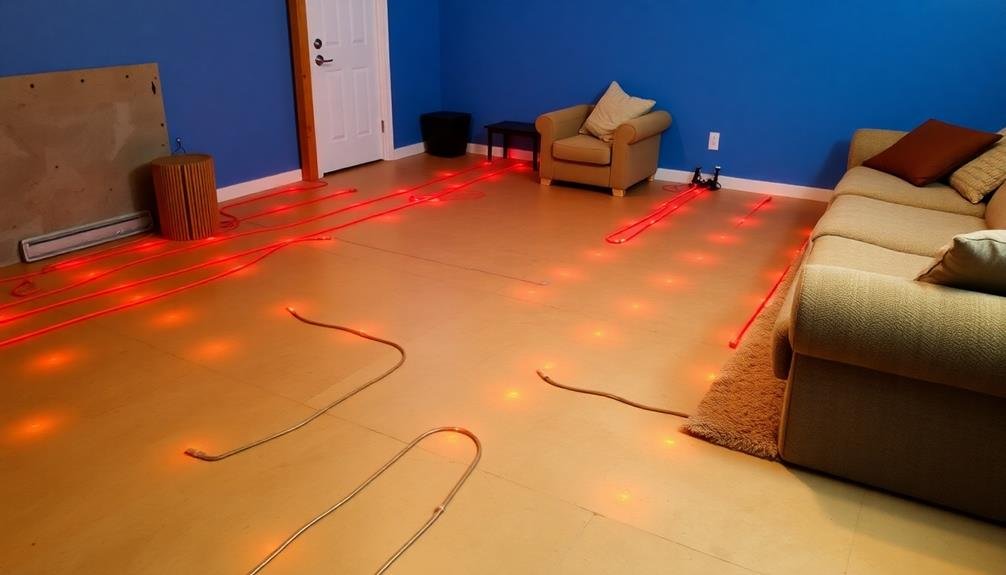
Designing radiant floor heating for basements requires careful evaluation of several unique factors.
You'll need to account for the higher moisture levels and cooler temperatures typically found in below-grade spaces. Proper insulation is vital to prevent heat loss to the surrounding soil and foundation walls.
It's also essential to choose the right type of flooring material that's compatible with radiant heating and suitable for basement conditions.
When planning your basement's radiant heating system, keep these key points in mind:
- Moisture barrier: Install a vapor barrier beneath the heating system to protect against ground moisture and potential water infiltration.
- Insulation: Use high-quality insulation beneath and around the radiant heating elements to maximize efficiency and prevent heat loss.
- Flooring selection: Opt for flooring materials that conduct heat well, such as tile, stone, or engineered wood, while avoiding thick carpets or rubber flooring that can inhibit heat transfer.
You'll also need to take into account the basement's layout, ceiling height, and intended use when designing the radiant heating system.
Proper zoning can help you efficiently heat different areas of the basement based on their specific requirements and usage patterns.
Integration With Smart Home Technology
Embracing the era of connected homes, integrating radiant floor heating systems with smart home technology can greatly enhance your basement's comfort and energy efficiency.
You'll be able to control your basement's temperature remotely using your smartphone or voice commands through virtual assistants like Alexa or Google Home.
Smart thermostats designed for radiant heating systems allow you to create custom schedules, adjusting temperatures based on your daily routines.
They can also learn your preferences over time, automatically optimizing heating patterns for maximum comfort and energy savings.
Some advanced systems incorporate occupancy sensors, detecting when you're in the basement and adjusting the temperature accordingly.
You can even integrate your radiant heating with other smart home devices, such as automated blinds or lighting, to create a cohesive, energy-efficient environment.
Many smart radiant heating systems offer real-time energy consumption data, helping you track and reduce your energy usage.
They can also send alerts for maintenance issues or unexpected temperature fluctuations, ensuring your system runs smoothly and efficiently year-round.
Environmental Impact of Radiant Heating
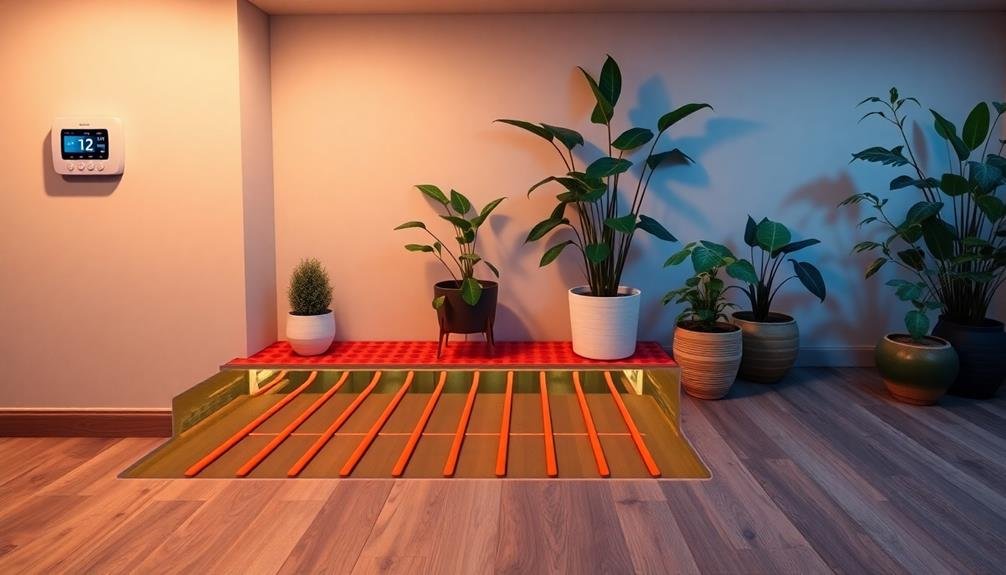
When considering home heating options, radiant floor heating stands out as an environmentally friendly choice for your basement. This system operates more efficiently than traditional forced-air heating, reducing energy consumption and lowering your carbon footprint.
Radiant heating distributes warmth evenly across the floor, eliminating cold spots and minimizing heat loss through ductwork.
You'll find that radiant floor heating offers several environmental benefits:
- Energy efficiency: It uses lower water temperatures than conventional systems, resulting in reduced energy consumption.
- Improved air quality: Without blowing air, it doesn't circulate dust, allergens, or pollutants, creating a healthier indoor environment.
- Longevity: Radiant systems typically last longer than forced-air systems, reducing the need for replacements and associated waste.
Frequently Asked Questions
Can Radiant Floor Heating Be Installed in an Existing Basement?
Yes, you can install radiant floor heating in your existing basement. It's possible to retrofit the system by adding heating elements above your current floor or by removing the existing flooring to install it underneath.
How Long Does It Take for Radiant Floor Heating to Warm Up?
You'll find radiant floor heating typically warms up within 30-60 minutes. It's slower than forced air systems but provides more consistent heat. Your floor type and insulation can affect warm-up time, so you'll need to plan accordingly.
Is Radiant Floor Heating Safe for Pets and Children?
You'll be glad to know radiant floor heating is generally safe for pets and children. It's not hot to the touch and doesn't create any hazards. However, you should still supervise kids and pets around any heating system.
Can Radiant Floor Heating Be Used for Cooling in Summer?
You can't use traditional radiant floor heating for cooling. However, you could install a reversible heat pump system that circulates cool water through the floor pipes in summer. It's not as efficient as air conditioning, though.
Does Radiant Floor Heating Affect Basement Ceiling Height?
Radiant floor heating won't greatly affect your basement's ceiling height. You'll only lose about 1/2 inch to 3/4 inch of height for the heating system. It's a minimal change that's barely noticeable in most basements.
In Summary
You've explored the ins and outs of radiant floor heating for your basement upgrade. It's an efficient, comfortable option that can transform your space. While it requires careful planning and investment, the benefits often outweigh the costs. As you move forward, consider your specific needs, budget, and long-term goals. Don't forget to consult professionals for tailored advice. With the right approach, you'll create a cozy, energy-efficient basement you'll love.



Leave a Reply