

Neglecting your radiant floor system is a costly mistake. Regular maintenance boosts efficiency, extends equipment life, and prevents minor issues from becoming major repairs. You'll enjoy consistent warmth without drafts or dry air while lowering energy bills. Simple tasks like cleaning surfaces, checking for leaks, and balancing system pressure can dramatically improve performance. Don't overlook insulation techniques and material selection, which play vital roles in heat distribution. Annual professional inspections guarantee peak functioning and catch potential problems early. By giving your radiant floors the attention they deserve, you'll maximize comfort and savings. Dive deeper to reveal the full potential of your heating system.
Understanding Radiant Floor Systems
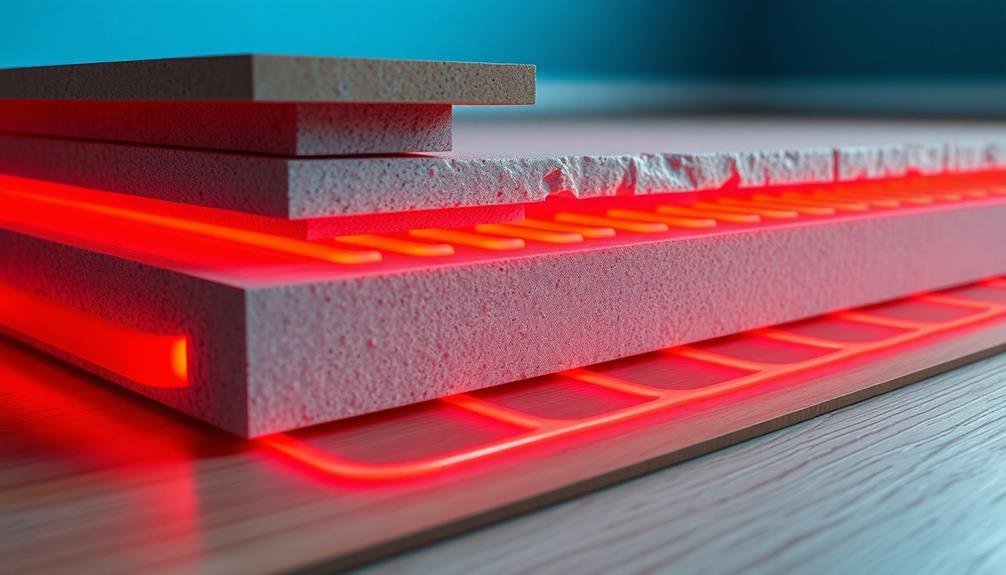
Radiant floor systems are a modern heating solution that's gaining popularity in homes and businesses. Unlike traditional forced-air systems, they work by warming the floor surface directly, which then radiates heat upward to warm the entire space.
You'll find two main types: hydronic systems that circulate warm water through pipes beneath the floor, and electric systems that use heating cables or mats.
These systems offer several advantages. They're energy-efficient, as they don't lose heat through ducts. They provide consistent, even heating without creating drafts or dry air. You'll enjoy improved indoor air quality, as there's no circulation of dust or allergens.
Radiant floors are also silent and invisible, freeing up wall space typically occupied by radiators or vents.
Installation can be done in new construction or as a retrofit. While upfront costs may be higher than traditional systems, you'll likely see long-term energy savings.
Radiant floors work well with various flooring materials, including tile, hardwood, and carpet. They're particularly effective in bathrooms, kitchens, and basements where floors tend to be cold.
Benefits of Regular Maintenance
Regular maintenance of your radiant floor system yields significant benefits you won't want to overlook.
By keeping your system in top shape, you'll experience improved performance, ensuring peak heating efficiency throughout your home.
Additionally, consistent upkeep extends the lifespan of your equipment, saving you money on premature replacements and costly repairs.
Improved System Performance
In order to maintain peak efficiency, radiant floor systems require consistent upkeep. When you prioritize regular maintenance, you'll notice a significant improvement in your system's performance.
You'll experience more even heat distribution throughout your home, resulting in enhanced comfort and reduced energy consumption.
By keeping your radiant floors in top condition, you'll prevent common issues like air pockets or sediment buildup that can hinder heat transfer. This means your system won't have to work as hard to achieve the desired temperature, leading to lower energy bills and a longer lifespan for your equipment.
Regular maintenance also allows you to identify and address minor problems before they escalate into costly repairs. You'll be able to spot leaks, corrosion, or worn components early on, saving you money and preventing unexpected breakdowns.
Moreover, a well-maintained radiant floor system operates more quietly and efficiently. You'll enjoy consistent warmth without the noise and drafts associated with forced-air systems.
Extended Equipment Lifespan
Three key factors contribute to extending the lifespan of your radiant floor equipment: consistent maintenance, prompt repairs, and proper usage.
By adhering to a regular maintenance schedule, you'll prevent small issues from escalating into major problems. This includes cleaning filters, checking for leaks, and inspecting pumps and valves.
Don't overlook the importance of water quality; use a water treatment system to prevent mineral buildup and corrosion.
When you notice any irregularities in your system's performance, address them immediately.
Prompt repairs can save you money in the long run and prevent further damage to your equipment. Pay attention to unusual noises, temperature fluctuations, or changes in energy consumption.
Proper usage is essential for maximizing your radiant floor system's lifespan.
Avoid sudden temperature changes, which can stress the equipment. Instead, gradually adjust settings and use programmable thermostats to optimize efficiency.
Educate all household members on the correct operation of the system to prevent misuse.
Common Issues and Solutions
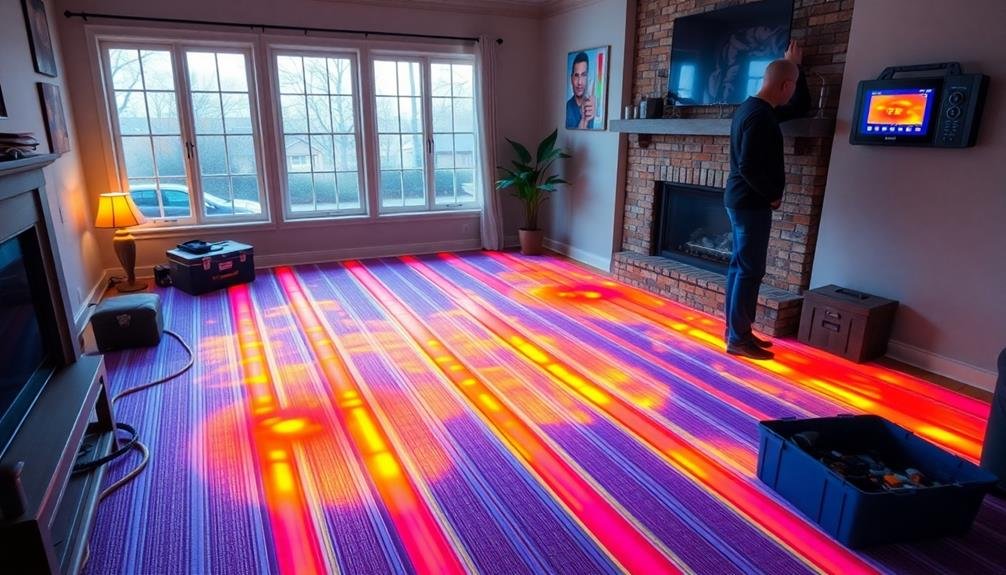
Troubleshooting radiant floor systems can be intimidating, but understanding common issues and their solutions will help you maintain best performance.
One frequent problem is uneven heating, often caused by air pockets in the system. To resolve this, you'll need to bleed the air from the pipes using the system's air vents.
If you're experiencing insufficient heat, check your thermostat settings and verify your boiler is functioning correctly. You may need to increase the water temperature or adjust the flow rate.
Leaks are another potential issue. If you notice damp spots or hear gurgling sounds, shut off the system immediately and call a professional.
For electric radiant floors, damaged wiring can cause cold spots. In this case, you'll need an electrician to locate and repair the fault.
Noise in the system, such as banging or clicking, often indicates expansion and contraction of pipes. Installing expansion joints can alleviate this problem.
Regular maintenance, including annual inspections and water quality checks, can prevent many issues. If you're unsure about any repairs, always consult a qualified technician to avoid damaging your radiant floor system.
Cleaning Radiant Floor Surfaces
Maintaining the cleanliness of your radiant floor surfaces is essential for peak performance and longevity. Regular cleaning not only enhances the aesthetic appeal of your floors but also guarantees maximum heat distribution.
For tile or stone surfaces, use a damp mop with a pH-neutral cleaner to avoid damaging the material. Avoid harsh chemicals or abrasive tools that could scratch the surface or compromise the radiant heating system beneath.
For hardwood floors with radiant heating, use a dry microfiber mop or vacuum with a soft brush attachment to remove dust and debris. If needed, lightly dampen the mop with a wood-specific cleaner, but don't oversaturate the floor. Excess moisture can warp the wood and potentially damage the heating elements.
For carpeted radiant floors, vacuum regularly to prevent dust buildup, which can act as an insulator and reduce heating efficiency. Deep clean your carpet annually using a professional service familiar with radiant floor systems.
Always consult your radiant floor manufacturer's guidelines for specific cleaning recommendations. By maintaining clean surfaces, you'll guarantee your radiant floor system operates at peak efficiency, providing consistent warmth and comfort throughout your living space.
Checking for Leaks
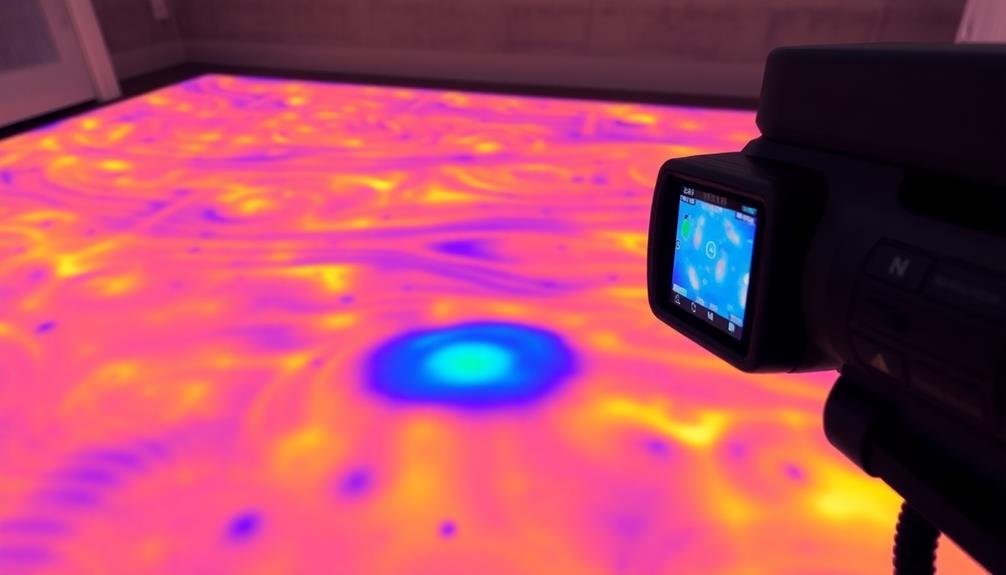
While keeping your radiant floors clean is important, regular inspections for leaks are equally essential. You'll want to check for any signs of moisture, discoloration, or warping in your flooring. These could indicate a leak in the radiant heating system beneath.
Start by visually inspecting your floors, paying close attention to corners and edges. If you suspect a leak, use a moisture meter to detect hidden water. For hydronic systems, monitor your boiler's pressure gauge regularly. A sudden drop in pressure might signal a leak.
Here's a quick guide to help you identify potential leak indicators:
| Visual Signs | Non-Visual Signs |
|---|---|
| Water stains | Unexplained high energy bills |
| Warped flooring | Reduced heating efficiency |
| Mold growth | Unusual sounds from the system |
| Discolored grout | Inconsistent room temperatures |
If you discover a leak, don't attempt repairs yourself. Contact a professional immediately to assess and fix the issue. Regular maintenance and prompt attention to leaks will guarantee your radiant floor system operates efficiently for years to come.
Balancing System Pressure
Three key components contribute to ideal radiant floor performance: temperature, flow rate, and pressure. Balancing system pressure is essential for ensuring even heat distribution and maximum efficiency.
You'll need to adjust the pressure in each loop of your radiant floor system to achieve uniform heating throughout your space.
Start by closing all the circuit valves except one. Open this valve fully and measure the flow rate. Gradually open the other valves, one at a time, adjusting each to match the flow rate of the first. This process helps equalize pressure across the system.
As you balance the pressure, keep an eye out for these indicators of proper system function:
- Even warmth across all floor areas
- Consistent water temperature throughout the loops
- Quiet operation without gurgling or hissing sounds
- Steady pressure readings on the system gauge
Insulation and Heat Distribution
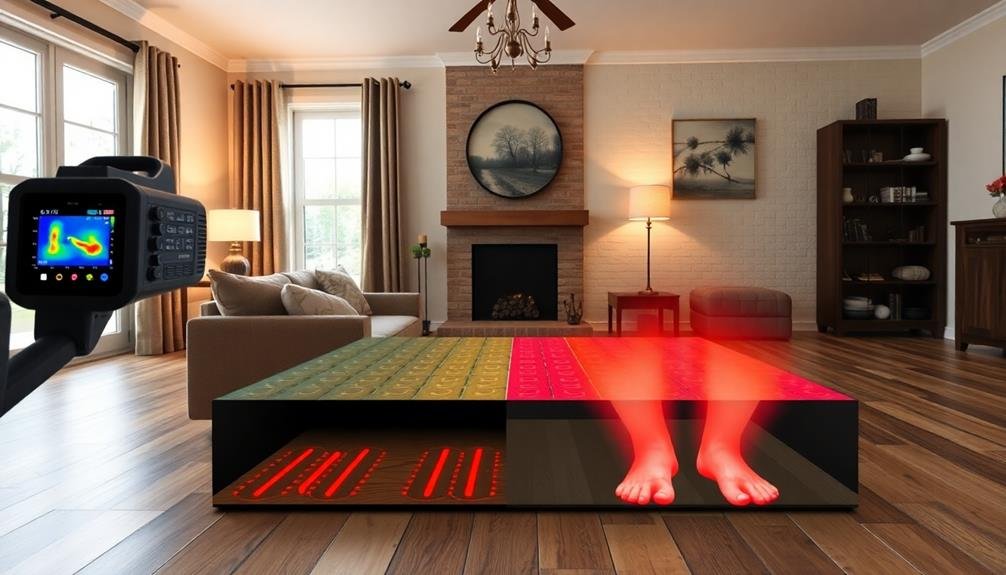
To maximize your radiant floor's efficiency, you'll need to focus on proper insulation and heat distribution.
Start by strategically placing thermal barriers to prevent heat loss and guarantee the warmth is directed where you need it most.
You'll also want to explore techniques for even heat dispersal and carefully select materials that promote ideal thermal conductivity throughout your floor system.
Optimal Thermal Barrier Placement
Proper insulation and heat distribution lay the foundation for an efficient radiant floor system. To maximize your radiant floor's performance, you'll need to place thermal barriers strategically.
Start by insulating beneath the heating elements to prevent heat loss to the ground or lower floors. This guarantees that the warmth is directed upward into your living space.
Don't forget to insulate the edges of your floor slab, as these areas are prone to heat loss. Use high-quality foam board insulation around the perimeter to create a thermal break.
For suspended floors, install insulation between the joists to minimize heat transfer to unheated spaces below.
Consider these visual elements when planning your thermal barrier placement:
- A cross-section of your floor showing layers of insulation
- Heat flow diagrams illustrating proper barrier positioning
- Infrared images comparing insulated vs. uninsulated floors
- Detailed schematics of edge insulation techniques
Even Heat Dispersal Techniques
Achieving uniform warmth throughout your space is essential for radiant floor efficiency. To guarantee even heat dispersal, you'll need to focus on proper insulation and strategic heat distribution techniques.
Start by insulating your subfloor thoroughly. Use high-quality insulation materials like extruded polystyrene or spray foam to create a barrier that prevents heat loss to the ground or lower floors.
Don't forget to insulate the edges of your radiant floor system to minimize heat escape.
For ideal heat distribution, space your radiant tubing evenly across the floor. Typically, you'll want to place tubes 6 to 12 inches apart, depending on your heating needs and floor covering.
In areas with higher heat loss, such as near windows or exterior walls, consider reducing the spacing to provide extra warmth.
Use heat-conducting materials in your floor construction to improve heat transfer. Aluminum heat transfer plates can help spread warmth more efficiently, especially with wooden subfloors.
For concrete slabs, embedding the tubing directly in the concrete ensures excellent heat distribution.
Material Selection Importance
Why does material selection play such an essential role in radiant floor efficiency? The materials you choose for your radiant floor system greatly impact its performance, heat distribution, and overall energy efficiency. Proper selection guarantees ideal heat transfer from the heating elements to the floor surface and, ultimately, to your living space.
When selecting materials for your radiant floor system, consider these key factors:
- Thermal conductivity: Materials with high thermal conductivity, like concrete or tile, transfer heat more efficiently.
- Heat retention: Dense materials retain heat longer, providing consistent warmth even after the system turns off.
- Insulation properties: Proper insulation beneath the heating elements prevents heat loss to the subfloor.
- Durability: Choose materials that can withstand temperature fluctuations without warping or cracking.
You'll want to select flooring materials that complement your radiant heating system. For example, ceramic tile and stone are excellent choices due to their high thermal conductivity.
Engineered hardwood can also work well, but avoid thick carpets as they can act as insulators.
Don't forget about the underlayment and insulation layers, which play important roles in preventing heat loss and improving system efficiency.
Professional Inspection and Servicing
For ideal performance and longevity, radiant floor systems require regular professional inspection and servicing. You'll want to schedule annual check-ups with a qualified technician who specializes in radiant heating systems. They'll assess your system's overall condition, check for leaks, and guarantee proper pressure levels.
During these inspections, the technician will examine the boiler or heat source, pumps, valves, and controls. They'll clean or replace filters, bleed air from the system, and verify that the thermostat is functioning correctly.
If you have a hydronic system, they'll test the water quality and add any necessary treatments to prevent corrosion or mineral buildup.
Don't skip these inspections, as they can catch minor issues before they become major problems. Regular servicing helps maintain your system's efficiency, potentially lowering your energy bills and extending the system's lifespan.
It's also an opportunity to discuss any concerns you may have about your radiant floor's performance.
If you notice any unusual sounds, uneven heating, or a sudden increase in energy consumption, don't wait for your annual inspection. Contact a professional immediately to address these issues and keep your radiant floor system running smoothly.
Frequently Asked Questions
Can Radiant Floor Heating Be Installed in Existing Homes?
Yes, you can install radiant floor heating in your existing home. You'll need to evaluate your current flooring, subfloor, and insulation. It's often easier to install during renovations, but retrofit options are available for various floor types.
How Long Does a Radiant Floor Heating System Typically Last?
Your radiant floor heating system can last 20-35 years with proper maintenance. You'll enjoy its longevity, but remember that components like pumps may need replacement sooner. Regular check-ups will help guarantee it's running efficiently for decades.
Are Radiant Floors Compatible With Smart Home Technology?
Yes, you'll find that radiant floors can be seamlessly integrated with smart home technology. You can control your system remotely, set schedules, and adjust temperatures using your smartphone or voice commands. It's a great way to enhance comfort and efficiency.
Can Radiant Floor Heating Be Used for Cooling in Summer?
You can't typically use radiant floor heating for cooling in summer. While it's great for warmth, it's not designed to cool. For summer comfort, you'll need to rely on other cooling methods like air conditioning or fans.
What Flooring Materials Work Best With Radiant Floor Heating Systems?
You'll find that ceramic tile, natural stone, and polished concrete work best with radiant floor heating. They're excellent heat conductors. You can also use engineered hardwood, vinyl, or laminate, but they're slightly less efficient at transferring heat.
In Summary
Don't overlook your radiant floors! By maintaining them regularly, you'll maximize efficiency and comfort while avoiding costly repairs. Clean surfaces, check for leaks, balance pressure, and guarantee proper insulation. Schedule professional inspections to catch issues early. With a little attention, you'll keep your radiant floor system running smoothly for years to come. It's an easy way to boost your home's energy efficiency and maintain a cozy living space. Take action today!

Leave a Reply