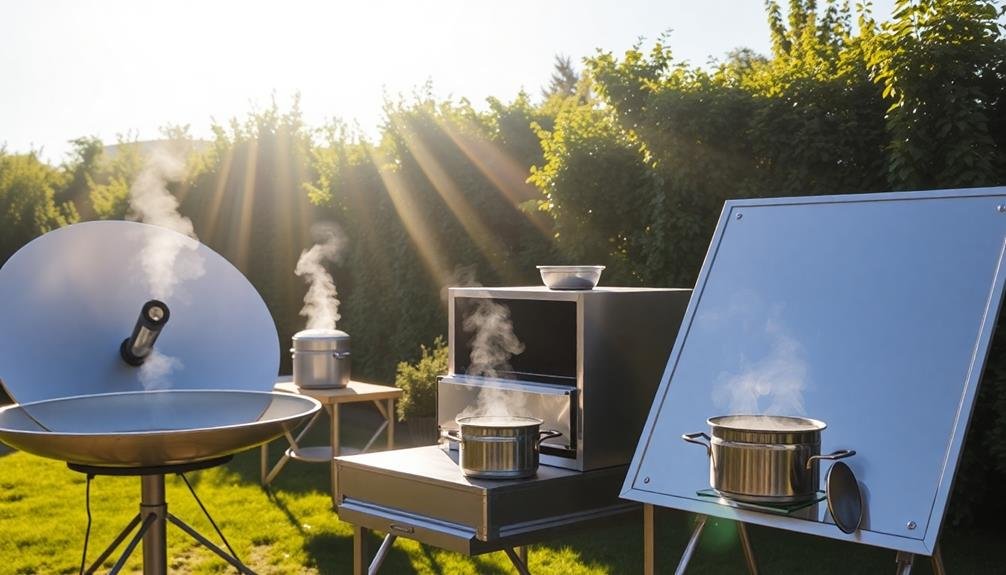
When it comes to off-grid cooking, solar ovens offer a sustainable and efficient solution. You'll find a variety of designs to suit your needs, from the highly efficient parabolic cooker to the simple box-style oven. Panel cookers and evacuated tube designs provide portability, while Fresnel lens ovens offer quick cooking times. For DIY enthusiasts, options like the solar funnel, tire oven, and bucket cooker are easy to construct. If you're looking for a permanent solution, consider a solar wall oven. Each design has its unique advantages, and exploring these options will help you find the perfect fit for your off-grid cooking adventures.
Parabolic Solar Cooker
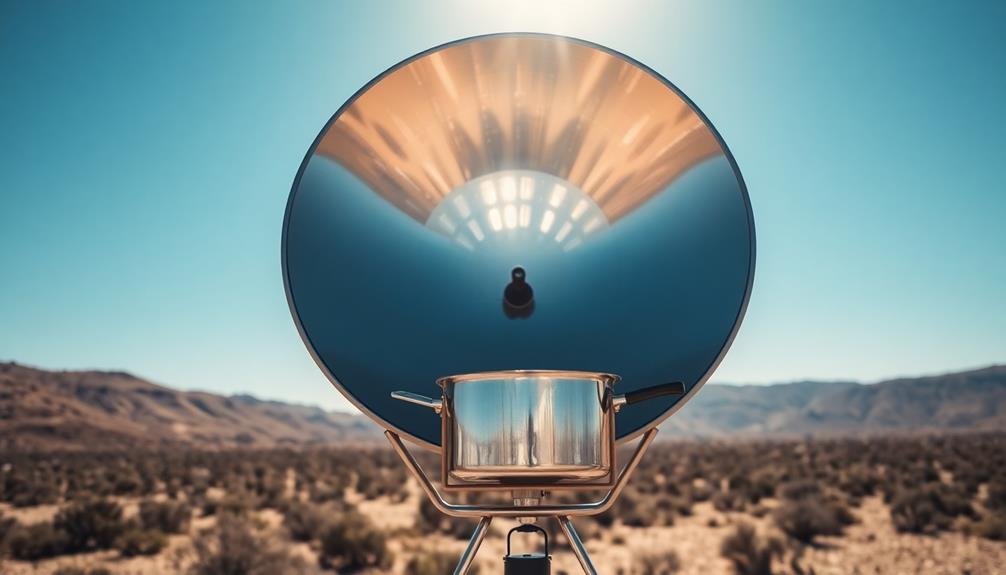
Out from the array of solar oven designs, the parabolic solar cooker stands as one of the most efficient options. Its distinctive curved shape concentrates sunlight onto a single focal point, generating intense heat for rapid cooking. You'll find that these cookers can reach temperatures up to 400°F (204°C), rivaling conventional stovetops.
To use a parabolic solar cooker, you'll need to position it directly facing the sun. The reflective surface, often made of polished aluminum or mirrored glass, directs sunlight to the cooking pot suspended at the focal point. You'll have to adjust the cooker's position every 15-30 minutes to maintain ideal sunlight exposure.
These cookers excel at tasks requiring high heat, such as boiling water, frying, and even grilling. However, they're less suited for baking or slow-cooking dishes. You'll appreciate their portability and efficiency, especially in emergency situations or off-grid living.
When choosing a parabolic solar cooker, consider factors like size, durability, and ease of assembly. Some models come with stands for better stability, while others are more compact for easy transport.
With proper use and maintenance, you'll find a parabolic solar cooker to be a reliable and eco-friendly cooking solution.
Box-Style Solar Oven
You'll find box-style solar ovens to be a simple yet effective design for off-grid cooking.
These lightweight and portable ovens are easy to transport and set up wherever you need them.
If you're on a budget, you can build your own box-style solar oven as an affordable DIY option.
Simple, Effective Design
One of the most accessible and efficient solar oven designs is the box-style cooker. You'll find it easy to build and use, making it perfect for beginners and experienced off-grid cooks alike. The basic structure consists of an insulated box with a transparent lid, reflecting panels, and a dark-colored cooking pot.
To create your own box-style solar oven, you'll need:
| Materials | Tools | Optional Items |
|---|---|---|
| Cardboard box | Utility knife | Oven thermometer |
| Aluminum foil | Scissors | Cooking rack |
| Black paint | Glue or tape | Silicone sealant |
| Glass or plastic | Ruler | Weather stripping |
Start by lining the interior of the box with foil, shiny side out. Paint the bottom black to absorb heat. Create a lid using clear glass or plastic, ensuring a tight seal. Add reflective panels to direct more sunlight into the oven. You can adjust these panels throughout the day to maximize sun exposure. With this simple design, you'll be able to cook meals, bake bread, and even pasteurize water using only the sun's energy.
Lightweight and Portable
While the box-style solar oven is effective, it can also be designed for portability. You'll find lightweight materials like aluminum foil, cardboard, and clear plastic sheets ideal for constructing a portable version. These materials aren't only easy to carry but also inexpensive and readily available.
To create a lightweight box-style solar oven, start with a cardboard box as your base. Line the interior with aluminum foil to reflect sunlight and increase heat retention. Use a clear plastic sheet or oven bag as the transparent lid to trap heat inside. For added insulation, you can stuff newspaper or other lightweight materials between the cardboard layers.
You'll want to include a foldable reflector panel made from cardboard covered with aluminum foil. This panel can be attached with Velcro or simple hinges for easy setup and storage.
When designing your portable solar oven, focus on collapsibility and compact storage. Consider using interlocking or nesting components that can be easily assembled on-site. With these modifications, you'll have a solar oven that's not only effective but also perfect for camping, hiking, or emergency preparedness situations.
Affordable DIY Option
Creating an affordable DIY box-style solar oven is a great way to get started with solar cooking. You'll need a cardboard box, aluminum foil, black paint, clear plastic, and insulation material.
Begin by lining the inside of the box with reflective aluminum foil to maximize heat retention. Paint the bottom of the box black to absorb sunlight effectively. Cut a flap in the box's lid and cover it with clear plastic to create a window for sunlight to enter.
For insulation, use materials like newspaper, straw, or foam board around the sides and bottom of the box. Create a reflective panel by attaching foil to the inside of the box's flap. This will help direct more sunlight into the oven.
Place your food in dark-colored, thin-walled containers for best results. Position your DIY solar oven in direct sunlight, adjusting it throughout the day to maintain ideal exposure.
Cooking times will vary depending on sunlight intensity and food type, but you can expect most dishes to take 2-4 hours. This simple, cost-effective design allows you to harness solar energy for cooking while reducing your carbon footprint.
Panel Solar Cooker
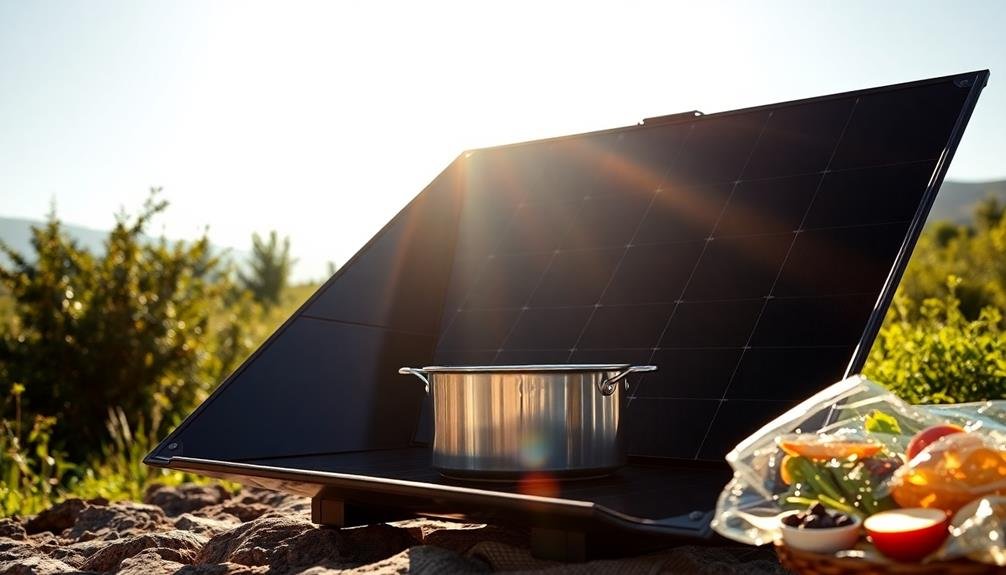
Panel solar cookers offer you a simple yet effective design for harnessing the sun's energy to prepare meals.
You'll appreciate their portability and lightweight nature, making them ideal for camping trips or emergency preparedness kits.
These cookers can be constructed using low-cost materials like cardboard and aluminum foil, allowing you to build your own solar oven on a budget.
Simple, Effective Design
One of the simplest and most effective solar oven designs you'll come across is the panel solar cooker. This design uses reflective panels to concentrate sunlight onto a cooking pot, typically placed inside a clear plastic bag to trap heat.
You'll find it's incredibly easy to build and use, making it perfect for beginners or those on a tight budget.
The panel cooker's key components are cardboard or similar sturdy material, reflective material like aluminum foil, and a clear plastic bag. You'll create a series of foldable panels that can be adjusted to capture maximum sunlight. The cooking pot, usually dark-colored for better heat absorption, sits in the center.
You'll appreciate the panel cooker's portability and quick setup. It's lightweight and can be folded flat for easy transport.
While it may not reach the high temperatures of more complex designs, it's still capable of cooking most foods and pasteurizing water. You'll find it works best on sunny days and in warmer climates.
For best results, you'll want to reposition the cooker every 30 minutes to follow the sun's movement.
Portable and Lightweight
Designed with mobility in mind, the panel solar cooker excels in portability and lightweight construction. You'll find this type of solar oven perfect for camping trips, emergency preparedness, or any situation where you need to cook on the go.
Typically made from reflective materials like aluminum foil or Mylar, these cookers fold flat for easy transport and storage.
Setting up a panel solar cooker is quick and simple. You'll unfold the reflective panels and arrange them to focus sunlight onto your cooking pot. Most designs use three or four panels that form a funnel shape, concentrating solar energy onto the cooking area.
You'll place your pot, often in a heat-resistant plastic bag to trap heat, at the center of this reflective array.
While panel solar cookers don't reach temperatures as high as some other designs, they're still capable of cooking most foods. You'll find they work well for boiling water, cooking rice, and simmering soups or stews.
Their compact size and minimal weight make them an excellent choice for hikers, preppers, or anyone who needs a portable, fuel-free cooking solution.
Low-Cost Construction Materials
With affordability in mind, panel solar cookers stand out for their use of readily available, low-cost materials. You can construct these efficient cookers using items commonly found around your home or purchased inexpensively.
Cardboard serves as the primary material, forming the reflective panels that concentrate sunlight onto your cooking pot. To enhance reflectivity, you'll cover the cardboard with aluminum foil or mylar, both of which are cost-effective options.
For the cooking area, a clear plastic bag acts as a greenhouse, trapping heat around your pot. You can use oven bags or even large zipper-lock bags for this purpose. The cooking pot itself can be any dark-colored container you already own, as darker colors absorb heat more efficiently.
To elevate the pot and allow sunlight to reach it from all angles, you can create a simple stand using wire or even repurposed materials like old CD cases.
Additional low-cost items you might need include scissors, tape, and glue. With these basic materials, you can build a functional solar cooker that harnesses the sun's energy for cooking, all while keeping your expenses to a minimum.
Evacuated Tube Solar Cooker
Harnessing the power of vacuum insulation, evacuated tube solar cookers offer an innovative approach to off-grid cooking. These efficient devices consist of two concentric glass tubes with a vacuum between them, effectively trapping heat and minimizing energy loss.
You'll find that evacuated tube cookers can reach higher temperatures than many other solar oven designs, often exceeding 550°F (288°C). This allows you to cook a wider variety of foods, including those requiring higher heat. The tubular shape also provides a natural focal point for sunlight, increasing efficiency.
To use an evacuated tube cooker, you'll place your food in a specially designed tray that slides into the inner tube. The outer tube's vacuum insulation guarantees that heat is retained, even in cooler outdoor conditions. You can easily adjust the cooker's angle to track the sun's movement, maximizing exposure throughout the day.
While evacuated tube cookers are typically more expensive than other solar oven designs, their durability and efficiency make them a worthwhile investment for serious off-grid enthusiasts. They're also portable, allowing you to take your solar cooking capabilities wherever you go.
Fresnel Lens Solar Oven
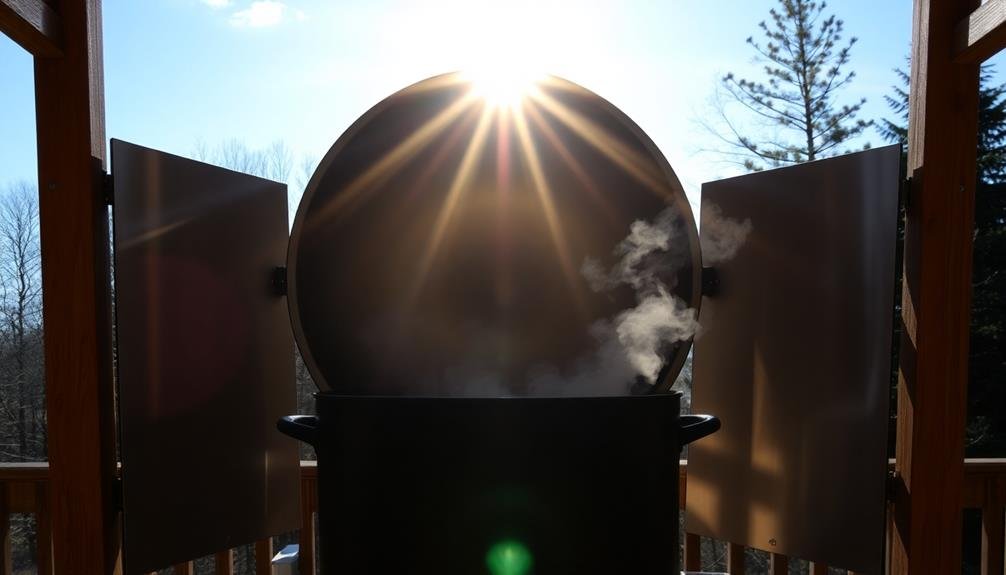
Moving from vacuum-insulated designs, we encounter another powerful solar cooking technology: the Fresnel lens solar oven. This innovative design uses a large, flat Fresnel lens to concentrate sunlight onto a cooking vessel.
You'll find that Fresnel lenses are much thinner and lighter than traditional curved lenses, making them ideal for portable solar ovens.
The Fresnel lens solar oven can achieve incredibly high temperatures, often exceeding 400°F (204°C). You'll need to position the lens carefully to focus sunlight on your cooking pot or pan. As the sun moves, you'll have to adjust the lens accordingly to maintain peak heat.
One advantage of this design is its ability to cook food quickly. You can boil water, fry eggs, or even bake bread in a fraction of the time required by other solar ovens.
However, you'll need to exercise caution, as the concentrated sunlight can cause burns or start fires if mishandled.
While Fresnel lens ovens are highly efficient, they're often bulkier than other designs. You'll also find that cloudy weather considerably reduces their effectiveness, as they rely on direct sunlight.
Umbrella Solar Cooker
The umbrella solar cooker offers a unique and portable solution for off-grid cooking. This innovative design utilizes a reflective umbrella to concentrate sunlight onto a cooking pot, making it an excellent choice for campers, hikers, and outdoor enthusiasts.
To use an umbrella solar cooker, you'll need a specially designed reflective umbrella and a dark-colored cooking pot. Simply open the umbrella and position it to face the sun, then place your pot in the focal point of the reflected sunlight. The concentrated heat can reach temperatures up to 300°F (150°C), allowing you to cook a variety of meals.
One of the main advantages of this design is its portability. When not in use, the umbrella folds up like a regular umbrella, making it easy to carry and store. It's also lightweight and doesn't require any additional equipment besides the cooking pot.
However, the umbrella solar cooker has some limitations. It's less effective in windy conditions and requires frequent adjustments to maintain ideal sun alignment.
Additionally, cooking times may be longer compared to traditional methods, so you'll need to plan accordingly.
Solar Funnel Cooker

Designed for simplicity and efficiency, the solar funnel cooker offers an accessible option for off-grid cooking enthusiasts. You'll find this design particularly appealing if you're looking for a lightweight, portable solution that's easy to construct and use.
To build a solar funnel cooker, you'll need a reflective material like aluminum foil or mylar, cardboard or sturdy plastic sheets, and some basic tools. The funnel shape concentrates sunlight onto your cooking vessel, which sits at the bottom of the funnel. You can use a dark-colored pot or jar to absorb maximum heat.
One of the funnel cooker's advantages is its ability to be adjusted throughout the day to track the sun's movement, ensuring ideal heat concentration. It's ideal for slow-cooking meals, pasteurizing water, or even baking bread.
While it may not reach temperatures as high as some other solar oven designs, the funnel cooker compensates with its simplicity and versatility. You can easily fold it flat for storage or transportation, making it perfect for camping trips or emergency preparedness kits.
With practice, you'll master the art of solar cooking using this innovative design.
Tire Solar Oven
Occasionally overlooked, the tire solar oven offers a unique and eco-friendly approach to off-grid cooking. This ingenious design repurposes an old tire, transforming it into a functional solar cooker. You'll need to clean the tire thoroughly and line it with reflective material, such as aluminum foil or mylar. The tire's shape naturally concentrates sunlight towards the center, where you'll place your cooking pot.
To create your tire solar oven, follow these steps:
- Cut the tire in half and remove the inner sidewall
- Line the inside with reflective material
- Add a clear lid (like a piece of glass or plexiglass) to trap heat
You'll find that the tire solar oven is particularly effective for slow-cooking dishes like stews, soups, and rice. It's also great for baking bread or roasting vegetables. The dark color of the tire absorbs heat efficiently, while the rubber acts as insulation, maintaining a consistent cooking temperature.
One of the biggest advantages of the tire solar oven is its durability and portability. It's an excellent option for camping trips or emergency preparedness kits.
Plus, you're recycling materials that might otherwise end up in a landfill.
Solar Bucket Cooker
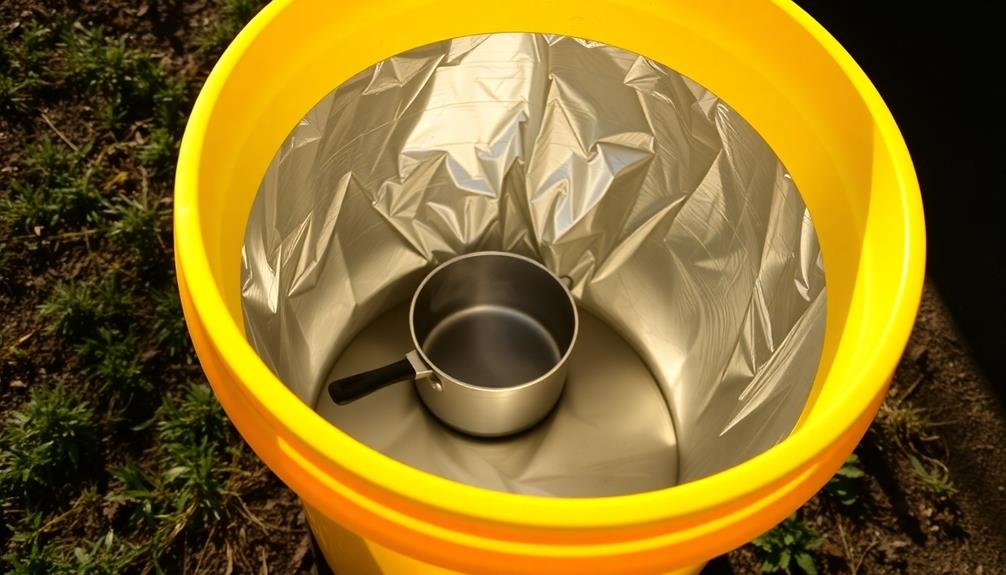
From out of everyday household items comes the solar bucket cooker, a simple yet effective off-grid cooking solution.
You'll need two 5-gallon buckets, one slightly smaller than the other, insulation material, and reflective surfaces. Start by lining the larger bucket's interior with reflective material, such as aluminum foil or Mylar. Then, place the smaller bucket inside and fill the gap between them with insulation, like newspaper or straw.
Create a lid for your cooker using a piece of plywood or sturdy cardboard covered in reflective material. Cut a hole in the center to accommodate your cooking pot. For added efficiency, attach adjustable reflectors around the bucket's rim to direct more sunlight into the cooker.
To use your solar bucket cooker, simply place your food in a dark-colored pot, set it inside the inner bucket, and position the cooker in direct sunlight. Adjust the reflectors to maximize sun exposure.
You'll be amazed at how quickly this DIY solar oven can cook your meals, reaching temperatures up to 300°F (150°C) on a sunny day. It's perfect for slow-cooking stews, soups, and even baking bread.
Solar Wall Oven
While the solar bucket cooker is portable, the solar wall oven offers a more permanent solution for off-grid cooking.
It's designed to be built into the south-facing wall of a structure, maximizing sun exposure throughout the day. This type of solar oven is ideal for those with a fixed off-grid dwelling or homestead.
The solar wall oven consists of an insulated box with a reflective interior and a double-paned glass front.
It's typically larger than portable solar ovens, allowing you to cook multiple dishes simultaneously. You'll find that it can reach higher temperatures and maintain them for longer periods, making it suitable for baking bread, roasting meats, and even canning foods.
Key advantages of a solar wall oven include:
- Increased efficiency due to its fixed position and larger size
- Ability to cook year-round, even in colder climates
- Integration with your living space, saving outdoor area
To build a solar wall oven, you'll need basic carpentry skills and materials like plywood, insulation, and reflective surfaces.
While it requires more initial effort, you'll enjoy the long-term benefits of a reliable, sustainable cooking solution that harnesses the sun's power effectively.
Frequently Asked Questions
How Do Solar Ovens Perform in Cloudy or Overcast Weather Conditions?
You'll find solar ovens less effective in cloudy weather. They'll still work, but cooking times increase considerably. You might need to rely on alternative methods or wait for clearer skies to get the best results from your solar oven.
Can Solar Ovens Be Used to Cook All Types of Food?
You can cook most foods in a solar oven, but they're best for slow-cooking dishes. They're great for baking, roasting, and stewing. You'll need to adjust cooking times and may struggle with foods requiring high heat.
What Safety Precautions Should Be Taken When Using a Solar Oven?
When using a solar oven, you'll need to wear protective gloves, use sunglasses, and avoid looking directly at reflective surfaces. Don't leave it unattended, keep children away, and guarantee it's stable to prevent accidents.
How Long Does It Typically Take to Cook a Meal in a Solar Oven?
You'll find solar oven cooking times vary widely. Typically, it'll take 1-3 hours for most dishes. Factors like sunlight intensity, food type, and oven design affect duration. Plan ahead and start early for best results.
Are There Any Health Benefits to Cooking With a Solar Oven?
You'll enjoy health benefits when cooking with a solar oven. It preserves nutrients better than traditional methods, doesn't produce harmful fumes, and reduces your carbon footprint. You'll also avoid added fats typically used in conventional cooking.
In Summary
You've now explored ten innovative solar oven designs for off-grid cooking. Whether you're camping, living off-grid, or simply want to reduce your carbon footprint, there's a solar cooker that'll suit your needs. From simple DIY options like the tire or bucket cooker to more advanced designs like the evacuated tube or Fresnel lens ovens, you'll find a sustainable cooking solution. Don't forget to evaluate factors like portability, cooking capacity, and local climate when choosing your ideal solar oven.