To track your solar panel's performance at home, start by monitoring your energy output using the system's built-in software or inverter display. This allows you to spot sudden drops that may indicate issues. Next, analyze weather impacts on your panels' efficiency, noting how different conditions affect production. Finally, utilize mobile apps provided by your solar manufacturer to access real-time data, historical trends, and alerts for performance drops. These apps can help you optimize energy consumption and increase savings. By implementing these tips, you'll gain valuable insights into your solar system's performance and maximize its benefits.
Monitor Energy Output
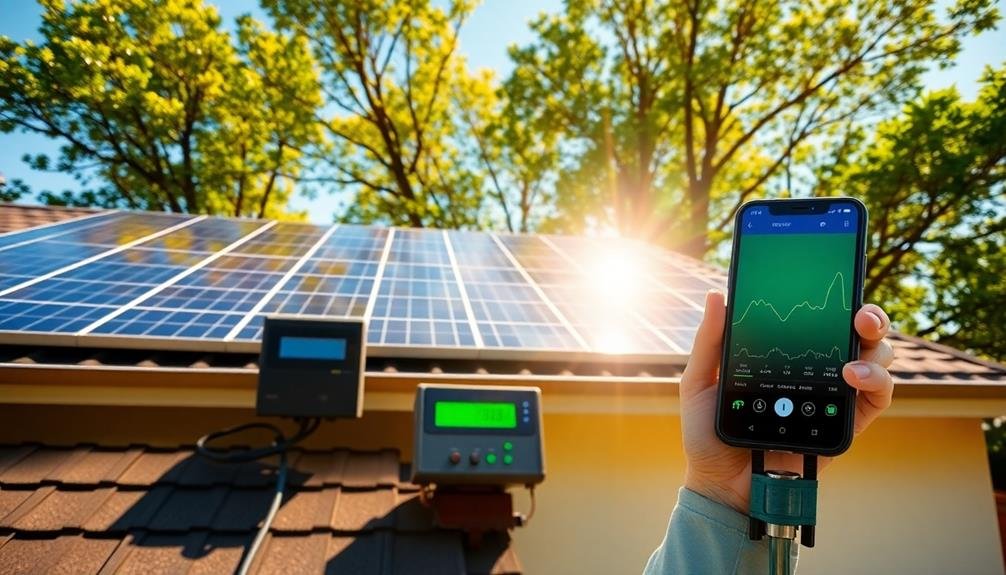
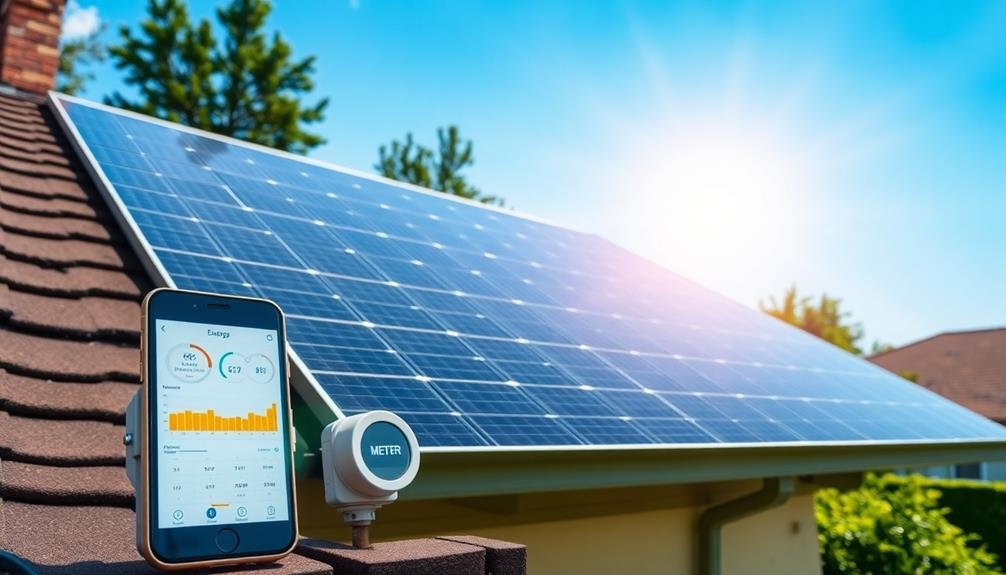
Once you've installed your solar panels, it's crucial to keep tabs on their energy output. Most modern solar systems come with monitoring software that allows you to track production in real-time. This software typically provides daily, monthly, and yearly energy generation data, helping you understand your system's performance over time.
Check your inverter's display panel regularly, as it often shows current power output and total energy generated. Many inverters now offer smartphone apps or web portals for remote monitoring, giving you access to your system's performance data from anywhere.
Pay attention to seasonal variations in energy output. You'll likely see higher production during summer months and lower output in winter. Compare your actual production to the estimated figures provided by your installer to verify your system is meeting expectations.
Keep an eye on sudden drops in energy output, as they may indicate issues like shading, dirty panels, or equipment malfunctions.
Tracking your energy production also helps you correlate it with your electricity bills, allowing you to verify the financial benefits of your solar investment.
Analyze Weather Impact
Weather plays an essential role in your solar panel's performance. Understanding how different weather conditions impact energy production can help you optimize your system and set realistic expectations. Sunny days are obviously ideal, but even on overcast days, your panels will still generate electricity, albeit at a reduced rate.
Track how temperature affects your panels' efficiency. While sunlight is vital, extremely high temperatures can actually decrease performance. Most panels operate best between 59°F and 95°F. During heat waves, you might notice a slight dip in output.
Monitor the impact of seasonal changes. In winter, shorter days and snow coverage can reduce production. However, cold, clear days can be surprisingly productive due to increased panel efficiency in cooler temperatures.
Rain can have both positive and negative effects. While it reduces sunlight, it also cleans your panels, potentially improving efficiency afterward. Strong winds can cool panels, enhancing performance, but be wary of debris that might cause shading.
Use your monitoring system to correlate weather data with energy output. This analysis will help you predict future performance and identify any issues that aren't weather-related.
Utilize Mobile Apps
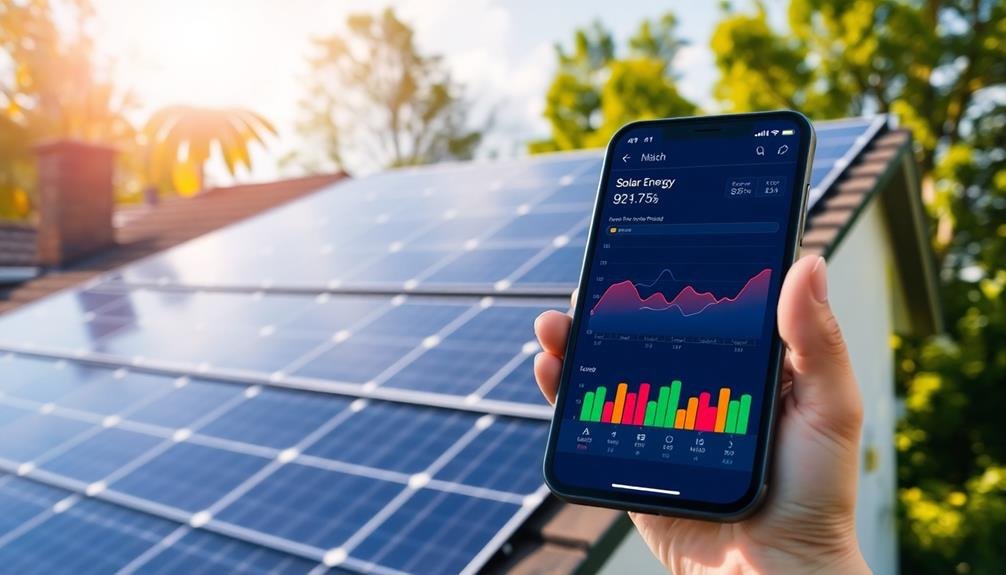
Many solar panel manufacturers and monitoring system providers offer mobile apps that put performance data at your fingertips. These apps allow you to track your system's output, energy consumption, and savings in real-time. You'll have instant access to essential information about your solar panels' performance, helping you make informed decisions about your energy usage.
When choosing a solar monitoring app, look for features that provide thorough insights. The best apps offer:
- Real-time power generation data
- Historical performance trends
- Energy consumption comparisons
By utilizing these mobile apps, you can quickly identify any issues with your solar panels. If you notice a sudden drop in performance, you'll be able to address the problem promptly, minimizing potential energy losses. Some apps even send alerts when they detect abnormalities in your system's output.
Additionally, many of these apps allow you to share your solar data with friends and family, promoting awareness about renewable energy. You can also use the information to optimize your energy consumption habits, potentially increasing your overall savings.
Frequently Asked Questions
How Often Should I Clean My Solar Panels?
You should clean your solar panels at least twice a year, but more frequently if you live in a dusty or polluted area. Regular cleaning guarantees peak performance. Don't forget to check for debris after storms or windy conditions.
What's the Average Lifespan of a Residential Solar Panel System?
You can expect your residential solar panel system to last about 25-30 years. However, it's not uncommon for panels to continue producing electricity for 40 years or more, albeit at a slightly reduced efficiency over time.
Can I Install Additional Panels to My Existing System Later?
Yes, you can add panels to your existing system later. It's called "expanding" your solar array. You'll need to guarantee your inverter can handle the extra capacity and that there's space for additional panels on your roof.
Are There Tax Incentives for Maintaining My Solar Panel System?
You may be eligible for tax incentives when maintaining your solar panel system. Check with your local government and tax advisor for specific programs. Some areas offer rebates or credits for system upgrades and maintenance to encourage ongoing solar use.
How Do I Know if My Inverter Is Functioning Properly?
You can check your inverter's functionality by monitoring its display panel for error codes or unusual readings. Watch for consistent power output during daylight hours and listen for any odd noises. Regular checks guarantee peak performance.
In Summary
You've now got the tools to keep a close eye on your solar panel's performance. By monitoring energy output, analyzing weather impacts, and using mobile apps, you'll stay on top of your system's efficiency. Don't forget to regularly check these metrics to catch any issues early. With these simple steps, you're empowering yourself to make the most of your solar investment. Keep tracking, stay informed, and enjoy the benefits of your solar panels for years to come.