
You can effectively cool your home using thermal mass strategies. Start with thermal mass flooring like concrete or stone. Place dense materials strategically near windows and doors. Implement night purging techniques to flush out warm air. Add water features for natural cooling. Consider earth-sheltered walls for insulation. Utilize roof and ceiling mass strategies. Install passive solar shading devices. Integrate phase change materials for temperature regulation. Use strategic vegetation placement for shading. Finally, incorporate thermal mass landscaping techniques around your home. These methods not only cool your space but also reduce energy costs. Dive deeper to discover how each strategy can transform your home's climate control.
Thermal Mass Flooring Solutions
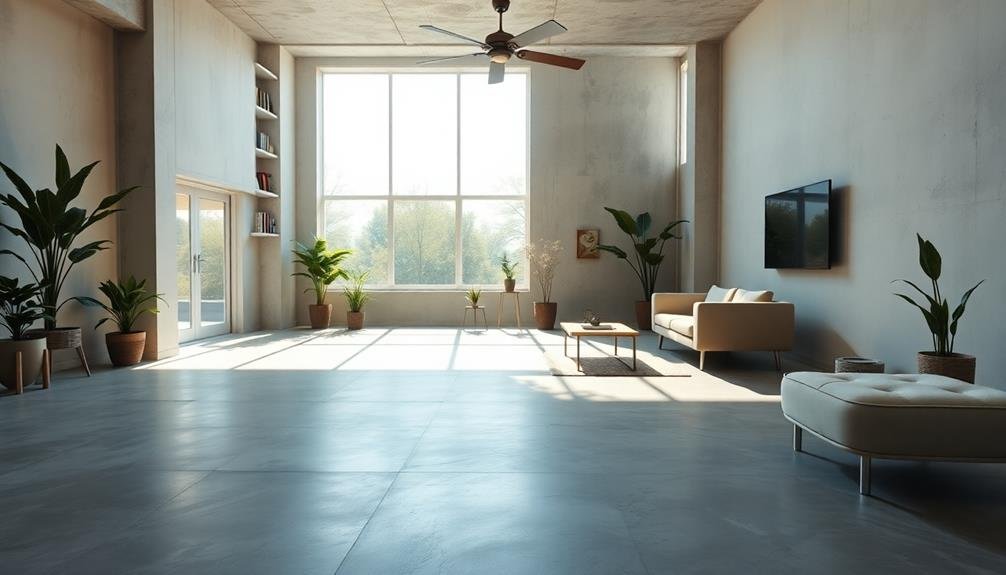
When it comes to thermal mass flooring solutions, concrete stands out as a top choice. It's dense, affordable, and excellent at absorbing and storing heat. You can use polished concrete for a sleek look or cover it with tiles for added aesthetics.
During hot days, concrete floors stay cool, helping to regulate your home's temperature naturally.
Another effective option is stone flooring. Materials like slate, marble, or granite offer high thermal mass properties. They're durable and can add a touch of luxury to your space.
While more expensive than concrete, stone floors can greatly impact your home's cooling efficiency.
For a more budget-friendly alternative, consider ceramic tiles. They're not as dense as concrete or stone but still provide good thermal mass benefits. You can install them over existing subfloors, making them a versatile choice for retrofitting.
Whichever material you choose, guarantee proper installation for maximum effectiveness. Insulate underneath the thermal mass flooring to prevent heat loss to the ground.
Also, consider incorporating radiant heating systems for year-round temperature control. With the right thermal mass flooring, you'll enjoy a cooler home in summer and reduced energy costs.
Strategic Placement of Dense Materials
Strategic placement of dense materials can greatly enhance your home's thermal performance.
You'll want to contemplate positioning thermal mass near windows and doors to absorb excess heat, as well as at floor level to naturally cool rising warm air.
Don't overlook the potential of interior walls, which can act as heat sinks during the day and slowly release stored coolness at night.
Near Windows and Doors
Placing dense materials strategically near windows and doors can greatly enhance your home's thermal performance. By positioning thermal mass elements like stone, concrete, or brick near these openings, you'll create a buffer zone that helps regulate indoor temperatures. This placement helps absorb excess heat during the day and release it slowly at night, reducing temperature fluctuations.
When planning your thermal mass placement near windows and doors, consider these key factors:
- Orientation: Focus on south-facing windows for maximum heat absorption
- Material thickness: Thicker materials store more heat
- Surface area: Larger surfaces provide better heat exchange
- Exposure: Verify the thermal mass is directly exposed to sunlight
You'll want to incorporate these materials into your home's design seamlessly. For example, use tile or stone flooring near large windows, install a brick feature wall adjacent to a glass door, or add a concrete countertop beneath a kitchen window.
Floor-Level Thermal Mass
The foundation of effective thermal mass cooling lies in strategic floor-level placement. You'll want to focus on incorporating dense materials like concrete, stone, or tile into your ground floor. These materials absorb heat during the day and release it at night, creating a natural cooling effect.
Consider installing a concrete or stone floor in high-traffic areas or rooms that receive direct sunlight. If you're renovating, you might opt for a concrete slab foundation, which provides excellent thermal mass properties. For existing homes, add thick stone or ceramic tiles over your current flooring.
Don't forget about furniture placement. Heavy pieces like stone coffee tables or concrete benches can contribute to floor-level thermal mass. Position these items where they'll receive direct sunlight during the hottest parts of the day.
To maximize the cooling effect, guarantee good airflow around your thermal mass elements. Use fans or open windows at night to help dissipate the stored heat. During the day, close windows and draw shades to prevent heat gain.
This cycle of heat absorption and release will help maintain a more consistent, comfortable temperature in your home throughout the day.
Interior Wall Placement
Optimizing your interior walls for thermal mass can greatly enhance your home's cooling efficiency. Contemplate incorporating dense materials like concrete, brick, or stone into your interior walls, particularly in areas that receive direct sunlight. These materials absorb heat during the day and release it slowly at night, helping to regulate indoor temperatures.
When placing thermal mass in your interior walls, focus on south-facing rooms that receive the most sunlight. You'll want to ascertain these walls are exposed to direct sunlight during winter months for passive solar heating, while providing shade during summer to prevent overheating.
Don't forget to contemplate the color of your thermal mass walls, as darker colors absorb more heat.
To maximize the effectiveness of interior wall thermal mass:
- Use materials with high thermal capacity, like concrete or adobe
- Ascertain proper insulation to prevent unwanted heat gain or loss
- Combine thermal mass walls with strategic ventilation
- Contemplate removable shading options for seasonal adjustments
Night Purging Techniques
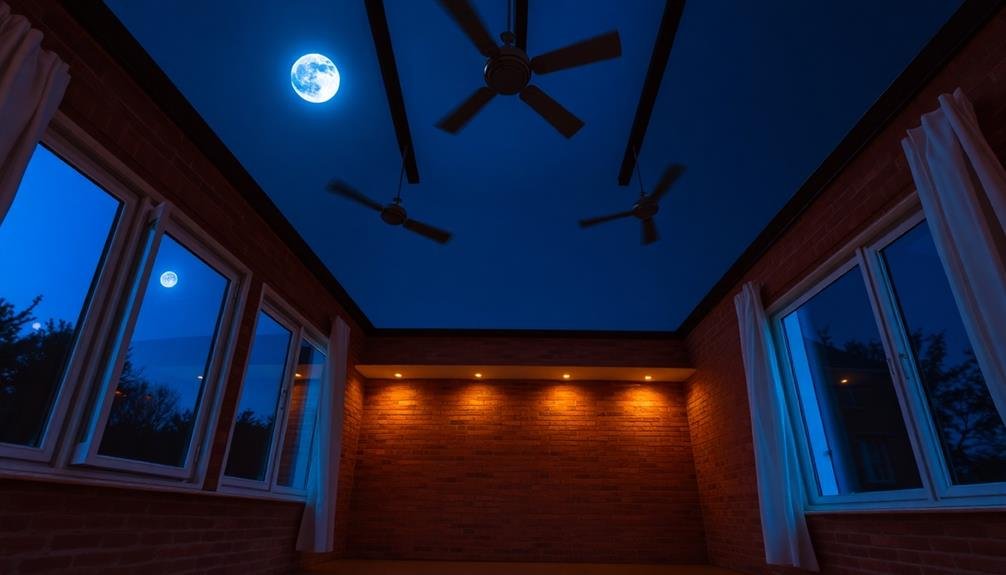
Several night purging techniques can effectively cool your home by leveraging thermal mass. The basic principle involves opening windows and doors during cool nighttime hours to flush out warm air and cool down the thermal mass.
You'll want to start this process when the outdoor temperature drops below your indoor temperature. To maximize efficiency, create cross-ventilation by opening windows on opposite sides of your home.
Use fans to boost air circulation, placing them strategically to draw cool air in and expel warm air out. Don't forget to open interior doors to allow airflow throughout the house.
For multi-story homes, take advantage of the stack effect. Open lower-level windows and upper-story windows or skylights to create a natural chimney effect, drawing cool air up through the house.
Automated systems can further optimize night purging. Install programmable thermostats or smart home devices to automatically open windows or activate whole-house fans when conditions are right.
These systems can also close everything up in the morning to trap the cooler air inside. Remember to take into account security when implementing night purging techniques.
Use window locks or security screens to maintain safety while allowing airflow.
Water Features for Cooling
Incorporating water features into your home's design can greatly cool down your living space while adding aesthetic appeal. Water's high thermal mass allows it to absorb heat during the day and release it slowly at night, creating a natural cooling effect.
You'll find that strategically placed fountains, ponds, or water walls can greatly lower the ambient temperature in your home.
When selecting water features for cooling, consider these factors:
- Size: Larger features provide more cooling capacity
- Location: Place them near windows or air circulation paths
- Material: Choose materials that complement your home's thermal mass
- Maintenance: Opt for features that are easy to clean and maintain
You can enhance the cooling effect by incorporating plants around your water features. The combination of water evaporation and plant transpiration creates a microclimate that's several degrees cooler than the surrounding air.
Don't forget to use energy-efficient pumps to circulate the water, maximizing the cooling effect while minimizing electricity costs. By integrating water features into your home's thermal mass strategy, you'll create a more comfortable living environment and potentially reduce your reliance on air conditioning.
Earth-Sheltered Wall Design
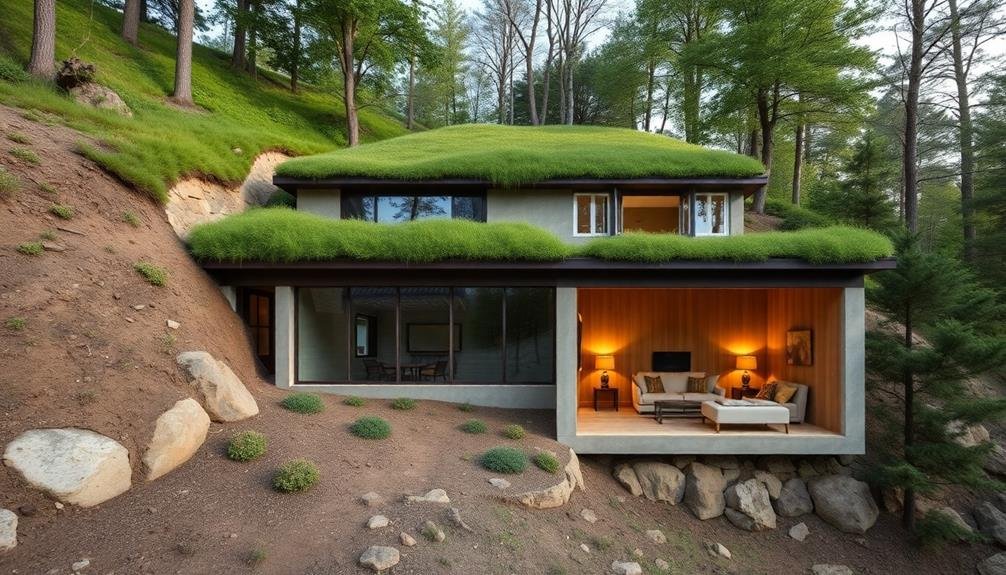
While water features can cool your home's interior, earth-sheltered walls offer a more permanent solution for temperature regulation. These walls utilize the earth's constant temperature to maintain a stable indoor environment. You'll find that earth-sheltered walls can greatly reduce your heating and cooling costs.
To implement earth-sheltered walls, you'll need to take into account several factors:
| Design Element | Purpose |
|---|---|
| Insulation | Prevents moisture infiltration |
| Drainage | Directs water away from walls |
| Waterproofing | Protects against water damage |
| Structural Support | Withstands soil pressure |
| Ventilation | Manages humidity levels |
When designing earth-sheltered walls, you'll want to choose materials that can withstand soil pressure and moisture. Concrete is a popular choice due to its strength and durability. You'll also need to incorporate a proper drainage system to prevent water accumulation.
Don't forget to take into account local building codes and regulations before starting your project. You may need to obtain special permits for earth-sheltered construction. By carefully planning and executing your earth-sheltered wall design, you'll create a comfortable, energy-efficient living space that harmonizes with the surrounding landscape.
Thermal Mass in Furniture
Furniture's thermal mass can play a significant role in regulating your home's temperature. Heavy, dense materials like stone, concrete, and thick wood absorb and store heat during the day, releasing it slowly at night. This process helps maintain a more stable indoor temperature, reducing the need for air conditioning.
To maximize the cooling effect of thermal mass in furniture, consider incorporating pieces made from:
- Natural stone slabs
- Concrete or terrazzo tables
- Thick, solid wood furniture
- Ceramic or porcelain tile-topped surfaces
Position these high-mass furniture items in areas that receive direct sunlight or near windows. They'll absorb excess heat during peak hours, preventing your living spaces from overheating.
At night, as temperatures drop, the stored heat will be released gradually, creating a more comfortable environment.
You can enhance the effectiveness of thermal mass furniture by combining it with proper ventilation. Open windows at night to allow cool air in, which will help dissipate the stored heat.
During the day, close windows and draw curtains to minimize heat gain. This strategy works particularly well in climates with significant temperature fluctuations between day and night.
Roof and Ceiling Mass Strategies
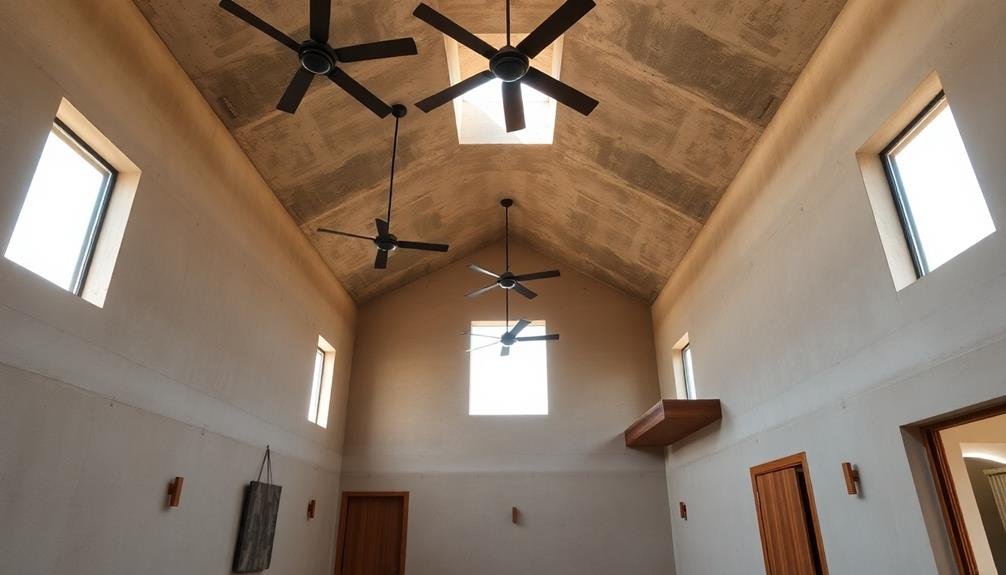
Beyond the living spaces, your home's roof and ceiling play a crucial role in managing indoor temperatures. Incorporating thermal mass in these areas can greatly enhance your home's cooling efficiency.
Consider using heavyweight materials like concrete or clay tiles for your roof, as they absorb heat during the day and release it slowly at night. This process helps delay heat transfer into your living spaces, keeping them cooler during peak hours.
For your ceiling, you can install a thermal mass layer beneath the roofing material. Options include concrete slabs, phase change materials, or even water-filled panels. These elements act as heat sinks, absorbing excess warmth and regulating indoor temperatures.
To maximize the effectiveness of your roof and ceiling thermal mass, guarantee proper insulation and ventilation. This combination prevents unwanted heat gain during hot days and allows for efficient night cooling.
You can also integrate cool roof technologies, such as reflective coatings or light-colored materials, to complement your thermal mass strategy. These surfaces reflect more sunlight, reducing heat absorption and further improving your home's cooling performance.
Passive Solar Shading Methods
You can markedly reduce your home's heat gain through passive solar shading methods.
Exterior shading devices, such as awnings, overhangs, and shutters, block sunlight before it reaches your windows and walls.
Additionally, you'll benefit from strategic vegetation placement, using trees and shrubs to create natural shade around your house.
Exterior Shading Devices
Implementing exterior shading devices is an essential step in maximizing your home's thermal efficiency. These devices prevent direct sunlight from reaching your windows and walls, greatly reducing heat gain during hot summer months.
You'll find various options available, each with its own benefits and aesthetic appeal.
Retractable awnings are a popular choice, offering flexibility as you can extend them when needed and retract them during cooler periods. Exterior roller shades provide excellent coverage and can be motorized for easy operation.
For a more permanent solution, consider installing fixed overhangs or louvers above windows, which block high summer sun while allowing lower winter sun to enter.
Don't overlook the power of natural shading. Strategic placement of deciduous trees can offer shade in summer and allow sunlight in winter.
When selecting exterior shading devices, consider these factors:
- Orientation of your windows
- Local climate conditions
- Architectural style of your home
- Desired level of light control
Strategic Vegetation Placement
Through strategic vegetation placement, you can create an effective passive solar shading system for your home. Deciduous trees are ideal for the south and west sides of your house, providing shade during hot summers while allowing sunlight to warm your home in winter. Plant these trees 15-20 feet from your house for maximum shading.
For east-facing walls, consider using smaller trees or tall shrubs to block early morning sun. Evergreen trees work well on the north side, acting as windbreaks year-round. Vines growing on trellises or pergolas can shade windows and walls, reducing heat gain.
When planning your landscape, think about the sun's path throughout the day and seasons. Use a combination of deciduous and evergreen plants to enhance shading benefits.
Don't forget about ground cover plants, which can help cool the air around your home by reducing reflected heat from hard surfaces.
Remember to maintain your vegetation regularly. Prune trees and shrubs to guarantee they provide maximum shading without interfering with your home's structure or blocking desirable views.
Phase Change Materials Integration
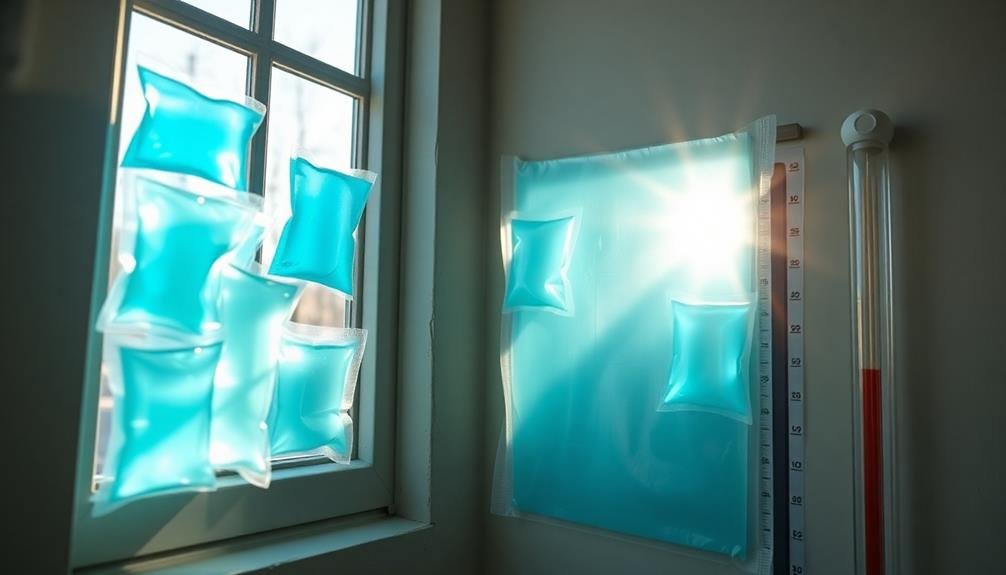
One cutting-edge approach to enhancing thermal mass in homes involves the integration of phase change materials (PCMs).
These innovative substances absorb and release heat as they change from solid to liquid and back again, effectively regulating indoor temperatures. You can incorporate PCMs into your home's construction or retrofit them into existing spaces to improve energy efficiency and comfort.
PCMs work by melting during the day, absorbing excess heat, and then solidifying at night, releasing stored heat. This process helps maintain a more consistent indoor temperature, reducing the need for air conditioning.
You'll find PCMs available in various forms, including:
- Microcapsules embedded in building materials
- Pouches or panels that can be installed in walls or ceilings
- PCM-infused insulation
- Specialized PCM-containing drywall
To maximize the benefits of PCMs, you'll need to take into account factors like the material's melting point, your local climate, and your home's specific cooling needs.
It's essential to work with a professional to determine the best PCM solution for your home. By integrating these materials strategically, you can greatly enhance your home's thermal mass and reduce energy consumption.
Thermal Mass Landscaping Techniques
Beyond your home's walls, landscaping can play an essential role in enhancing thermal mass and improving cooling efficiency. You can strategically place trees, shrubs, and other plants to create shade and reduce heat gain. Consider planting deciduous trees on the south and west sides of your home to block summer sun while allowing winter warmth.
Incorporate water features like ponds or fountains to add thermal mass and create a cooling effect through evaporation. Use hardscaping elements like stone walls or patios to absorb heat during the day and release it at night, moderating temperature fluctuations.
Here's a table summarizing key thermal mass landscaping techniques:
| Technique | Benefits | Considerations |
|---|---|---|
| Deciduous trees | Summer shade, winter sun | Proper placement, growth rate |
| Water features | Evaporative cooling, aesthetics | Maintenance, water usage |
| Stone walls/patios | Heat absorption, temperature moderation | Material selection, positioning |
| Green roofs | Insulation, reduced heat island effect | Structural support, plant selection |
Frequently Asked Questions
How Does Thermal Mass Cooling Compare to Traditional Air Conditioning in Energy Efficiency?
You'll find thermal mass cooling is often more energy-efficient than traditional air conditioning. It uses stored coolness in dense materials to naturally regulate temperature, reducing the need for constant electricity consumption that AC systems require.
Can Thermal Mass Cooling Be Effectively Combined With Other Passive Cooling Techniques?
Yes, you can combine thermal mass cooling with other passive techniques. You'll get better results by pairing it with natural ventilation, shading, and reflective surfaces. It's an effective way to reduce your reliance on energy-intensive air conditioning systems.
What Are the Cost Implications of Implementing Thermal Mass Cooling in Existing Homes?
You'll face varying costs depending on your home's structure. Adding thermal mass can be expensive, involving materials like concrete or stone. However, you'll save on long-term energy bills, making it a potentially worthwhile investment for your home.
How Does Climate Affect the Effectiveness of Thermal Mass Cooling Strategies?
Climate greatly impacts thermal mass cooling's effectiveness. You'll find it works best in areas with large day-night temperature swings. It's less effective in humid climates or regions with minimal temperature fluctuations. Consider your local weather patterns before implementing.
Are There Any Health Benefits Associated With Using Thermal Mass for Cooling?
You'll experience improved indoor air quality and humidity control with thermal mass cooling. It can reduce allergens and mold growth, promoting better respiratory health. You'll also enjoy more consistent temperatures, which may enhance your sleep quality and overall comfort.
In Summary
You've now got a toolbox of thermal mass strategies to keep your home cool. From smart flooring choices to night purging, you're equipped to harness nature's cooling power. Don't forget the impact of water features and landscaping. Remember, it's all about placement, timing, and material choices. With these techniques, you'll create a more comfortable living space while reducing your energy bills. Stay cool and enjoy your thermally efficient home!




Leave a Reply