
Looking to beat the desert heat? Try these seven thermal mass solutions for a cooler home. Install underground concrete cisterns to store and regulate water temperature. Build thick adobe brick walls to absorb daytime heat and release it at night. Lay rammed earth flooring for natural temperature control. Add stone feature walls as heat-absorbing elements. Install water-filled interior columns for efficient cooling. Top your home with ceramic tile roofing to deflect heat. Finally, incorporate phase change material panels to manage temperature fluctuations. These desert-proof ideas will transform your home into a comfortable retreat, and there's even more to discover about keeping cool in extreme climates.
Underground Concrete Cisterns
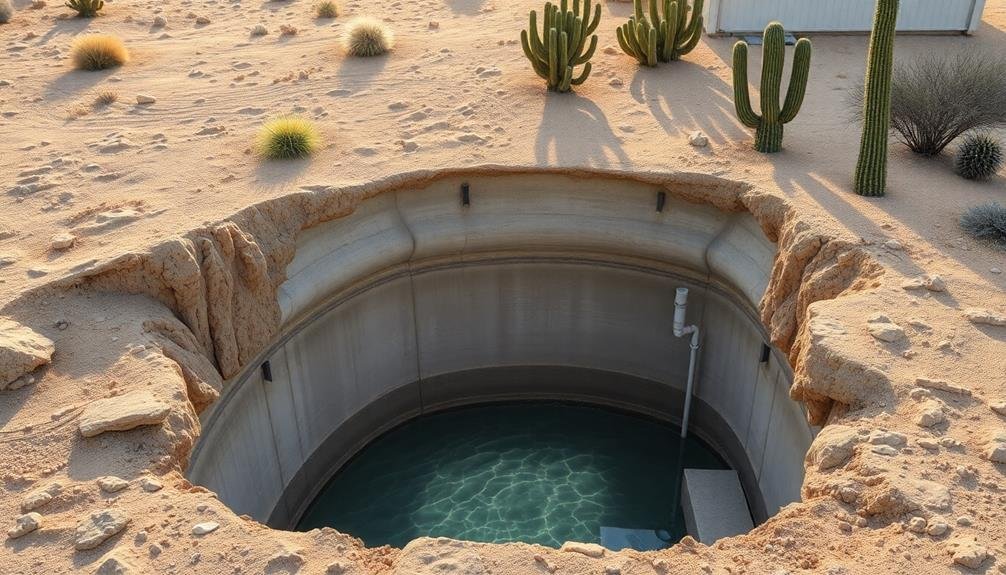
Buried deep beneath the scorching desert sands, underground concrete cisterns offer an excellent thermal mass solution. These large, subterranean tanks serve a dual purpose: storing water and regulating temperature. The thick concrete walls absorb heat during the day and release it slowly at night, helping to maintain a more consistent temperature in your home.
You'll find that underground cisterns are particularly effective in desert climates due to their ability to tap into the earth's natural cooling properties. As you design your cistern, consider incorporating it into your home's foundation or placing it nearby. The stored water can be used for irrigation or household needs, reducing your reliance on external water sources.
To maximize the thermal mass benefits, insulate the cistern's top and sides that aren't in direct contact with the soil. This will prevent heat gain from above and guarantee the coolness is directed towards your living space.
You can also connect the cistern to a passive cooling system, using the cool air it generates to naturally ventilate your home. By integrating an underground concrete cistern into your desert home design, you'll create a more comfortable and energy-efficient living environment.
Adobe Brick Walls
Another time-tested thermal mass solution for desert climates is adobe brick walls. These thick, earthen structures have been used for centuries in arid regions to regulate indoor temperatures.
Adobe bricks are made from a mixture of clay, sand, and straw, then sun-dried to create durable building blocks. The high thermal mass of adobe walls allows them to absorb heat during the day and release it slowly at night, creating a more stable indoor environment.
To maximize the effectiveness of adobe brick walls in your desert home:
- Use thicker walls (12-24 inches) for greater thermal mass
- Incorporate south-facing windows to capture winter sun
- Add overhangs or awnings to shade walls during summer
- Combine with other passive cooling techniques like cross-ventilation
Adobe's natural breathability helps regulate indoor humidity, while its eco-friendly composition appeals to environmentally conscious homeowners.
You'll find that adobe walls not only keep your home cooler but also provide a unique aesthetic that connects you to the surrounding landscape.
With proper maintenance, these walls can last for generations, offering long-term sustainability and energy savings in harsh desert climates.
Rammed Earth Flooring
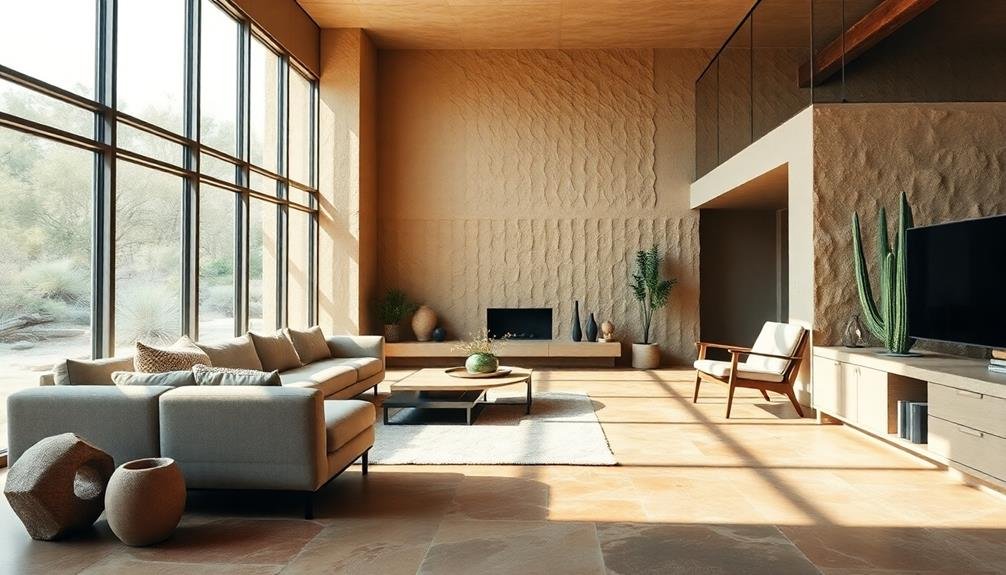
Rammed earth flooring stands out as a robust thermal mass solution for desert homes. It's an ancient technique that's gaining popularity in modern sustainable architecture. To create this flooring, you'll compact layers of moistened earth mixed with stabilizers like cement or lime. The result is a dense, solid surface that effectively absorbs and releases heat.
In desert climates, rammed earth floors work wonders for temperature regulation. During the day, they absorb excess heat, keeping your home cooler. At night, they slowly release that stored heat, maintaining a comfortable indoor temperature. You'll find this natural temperature control reduces your reliance on artificial cooling systems.
Rammed earth flooring isn't just functional; it's aesthetically pleasing too. You can customize the color and texture by selecting different soil types and adding natural pigments.
It's also durable, low-maintenance, and resistant to pests. However, proper sealing is essential to prevent moisture issues. While installation can be labor-intensive, the long-term benefits often outweigh the initial effort.
Stone Feature Walls
Stone feature walls offer excellent heat absorption properties, making them ideal for desert climates.
You'll find that these walls can effectively regulate indoor temperatures by absorbing excess heat during the day and releasing it at night.
Beyond their thermal benefits, stone walls add a natural aesthetic appeal to your home, bringing the rugged beauty of the desert landscape indoors.
Heat Absorption Properties
Feature walls constructed from stone offer exceptional heat absorption properties, making them ideal for desert environments.
These walls act as thermal batteries, absorbing heat during the day and slowly releasing it at night when temperatures drop. You'll find that different types of stone have varying heat absorption capacities, with darker, denser stones generally performing better.
To maximize the effectiveness of your stone feature wall, consider its placement carefully. South-facing walls receive the most sunlight and will absorb the most heat. However, you can also use stone walls strategically in other areas of your home to create a more consistent indoor temperature.
The benefits of stone feature walls extend beyond their practical thermal properties:
- They create a sense of connection to the natural desert landscape
- Their timeless beauty adds a touch of luxury to your home
- The tactile nature of stone provides a grounding, calming effect
- They serve as a reminder of the earth's enduring strength
Natural Aesthetic Appeal
Beauty and nature converge in the striking aesthetics of stone feature walls. You'll find these elements not only provide thermal mass but also elevate your home's visual appeal. By incorporating local stones, you're creating a seamless connection between your interior and the surrounding desert landscape.
Stone feature walls offer versatility in design, allowing you to customize the look to match your personal style. Whether you prefer a rustic, stacked appearance or a smooth, polished finish, there's a stone option for you. Consider these popular choices:
| Stone Type | Texture | Color Range | Best For |
|---|---|---|---|
| Sandstone | Grainy | Tan to Red | Rustic |
| Limestone | Smooth | White to Gray | Modern |
| Slate | Layered | Gray to Black | Contemporary |
| Travertine | Porous | Beige to Brown | Mediterranean |
These natural materials not only regulate temperature but also add depth and character to your space. They're durable, low-maintenance, and age beautifully over time. By choosing stone feature walls, you're investing in a timeless element that will enhance your desert home's comfort and aesthetics for years to come.
Water-Filled Interior Columns
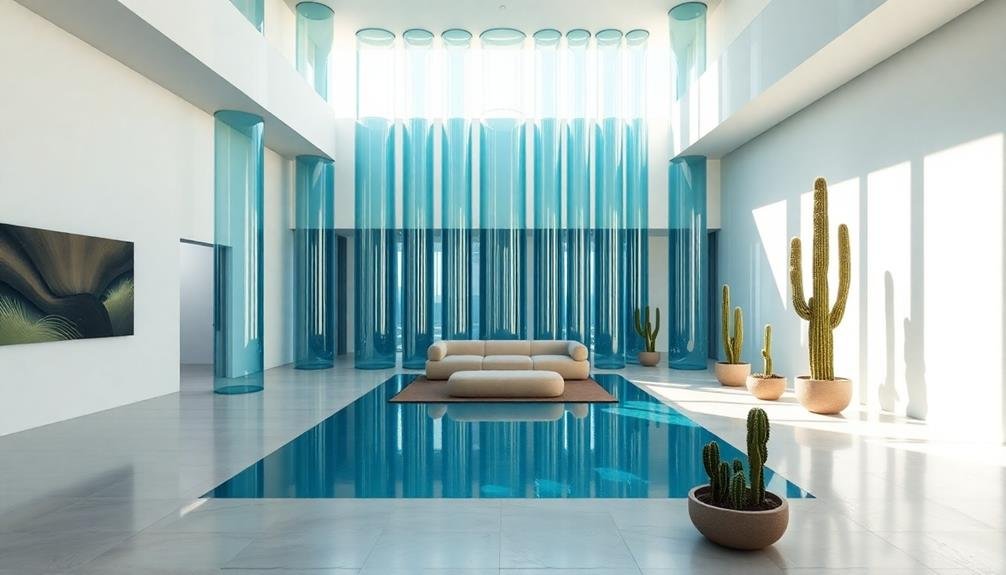
When considering water-filled interior columns for thermal mass, you'll need to carefully plan their design and installation to maximize effectiveness.
You'll want to guarantee proper sealing and structural support, as well as integrate them seamlessly into your home's aesthetic.
These columns can offer significant maintenance and efficiency benefits, helping regulate indoor temperatures and potentially reducing your energy costs in the long run.
Design and Installation Considerations
Incorporating water-filled interior columns into your desert home requires careful planning and execution. You'll need to take into account the structural integrity of your building, as these columns can be quite heavy when filled. Verify your foundation can support the added weight and consult with a structural engineer if necessary.
When designing the columns, opt for materials that won't corrode or degrade over time, such as high-quality plastics or treated metals. Installation should be done by professionals to guarantee proper sealing and prevent leaks.
You'll want to position the columns strategically to maximize their cooling effect without impeding traffic flow in your home. Contemplate incorporating them into existing structural elements or as decorative features to blend seamlessly with your interior design.
Here's why water-filled columns can be a game-changer for your desert home:
- They provide a natural, eco-friendly cooling solution
- You'll enjoy lower energy bills and reduced carbon footprint
- Your home becomes a cool oasis in the scorching desert heat
- You're embracing innovative, sustainable architecture
Remember to include a maintenance plan for your water-filled columns, including regular inspections for leaks and water quality checks to prevent algae growth or stagnation.
Maintenance and Efficiency Benefits
While water-filled interior columns offer impressive cooling benefits, they also provide significant advantages regarding maintenance and efficiency. You'll find that these columns require minimal upkeep compared to other thermal mass solutions. The water inside remains stable, reducing the need for frequent refills or replacements. You won't have to worry about degradation or wear over time, as the water's properties remain consistent.
These columns contribute to your home's overall energy efficiency. By regulating indoor temperatures, they reduce the load on your air conditioning system, leading to lower energy bills. You'll notice a more consistent and comfortable indoor environment throughout the day. The columns' ability to absorb and release heat slowly helps maintain a steady temperature, even during extreme desert conditions.
Additionally, water-filled columns can be easily integrated into your home's existing plumbing system. This allows for convenient maintenance and the potential to circulate the water, further enhancing its cooling properties.
You can also add non-toxic additives to the water to prevent algae growth and maintain clarity, ensuring the columns remain visually appealing and functional for years to come.
Ceramic Tile Roofing
Ceramic tile roofing stands out as a desert-proof thermal mass solution for hot climates. These tiles absorb heat during the day and release it slowly at night, helping to regulate your home's temperature.
You'll find that ceramic tiles come in various colors and styles, allowing you to maintain aesthetic appeal while improving energy efficiency.
When installing ceramic tile roofing, guarantee proper ventilation to maximize its thermal mass benefits. You'll need to take into account the weight of the tiles, as they're heavier than traditional shingles, and may require additional structural support.
Despite the initial investment, you'll enjoy long-term savings on cooling costs and increased durability against harsh desert conditions.
To fully appreciate ceramic tile roofing, contemplate these emotional benefits:
- Peace of mind knowing your home is protected from intense desert heat
- Pride in owning a stylish, eco-friendly roof that stands out in your neighborhood
- Comfort in creating a cooler, more enjoyable living space for your family
- Satisfaction in reducing your carbon footprint and energy bills simultaneously
Phase Change Material Panels
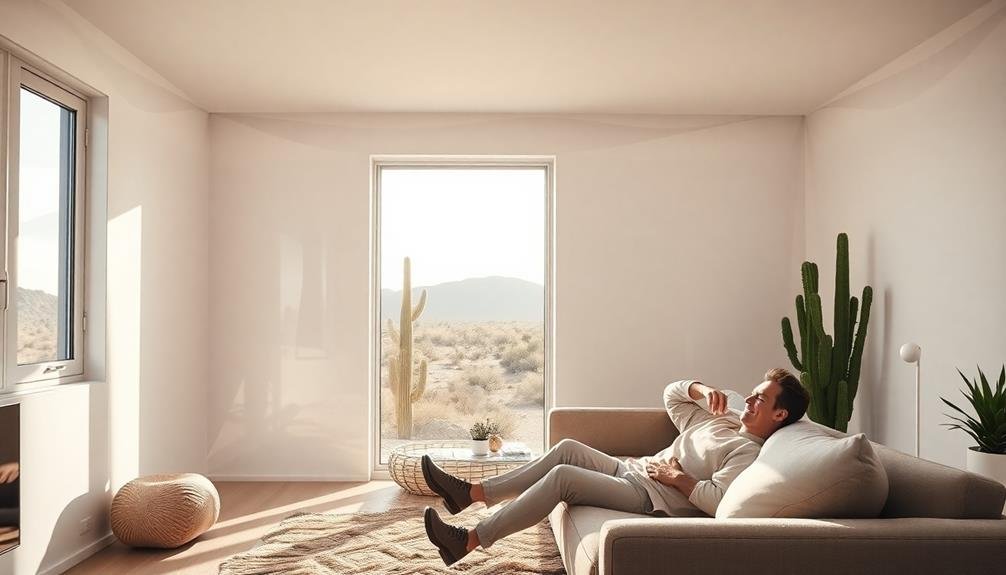
Phase Change Material (PCM) panels offer an innovative approach to thermal mass in desert climates. You'll find these panels particularly effective in managing temperature fluctuations, as they absorb and release heat at specific temperatures. PCM panels work by changing their physical state, typically from solid to liquid and back, as temperatures rise and fall.
When you're considering PCM panels for your desert home, you'll want to choose materials with melting points around your desired indoor temperature. Here's a quick comparison of common PCM types:
| PCM Type | Melting Point (°C) | Heat Capacity (kJ/kg) |
|---|---|---|
| Paraffin | 20-35 | 200-250 |
| Salt Hydrates | 20-40 | 180-230 |
| Bio-based | 20-30 | 180-200 |
You can integrate PCM panels into walls, ceilings, or floors. They're especially useful in areas with high solar gain. During the day, they'll absorb excess heat, keeping your home cooler. At night, they'll release the stored heat, maintaining a more stable indoor temperature. This cycle helps reduce your reliance on air conditioning, potentially lowering your energy costs and environmental impact.
Frequently Asked Questions
How Does Thermal Mass Differ From Insulation in Cooling a Home?
You'll find thermal mass absorbs and stores heat, releasing it slowly, while insulation resists heat transfer. Thermal mass can help regulate temperature swings, but insulation prevents heat from entering or leaving your home more effectively.
Can Thermal Mass Techniques Be Retrofitted to Existing Desert Homes?
You can retrofit thermal mass techniques to existing desert homes. You'll want to add materials like concrete, stone, or water features inside. Don't forget to contemplate exterior modifications like adobe walls or green roofs too.
What Maintenance Is Required for Thermal Mass Features in Desert Climates?
You'll need minimal maintenance for thermal mass features in desert climates. Regularly inspect for cracks or damage, clean surfaces to maintain efficiency, and guarantee proper ventilation. You might occasionally need to reapply sealants or coatings for peak performance.
How Do Thermal Mass Solutions Impact Indoor Air Quality?
You'll find that thermal mass solutions generally improve indoor air quality. They stabilize temperatures, reducing humidity fluctuations. This can limit mold growth and dust mite activity. However, guarantee proper ventilation to prevent stagnant air in your space.
Are There Any Aesthetic Limitations When Incorporating Thermal Mass in Home Design?
You'll find that thermal mass can enhance aesthetics when thoughtfully incorporated. You're not limited to plain concrete; you can use stylish materials like exposed brick, stone, or tile. You'll just need to balance form with function.
In Summary
You've now got a toolbox of desert-ready thermal mass solutions to keep your home cool. Whether you're digging deep with underground cisterns or getting creative with water-filled columns, these ideas will help regulate your indoor temperature. Don't forget to take into account local materials and building codes. With these thermal mass techniques, you'll create a more comfortable living space that stands up to the desert heat. Stay cool and enjoy your energy-efficient oasis!