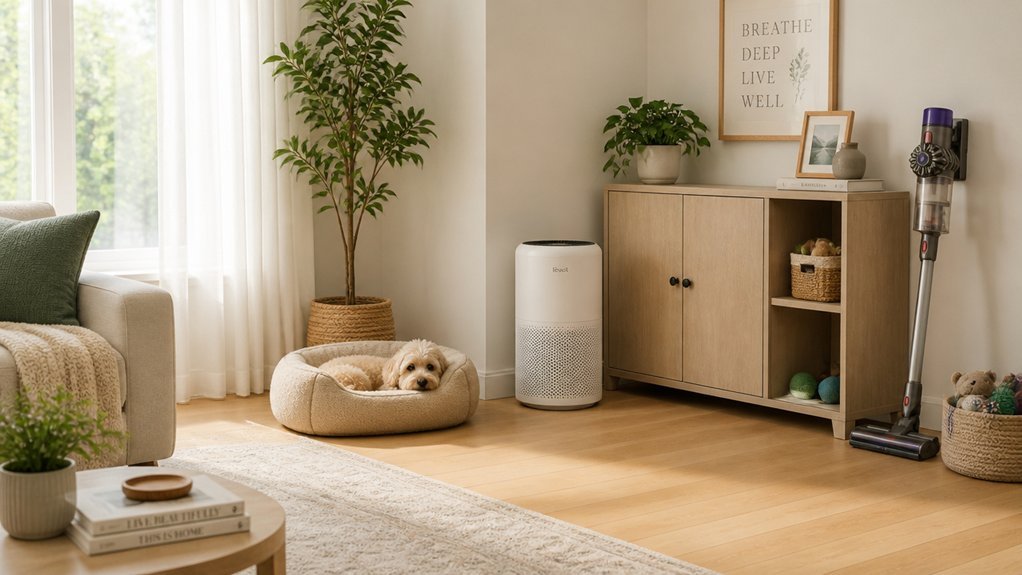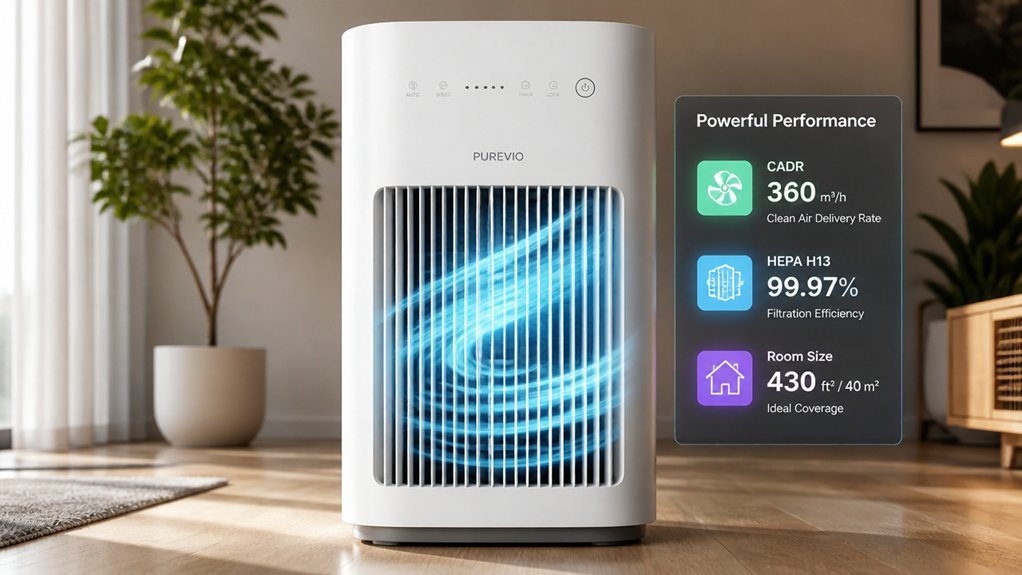
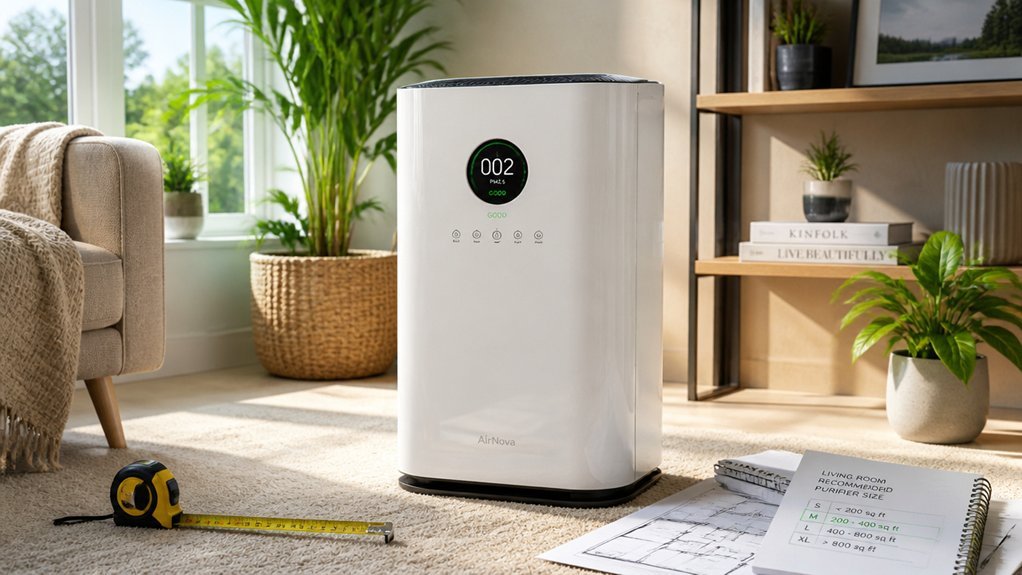
Choose an air purifier by matching it to your room’s square footage, not just its looks. Check the CADR rating and make sure it fits your room volume and desired air changes per hour. Don’t forget ceiling height, open layouts, or odd room shapes, since they affect airflow. Pick a unit that targets your main pollutant, whether that’s dust, smoke, or pollen. Get these basics right, and you’ll see why the details matter next.
How to Choose an Air Purifier for Your Room
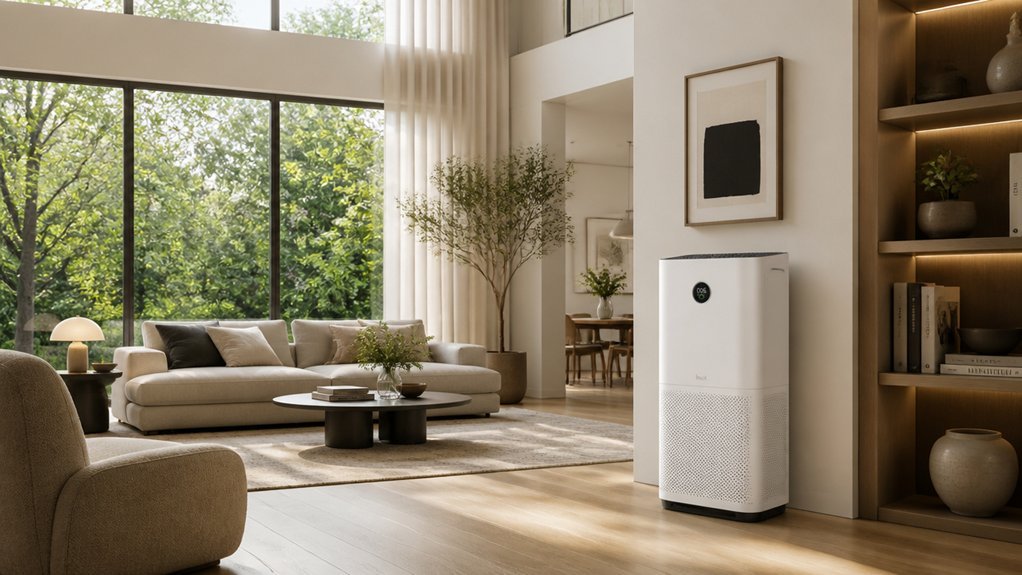
Choosing the right air purifier for your room starts with size: you need a unit that can clean the full space without working too hard or falling short. Start by checking the manufacturer’s recommended room range, then compare it with your room’s dimensions. If you have an open layout, treat connected spaces as one area.
Next, think about how you use the room. A bedroom, nursery, or home office may need quieter operation, while a living room may need stronger airflow. Consider the CADR ratings, which measure how quickly an air purifier can clean a room, to select a model with sufficient power for your space.
Look for a purifier with a filter system that suits your concerns, such as dust, smoke, or pet dander. Also, make sure the unit fits your space physically so you can place it where air can circulate freely and effectively.
Match Air Purifier Size to Square Footage
To match an air purifier to your room, start with the square footage. Measure the room’s length and width, then multiply them to get total area. Compare that number with the purifier’s recommended coverage, and choose a model that meets or slightly exceeds your room size.
It’s also helpful to consider the airflow coverage and intake design of the purifier, as these factors influence how effectively it can clean air in larger or more open spaces. For bedrooms, offices, and small living rooms, a properly sized purifier can clean the air more efficiently and avoid straining the unit.
Don’t guess based on appearance alone; a bigger-looking device isn’t always better. When you match the purifier to your room’s footprint, you’ll get better performance, quieter operation, and more reliable results.
Check CADR for Your Room Size
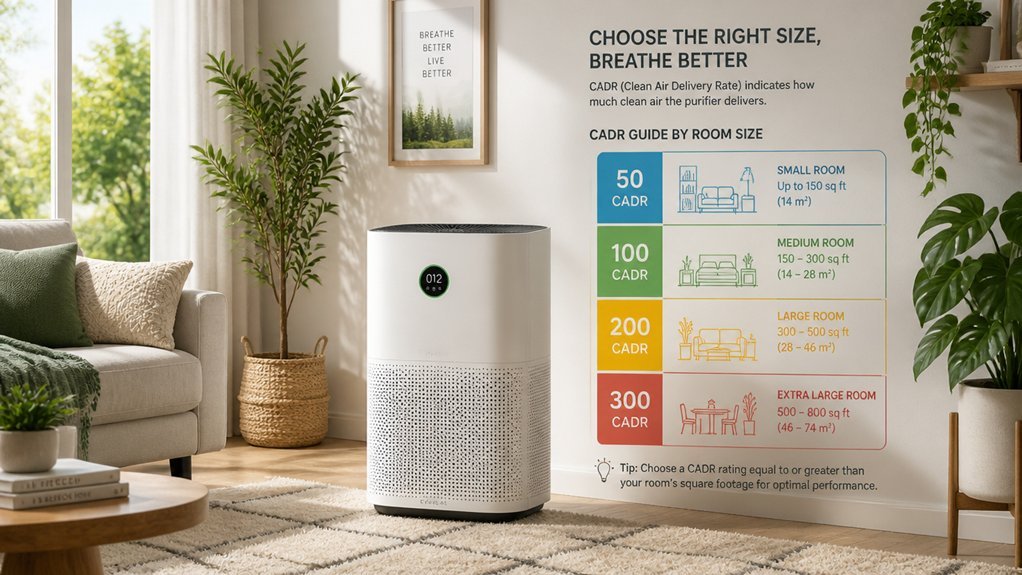
You should match the CADR to your room size so the purifier can clean the air fast enough. To do that, calculate how much clean air your room needs based on its square footage and the air changes you want. When the CADR lines up with your space, you’ll get better performance and cleaner air. Ensure your chosen monitor has an adequate measurement range to accurately assess your indoor air quality levels.
Match CADR To Room
How do you know if an air purifier can actually clean your space? You match its CADR to your room size. CADR, or clean air delivery rate, tells you how quickly the unit filters smoke, dust, and pollen.
If the number is too low, the purifier won’t keep up, and you’ll still breathe stale air. If it’s too high, you may spend more than you need to. Check the manufacturer’s room-size recommendation, then compare it with your room’s square footage.
A living room with high ceilings or open doorways may need a stronger model than a closed bedroom of the same size. Choose a purifier whose CADR fits your space closely, so it can circulate air efficiently and deliver noticeable results every day.
Additionally, sensor accuracy plays a role in ensuring your air purifier responds appropriately to changing air quality conditions.
Calculate Needed Clean Air
Start by calculating the clean air your room needs, then compare that number with the purifier’s CADR.
Measure your room’s length, width, and ceiling height to get cubic feet, then decide how many air changes per hour you want. A bedroom may need fewer changes than a smoky living room.
Multiply the room volume by the air changes, then divide by 60 to estimate the CADR you should target.
- A 10-by-12-foot room with 8-foot ceilings needs about 960 cubic feet of clean air.
- If you want five air changes an hour, aim for a CADR near 80.
- Pick a purifier rated a bit higher so it doesn’t struggle.
Choose the Right Air Changes Per Hour
Air changes per hour, or ACH, tell you how often your purifier can clean the air in a room each hour. You’ll want a higher ACH for bedrooms, kitchens, or other spaces with more dust, odors, or activity. Match the ACH to your room’s needs so you get cleaner air without over- or under-sizing your purifier. Ensuring the purifier has the appropriate sensor accuracy can also improve the effectiveness of air quality monitoring.
Understanding Air Changes
When you’re choosing an air purifier, air changes per hour, or ACH, tells you how often the unit can filter the room’s air in a single hour.
If your purifier has a higher ACH, it moves through the room faster and refreshes the air more often. That matters because you want steady filtration, not a slow pass that leaves stale air behind.
Think of ACH as a simple performance signal: it shows how hard the unit works in your space.
- A low ACH means fewer air passes.
- A moderate ACH gives balanced circulation.
- A higher ACH helps you clear airborne particles faster.
You can use ACH to compare models without guessing. It gives you a clear way to judge whether a purifier’s output feels strong enough for everyday use.
Matching Room Needs
ACH is only useful if it fits the room you plan to clean. Start by matching the purifier’s air changes per hour to how you use the space. A bedroom may do well with 4 to 5 ACH, while a busy living room or kitchen often needs 5 to 6 or more. If you deal with pets, smoke, or allergies, choose a higher rate so the unit can cycle air often enough to catch particles before they settle. Also check room height, because larger air volume needs stronger performance. Don’t rely on square footage alone; use the purifier’s coverage rating and your target ACH together. When selecting a dehumidifier, consider the noise level to ensure it won’t disturb your comfort, especially in bedrooms or quiet spaces. When you pick the right match, you get cleaner air faster, and the unit won’t struggle to keep up.
Don’t Forget Ceiling Height and Room Shape
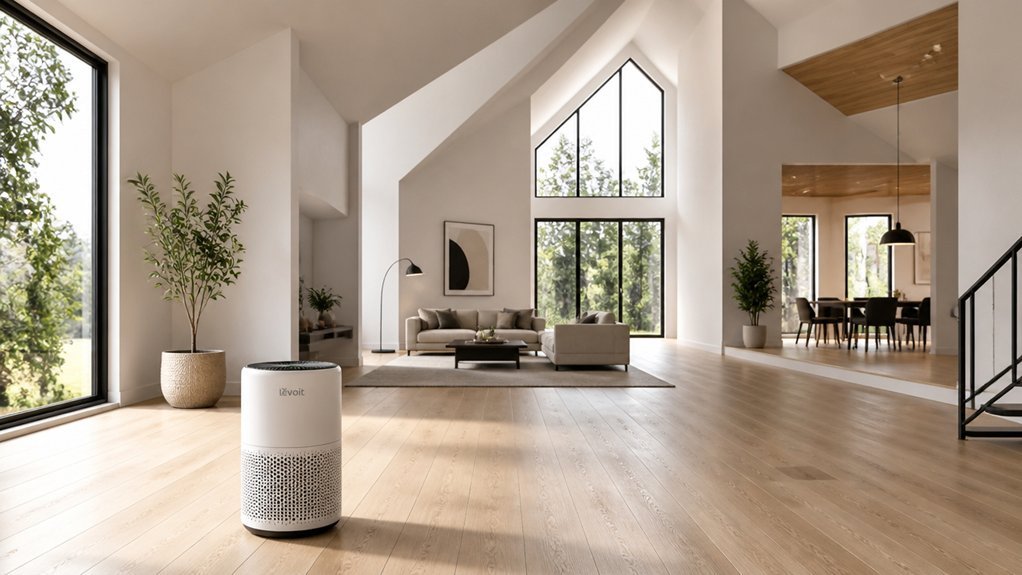
A room’s ceiling height can change the purifier size you need just as much as floor space, because taller ceilings mean more air volume to clean. When you shop, don’t stop at square footage; multiply length, width, and height if you can.
A vaulted living room may need a stronger unit than a low-ceiling bedroom with the same floor area. Room shape matters too, since odd layouts, alcoves, and open doorways can let air move unevenly.
For optimal performance, choose a purifier that accounts for air circulation, ensuring it effectively covers all areas regardless of room irregularities.
- Measure the actual ceiling height.
- Note corners, hallways, and open connections.
- Choose a purifier that can circulate air through the whole space, not just the center.
If your room’s shape feels tricky, size up a bit. That extra capacity can help you get steadier, more consistent coverage.
Pick an Air Purifier for Your Main Pollutants
What are you trying to remove from the air? Start with your biggest problem, then match the purifier to it. If you deal with dust, pet dander, or pollen, choose a model with a true HEPA filter. If smoke, cooking odors, or VOCs bother you, look for activated carbon. For allergies, you’ll want strong particle capture; for germs, check for purifier features that support UV or PECO, if available.
| Pollutant | Best filter |
|---|---|
| Dust | True HEPA |
| Smoke | Activated carbon |
| Pet dander | True HEPA |
Don’t pay for extras you won’t use. A purifier that targets your main pollutant works better, costs less, and fits your room size more effectively.
Frequently Asked Questions
How Often Should I Replace the Air Purifier Filter?
You should replace your air purifier filter every 3 to 12 months, depending on use, filter type, and air quality. Check the manufacturer’s guide, and change it sooner if airflow drops or odors linger.
Are Air Purifiers Noisy at Higher Fan Speeds?
Yes, you’ll usually hear more noise at higher fan speeds, but you can often balance sound and cleaning power. You should try lower settings for quiet use, then switch higher when you need faster filtration.
Can One Purifier Handle Multiple Connected Rooms?
Yes, one purifier can handle multiple connected rooms if you place it centrally, keep doors open, and choose a unit rated for the combined square footage. You’ll get better results with strong airflow and good circulation.
Should I Choose a Smart Air Purifier With Sensors?
Yes—if you want convenience, choose a smart air purifier with sensors. You’ll get automatic speed changes, real-time air-quality feedback, and better energy use, but you’ll pay more for features you might not need.
Do Air Purifiers Use a Lot of Electricity?
No, you usually won’t use a lot of electricity. You’ll often spend about as much as a small fan, and you can lower costs by running it on lower settings or using a timer.
In Summary
To choose the right air purifier, start by matching its size to your room’s square footage, then check the CADR rating and air changes per hour. Don’t forget to factor in ceiling height, room shape, and the pollutants you want to target most. When you pick a purifier that fits your space and needs, you’ll get cleaner air faster and with less effort. The right size makes all the difference for better breathing.