If you want cleaner air at home in 2027, you’ve got more monitor options than ever, but not all of them tell the same story. You’ll see models that track CO2, PM2.5, VOCs, and even radon, plus smart alerts and app support that make action easier. The real question is which ones actually help you notice problems before they affect comfort and health.
| Amazon Smart Air Quality Monitor with Alexa |  | Best for Alexa Homes | Air Metrics: PM2.5, VOCs, CO, humidity, temperature | CO2 Monitoring: Not included | Display: Alexa app / LED | CHECK ON AMAZON | Read Our Analysis |
| Airthings View Plus Radon & Air Quality Monitor |  | Best Premium Monitor | Air Metrics: Radon, PM2.5, CO2, VOCs, humidity, temperature, air pressure | CO2 Monitoring: Included | Display: eInk display | CHECK ON AMAZON | Read Our Analysis |
| 16-in-1 Indoor Air Quality Monitor with CO2 | 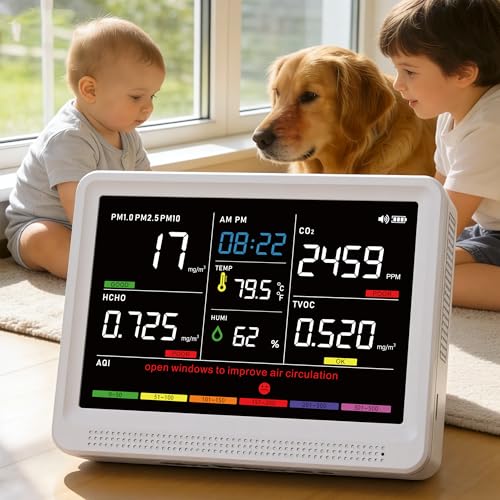 | Best Multi-Sensor Pick | Air Metrics: CO2, PM2.5, PM1.0, PM10, HCHO, TVOC, temperature, humidity, AQI | CO2 Monitoring: Included | Display: 5.5-inch HD LED | CHECK ON AMAZON | Read Our Analysis |
| BREATHE Smart Indoor Air Quality Monitor for Home |  | Best for Data Tracking | Air Metrics: CO2, PM1, PM2.5, PM10, TVOC, HCHO, temperature, humidity | CO2 Monitoring: Included | Display: App + mobile readings | CHECK ON AMAZON | Read Our Analysis |
| Aranet4 Indoor Air Quality Monitor with CO2 Sensor | 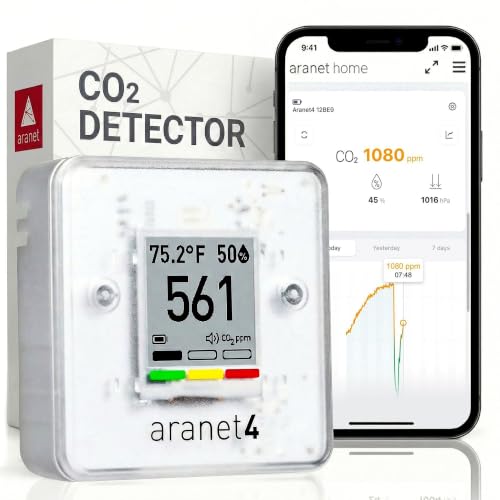 | Best Battery Life | Air Metrics: CO2, temperature, humidity, pressure | CO2 Monitoring: Included | Display: E-ink display | CHECK ON AMAZON | Read Our Analysis |
| Air Quality Monitor with CO2 TVOC and PM Sensors |  | Best Portable Monitor | Air Metrics: CO2, HCHO, TVOC, PM2.5, PM1.0, PM10, temperature, humidity, AQI | CO2 Monitoring: Included | Display: Color screen | CHECK ON AMAZON | Read Our Analysis |
More Details on Our Top Picks
Amazon Smart Air Quality Monitor with Alexa
If you already use Alexa, this Amazon Smart Air Quality Monitor fits your home naturally. You can track five indoor air factors: PM2.5, VOCs, carbon monoxide, humidity, and temperature. The color-coded LED and Alexa app give you a simple air quality score at a glance. When conditions worsen, you’ll get phone alerts or Echo announcements. You can also build routines that trigger air purifiers, fans, or dehumidifiers automatically. Its temperature sensor helps you fine-tune comfort, and it works with Amazon Smart Thermostat for better room control throughout your home.
- Air Metrics:PM2.5, VOCs, CO, humidity, temperature
- CO2 Monitoring:Not included
- Display:Alexa app / LED
- Connectivity:Alexa ecosystem
- Power:Plug-in
- Alerts:Phone/Echo alerts
- Additional Feature:PM2.5 and VOC sensing
- Additional Feature:Alexa routine automation
- Additional Feature:Smart thermostat compatible
Airthings View Plus Radon & Air Quality Monitor
Airthings View Plus stands out as a premium pick for monitoring radon and indoor air quality. You’ll track radon, PM2.5, CO2, VOCs, humidity, temperature, and air pressure with always-on sensors and WiFi. Its highly accurate digital radon detector helps you spot a serious lung cancer risk early. You get live readings, cloud-stored data, and alerts through the Airthings app, which also offers trends, pollen forecasts, and tips. Battery power lets you place it anywhere, and the customizable eInk display keeps it easy to read. Airthings backs it with a five-year warranty.
- Air Metrics:Radon, PM2.5, CO2, VOCs, humidity, temperature, air pressure
- CO2 Monitoring:Included
- Display:eInk display
- Connectivity:WiFi
- Power:Battery-powered
- Alerts:Notifications
- Additional Feature:Radon gas detection
- Additional Feature:Pollen forecasts included
- Additional Feature:Five-year warranty
16-in-1 Indoor Air Quality Monitor with CO2
For households that want a true all-in-one readout, this is the best multi-sensor pick. You get CO2, PM2.5, PM1.0, PM10, HCHO, TVOC, temperature, humidity, and AQI, plus seven alert buzzers for a 16-in-1 setup. Its external high-precision sensors and multi-sensor array catch subtle changes fast, while the 5.5-inch HD LED screen keeps readings easy to see. You can adjust brightness, mute alarms, and charge it by USB-C or AC. With up to 10 hours of runtime, it fits your home, office, bedroom, or car.
- Air Metrics:CO2, PM2.5, PM1.0, PM10, HCHO, TVOC, temperature, humidity, AQI
- CO2 Monitoring:Included
- Display:5.5-inch HD LED
- Connectivity:USB-C charging
- Power:USB-C rechargeable
- Alerts:AQI buzzers
- Additional Feature:16-in-1 functionality
- Additional Feature:5.5-inch HD display
- Additional Feature:Three brightness levels
BREATHE Smart Indoor Air Quality Monitor for Home
BREATHE Smart suits you when you want detailed indoor air tracking. You get real-time readings for CO2, PM1, PM2.5, PM10, TVOC, formaldehyde, temperature, and humidity in one compact monitor. Its laser particle sensors and true NDIR CO2 sensor give you direct, accurate data, while quick calibration helps keep results reliable. Connect it to the free 2.4 GHz Wi-Fi app for remote viewing, alerts, and 90-day history. You can export CSV data, run it on USB-C, or use battery power for up to 6 hours. It’s indoor-only and doesn’t replace smoke or CO alarms.
- Air Metrics:CO2, PM1, PM2.5, PM10, TVOC, HCHO, temperature, humidity
- CO2 Monitoring:Included
- Display:App + mobile readings
- Connectivity:2.4 GHz Wi-Fi
- Power:USB-C / battery
- Alerts:Custom alerts
- Additional Feature:90-day history tracking
- Additional Feature:CSV data export
- Additional Feature:Quick calibration support
Aranet4 Indoor Air Quality Monitor with CO2 Sensor
If you need long-term CO2 tracking without frequent charging, Aranet4 stands out with up to 4 years of battery life. You can monitor CO2, temperature, humidity, and atmospheric pressure in real time with its precise NDIR sensor. Its wireless, cable-free design and e-ink display make daily use simple and efficient. Color coding plus a large CO2 reading help you spot poor air fast, and the optional buzzer adds an alert when levels climb. With the free app, you can review 90 days of data in clear graphs. It’s compact, made in the EU, and built for healthier indoor air.
- Air Metrics:CO2, temperature, humidity, pressure
- CO2 Monitoring:Included
- Display:E-ink display
- Connectivity:Smartphone app
- Power:Long-life battery
- Alerts:Optional buzzer
- Additional Feature:Four-year battery life
- Additional Feature:Optional buzzer alert
- Additional Feature:E-ink display
Air Quality Monitor with CO2 TVOC and PM Sensors
When you need a best portable monitor for thorough indoor air checks, this unit fits the bill. You can track CO2, HCHO, TVOC, temperature, humidity, AQI, PM1.0, PM2.5, and PM10 in real time, so you’ll spot problems fast. Its high-definition color screen uses a three-color alert system that changes when readings pass safe limits. Smart sensing and precision electrochemical sensors help keep data stable and accurate. You can calibrate time via Bluetooth, switch units, mute sound, and sleep the display. It’s compact enough for bedrooms, cars, offices, and more.
- Air Metrics:CO2, HCHO, TVOC, PM2.5, PM1.0, PM10, temperature, humidity, AQI
- CO2 Monitoring:Included
- Display:Color screen
- Connectivity:Bluetooth
- Power:USB-powered
- Alerts:Color alerts
- Additional Feature:Bluetooth clock calibration
- Additional Feature:Three-color visualization
- Additional Feature:Multi-location portable use
Factors to Consider When Choosing Indoor Air Quality Monitors for Healthier Homes
When you choose an indoor air quality monitor, make sure it covers the pollutants that matter most in your home and gives you accurate readings. You’ll also want clear alerts, smart connectivity if you like app tracking, and a display that’s easy to read at a glance. These features help you act quickly and keep your home healthier.
Measurement Coverage
Measurement coverage matters because a good indoor air quality monitor should track more than just one or two pollutants. You’ll get a clearer picture when it measures PM2.5, PM10, CO2, VOCs, formaldehyde, and carbon monoxide. Add temperature and humidity too, since they affect how pollutants behave and how comfortable your home feels. If you live in a radon-prone area, choose a monitor that includes radon detection, because standard units won’t catch it. Look for multi-sensor systems that update in real time and send instant alerts, so you can spot changes quickly and act before problems build up. Devices that use direct sensing for gases, like NDIR for CO2 or electrochemical sensors for VOCs and formaldehyde, can also give you more dependable readings overall.
Sensor Accuracy
Sensor accuracy is what makes an indoor air quality monitor truly useful, because you need reliable readings to catch pollutants like PM, CO2, VOCs, and formaldehyde before they affect your health. Look for high-precision sensors that offer fine resolution and use proven technologies such as electrochemical and NDIR sensing. These systems give you steadier measurements and better pollutant detection than basic sensors. Multi-sensor arrays can also help you distinguish between contaminants at the same time, so you get a clearer picture of your air. Accurate monitors reduce false alarms and missed issues by staying sensitive and well calibrated. To keep performance strong, calibrate the device regularly and place it away from dust, strong odors, and other contaminants that can interfere with readings.
Alert Systems
A good alert system helps you act fast when indoor air quality starts to worsen, using color-coded LEDs, audible buzzers, or mobile app notifications to flag problems in real time. You’ll want a monitor that lets you set custom thresholds for CO2, PM2.5, VOCs, or formaldehyde, so alerts match your home and your sensitivity. Strong systems don’t just warn you; they help you respond quickly. Some can announce issues by voice or trigger routines that start air purifiers, fans, or ventilation changes automatically. If constant notifications feel overwhelming, look for mute or snooze options so you can control alert frequency without missing important changes. The best system keeps you informed, reduces response time, and makes it easier to protect your family from unhealthy air.
Smart Connectivity
Smart connectivity lets you check your indoor air quality in real time through a mobile app, so you can spot problems early and act before they worsen. You should look for Wi-Fi or Bluetooth support so you can monitor conditions remotely and review historical trends for clearer health insights. When your monitor syncs with cloud storage, you’ll access the same data across devices without hassle. Smart home integration also helps you automate responses, like turning on an air purifier or adjusting your thermostat when pollution rises. If you use virtual assistants, voice control can make management even easier. The best connected monitor should fit into your routines, keep you informed, and help you respond quickly without extra effort or guesswork every day.
Display Readability
When you’re choosing an indoor air quality monitor, display readability can make a big difference in how quickly you understand the data. Look for a high-definition screen that presents readings clearly, so you don’t have to squint or guess. Color-coded indicators, like multi-color LEDs or tinted backgrounds, help you spot air quality changes at a glance from across the room. Adjustable brightness matters too, because you’ll need visibility in both sunny spaces and low-light areas. A larger display usually shows more detail and makes metrics easier to read than a compact screen. Also, choose a monitor that uses simple symbols, numerical values, and clear labels. When the display is easy to scan, you can act faster and with more confidence.
Power Options
Power options affect where you can place an indoor air quality monitor and how easy it is to use day to day. If you want maximum flexibility, choose a battery-powered model so you can move it from room to room without cords. That’s especially useful when you travel or need to monitor a spot far from an outlet. Look for long battery life if you’d rather not recharge often; some models run for hours, while others last much longer. USB-C rechargeable monitors make power simple because you can use common cables and adapters. A plug-in USB-C model suits a fixed location, and hybrid units give you both options. You can keep them plugged in at home, then unplug them when you need portable, uninterrupted monitoring.
Data Tracking
Good data tracking helps you turn air quality readings into useful action. You should look for indoor air quality monitors that give you continuous readings through a device display or connected app, so you can spot changes as they happen. Strong monitors also store at least 90 days of history, letting you compare current conditions with past patterns and see how seasons, cooking, or cleaning affect your air. Cloud storage makes it easier to keep data secure and follow trends across multiple devices. Choose models with alerts you can customize, so you get notified when levels drift from your targets. If you want deeper analysis, export options like CSV let you review the numbers, match them with symptoms, and make smarter choices for a healthier home.
Frequently Asked Questions
How Often Should Indoor Air Quality Monitors Be Calibrated?
You should calibrate indoor air quality monitors every 6 to 12 months, and sooner if readings drift, after repairs, or following manufacturer guidance. You’ll keep measurements reliable and catch problems before they affect your home.
Can These Monitors Detect Mold Before It Becomes Visible?
They can’t directly spot mold before you see it, but you can catch rising humidity, VOCs, and particulate spikes early. You’ll use those clues to investigate leaks, dampness, and hidden growth quickly.
Do Indoor Air Quality Monitors Work Accurately in Large Open Spaces?
Not always—you’ll get decent readings near the monitor, but large open spaces can create uneven airflow and mixed pollutant zones. You should place multiple units strategically, because one sensor can’t capture every hotspot accurately.
How Do Smartphone Apps Improve Monitor Usability?
Smartphone apps improve monitor usability by letting you check readings remotely, set alerts, track trends, and customize settings fast. You’ll get clearer insights, easier controls, and quicker responses without hovering near the device.
What Maintenance Do Indoor Air Quality Monitors Require?
You’ll need to clean sensors, replace filters if included, update firmware, and calibrate occasionally. Keep it dust-free, check batteries or power, and verify readings monthly so you trust your monitor’s results.