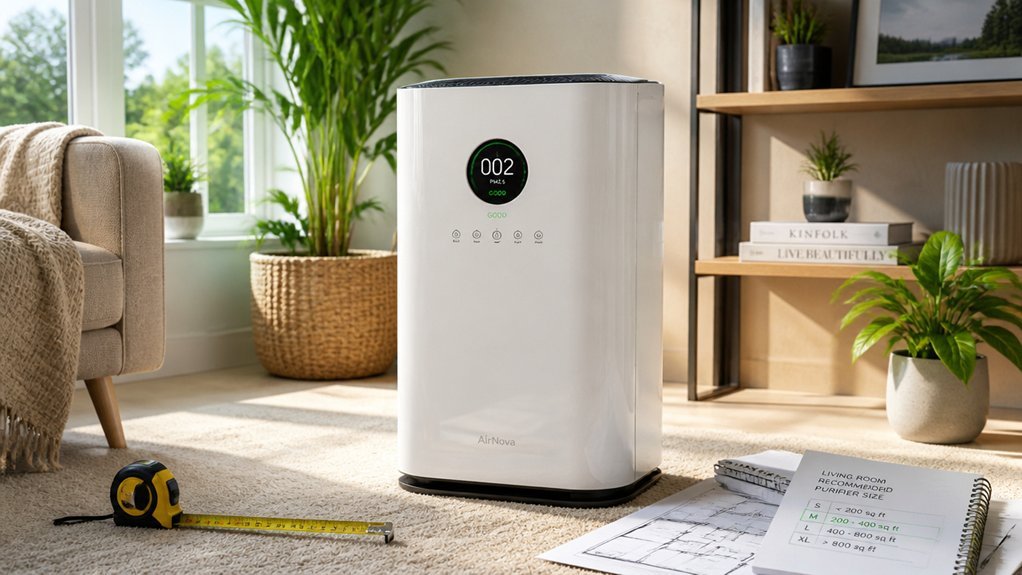
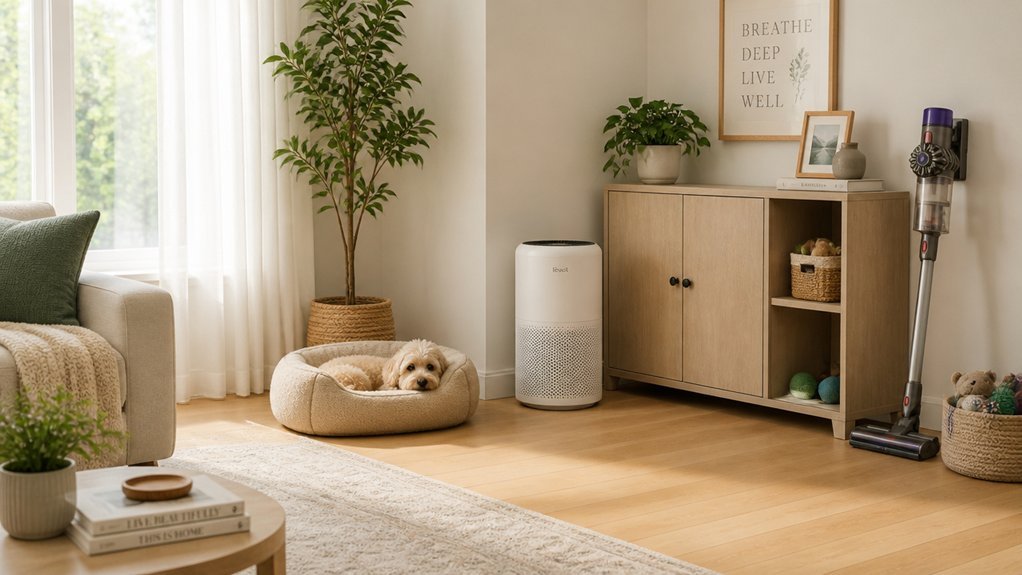
You can cut pet dander in your home by using a HEPA vacuum with a sealed system, washing pet bedding weekly in hot water, and brushing and bathing your pets regularly with gentle shampoo. Run a true HEPA air purifier, keep pets out of bedrooms, and clean floors and surfaces often with damp cloths or mops. Keep indoor humidity between 30% and 50% so allergens stay lower, and you’ll find a few more easy fixes below.
Start With a HEPA Vacuum
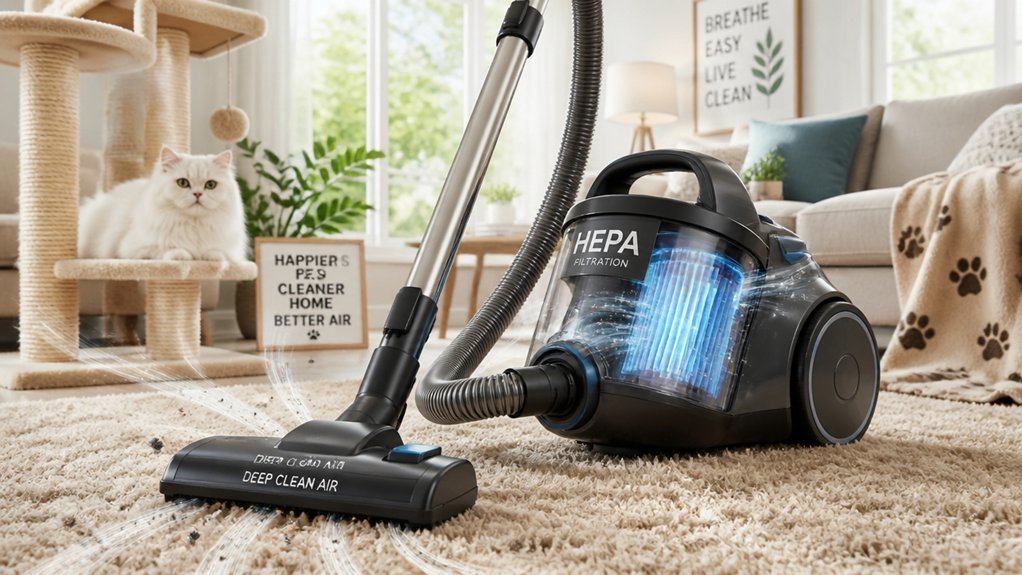
A HEPA vacuum can make a big difference in controlling pet dander because it traps tiny particles instead of kicking them back into the air. When you vacuum carpets, rugs, upholstery, and baseboards regularly, you pull up dander before it settles deeper into fabrics.
Choose a vacuum with a sealed system and a true HEPA filter so it holds onto allergens instead of leaking them back out. Move slowly over high-traffic areas, and use attachments to reach corners, stairs, and furniture seams where fur collects. Empty or replace the bag or canister as directed so the vacuum keeps working well.
If you have pets that shed heavily, aim to vacuum several times a week to keep indoor dander levels lower.
Wash Pet Bedding Weekly
Wash your pet’s bedding once a week to cut down on the dander your pet sheds where they sleep and rest. Use hot water if the fabric allows it, and choose a fragrance-free detergent to avoid irritating sensitive skin. A clean environment with less pet hair and dander can help improve air quality and reduce allergens in your home. Remove loose hair before washing so your machine doesn’t clog and the bedding comes out cleaner. If you use a cover or blanket, wash that too, since dander settles quickly into soft surfaces. Let the bedding dry completely before putting it back in place, because damp fabric can hold odors and debris. Keep a spare set on hand so you can rotate between washes without skipping a week. Clean bedding won’t eliminate dander entirely, but it can greatly reduce the amount that builds up in the spots your pet uses most.
Brush and Bathe Your Pets Regularly
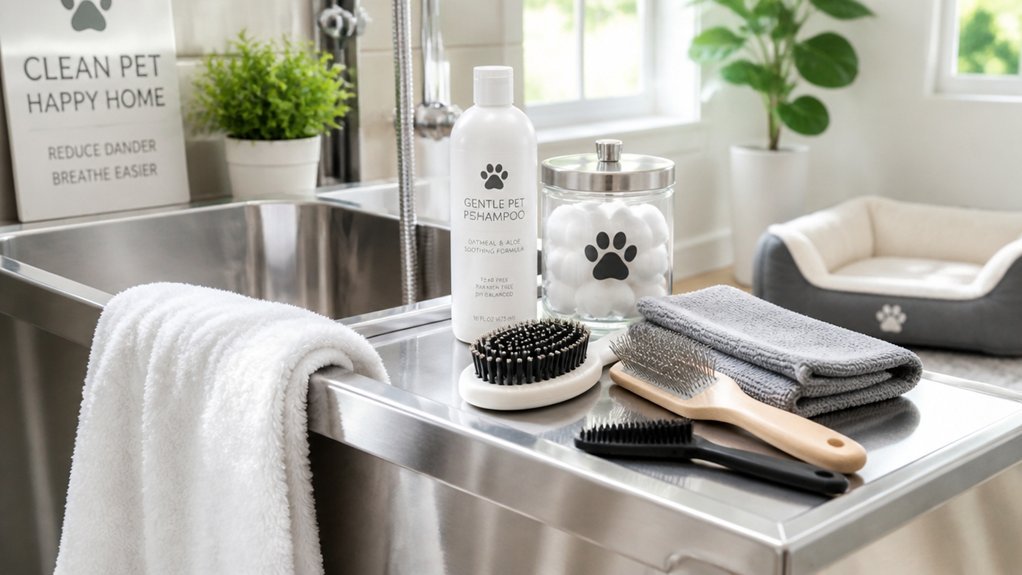
Brushing and bathing your pet regularly can help cut down on loose dander before it spreads around your home. Choose the right brush for your pet’s coat, and set a bathing schedule that fits their needs. Using proper testing methods can also help identify areas with excessive mold or dander buildup, ensuring targeted cleaning efforts. Use a pet-friendly shampoo so you clean their skin without causing irritation.
Choose the Right Brush
To keep pet dander under control, choose a brush that matches your pet’s coat and use it regularly to lift loose hair before it spreads around your home.
For short-haired pets, use a soft bristle brush or grooming glove to catch shedding fur without irritating skin. For medium or long coats, pick a slicker brush or undercoat rake to reach deeper layers and remove trapped dander.
Brush in the direction of hair growth with gentle, steady strokes, and pay extra attention to high-shedding spots like the back, chest, and tail. If your pet resists, keep sessions brief and reward calm behavior.
The right brush helps you trap allergens early, keeps your pet more comfortable, and reduces how much dander settles on floors, furniture, and fabrics. Regular grooming with high-quality tools also supports the use of high-precision sensors, ensuring a healthier environment for you and your pet.
Set a Bathing Schedule
If your pet’s skin tolerates it, regular baths can make a big difference in controlling dander by washing away loose flakes, dirt, and oils before they spread through your home. Set a bathing schedule that fits your pet’s coat, activity level, and lifestyle, then stick to it so you don’t let buildup get ahead of you. Brushing before each bath helps loosen dead hair and keeps the water cleaner. Using the right mist type and proper routine can enhance the effectiveness of controlling pet dander.
- Bathe short-haired pets less often.
- Bathe high-shedding pets more consistently.
- Add extra baths after outdoor play or heavy shedding.
- Watch for dry skin and adjust the routine.
Keep baths calm and brief, and always dry your pet thoroughly afterward. Consistency matters more than occasional deep cleaning.
Use Pet-Friendly Shampoo
Choose a gentle, pet-friendly shampoo that won’t strip your pet’s skin and coat, since harsh products can worsen dryness and increase dander. You’ll help your pet feel cleaner and calmer when you wash away loose flakes and trapped allergens. Massage the shampoo in gently, rinse thoroughly, and dry your pet well to prevent irritation. Pair bathing with regular brushing to catch shedding before it lands on your furniture or floors.
| Step | What You Do | Why It Matters |
|---|---|---|
| Brush | Remove loose fur | Less dander in the air |
| Bathe | Use gentle shampoo | Protects skin moisture |
| Dry | Towel or blow-dry | Reduces itch and flaking |
When you stay consistent, you can make your home feel fresher and your pet more comfortable every week.
Run an Air Purifier for Pet Dander

An air purifier can make a noticeable difference when pet dander keeps circulating through your home. Choose a model with a true HEPA filter, and place it where you and your pet spend the most time. Let it run daily so it can trap airborne flakes before they settle on furniture or carpets.
A true HEPA purifier can help trap pet dander before it settles around your home.
- Pick a HEPA purifier for fine dander.
- Match the unit’s size to the room.
- Run it on a steady setting.
- Replace filters on schedule.
- Ensure proper filtration quality for effective removal of pet allergens.
Keep Pets Out of Bedrooms
Set clear bedroom boundaries so your pet knows the sleeping space is off-limits. You can keep the room cleaner by making sleep space rules and enforcing them every night. A closed door policy helps block dander from settling where you rest. Using a digital hygrometer to monitor humidity levels can help create an environment less conducive to pet dander and allergens.
Bedroom Boundaries
Keeping pets out of the bedroom can make a noticeable difference in your exposure to dander, especially since you spend so many hours there each night. Set firm boundaries and stick to them so your room stays cleaner and easier to manage.
- Close the door every day.
- Use a baby gate if needed.
- Tell everyone in your home to follow the rule.
- Keep treats and toys outside the room.
You’ll also avoid giving fur and flakes extra places to settle on fabrics and surfaces. When you make the bedroom a pet-free zone, you cut down on allergens where they affect you most.
Stay consistent, and you’ll support a fresher, more comfortable space without much extra effort.
Sleep Space Rules
Your sleep space deserves the same firm pet-free boundary as the rest of your bedroom. When you keep pets out of where you sleep, you cut down on dander that settles into sheets, pillows, and mattresses. You also avoid the extra shedding that happens when animals curl up on soft surfaces for hours.
Make your bed a human-only zone, and stick to it every night. If your pet usually sleeps nearby, give them a comfortable alternative in another room so the habit feels consistent, not punishing.
Washing your bedding regularly is crucial, as fabric can trap lingering flakes even after you’ve changed routines. This simple rule can improve air quality, reduce nighttime irritation, and help you wake up with fewer sneezes, less itching, and better rest. Additionally, choosing a small dehumidifier for your bedroom can help reduce excess moisture that contributes to dander buildup.
Door Closed Policy
Keep your bedroom door closed so pets can’t wander in and spread dander onto your pillow, blankets, and carpet. This simple habit cuts down on nightly exposure and helps you breathe easier while you sleep.
If you share your home with cats or dogs, make your bedroom a pet-free zone and stick to it every day.
- Close the door before bedtime.
- Use a baby gate if needed.
- Wash bedding weekly in hot water.
- Vacuum nearby floors often.
You’ll also want to keep clothes and shoes out of the room so dander doesn’t hitch a ride inside. If your pet scratches at the door, stay consistent and offer a cozy spot elsewhere. A firm door policy gives you cleaner air and a calmer sleep space.
Clean Floors and Surfaces Often
Dust and dander don’t just settle on carpets; they cling to hard floors, baseboards, and furniture too. You can cut buildup by sweeping, vacuuming, and wiping these areas regularly. Use a vacuum with a HEPA filter to trap tiny particles instead of blowing them back into the air.
Mop hard floors with a damp microfiber cloth or pad, and wipe shelves, window sills, and trim with a slightly damp cloth so dust lifts off instead of spreading. Don’t forget under couches, behind doors, and along pet favorite spots, where dander collects fast.
If you stay consistent, you’ll remove allergens before they spread through your home and make breathing easier for everyone. Stick to a routine, and you’ll notice cleaner surfaces and less visible pet debris.
Control Indoor Humidity
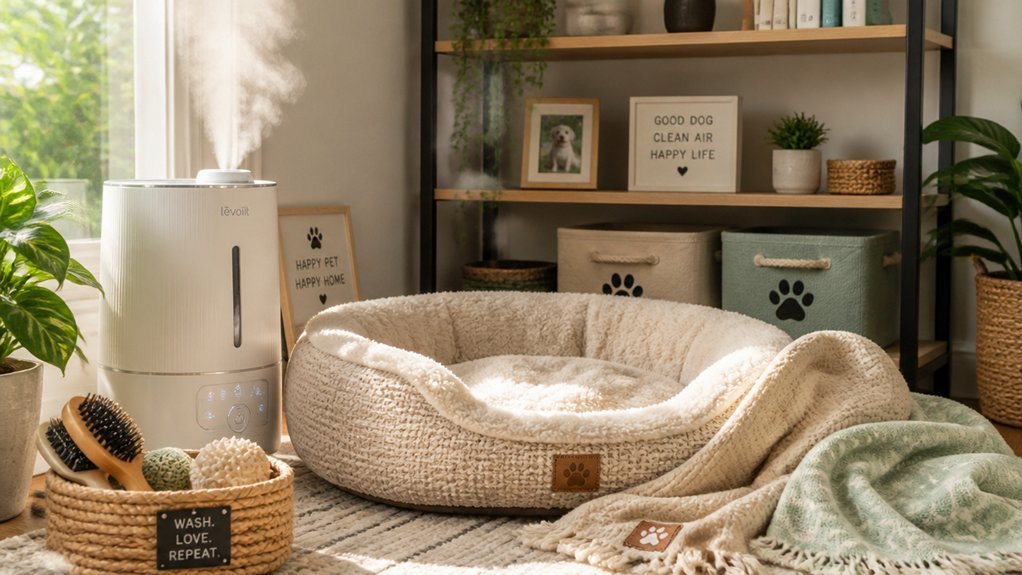
Even with clean floors and wiped surfaces, dander can linger longer when indoor air is too dry or too damp. You can keep humidity in the sweet spot, around 30% to 50%, so flakes don’t stay airborne as long and your pet’s skin doesn’t dry out.
Use a hygrometer to check levels, then adjust with a humidifier or dehumidifier as needed.
- Place a monitor in the main living area.
- Run a humidifier in winter if air feels parched.
- Use a dehumidifier in muggy rooms, especially basements.
- Vent bathrooms and kitchens to reduce excess moisture.
When you control humidity, you’ll make your home less inviting to lingering dander and easier to breathe in every season.
Frequently Asked Questions
How Often Should I Replace HVAC Filters for Pet Dander?
You should replace HVAC filters every 1 to 3 months if you’ve got pets, and monthly if shedding’s heavy. Use high-MERV filters, check them often, and change them sooner when airflow drops noticeably.
Which Flooring Traps the Least Pet Dander?
Hard-surface flooring like tile, sealed hardwood, or vinyl traps the least pet dander, so you can sweep or mop it easily. You’ll reduce buildup more than with carpet, which holds allergens deep.
Do Air Ducts Need Professional Cleaning for Pet Allergies?
Yes, you should consider professional duct cleaning if your allergies stay bad despite regular vacuuming and filters. You can’t fix heavy dust, mold, or dander buildup yourself, and pros clean it more thoroughly.
Can Grooming Diets Reduce Shedding and Dander?
Yes, you can reduce shedding and dander somewhat with regular grooming and a balanced diet, but they won’t eliminate it. You’ll see the biggest benefit when you brush often and keep your pet hydrated.
Are Allergy Medications Helpful Alongside Home Dander Control?
Yes, you can use allergy medications alongside home dander control. They often ease sneezing, itching, and congestion, while cleaning and grooming reduce triggers. You’ll usually get the best relief when you combine both approaches.
In Summary
By making a few simple changes, you can cut down pet dander and keep your home more comfortable. Use a HEPA vacuum, wash bedding often, groom your pets, and run an air purifier to help trap allergens. Keeping pets out of bedrooms and cleaning regularly can make a big difference, too. Stay on top of indoor humidity, and you’ll create a cleaner, healthier space for you and your furry friends.