

If you’re planning a DIY insulation upgrade in 2027, the spray foam kit you choose can make a big difference in performance, safety, and ease of use. Some kits give you stronger moisture resistance and higher R-values, while others focus on sound control or fire protection. A few stand out for larger jobs, but not every option fits every space or skill level. The differences matter more than you might think.


Product availability last checked: October 2026
Which Spray Foam Kit Fits Your Project?
- Rim joists, crawl spaces and basement walls: closed-cell foam that also blocks moisture: Vega Bond V200 for smaller areas, Vega Bond V600 for bigger ones.
- Interior walls, ceilings and sound control: HandiFoam HFO 500 open cell – lower density, good at deadening sound.
- Sealing gaps and small areas without a two-part rig: canned kits like Seal Spray 300 BF or BEEST FullStop.
- You want fire-rated foam: BEEST FullStop and Kraken Bond Fastcoat both list Class A (ASTM E84) results. Check local code on whether exposed foam needs a covering.
How Many Kits Do You Need?
Coverage is rated in board feet (square feet at 1 inch thick), and it ranges from 200 to 600 per kit here. Enter your area and thickness to compare.
Board feet needed: – (includes 15% for real-world yield)
| Product | Rated coverage | R-value at your thickness | Kits needed | |
|---|---|---|---|---|
| Vega Bond V600 (closed cell) | 600 bd ft | – | – | View on Amazon |
| Vega Bond V200 (closed cell) | 200 bd ft | – | – | View on Amazon |
| HandiFoam HFO 500 (open cell) | 500 bd ft | – | – | View on Amazon |
| BEEST FullStop | 240 bd ft | – | – | View on Amazon |
| Seal Spray (12 cans) | 300 bd ft | – | – | View on Amazon |
| YallCanDIY (18 cans) | 414 bd ft | – | – | View on Amazon |
R-values per inch come from each listing (BEEST does not list one). Kraken Bond is left out because its listing gives can count rather than board feet. Real yield drops when the foam or the surface is cold, so follow each kit’s temperature guidance.
More Details on Our Top Picks
Vega Bond Spray Foam Insulation Kit V600 Closed Cell 600 Sq Ft Off Yellow
If you want one kit that handles big DIY insulation jobs, Vega Bond stands out overall. You can use this closed cell spray foam to fill cracks, gaps, wall junctures, and other problem spots in rim joists, crawl spaces, roof rafters, ducts, basements, concrete walls, and attic spaces. It expands fast, hardens into a firm barrier, and seals out air and moisture. You get up to 600 sq ft at 1 inch thick with an R-7 value per inch. Store it at 75°F to 85°F for 24 hours before use so you’ll get the best yield and finish.
- Foam Type:Closed cell
- Coverage:600 sq ft
- R-Value:R-7/in
- Fire Rating:Not listed
- Color:Off yellow
- Included Accessories:Not listed
- Additional Feature:Airtight moisture seal
- Additional Feature:Store at 75°-85°F
- Additional Feature:Hardens into firm barrier
Not ideal if your job is under about 200 sq ft at 1 inch. The V200 fits small jobs better, and this 60 lb kit needs to sit at 75 to 85°F for a day before spraying.
Vega Bond V200 Closed Cell Spray Foam Insulation Kit 200 BF Low GWP System
Vega Bond V200 is your best eco pick for large DIY insulation jobs. You can cover up to 200 square feet at 1 inch thick, making it a solid fit for basements, attics, crawl spaces, and other bigger projects. Its low-GWP formula helps you cut environmental impact while still getting strong performance. The 2-pound closed-cell foam delivers R-7 per inch, so you boost efficiency and lower utility costs. It cures fast, seals drafts, and blocks moisture. You’ll also get a 9.5-foot gun/hose assembly, safety gear, and tips. Warm canisters to 75°F-85°F first.
- Foam Type:Closed cell
- Coverage:200 sq ft
- R-Value:R-7/in
- Fire Rating:Not listed
- Color:Not listed
- Included Accessories:Gun/hose, tips, gear
- Additional Feature:Low GWP formula
- Additional Feature:Nationwide U.S. shipping
- Additional Feature:Vapor barrier protection
Not ideal if you are insulating a whole attic or basement. At 200 board feet you would need several kits, so the V600 makes more sense.
HandiFoam HFO 500 Open Cell Spray Foam Insulation Kit
HandiFoam HFO 500 suits DIYers who want stronger sound control and reliable wall insulation. You get a low-density, two-component open-cell foam that works well in residential walls, cathedral ceilings, and other interior spaces. It cures to an installed density of 1.64 lb/ft³ and delivers an aged R-value of 4.4 per inch. One kit covers up to 500 sq. ft. at 1 inch. It expands into irregular cavities, cuts vibration, and tackles patch, repair, and touch-up jobs. Tack-free in 75 seconds, it’s cuttable in 15 minutes and fully cures in about an hour.
- Foam Type:Open cell
- Coverage:500 sq ft
- R-Value:R-4.4/in
- Fire Rating:Not listed
- Color:Not listed
- Included Accessories:Not listed
- Additional Feature:Sound-deadening open-cell foam
- Additional Feature:Tack-free in 75 seconds
- Additional Feature:Cuttable in 15 minutes
Not ideal if you need a moisture barrier on rim joists or below-grade walls. Open-cell foam lets vapor through, so use closed-cell there.
BEEST FullStop Spray Foam Insulation Kit (240 Board ft)
When you want strong fire resistance, the BEEST FullStop kit stands out for DIY insulation jobs. You get a Class A surface-burning foam tested to ASTM E84 with a Flame Spread Index of 0 and Smoke Developed Index of 120. Its R-value of 8.24 at 2 inches helps cut heat loss, while the hybrid foam expands predictably to fill gaps. It bonds to wood, metal, drywall, concrete, and brick, then cures into a water-resistant seal. The 12-can kit covers 240 board feet and includes a gun, cleaner, gloves, goggles, and coverall.
- Foam Type:Hybrid foam
- Coverage:240 board ft
- R-Value:R-8.24 at 2 in
- Fire Rating:Class A
- Color:Blue
- Included Accessories:Gun, cleaner, PPE
- Additional Feature:ASTM E84 tested
- Additional Feature:Short-term water resistance
- Additional Feature:Bonds to multiple materials
Not ideal if you want the high R-value per inch of a two-part closed-cell kit. This is a canned hybrid foam that suits gaps, walls and smaller areas.
Kraken Bond Fire Rated Spray Foam Insulation Kit
Kraken Bond’s fire-rated kit suits DIYers who want safer insulation with pro-level coverage. You get 24 cans of closed-cell polyurethane foam plus an ergonomic gun, cleaner, goggles, worksuit, and gloves, so you can start fast. Its Class-A fire rating meets ASTM E84, while the 5.66 R-value per inch boosts thermal control. The dual-nozzle design helps you coat walls, ceilings, and hard-to-reach spots evenly. You’ll seal out drafts, pests, and moisture, and the dense foam also cuts noise. Apply it between 41°F and 86°F, and let cold cans warm first.
- Foam Type:Closed cell
- Coverage:24 cans
- R-Value:R-5.66/in
- Fire Rating:Class A
- Color:Not listed
- Included Accessories:Gun, cleaner, PPE
- Additional Feature:Dual-nozzle system
- Additional Feature:Blocks pests and drafts
- Additional Feature:Acclimate cans to room temp
Not ideal if you want board-foot coverage spelled out before buying. The listing gives can count (24 x 27.1 oz) and R-value per 2 inches instead.
Seal Spray Insulating Foam Cans 300 Board FT
For bigger DIY sealing jobs, Seal Spray gives you broad, even coverage fast. You get a high-performance one-component foam with an 80%+ closed-cell formula, so it seals drafts, moisture, and noise in one pass. Each can covers up to 25 board feet, about 25% more than many 20-board-foot rivals, and delivers an R-6.45 per inch. Its fan spray coats studs, joists, ducts, and rim joists evenly. You don’t need tanks or mixing—just attach and spray. It’s Class A fire rated too, and you can make multiple passes for more R-value.
- Foam Type:Closed cell
- Coverage:300 board ft
- R-Value:R-6.45/in
- Fire Rating:Class A
- Color:White
- Included Accessories:Gun sold separately
- Additional Feature:Fan spray application
- Additional Feature:Multiple-pass application allowed
- Additional Feature:No tanks or mixing
Not ideal if you do not have a foam gun. The maker recommends its own gun for best results, so plan on one.
YallCanDIY Spray Foam Insulation Kit for Walls & Attic
Built for DIYers, this spray foam kit gives you everything needed to insulate walls and attics. You get 18 foam cans, a Teflon-coated gun, cleaner, gloves, goggles, a mask, a coverall, straws, spreaders, and nozzles for easy setup. It delivers up to R-8 at 2-inch thickness, seals gaps, and helps block drafts, moisture, and heat loss. The hybrid formula expands well, grips wood, concrete, drywall, metal, and more, and works best on clean, dry surfaces between 60 and 90°F. Apply thin layers and let it cure fully.
- Foam Type:Hybrid foam
- Coverage:18 cans
- R-Value:R-8 at 2 in
- Fire Rating:Not listed
- Color:Not listed
- Included Accessories:Full kit accessories
- Additional Feature:Hybrid foam formula
- Additional Feature:2-inch application depth
- Additional Feature:Use on clean, misted surfaces
Not ideal if you need the most insulation per inch. The listing quotes R-8 at 2 inches, about R-4 per inch, which is lower than two-part closed-cell kits.
What Else You Will Need

Dissolves uncured foam so the gun and nozzles keep working between sessions.

Spray foam gives off fumes while it cures; a proper respirator matters more than any other accessory.

Overspray sticks to everything and does not wash out.
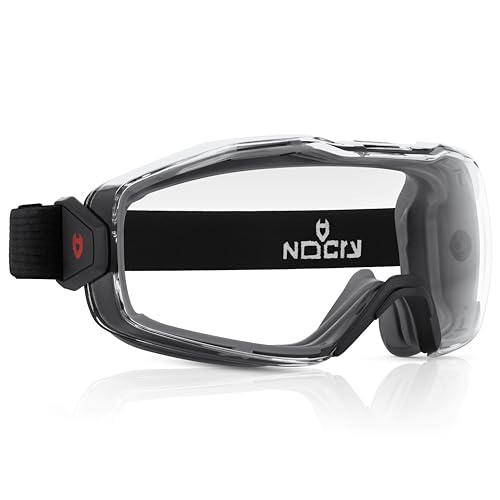
Fit over glasses and keep foam out of your eyes when spraying overhead.
Factors to Consider When Choosing Insulation Spray Foam Kits for DIY Projects
When you choose a spray foam kit for your DIY project, start by matching the coverage area to the space you need to insulate. You should also compare the R-value per inch, decide between open-cell and closed-cell foam, and check cure time, expansion, and fire rating standards. These factors help you pick a kit that fits your project, budget, and safety needs.
Coverage Area Needs
How much foam do you really need? Start by measuring the total square footage you plan to insulate, then match that number to the kit’s stated coverage at your chosen thickness. Remember, deeper applications use more foam, so a kit that covers 200 square feet at 1 inch may only handle half that area at 2 inches. If your surface has cracks, studs, corners, or odd shapes, budget extra material so you don’t come up short. You should also size the kit to your project: a small patch needs a different quantity than a full room. Finally, check the temperature and humidity during application, since they can change expansion and reduce the coverage you get.
R-Value Per Inch
Once you’ve figured out how much foam your project needs, look at the R-value per inch, because that tells you how much insulating power you get from each layer. R-value per inch measures thermal resistance, so a higher number means your foam slows heat flow better with less thickness. That matters when you want strong energy savings without using extra space. It also affects your budget and how many passes you’ll need during installation. Check the product’s stated rating, but remember that temperature and humidity during application can change the cured result. If your project has tight cavities or limited room, a higher R-value per inch can help you meet your target more easily and finish with a cleaner, more efficient install.
Open Vs Closed Cell
Choosing between open-cell and closed-cell spray foam comes down to where you’re using it and what you need it to do. You should pick closed-cell foam when you want top thermal performance, since it delivers about R-7 per inch and blocks moisture better. Its high density lets it form a firm, airtight, watertight layer, so it works well on exterior surfaces, rim joists, and other damp-prone areas. Choose open-cell foam when you need to fill larger interior cavities, reduce sound, or keep the foam more flexible. With roughly R-4.4 per inch, it insulates less, but its softer structure absorbs noise and vibration well. It also usually cures faster. Closed-cell needs warmer conditions and more careful handling, so match the foam to your project.
Cure Time And Expansion
Cure time and expansion can make or break a DIY spray foam job, so you’ll want to check both before you buy. Fast tack-free foam can set in about 75 seconds, while full cure may take around an hour, so your pace matters. If you need quick sealing, choose a product that hardens fast to block drafts and moisture. Expansion also shapes results: closed-cell foam rises quickly and creates a firm barrier, while open-cell foam expands more flexibly around odd cavities. You’ll get the best fill when you keep temperatures between 60°F and 90°F during application. Controlled expansion helps you avoid gaps, overfill, and pressure on framing, so the foam insulates evenly and performs reliably.
Fire Rating Standards
When you compare spray foam kits, fire rating standards should be high on your checklist because they tell you how the material behaves under flame and smoke exposure. Look for ratings like ASTM E84, which measures flame spread and smoke development. If you see a Class A label, you’re getting the highest resistance category, with a flame spread index of 0–25 and a smoke developed index below 450. That matters because a fire-rated foam can slow ignition, limit flame travel, and reduce smoke movement in your home or building. You should also confirm the product meets your local building codes. Choosing the right rating isn’t just about specs; it’s about protecting occupants and improving safety during a fire event.
Application Temperature Range
Temperature range is a key factor in how well a spray foam kit performs, because most products need storage and pre-use warming between about 60°F and 90°F to expand and bond properly. You should check the label before you start, since most kits work best around 68°F to 85°F for steady coverage and reliable air and moisture sealing. If you spray when it’s too cold, the foam gets thicker, sprays unevenly, and won’t expand as much. If it’s too hot, it can cure too fast and weaken the result. Staying within the recommended range helps you get the right density, R-value, and gap filling. That means you’ll improve insulation performance and avoid wasting material on your project.
Included Kit Accessories
Beyond the foam itself, the accessories in a spray foam kit can make your DIY project much easier and cleaner. You’ll want an application gun or hose with the right tip sizes, so you can control foam flow and reach tight spots. Look for kits that include gloves, goggles, a respirator, and coveralls, because proper protection matters during installation. If you’re planning a larger job, extra cans or nozzles help you keep working without stopping to swap parts. Some kits also include foam cleaner or solvent spray, which lets you clean tools and keep them performing well. User-friendly extras like gun straws, spreaders, and clear instructions can also help you apply foam accurately and finish the job with less frustration.
Frequently Asked Questions
How Long Does Spray Foam Need to Cure Before Trimming?
You can trim spray foam after it’s fully cured, usually 1 to 24 hours, depending on the product and thickness. Don’t rush it; you’ll get cleaner cuts and avoid tearing or shrinking.
Can Spray Foam Kits Be Used in Cold Weather?
Yes, you can use spray foam kits in cold weather, but you’ll get better results if you warm the cans and the surface first. You should follow the kit’s temperature range carefully.
What Safety Gear Is Required for DIY Spray Foam Application?
You’ll need a respirator, goggles, chemical-resistant gloves, long sleeves, pants, and sealed footwear. You should also ventilate the area well, and wear disposable coveralls if you’re spraying in confined spaces or overhead.
How Do I Dispose of Empty Spray Foam Kit Containers Safely?
You’ll dispose of empty spray foam kit containers safely by letting them cure fully, checking local hazardous-waste rules, puncturing only if allowed, and recycling metal canisters where accepted. Never burn, crush, or incinerate them.
Can Spray Foam Kits Be Reused After a Partial Application?
No, you usually can’t reuse spray foam kits after a partial application because the chemicals can cure in the nozzle or hose. You should seal it tightly, check the kit instructions, and use it quickly.