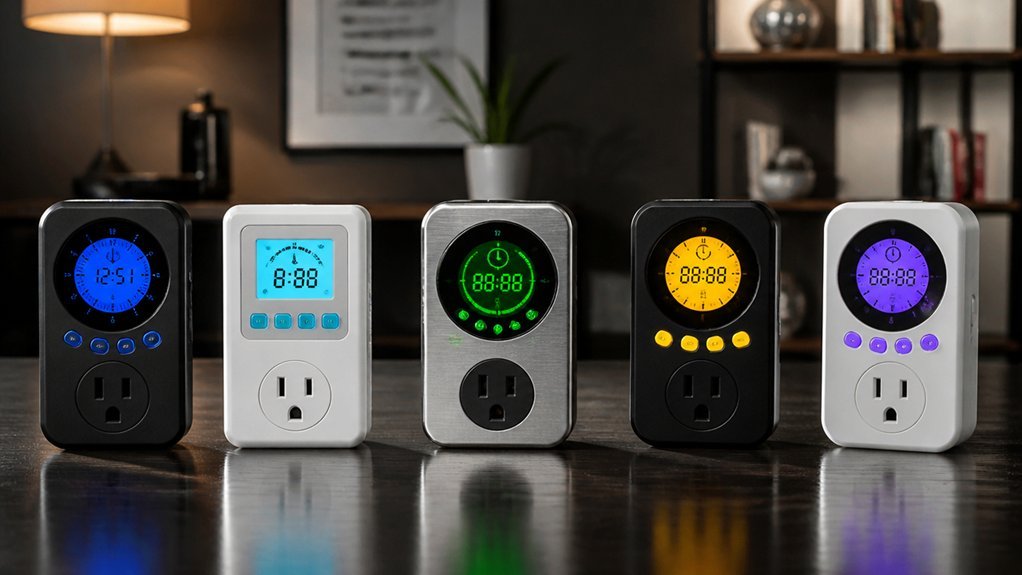
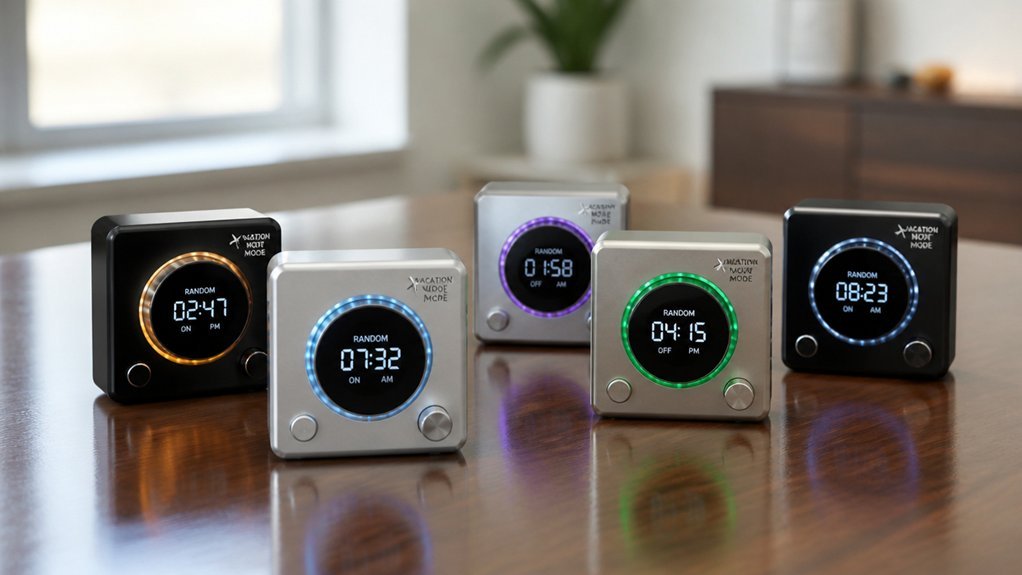
If you want your home to look occupied while you’re away, the right light timer can do more than just switch lamps on and off. In 2027, you’ve got options ranging from portable outlet timers to in-wall switches with sunset automation and backup power. Some models are simple, while others add random vacation modes that feel far more natural. The differences matter more than you might think.
| Fospower 7-Day Programmable Digital Timer Outlet |  | Best Dual Outlet | Timer Type: Plug-in outlet timer | Scheduling: 7-day programmable | Random Mode: Yes | CHECK ON AMAZON | Read Our Analysis |
| Fosmon Digital Timer Outlets 7-Day Programmable (2 Pack) |  | Best Value | Timer Type: Plug-in outlet timer | Scheduling: 7-day programmable | Random Mode: Yes | CHECK ON AMAZON | Read Our Analysis |
| BN-LINK 7 Day Programmable In-Wall Timer Switch |  | Best In-Wall | Timer Type: In-wall timer switch | Scheduling: 7-day programmable | Random Mode: Yes | CHECK ON AMAZON | Read Our Analysis |
| Ortis 7 Day Programmable In-Wall Timer Switch | 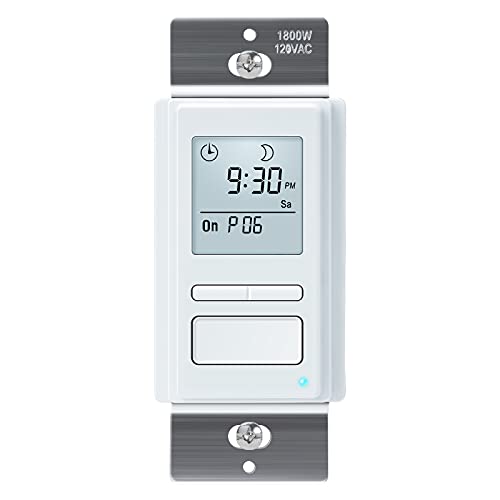 | Smartest Schedule | Timer Type: In-wall timer switch | Scheduling: 7-day programmable | Random Mode: Yes | CHECK ON AMAZON | Read Our Analysis |
| ENERLITES Heavy Duty Programmable Digital Timer Outlet | 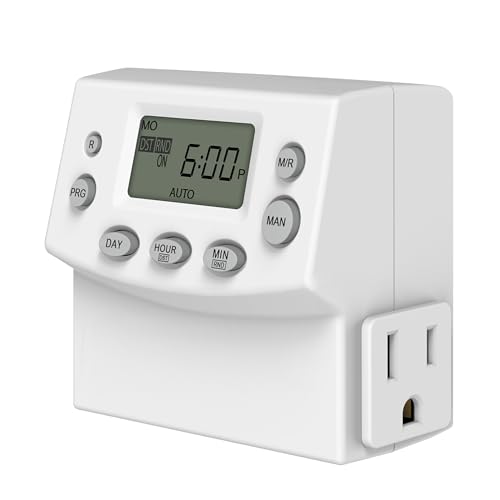 | Best Heavy Duty | Timer Type: Plug-in outlet timer | Scheduling: 7-day programmable | Random Mode: Yes | CHECK ON AMAZON | Read Our Analysis |
More Details on Our Top Picks
Fospower 7-Day Programmable Digital Timer Outlet
If you need a timer with two outlets, the Fospower 7-Day Programmable Digital Timer Outlet fits well. You can set up to 10 ON/OFF programs across daily, weekday, weekend, or custom schedules like Mon/Wed/Fri. Its clear LCD and simple three-step setup make programming easy. You control two grounded devices at once, from lamps to grow lights, without extra power strips. Use random mode to make your lights seem occupied while you’re away. The backup battery keeps settings for 100+ hours, and ETL listing plus a lifetime warranty add peace of mind.
- Timer Type:Plug-in outlet timer
- Scheduling:7-day programmable
- Random Mode:Yes
- Manual Mode:Yes
- Backup Power:NiMH battery
- Safety Certification:ETL listed
- Additional Feature:Dual grounded outlets
- Additional Feature:DST adjustment button
- Additional Feature:100+ hour battery backup
Fosmon Digital Timer Outlets 7-Day Programmable (2 Pack)
Fosmon’s 2-pack is a smart pick when you want affordable timer control with vacation-style randomness. You get 7-day programming with 10 on/off settings, so you can schedule lights by day, week, or exact days. The random mode runs between 6 pm and 6 am, helping your home look occupied. You can also use the countdown feature or flip devices manually with the MODE button. It’s ETL certified, works with incandescent, CFL, and LED lights, and includes battery backup for over 100 hours. Use it indoors for lamps, fans, heaters, or holiday lights.
- Timer Type:Plug-in outlet timer
- Scheduling:7-day programmable
- Random Mode:Yes
- Manual Mode:Yes
- Backup Power:Built-in battery
- Safety Certification:ETL certified
- Additional Feature:Countdown function
- Additional Feature:Polarized 2-prong outlet
- Additional Feature:Two-pack value
BN-LINK 7 Day Programmable In-Wall Timer Switch
BN-LINK’s in-wall timer suits you if you want precise scheduling and vacation-style security. You can program 18 on/off events across seven days, with intervals as short as one minute, then pick individual days or preset groups. The blue backlight helps you read and set it easily, while AUTO and MANUAL modes give you quick control. Random vacation mode makes your lights look occupied, and DST mode handles seasonal shifts with one touch. A rechargeable battery keeps settings during outages. It fits single-pole or 3-way setups and works well for lights and fans.
- Timer Type:In-wall timer switch
- Scheduling:7-day programmable
- Random Mode:Yes
- Manual Mode:Yes
- Backup Power:Rechargeable battery
- Safety Certification:ETL listed
- Additional Feature:18 on/off programs
- Additional Feature:Blue backlight display
- Additional Feature:3-way wiring compatible
Ortis 7 Day Programmable In-Wall Timer Switch
Ortis’s 7-day programming makes your lighting schedule feel smartest. You can set up to 49 on/off events across 7 days, then mix 24-hour or weekly cycles for tighter control. Its sunrise and sunset automation uses your latitude and longitude to match daylight, so you waste less power. If the lights need to look active while you’re away, random mode shifts schedules naturally. The timer also keeps settings during outages. You’ll value the backlit LCD, three-button setup, flush-mount design, and support for LEDs, fans, pumps, and sprinklers.
- Timer Type:In-wall timer switch
- Scheduling:7-day programmable
- Random Mode:Yes
- Manual Mode:Yes
- Backup Power:Power retention
- Safety Certification:ETL listed
- Additional Feature:Sunrise/sunset automation
- Additional Feature:49 on/off programs
- Additional Feature:Flush mount design
ENERLITES Heavy Duty Programmable Digital Timer Outlet
ENERLITES’ heavy-duty timer suits you if you want serious control and security. You can plug it into a grounded 3-prong outlet and program unique schedules for each day of the week. The color LCD makes setup easy, and the 7-day random mode helps make your home look occupied when you’re away. It handles 120VAC systems, lights, fans, lamps, and many appliances, with strong load support. You also get a 14-day power backup, UL listing, and a 3-year warranty, so you can trust it to keep working reliably.
- Timer Type:Plug-in outlet timer
- Scheduling:7-day programmable
- Random Mode:Yes
- Manual Mode:Yes
- Backup Power:Power backup
- Safety Certification:UL listed
- Additional Feature:14-day power backup
- Additional Feature:Color LCD display
- Additional Feature:3-year warranty
Factors to Consider When Choosing Light Timers With Random Vacation Mode
When you choose a light timer with random vacation mode, check how wide the random range is so it can vary your lights naturally. You’ll also want to compare programming flexibility, decide whether an outlet or switch style fits your setup, and look at backup battery life. Finally, make sure the timer matches your load requirements so it’ll work safely with your lights.
Random Mode Range
The random mode range tells you the exact time window when a timer can vary your lights’ on/off schedule to mimic occupancy. You should check whether that range fits your routine and security goals. Many timers use an interval from about 6 PM to 6 AM, which covers the hours when people’re usually home or asleep. A wider range makes the pattern harder to predict, so it can better deter intruders. Some models restrict random switching to nighttime only, which matches normal presence patterns and can save energy during the day. Knowing the precise range helps you avoid a timer that activates too early, too late, or outside the hours you want to simulate activity.
Programming Flexibility
Programming flexibility matters because it lets you tailor your timer to your actual routine instead of forcing you into a rigid schedule. You should look for timers that let you create multiple on and off events each day, with weekly options that can reach 7 to 49 programs. That range helps you match changing habits with precision. Advanced models also let you choose daily, weekday/weekend, or individual-day schedules, so you can adapt patterns to your life. If you want fine control, pick one that supports intervals as short as one minute. It’s also smart to choose a timer that keeps manual override available without erasing your automated plan. When random vacation mode ties into weekly programming, you can mimic real occupancy and make your lighting pattern less predictable.
Outlet Or Switch
Outlet timers are the easiest choice if you want a simple plug-in solution, since they connect directly to a wall socket and can control lamps, fans, or holiday lights without any wiring changes. You can move them between rooms, and many give you two outlets so you can run more than one device at once. If you want a cleaner, built-in setup, choose a switch timer instead. It replaces your wall switch and gives you direct control over hardwired lights or fans. You’ll need wiring access, and some models require a neutral wire, so installation takes more effort. Still, switch timers suit permanent fixtures and higher-amperage loads. Either style can use random vacation mode to create unpredictable lighting that helps make your home look occupied.
Backup Battery Life
When you’re choosing a light timer with random vacation mode, backup battery life matters because it keeps your settings intact during a power outage. You won’t have to reset schedules after the lights come back on, which saves time and hassle. Look for timers with a long backup reserve, ideally 100 hours or more, so random cycling keeps working without gaps. Rechargeable backup batteries are especially useful because they preserve memory and support seamless on/off automation for security. With enough battery capacity, your timer can keep simulating occupancy even when power’s lost. That consistency helps you maintain a believable presence at home during long trips. In short, stronger backup battery life makes your timer more dependable, more convenient, and more effective at protecting your place when you’re away.
Load Compatibility
Load compatibility is a key factor because your timer has to safely handle the type of device you’re controlling, whether that’s a resistive light, tungsten bulb, fluorescent fixture, LED, or even a motor load. You should check the timer’s amperage and wattage ratings, like 15A or 1200W, so you don’t overload it. If you’re switching fans, pumps, or other motors, look for a horsepower rating, such as ½ HP, to guarantee proper operation. For LEDs or electronic ballasts, verify that the timer supports those lower-load requirements, since some models can’t handle them well. Matching the load correctly helps your timer work reliably, last longer, and support random vacation mode without stressing your connected lights or appliances.
Safety Certifications
Safety certifications matter because they show the timer has been tested to meet recognized electrical safety standards, such as ETL or UL listings. When you choose a certified light timer, you’re picking a device that’s been checked for safe performance under normal use and fault conditions. That testing helps reduce risks like shock, fire, overheating, and short circuits. Certified models also usually meet rules for grounding, insulation, and other protective design details. Many include grounded outlets and polarized plugs, which add another layer of protection. You’ll also gain peace of mind knowing the timer may satisfy insurance or building code requirements for electrical devices. In short, certification helps you shop smarter and protect your home.
Installation Requirements
After checking certifications, make sure the timer will actually fit your home’s wiring and setup. You should confirm whether your circuit uses a single-pole or 3-way configuration before you buy, since the wrong match can stop installation cold. Check if the model needs a neutral wire in the electrical box; many advanced timers won’t work without one. If you’re replacing a wall switch, verify that the unit mounts flush and includes a wall plate for a clean fit. You also need to match the timer’s load rating to the lights or other devices it will control, so you don’t overload it. Finally, follow any UL, ETL, or local code requirements, because they can change how you install and connect the timer.
Display Visibility
When you’re choosing a light timer with random vacation mode, display visibility can make setup and daily use much easier, especially in dim hallways, garages, or outdoor areas. You should look for a backlit LCD so you can read settings at night without squinting. Strong contrast between text and background helps you spot schedules fast and lowers the chance of setup mistakes. A larger screen also lets you review multiple programs or a complex routine at a glance, which saves time. You’ll also benefit from clear icons and segmented views, since they make active modes easier to recognize, including random vacation mode. If you often adjust timers in low light, readable displays aren’t optional—they’re a practical must for fast, confident control and fewer errors overall.
Frequently Asked Questions
Can Random Vacation Mode Work With LED and CFL Bulbs?
Yes, it can work with both LED and CFL bulbs if your timer supports the bulbs’ wattage and load type. You’ll get better results by checking compatibility, since some timers need minimum loads or special settings.
Do These Timers Remember Settings During Power Outages?
Yes, you usually keep your settings during outages if the timer has battery backup or nonvolatile memory. You should check the model, though, because some cheaper timers reset and need reprogramming after power returns.
Are Outdoor Lights Compatible With These Timers?
Yes, you can use outdoor lights with many of these timers if you match their wattage and weather ratings. You’ll want a grounded, outdoor-rated model, and you should keep connections protected from rain.
How Noisy Are Mechanical Versus Digital Timer Models?
Mechanical timers usually tick and click audibly, so you’ll notice them in quiet rooms. Digital timers run silently or nearly so, making them better if you want a quieter setup and less distraction.
Can One Timer Control Multiple Light Circuits?
Yes, you can, if the timer’s rated for the total load and you wire those circuits correctly. You’ll usually need a multi-zone or relay setup, so check compatibility, voltage, and code requirements first.