If you’re trying to spot hidden moisture before it turns into damage, the right meter can save you time and guesswork. In 2027, the best models for walls and wood now blend pin and pinless scanning, clearer displays, and smarter alerts to help you judge surfaces fast. But not every meter suits every material or job, so choosing the right one still takes a closer look.


More Details on Our Top Picks
General Tools Moisture Meter for Wood & Walls
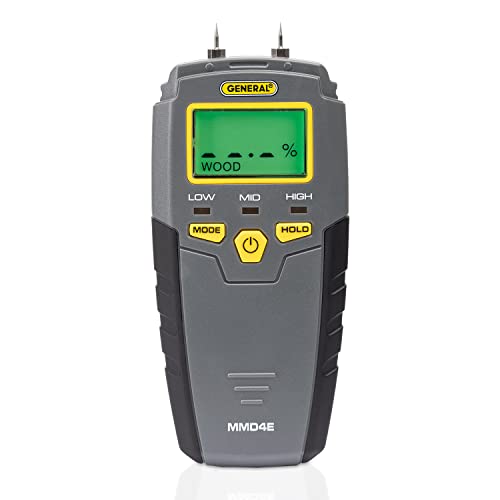
If you want an all-around moisture tester, this General Tools meter stands out for wood and walls. You can check wood, drywall, concrete, and other building materials with its pin-type sensor, which reads 5–50% in wood and 1.5–33% in building materials. The extra 8mm stainless steel pins help you get accurate results, while the HOLD button lets you freeze a reading. Its backlit 0.3-inch LCD is easy to see, and low, medium, and high alerts help you spot leaks, dampness, and mold risks fast. It runs on a 9V battery and includes a calibration-check cap.
- Sensing Type:Pin
- Display:Backlit LCD
- Hold Function:Yes
- Alert System:Tone alerts
- Auto Off:Not specified
- Power Source:9V battery
- Additional Feature:8mm stainless pins
- Additional Feature:Calibration checker cap
- Additional Feature:Low-medium-high tones
Klein Tools Pinless Moisture Meter for Drywall Wood Masonry
Klein’s ET140 pinless meter is a smart pick when you need quick, noninvasive checks in walls and wood. You can scan drywall, masonry, hardwood, and softwood without damaging surfaces, and it measures moisture up to 3/4-inch deep with EMF technology. The reverse-contrast display helps you read results fast, while nine LED bars show the moisture range clearly. You also get a hold function to freeze readings, plus low-battery and auto-off features. The kit includes the meter, a 9V battery, and manual, and its 2-meter drop protection adds durability.
- Sensing Type:Pinless
- Display:Reverse-contrast display
- Hold Function:Yes
- Alert System:LED bars
- Auto Off:Yes
- Power Source:9V battery
- Additional Feature:EMF noninvasive scanning
- Additional Feature:2-meter drop protection
- Additional Feature:Nine LED bars
Pinless Moisture Meter for Wall and Floor
This pinless moisture meter suits DIYers who want noninvasive checks on walls and floors. You can scan wood, masonry, painted walls, finished floors, tiles, and furniture without leaving marks. Its pinless sensor reads up to 0.75 inches deep and avoids false readings from pipes, wiring, or steel studs. The 3-color LCD, audible alarm, and HOLD function make results easy to spot and record. Use it to catch leaks, flooding, or humidity issues early, so you can protect structural integrity during inspections, renovations, and repairs with confidence.
- Sensing Type:Pinless
- Display:3-color LCD
- Hold Function:Yes
- Alert System:Audible alarm
- Auto Off:Not specified
- Power Source:Not specified
- Additional Feature:3-color LCD display
- Additional Feature:Audible alarm
- Additional Feature:Sensing depth 0.75-inch
Pinless Digital Moisture Meter for Wood and Drywall
For anyone protecting finished wood or drywall, Povlen’s pinless meter detects moisture without leaving marks. You get precise readings with advanced sensor technology and a smart chip that measures through high-frequency waves. Choose SOFTWOOD, HARDWOOD, WALL, or MASONRY mode to match the material, from lumber to concrete. The large color LCD and analog bar make readings easy to see, while beeps and red alerts warn you when moisture’s too high. Use HOLD to save data, and rely on auto shutoff and low-battery alerts for convenience.
- Sensing Type:Pinless
- Display:Color LCD
- Hold Function:Yes
- Alert System:Audible alerts
- Auto Off:Yes
- Power Source:Not specified
- Additional Feature:Four measurement modes
- Additional Feature:High-frequency wave sensing
- Additional Feature:Red color warning
LASELION 2-in-1 Moisture Meter MS03
LASELION’s MS03 suits DIYers who want one meter for both quick scans and deeper checks. You can use pin mode for more precise moisture readings in thicker lumber and panels, while pinless mode helps you scan finished wood, furniture, and antique surfaces without damage. It reads 0-75% in wood and 0-25% in building materials, so you can also check drywall, plaster, and concrete. The LCD hold function, flashlight, and auto shutoff add convenience. Just calibrate it before first use and when you switch environments for the best results.
- Sensing Type:Dual-mode
- Display:LCD
- Hold Function:Yes
- Alert System:N/A
- Auto Off:Yes
- Power Source:Battery powered
- Additional Feature:Dual pin/pinless modes
- Additional Feature:Built-in flashlight
- Additional Feature:Manual pinless calibration
Pinless Moisture Meter for Wood and Drywall
When you need non-destructive readings on wood or drywall, the Kereinpo HY16C delivers tight accuracy. You can scan up to about 20mm deep without leaving pinholes, scratches, or scuffs. Its pinless sensor reads wood from 5% to 75% and building materials from 1.5% to 30%, with 0.1% resolution and about ±2% error. You also get two detection modes, plus packing and building settings for drywall, wallboard, brick, cement block, cardboard, and more. The backlit LCD, three-color LED bar, hold function, audible alert, auto shutoff, and low-battery indicator make checks quick and easy.
- Sensing Type:Pinless
- Display:Backlit LCD
- Hold Function:Yes
- Alert System:Audible alert
- Auto Off:Yes
- Power Source:2 AAA batteries
- Additional Feature:Packing mode
- Additional Feature:Building mode
- Additional Feature:0.1% resolution
Wood Moisture Meter and Leak Detector
If you need fast, accurate moisture readings, this meter suits professionals on job sites. You can check wood, plywood, plaster, flooring, and other building materials in seconds. Its two stainless steel pins pierce the surface to reveal hidden moisture and possible leaks, while six calibrated scales help you judge low, medium, or high levels quickly. You’ll get readings for wood and construction materials, plus an LCD with green, yellow, and red alerts. It’s lightweight, portable, and built for carpentry, restoration, flooring, and inspections, so you can protect materials from warping, cracking, and damage.
- Sensing Type:Pin
- Display:Color LCD
- Hold Function:Yes
- Alert System:Color indicator
- Auto Off:Yes
- Power Source:Not specified
- Additional Feature:Six calibrated scales
- Additional Feature:MAX/MIN readings
- Additional Feature:Tree species selection
Factors to Consider When Choosing Moisture Meters for Walls and Wood
When you choose a moisture meter for walls and wood, check the measurement type and make sure it fits the material you’re testing. You’ll also want the right depth range, clear display readability, and alert features that quickly flag problem areas. The best meter gives you accurate readings and makes it easy to spot hidden moisture before it turns into damage.
Measurement Type
Measurement type is the first big decision you’ll make: pin meters use probes that penetrate the material for direct moisture readings, while pinless meters scan below the surface with electromagnetic sensors and leave no marks. If you need to check moisture deep inside wood or other thick materials, pin meters usually give you more precise internal readings. They can reach deeper, depending on pin length, and they show moisture changes where problems often hide. If you’re testing finished walls, painted surfaces, floors, or delicate areas, pinless meters let you measure nondestructively. They typically scan up to about 0.75 inches beneath the surface. Pin meters read moisture directly, while pinless models estimate levels from electromagnetic field changes, so your choice affects both depth and accuracy.
Material Compatibility
Material compatibility matters because the best moisture meter for one surface can give misleading results on another. You’ll get better readings when the meter matches the material you’re testing, whether that’s wood, drywall, concrete, masonry, or plaster. Many models include modes for softwood, hardwood, drywall, and masonry, so you can switch settings and measure more precisely. If you’re checking finished or delicate walls, a pinless meter often works best because it uses electromagnetic sensing and won’t damage the surface. For solid wood, a pin-type meter can be more practical since it penetrates the material directly. You should also confirm the meter’s calibration suits the moisture range of each surface, or you may see inaccurate results and waste time chasing the wrong problem.
Depth Range
Depth range matters because a meter has to reach past the surface to find hidden moisture. You’ll want a model that matches the material you’re testing, since sensing depth usually runs from about 0.2 inches to 0.75 inches, depending on the technology. Pinless meters scan non-destructively and can check roughly 0.75 inches deep, so they’re great when you don’t want to mar paint, drywall, or finished wood. Pin-type meters drive pins into the material and can read moisture more directly at varying depths, but they leave small holes. Choose a range that can get through surface layers, or you might miss damp spots, leaks, or early mold conditions hiding underneath.
Display Readability
A clear display can make all the difference when you’re checking moisture in walls or wood, especially in dim spaces like basements, crawlspaces, or shaded job sites. You should look for a large, backlit LCD because it lets you see readings without squinting. Color-coded screens or multi-color LCDs help you spot moisture levels fast, so you don’t have to decode every number. Good contrast, such as reverse-contrast screens or clear analog bars, reduces eye strain and makes measurements easier to read. LED moisture bars or multi-segment displays also give you a quick sense of the range. A hold function is useful too, since it freezes the reading on screen and lets you record it without keeping the meter pressed.
Alert Features
Alert features can help you spot moisture problems fast, especially when you’re working in dim areas or need to check several spots quickly. You’ll often see audible beeps or tones that change in intensity, so you can tell whether moisture is low, medium, or high without staring at the screen. Many meters also use color-coded displays or LED bars, such as green, yellow, and red, to make the reading easy to interpret at a glance. If you want extra confidence, choose a model that combines sound and visual cues. Hold or freeze functions let you keep a critical reading on screen for review. Automatic threshold alerts can warn you when moisture rises too high, helping you catch mold risks or water damage early.
Power Options
Power options matter because they affect how easy a moisture meter is to use in the field and how often you’ll need to maintain it. You’ll usually choose between 9V and AAA batteries, and the right fit often depends on the meter’s size and features. Standard batteries let you work anywhere without external power, which keeps field checks simple. Look for automatic power-off, since it helps conserve battery life when you forget to shut the tool down. A low battery indicator is also useful because it warns you before readings become unreliable. Battery life and replacement frequency matter, too, since they influence both convenience and long-term cost. If you use the meter often, fewer battery changes can save time and reduce hassle over months.
Portability Features
Beyond battery choice, portability can make a moisture meter much easier to live with on the job. You’ll value a lightweight model, especially one around 130 grams, because it won’t drag you down during long inspections. A compact body and ergonomic grip help you work in tight corners and reduce hand fatigue. Choose a battery-powered meter that runs on common 9V or AAA cells so you can measure anywhere without cords. Protective details matter too: calibration caps and 2-meter drop resistance help your tool survive transport and daily handling. Built-in backlit displays improve visibility in dim areas, and a hold function lets you keep readings on screen while you move. These features make your meter easier to carry, read, and trust.
Frequently Asked Questions
How Often Should Moisture Meters Be Calibrated?
You should calibrate your moisture meter at least once a year, and sooner if readings seem off, you drop it, or you use it heavily. Check it against a known standard regularly to stay accurate.
Can Moisture Meters Detect Hidden Mold Behind Walls?
Yes, you can spot likely hidden mold if your moisture meter shows damp wall areas, but it can’t detect mold directly. You’ll need visual inspection, smell, or professional testing to confirm it.
Do Moisture Meters Work on Painted or Wallpapered Surfaces?
Yes, you can use moisture meters on painted or wallpapered surfaces, but readings may be less accurate. You’ll get better results if you press firmly and check several spots to spot dampness beneath the finish.
What Battery Type Lasts Longest in Moisture Meters?
Lithium batteries usually last longest in moisture meters because you get more runtime and less self-discharge. You’ll replace them less often, though AA alkaline models can be cheaper and widely available for everyday use.
Are Moisture Meter Readings Affected by Temperature Changes?
Yes, your moisture meter readings can shift when temperatures change because wood and materials expand or contract. You’ll get the most accurate results if you let the meter and surface adjust to room temperature first.