

You can pair radiant floors with photovoltaic systems in three effective ways. First, direct solar-powered radiant heating combines PV panels with embedded floor heating elements for eco-friendly warmth. Second, battery storage integration allows you to store excess solar energy for use during cloudy days or at night. Third, grid-tied hybrid systems connect your PV array to both the grid and batteries, optimizing energy usage and providing backup power. Each method offers unique benefits, from reduced energy costs to increased energy independence. By exploring these options, you'll discover how to maximize your home's efficiency and comfort.
Direct Solar-Powered Radiant Heating
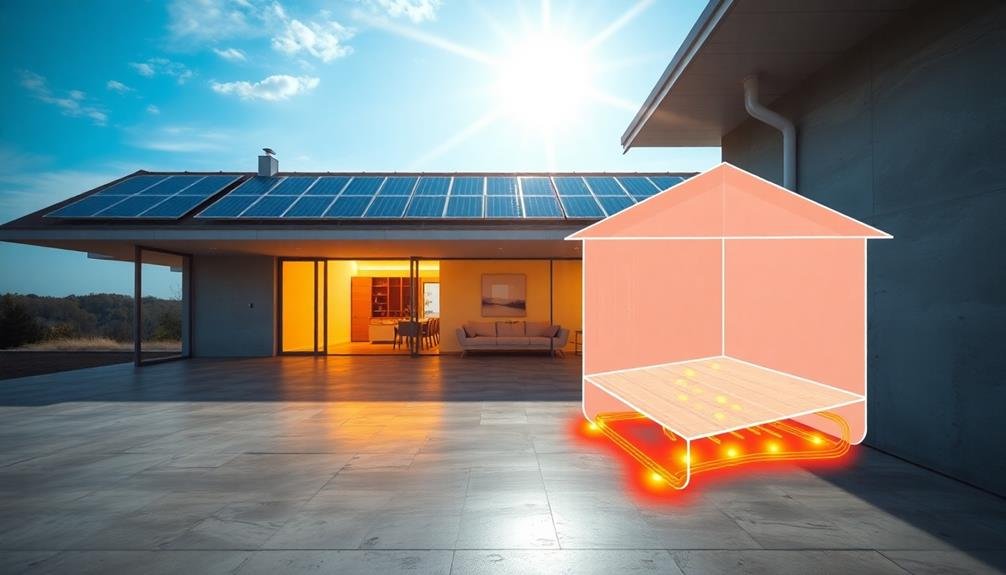
In light of the growing interest in sustainable heating solutions, direct solar-powered radiant heating has emerged as an innovative approach. This system combines photovoltaic (PV) panels with radiant floor heating to create an eco-friendly and efficient heating solution for your home.
Here's how it works: PV panels on your roof convert sunlight into electricity, which is then used to power electric heating elements embedded in your floor. These elements warm the floor surface, radiating heat upward to keep your living spaces comfortable.
You'll benefit from reduced energy costs and a lower carbon footprint. The system is most effective in areas with ample sunlight and when paired with proper insulation. To enhance efficiency, you should consider installing a battery storage system to store excess solar energy for use during cloudy days or at night.
When designing your direct solar-powered radiant heating system, it's vital to properly size both the PV array and the radiant floor system. This guarantees peak performance and prevents overheating or underheating.
You'll also need to integrate controls that balance solar input with heating demands, maintaining consistent comfort levels throughout your home.
Battery Storage Integration
Battery storage integration takes your direct solar-powered radiant heating system to the next level. By incorporating batteries, you'll be able to store excess energy generated during peak sunlight hours for use during cloudy days or at night. This guarantees a consistent power supply for your radiant floors, maximizing their efficiency and comfort.
When choosing batteries, consider lithium-ion options for their high energy density and long lifespan. You'll need to size your battery system based on your home's energy consumption and the capacity of your photovoltaic array. A properly sized system will allow you to operate your radiant floors even during extended periods of low solar production.
To integrate batteries effectively, you'll need a hybrid inverter that can manage power flow between your solar panels, battery bank, and radiant floor system. This inverter will also handle grid connection, allowing you to draw power when necessary or feed excess energy back to the grid.
Don't forget to install a battery management system to monitor and optimize your battery performance. This will help extend the life of your batteries and guarantee they're operating at peak efficiency.
Grid-Tied Hybrid Systems
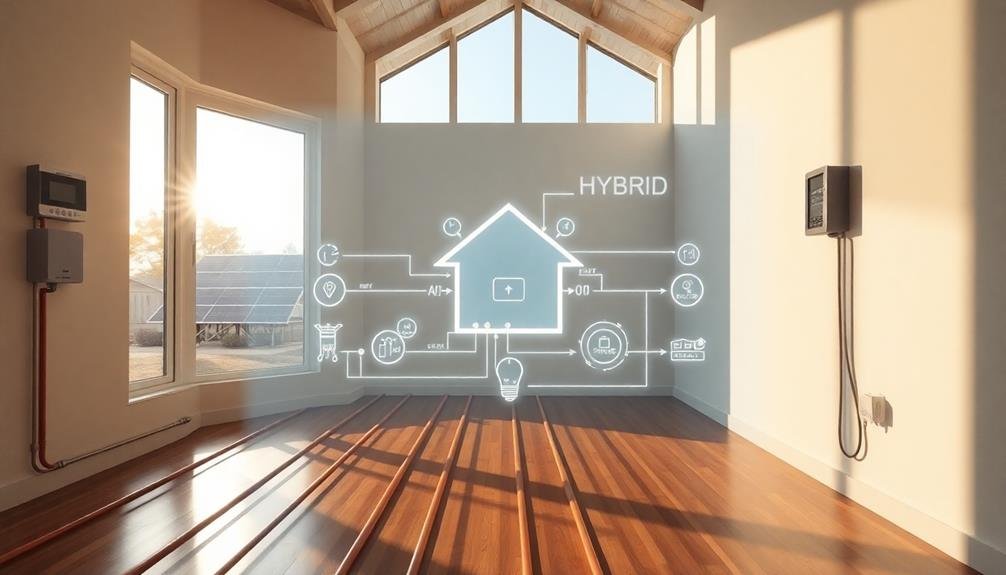
Combining the best of both worlds, grid-tied hybrid systems offer unparalleled flexibility for your radiant floor heating setup.
These systems allow you to connect your photovoltaic array to both the electrical grid and a battery storage system. During sunny periods, you'll power your radiant floors directly from solar energy, storing excess electricity in batteries. When sunlight is insufficient, you can draw power from the batteries or the grid as needed.
Grid-tied hybrid systems provide several advantages. You'll have backup power during outages, ensuring your radiant floors continue to function. You can also optimize energy usage by consuming stored power during peak rate hours and selling excess electricity back to the grid when rates are high. This setup maximizes your energy independence while maintaining grid reliability.
To implement a grid-tied hybrid system, you'll need a specialized inverter that can manage power flow between your PV panels, batteries, and the grid.
You'll also require a smart controller to optimize energy distribution based on factors like time of day, energy prices, and battery charge levels. While the initial investment may be higher, the long-term benefits in energy savings and reliability make grid-tied hybrid systems an attractive option for pairing with radiant floors.
Frequently Asked Questions
What Is the Typical Lifespan of a Radiant Floor Heating System?
You can expect your radiant floor heating system to last 20-35 years. It's long-lasting due to its simple design and lack of moving parts. With proper maintenance, you'll enjoy efficient heating for decades to come.
Can Radiant Floors Be Installed in Existing Homes Without Major Renovations?
Yes, you can install radiant floors in existing homes without major renovations. You'll find options like electric mats or hydronic systems that can be placed under various flooring types. They're often thinner and easier to retrofit than traditional systems.
How Does Radiant Floor Heating Affect Indoor Air Quality?
You'll enjoy improved indoor air quality with radiant floor heating. It doesn't circulate dust or allergens like forced-air systems do. Plus, it maintains consistent humidity levels, reducing mold growth and creating a healthier living environment for you.
Are There Any Health Concerns Associated With Electromagnetic Fields From Radiant Floors?
You don't need to worry about electromagnetic fields from radiant floors. They produce minimal EMF levels, far below safety thresholds. There's no scientific evidence of health risks associated with properly installed radiant heating systems in homes.
What Maintenance Is Required for a Combined Radiant Floor and Photovoltaic System?
You'll need to regularly clean your PV panels and check for damage. Inspect your radiant floor system annually for leaks or pressure issues. Don't forget to maintain your water heater and circulating pumps. Schedule professional inspections every few years.
In Summary
You've now explored three effective ways to combine radiant floor heating with solar power. Whether you opt for direct solar-powered heating, integrate battery storage, or choose a grid-tied hybrid system, you're taking a step towards more sustainable and efficient home heating. Remember, each option has its pros and cons, so carefully consider your specific needs and local climate. By pairing these technologies, you'll reduce your carbon footprint and potentially save on energy costs long-term.

Leave a Reply