
Earth-sheltered homes stay naturally cool year-round thanks to the earth's insulating properties and thermal mass. The surrounding soil acts as a heat sink, absorbing excess heat in summer and slowly releasing it in winter. This natural temperature regulation keeps indoor temperatures stable, typically between 50-60°F (10-15°C). Underground cooling tubes and passive solar design further enhance this effect. Proper moisture control and ventilation systems guarantee a comfortable living environment. Energy-efficient building materials and strategic landscaping complement these natural cooling methods. By harnessing the earth's geothermal properties, you'll enjoy a consistently cool home without relying heavily on artificial cooling systems. Discover how these homes work in harmony with nature for superior comfort.
Earth's Natural Insulation Properties
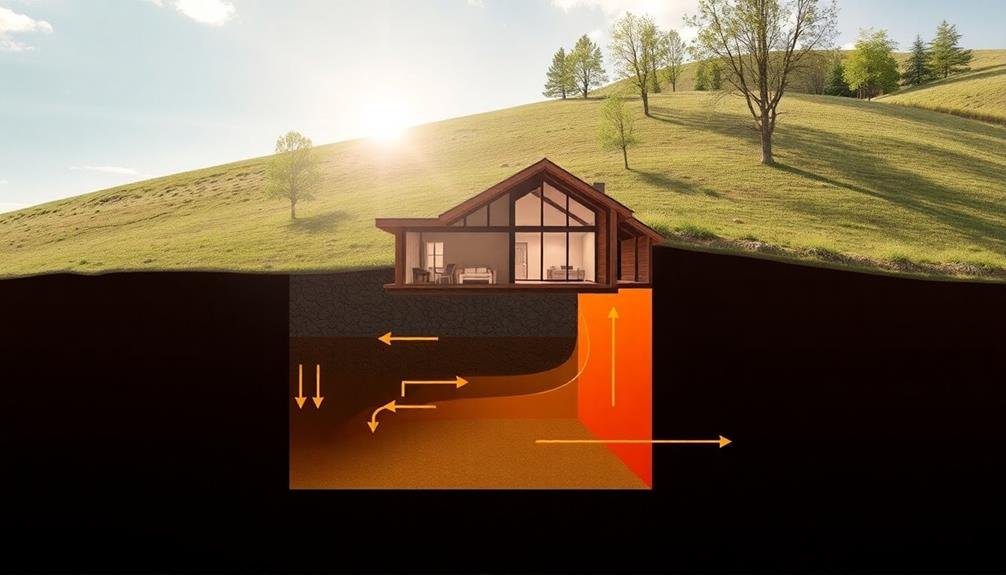
Imagine wrapping your home in a cozy blanket of earth. That's fundamentally what earth-sheltered homes do, and it's the key to their natural temperature regulation. The earth's incredible insulation properties make this possible.
Soil has a high thermal mass, meaning it can absorb and store heat energy efficiently. This characteristic allows the earth surrounding your home to act as a temperature buffer. In summer, it absorbs excess heat from the environment, keeping your home cool. In winter, it releases stored warmth, helping maintain a comfortable indoor temperature.
The depth at which your home is built also plays an essential role. Just a few feet below the surface, the earth maintains a relatively constant temperature year-round, typically between 50-60°F (10-15°C). This phenomenon, known as "earth tempering," provides a stable baseline temperature for your home.
Additionally, the soil's density creates a barrier against outdoor temperature fluctuations. It slows heat transfer, reducing the impact of sudden weather changes on your home's interior. This natural insulation can notably decrease your reliance on artificial heating and cooling systems, leading to energy savings and a more sustainable living environment.
Thermal Mass Advantage
You'll find that earth-sheltered homes leverage the thermal mass advantage of the surrounding soil.
This enables the structure to absorb and store heat during warmer periods, considerably reducing temperature fluctuations inside the home.
As a result, you'll experience a delayed heat release effect, where the stored warmth is gradually emitted during cooler times, maintaining a more stable indoor climate.
Heat Absorption and Storage
Harnessing the power of thermal mass is one of the key advantages of earth-sheltered homes. The earth surrounding these structures acts as a massive heat sink, absorbing and storing thermal energy throughout the day. This process helps regulate indoor temperatures, keeping your home cooler in summer and warmer in winter.
During hot summer days, the earth's thermal mass absorbs excess heat from the air and sun, preventing it from entering your living space. As the temperature drops at night, this stored heat is slowly released back into the environment, maintaining a stable indoor climate.
In winter, the process works in reverse. The earth retains heat from the warmer daytime hours and gradually releases it when temperatures fall, reducing your heating needs.
You'll find that this natural heat absorption and storage system creates a more consistent indoor temperature year-round. It's like having a built-in temperature buffer that smooths out daily and seasonal fluctuations.
This passive cooling and heating effect considerably reduces your reliance on artificial climate control systems, leading to lower energy consumption and costs. By utilizing the earth's natural thermal properties, you're effectively tapping into an eco-friendly and efficient method of temperature regulation.
Temperature Fluctuation Reduction
One of the most significant benefits of earth-sheltered homes lies in their ability to reduce temperature fluctuations. This advantage stems from the thermal mass of the earth surrounding the structure. The soil acts as a natural insulator, absorbing heat during warmer periods and releasing it when temperatures drop.
You'll experience more stable indoor temperatures throughout the year, as the earth's mass helps to buffer against rapid changes in outdoor conditions. In summer, you won't feel the full impact of scorching hot days, while in winter, you'll be protected from extreme cold snaps. This thermal stability means you'll rely less on artificial heating and cooling systems, potentially saving on energy costs.
The earth's thermal mass also helps to delay temperature peaks inside your home. During hot summer days, you'll notice that the interior stays cooler for longer, as the surrounding soil slowly absorbs the heat.
Similarly, in winter, the stored warmth in the earth will continue to radiate into your home, even as outside temperatures plummet.
Delayed Heat Release Effect
The delayed heat release effect is a key advantage of earth-sheltered homes' thermal mass. This phenomenon occurs because the earth surrounding the home absorbs heat slowly during the day and releases it gradually at night. You'll experience a more stable indoor temperature as a result, with less reliance on artificial heating and cooling systems.
The thermal mass of the earth acts as a natural heat sink, absorbing excess heat during hot periods and releasing it when temperatures drop. This process helps maintain a comfortable living environment throughout the year. Here's a breakdown of how the delayed heat release effect works in different seasons:
| Season | Daytime Effect | Nighttime Effect | Overall Benefit |
|---|---|---|---|
| Summer | Earth absorbs heat | Cooler air released | Reduced cooling needs |
| Winter | Earth retains warmth | Warmth released slowly | Less heating required |
| Spring | Moderate temperatures | Stable indoor climate | Minimal HVAC use |
| Fall | Gradual cooling | Residual warmth released | Extended comfort |
You'll find that this natural temperature regulation considerably reduces your energy consumption and costs while providing a consistently comfortable living space throughout the year.
Geothermal Heat Exchange
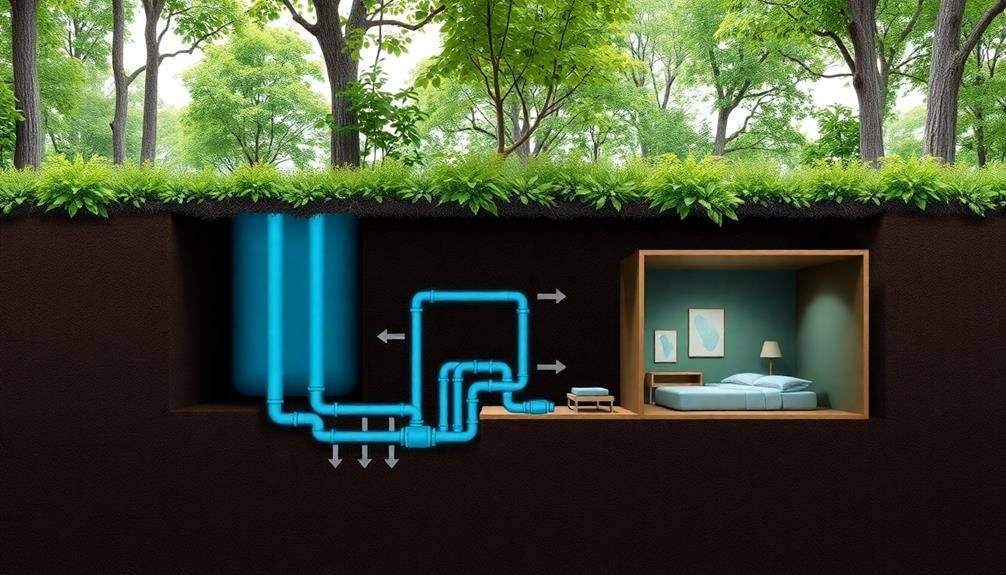
You'll find that earth-sheltered homes naturally benefit from geothermal heat exchange.
The earth's stable underground temperatures and vast thermal mass act as a constant, moderate heat source or sink.
Your home can tap into this natural heat transfer process, using the surrounding soil to help regulate indoor temperatures year-round.
Stable Underground Temperatures
Beneath the Earth's surface lies a natural temperature regulator that earth-sheltered homes can tap into. As you descend into the ground, you'll find that temperatures remain relatively constant year-round. This phenomenon occurs because the Earth's crust acts as a massive thermal mass, absorbing and releasing heat slowly.
In most regions, the temperature at about 10-20 feet below the surface stays between 50-60°F (10-15°C) regardless of the season. By building your home partially or fully underground, you're taking advantage of this stable temperature zone. This natural insulation helps keep your home cool in summer and warm in winter, reducing your reliance on artificial heating and cooling systems.
| Depth (ft) | Temperature Stability | Benefits |
|---|---|---|
| 0-5 | Variable | Minimal |
| 5-10 | Moderately stable | Some insulation |
| 10-20 | Highly stable | Ideal for homes |
| 20-30 | Very stable | Excellent insulation |
| 30+ | Extremely stable | Geothermal potential |
You'll find that this natural temperature regulation can greatly reduce your energy costs and environmental impact. By working with the Earth's natural systems, you're creating a more sustainable and comfortable living space.
Earth's Thermal Mass
Geothermal heat exchange forms the cornerstone of earth-sheltered homes' energy efficiency. This process utilizes the earth's thermal mass to regulate indoor temperatures. The soil surrounding your home acts as a massive heat sink, absorbing excess heat during summer and releasing it in winter.
As you explore deeper into the ground, you'll find that temperatures remain relatively constant year-round, typically around 50-60°F (10-15°C). This natural phenomenon allows earth-sheltered homes to maintain a comfortable interior climate with minimal energy input. The earth's thermal mass effectively buffers your home against extreme temperature fluctuations.
You'll benefit from this thermal stability in several ways. In summer, the cooler earth absorbs heat from your home, reducing the need for air conditioning. During winter, the warmer ground temperatures help maintain a higher baseline temperature inside, decreasing your heating requirements.
This continuous heat exchange occurs through the walls and floor of your earth-sheltered home, creating a passive heating and cooling system.
Natural Heat Transfer
Natural heat transfer in earth-sheltered homes consistently relies on the principle of geothermal heat exchange. This process takes advantage of the earth's stable temperature to regulate the indoor climate.
You'll find that the soil surrounding your earth-sheltered home acts as a natural heat sink, absorbing excess heat in summer and releasing stored warmth in winter.
The geothermal heat exchange occurs through various mechanisms:
- Conduction: Heat moves directly through the soil and walls of your home
- Convection: Air circulation transfers heat between the earth and your living space
- Radiation: Infrared energy is emitted from the earth's surface into your home
- Evaporation and condensation: Moisture in the soil helps regulate temperature
You'll notice that this natural heat transfer process is continuous and passive, requiring no additional energy input.
It's particularly effective in moderating temperature extremes, keeping your home cooler in summer and warmer in winter.
Passive Solar Design Integration
Integrating passive solar design principles into earth-sheltered homes enhances their energy efficiency and comfort.
You'll want to orient your home's main living areas and windows towards the south to maximize sunlight exposure during winter months. This orientation allows you to capture and store solar heat, reducing your reliance on artificial heating systems.
To optimize passive solar design, you should incorporate thermal mass materials like concrete, stone, or water-filled containers into your earth-sheltered home.
These materials absorb heat during the day and release it slowly at night, helping to maintain a stable indoor temperature.
You can also use overhangs or awnings to shade windows during summer, preventing excessive heat gain.
Deciduous trees planted strategically around your home provide natural shading in summer while allowing sunlight to penetrate in winter when leaves have fallen.
Consider implementing a trombe wall, which consists of a dark-colored wall with a glass layer in front.
This design traps solar heat and gradually releases it into your living space, further improving thermal regulation.
Moisture Control Techniques

Effective moisture control is essential for maintaining a healthy and durable earth-sheltered home. You'll need to implement various strategies to prevent water infiltration and manage humidity levels. Start by ensuring proper site drainage, directing water away from your home's foundation.
Install a high-quality waterproofing system on the exterior walls and roof to create a barrier against moisture penetration.
Inside your earth-sheltered home, you'll want to focus on:
- Ventilation: Install an efficient mechanical ventilation system to circulate fresh air and remove excess moisture.
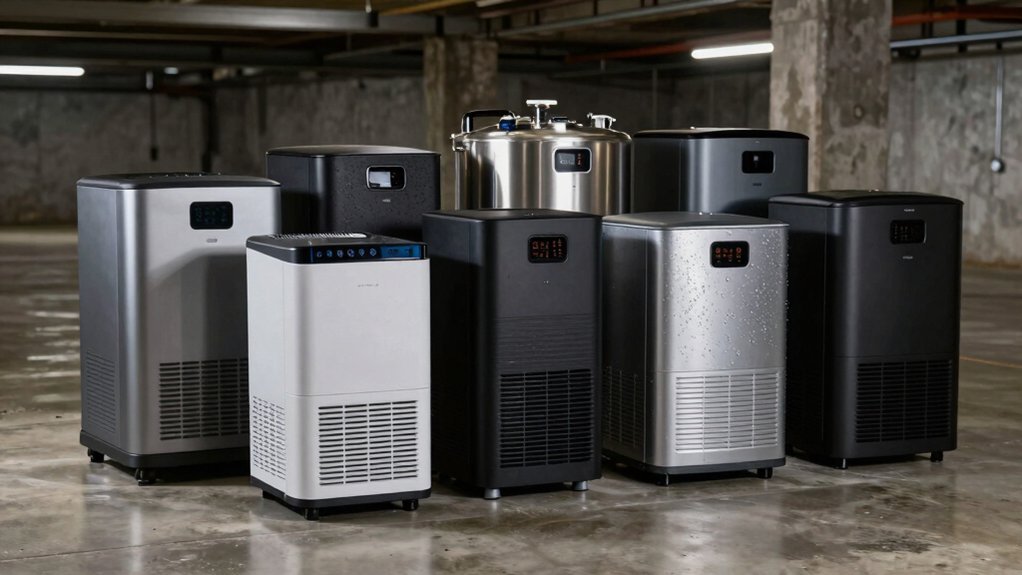
- Dehumidification: Use dehumidifiers in areas prone to high humidity, such as bathrooms and kitchens.
- Vapor barriers: Apply vapor barriers to interior walls to prevent moisture from seeping through the building envelope.
- Proper insulation: Choose moisture-resistant insulation materials to maintain thermal efficiency while preventing condensation.
You should also monitor indoor humidity levels regularly and address any signs of water intrusion promptly.
By implementing these moisture control techniques, you'll create a comfortable living environment and protect your earth-sheltered home from potential water damage.
Ventilation Systems for Air Quality
A well-designed ventilation system is essential for maintaining excellent air quality in your earth-sheltered home. You'll need to incorporate both passive and mechanical ventilation strategies to guarantee proper air circulation and prevent stagnation.
Passive ventilation techniques include strategically placed windows and vents that allow for natural air movement. You can utilize the stack effect by positioning openings at different heights, encouraging warm air to rise and escape while drawing in cooler air from lower levels.
Consider installing operable skylights or clerestory windows to enhance this natural airflow.
For mechanical ventilation, you'll want to invest in an energy-efficient heat recovery ventilator (HRV) or energy recovery ventilator (ERV). These systems exchange stale indoor air with fresh outdoor air while recovering heat or coolness, maintaining temperature stability.
You should also install exhaust fans in bathrooms and kitchens to remove excess moisture and odors.
Don't forget to include air filters in your ventilation system to trap dust, pollen, and other airborne particles. Regularly clean or replace these filters to guarantee ideal air quality.
Roof Design and Insulation
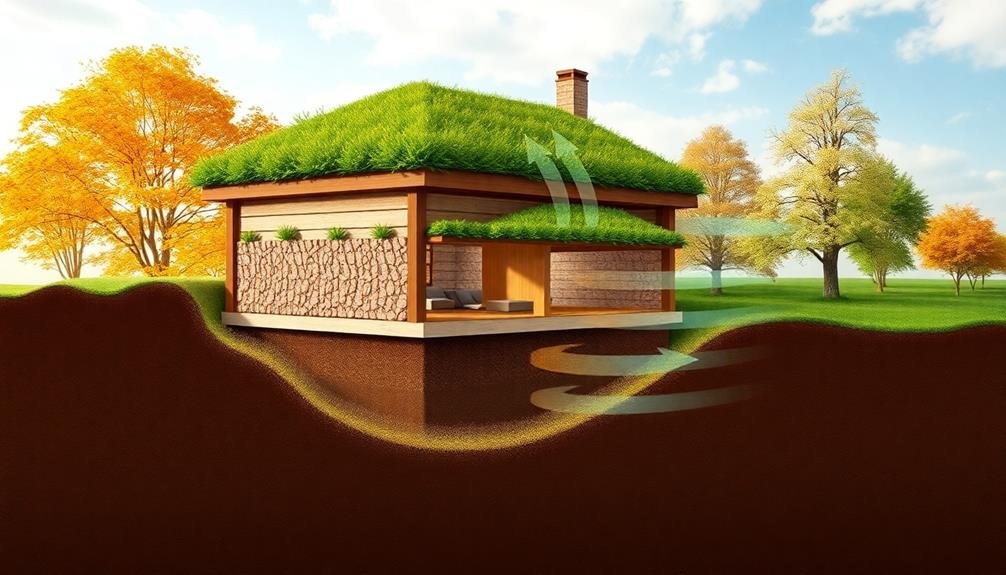
While ventilation keeps the air fresh, your earth-sheltered home's roof plays a key role in temperature control and protection. The roof's design and insulation work together to maintain a comfortable indoor climate year-round. A well-designed roof for an earth-sheltered home typically features multiple layers of insulation and waterproofing materials.
You'll find that the roof's structure often includes:
- A sturdy concrete or steel frame to support the weight of soil and vegetation
- A waterproof membrane to prevent moisture infiltration
- Rigid insulation boards to minimize heat transfer
- A layer of gravel or drainage material to direct water away from the structure
The roof's insulation helps regulate temperature by slowing heat transfer between the interior and exterior. In summer, it blocks solar heat gain, while in winter, it retains warmth inside.
Many earth-sheltered homes incorporate green roofs, which add an extra layer of insulation and help manage stormwater runoff. The soil and vegetation on these living roofs absorb heat and provide natural cooling through evapotranspiration.
Underground Cooling Tubes
Underground cooling tubes offer an innovative approach to temperature regulation in earth-sheltered homes.
You'll find these systems utilize passive geothermal heat exchange, drawing cool air from the earth to naturally condition your living space.
As you design your home's airflow and ventilation systems, you'll need to evaluate moisture control strategies to prevent condensation and maintain air quality within the tubes and throughout your dwelling.
Passive Geothermal Heat Exchange
Many earth-sheltered homes incorporate passive geothermal heat exchange systems, often called underground cooling tubes. These systems take advantage of the earth's constant temperature below the frost line to cool your home in summer and warm it in winter.
You'll find that these tubes are typically buried 6 to 10 feet deep, where the ground temperature remains stable year-round.
Here's how passive geothermal heat exchange works:
- Air intake: Fresh air is drawn in through an external vent.
- Underground journey: The air travels through buried pipes, exchanging heat with the surrounding soil.
- Temperature moderation: In summer, hot air cools as it moves through the pipes; in winter, cold air warms up.
- Home circulation: The temperature-moderated air is then circulated throughout your home.
You'll notice significant energy savings with this system, as it reduces the load on your heating and cooling equipment.
It's a low-maintenance solution that can last for decades. While installation costs can be high, the long-term benefits often outweigh the initial investment.
You'll enjoy improved indoor air quality and consistent temperatures throughout the year.
Airflow and Ventilation Systems
Building on the concept of passive geothermal heat exchange, an effective airflow and ventilation system is key to maximizing the benefits of underground cooling tubes. These tubes, typically made of PVC or concrete, are buried several feet below the earth's surface where temperatures remain constant year-round.
As you design your earth-sheltered home, you'll want to incorporate these tubes into your ventilation system. They work by drawing in outside air through an intake vent, passing it through the underground tubes, and then circulating it throughout your home. As the air travels through the tubes, it's naturally cooled in summer and warmed in winter, thanks to the earth's stable temperature.
To guarantee peak performance, you'll need to take into account factors like tube length, diameter, and burial depth. You'll also want to include proper filtration systems to prevent mold and bacterial growth.
Moisture Control Strategies
While underground cooling tubes offer significant energy-saving benefits, they also present unique moisture control challenges that you'll need to address.
These tubes can accumulate condensation, potentially leading to mold growth and decreased air quality. To maintain a healthy living environment, you'll need to implement effective moisture control strategies.
Here are four key approaches to managing moisture in underground cooling tubes:
- Install a condensate drain: Confirm the tubes have a slight downward slope and include a drain at the lowest point to remove accumulated water.
- Use anti-microbial coatings: Apply specialized coatings inside the tubes to inhibit mold and bacteria growth.
- Implement a dehumidification system: Integrate a dehumidifier into your ventilation setup to remove excess moisture from the air before it enters the cooling tubes.
- Regular maintenance and cleaning: Schedule periodic inspections and cleanings to prevent buildup of dirt, debris, and biological growth.
Seasonal Temperature Fluctuations
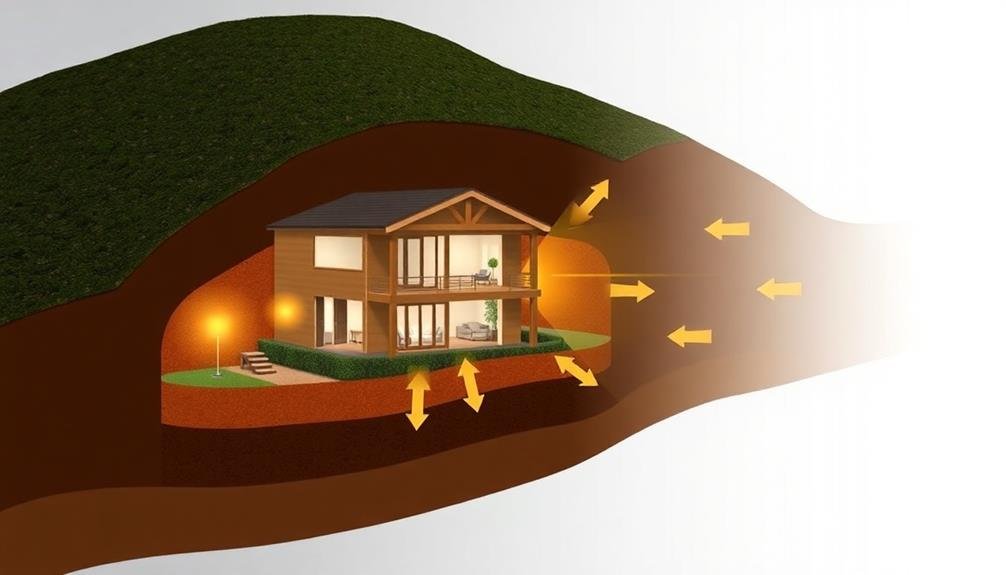
Earth-sheltered homes' temperature stability is one of their most significant advantages. You'll find that these structures maintain a relatively constant indoor temperature throughout the year, thanks to the earth's natural insulating properties. The soil surrounding the home acts as a thermal mass, absorbing heat during summer and releasing it during winter.
In summer, when outdoor temperatures soar, the earth-sheltered home remains cool. The soil's temperature at depths of 6 to 8 feet stays around 55°F (13°C) year-round in most regions. This natural cooling effect reduces your need for air conditioning, saving energy and money.
During winter, the earth's stored heat helps keep the home warm. While above-ground structures lose heat through walls and roofs, earth-sheltered homes benefit from the ground's consistent temperature. You'll need less heating, as the earth acts as a buffer against cold air and winds.
The home's design also plays an essential role in managing seasonal fluctuations. South-facing windows allow sunlight to warm the interior in winter, while overhangs or deciduous trees provide shade in summer. This passive solar design further enhances the home's natural temperature regulation.
Energy-Efficient Building Materials
Materials play an essential role in maximizing the energy efficiency of earth-sheltered homes. You'll find that these structures often incorporate high-performance insulation, thermal mass materials, and moisture-resistant barriers to maintain a comfortable indoor environment year-round. The earth itself acts as a natural insulator, but additional materials enhance this effect.
When building an earth-sheltered home, you'll want to reflect on:
- Insulation: High R-value materials like spray foam or rigid foam boards prevent heat transfer between the interior and exterior.
- Thermal mass: Concrete, stone, or rammed earth walls absorb and release heat slowly, helping to regulate temperature.
- Waterproofing membranes: These protect against moisture intrusion and maintain the integrity of the structure.
- Energy-efficient windows: Double or triple-paned windows with low-E coatings minimize heat loss and gain.
You'll also find that earth-sheltered homes often use recycled or locally sourced materials, further reducing their environmental impact.
Landscaping for Climate Control
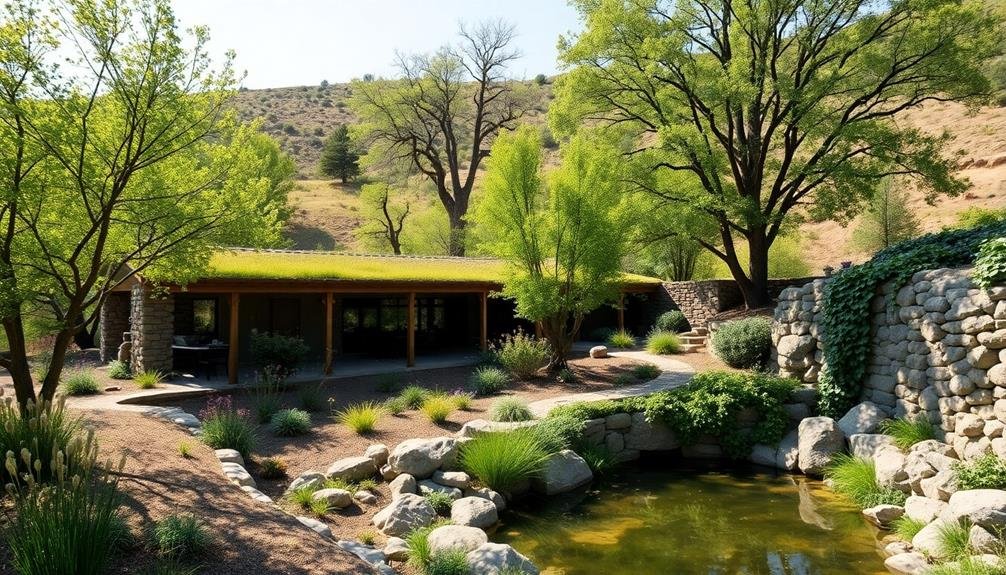
Strategic landscaping plays an essential role in enhancing the climate control benefits of earth-sheltered homes.
You'll want to focus on using vegetation and landforms to regulate temperature and airflow around your dwelling. Start by planting deciduous trees on the south and west sides of your home. In summer, their leaves will provide shade and reduce heat gain, while in winter, bare branches allow sunlight to warm the structure.
Consider creating berms or small hills on the windward side of your home to deflect cold winter winds. You can also use evergreen trees as windbreaks to further protect against chilling gusts.
On the leeward side, design open areas that allow for natural ventilation during warmer months.
Don't forget about the roof. If it's exposed, a green roof or light-colored, reflective materials can greatly reduce heat absorption.
For partially exposed walls, consider climbing plants or trellises to provide additional insulation and shade.
Lastly, incorporate water features like ponds or fountains near air intake areas. As water evaporates, it'll cool the incoming air, helping to maintain a comfortable indoor temperature naturally.
Frequently Asked Questions
How Much Does It Cost to Build an Earth-Sheltered Home?
You'll find earth-sheltered homes typically cost 20-30% more than conventional houses. Prices vary widely based on design, location, and materials. Expect to pay $200-$300 per square foot, but remember you'll save on energy costs long-term.
Are Earth-Sheltered Homes Resistant to Natural Disasters Like Earthquakes?
You'll find earth-sheltered homes are generally resistant to earthquakes. Their sturdy construction and earth-backed walls provide stability. However, proper engineering is essential. They're also more resilient against tornadoes, hurricanes, and wildfires due to their protected design.
Can Earth-Sheltered Homes Be Built in Any Climate or Geographical Location?
You can build earth-sheltered homes in most climates and locations. They're adaptable, but you'll need to take into account local soil conditions, water table, and terrain. Some areas may require extra engineering or modifications to suit the environment.
What Are the Challenges of Obtaining Permits for Earth-Sheltered Home Construction?
You'll face unique challenges when obtaining permits for earth-sheltered homes. Local building codes may not address this type of construction, so you'll need to educate officials, provide detailed plans, and possibly hire specialized engineers to gain approval.
How Do Earth-Sheltered Homes Impact Property Values and Resale Potential?
You'll find earth-sheltered homes can impact property values both positively and negatively. They're energy-efficient and unique, which appeals to some buyers. However, their unconventional design may limit resale potential in traditional markets. Consider your location carefully.
In Summary
You've discovered the secrets of earth-sheltered homes' year-round comfort. By harnessing the earth's insulation, thermal mass, and geothermal properties, you're able to maintain a stable indoor climate. You've learned how passive solar design, moisture control, and underground cooling tubes work together. Don't forget the importance of energy-efficient materials and strategic landscaping. With these techniques, you'll enjoy a naturally cool home that's in harmony with its environment, saving energy and money.