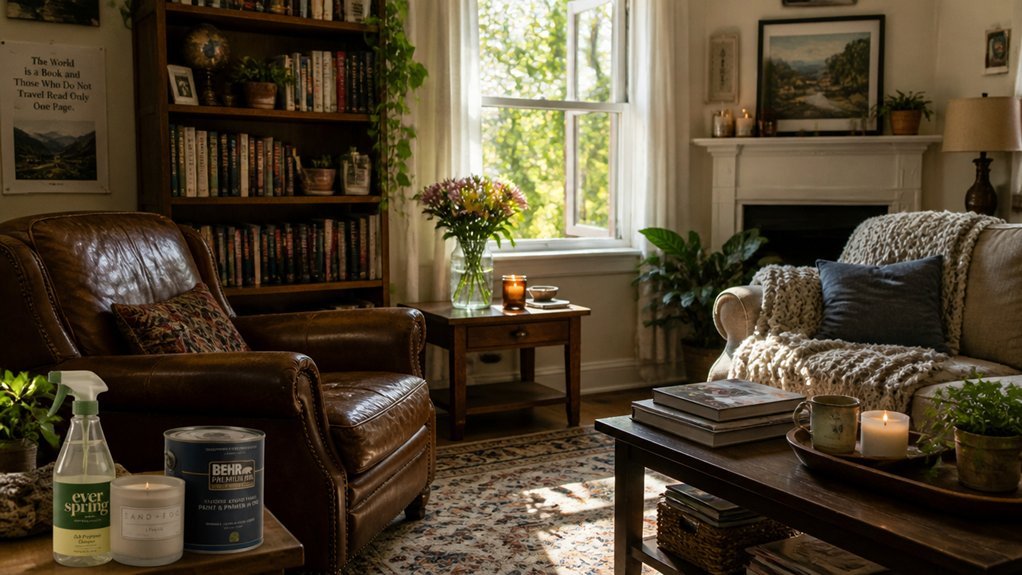

You can make your home healthier with six low-VOC swaps: choose low- or zero-VOC paint, solid wood or certified low-VOC flooring, safer silicone or acrylic latex caulk, and fragrance-free, plant-based cleaners. Add carbon and HEPA air purifiers to help cut fumes and fine particles. Just as important, ventilate well after each project by opening windows, using fans, and creating cross-breezes so odors clear faster and indoor air stays fresher. There’s more to know if you keep going.
Why Low-VOC Swaps Matter
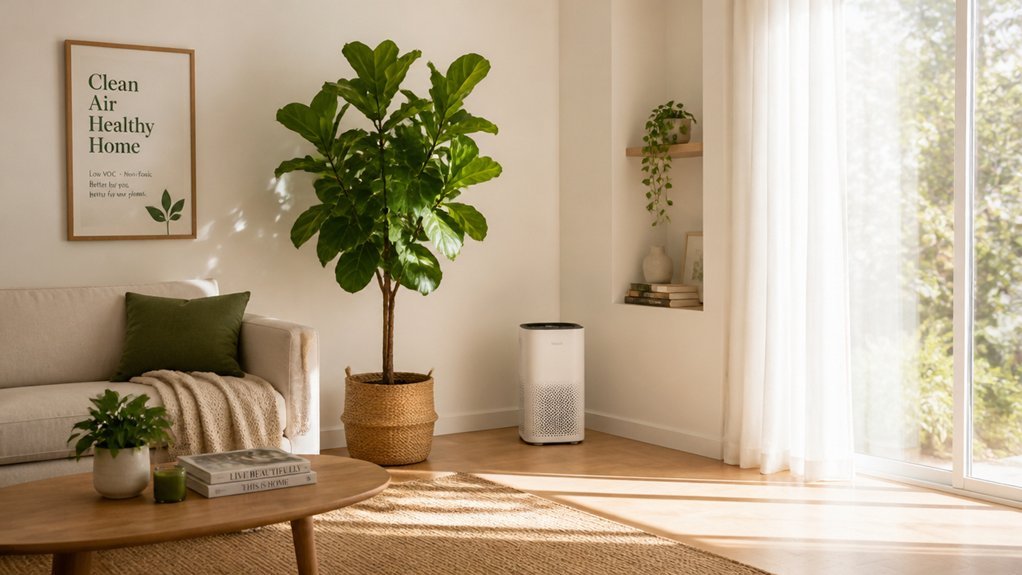
Why do low-VOC swaps matter so much? You breathe what’s in your home all day, so the products you choose can affect how you feel now and later.
When you replace high-emission cleaners, finishes, and furnishings with lower-VOC options, you cut down on fumes that can irritate your eyes, throat, and lungs. That matters even more if you have kids, pets, allergies, or asthma.
Low-VOC choices also help limit that lingering chemical smell that can make a room feel stuffy and unpleasant. You don’t need to overhaul everything at once; even small substitutions reduce your indoor exposure.
Using HEPA and carbon filtration in your air purifiers further enhances your home’s air quality by capturing ultrafine particles and reducing VOCs, making your environment healthier.
Start With Low-VOC Paints
Paint is one of the biggest sources of indoor VOCs, so starting there can make a noticeable difference fast. You can reduce exposure by choosing paints labeled low-VOC or zero-VOC, then checking the can for emissions claims and tinting details.
Stir the paint well, ventilate the room, and keep windows open while you work and for a few days after. If you’re repainting a bedroom, nursery, or home office, these choices matter even more because you spend long hours there.
You’ll still get the color you want, but with less odor and fewer irritating fumes. Read the label carefully, since some products only meet low-VOC standards before tinting. A smarter paint choice helps you improve indoor air without sacrificing style or durability.
Using low-VOC paints and proper ventilation is especially effective when paired with indoor air quality monitoring, ensuring you can track improvements in your home’s air.
Choose Low-VOC Flooring
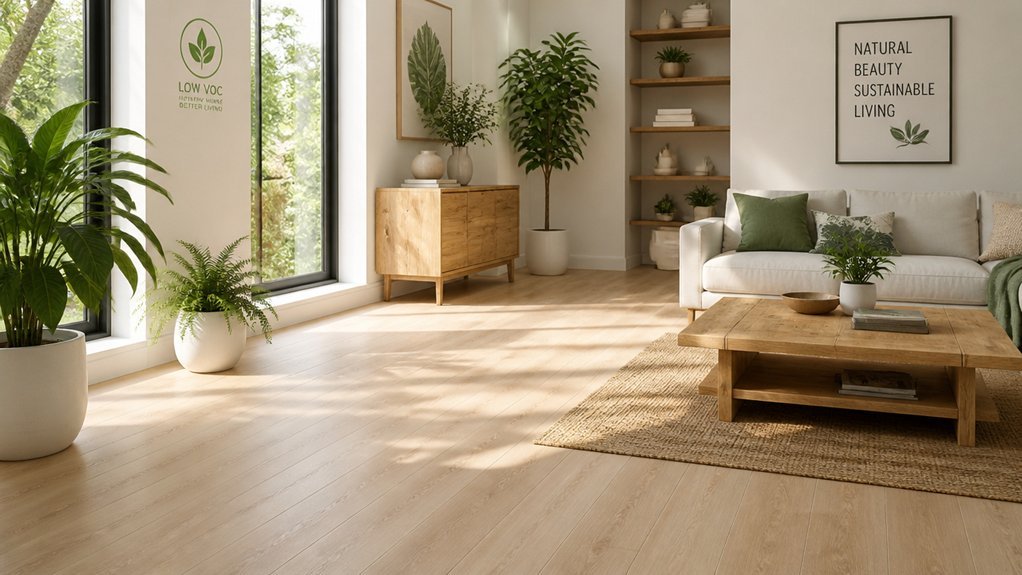
After you’ve tackled the walls, look down at the floor, since flooring can also release VOCs into your home. You can lower exposure by choosing solid wood, bamboo, cork, or ceramic tile instead of high-emission options. Look for products certified by GREENGUARD Gold, FloorScore, or similar programs, because they help you spot materials with fewer chemical releases. Additionally, selecting flooring with adequate moisture removal capacity can prevent mold growth and reduce the need for frequent repairs or replacements. If you prefer carpet, pick low-VOC carpet and padding, and ask for products made with recycled or natural fibers. Let the flooring acclimate and air out before installation, then keep rooms well ventilated afterward.
You’ll also reduce emissions by using fewer synthetic layers and by replacing damaged sections instead of tearing out whole rooms. Small choices here can make your home feel cleaner, fresher, and easier to breathe in every day.
Use Safer Sealants and Caulk
You can choose low-VOC sealants and non-toxic caulk to cut down on indoor chemical exposure while still getting a strong, lasting bond. These safer products help protect your air quality and work well in kitchens, baths, and other high-use areas. A reliable application and full curing time are essential to ensure optimal performance and safety. Additionally, selecting products with proper measurement accuracy ensures consistent results over time.
Low-VOC Sealant Choices
When you seal gaps and finish trim, choose low-VOC caulk and sealants to cut down on indoor fumes without sacrificing performance. You can use these products around windows, baseboards, sinks, and tubs where air leaks and moisture often show up.
Check the label for VOC content, cure time, and intended use so you pick the right formula for the job. Silicone works well in wet areas, while acrylic latex suits paintable interior seams.
Read the instructions closely, because proper prep and application help the sealant adhere cleanly and last. Ventilate the room while you work, wear gloves, and smooth the bead before it skins over.
Additionally, selecting products with certified low-VOC levels can further ensure healthier indoor air quality.
Non-Toxic Caulk Benefits
Safer caulks and sealants do more than fill gaps—they help reduce the chemical load in your home while still protecting against drafts and moisture. You’ll also cut down on lingering odors that can make freshly sealed rooms feel harsh or irritating.
Non-toxic options can improve indoor air quality because they’re designed to release fewer harmful compounds than conventional products. That makes them a smart choice if you’re sensitive to fumes, have kids, or want a healthier space overall.
You still get strong adhesion and flexible sealing around windows, tubs, sinks, and trim, so you don’t have to trade performance for peace of mind. By choosing low-VOC or VOC-free caulk, you support a cleaner home environment without sacrificing everyday comfort or protection. Using accurately calibrated air quality monitors can help you track improvements in indoor air quality when switching to safer sealants.
Application And Curing Tips
Even low-VOC caulk works best with careful prep and application. Clean the joint, dry it fully, and remove loose debris so the bead bonds well. Cut the tip small, puncture the inner seal, and move at a steady pace. Tool the bead right away for a tight finish, then let it cure without rushing. Keep windows open and follow the label for temperature and humidity limits. Proper DIY mold testing can help identify unseen mold growth that may affect your sealing needs.
| Step | Do This | Why It Helps |
|---|---|---|
| Prep | Clean and dry surfaces | Improves adhesion |
| Apply | Use a thin, steady bead | Reduces waste |
| Cure | Leave it undisturbed | Guarantees a stronger seal |
Avoid water exposure until the product reaches full cure. If you need to recaulk later, scrape old material off first for a cleaner, healthier home.
Replace High-VOC Cleaning Products
If you want to lower indoor VOC levels quickly, start by swapping harsh cleaners for low-VOC or fragrance-free options. You can replace aerosol sprays, bleach-heavy mixes, and solvent-based degreasers with simpler products made for everyday use.
Check labels for plant-based surfactants, enzyme cleaners, and clear ingredient lists, and avoid terms like “pine,” “fresh,” or “antibacterial” when they hide added fragrance or chemicals. Use concentrated formulas so you dilute only what you need, and choose microfiber cloths with water for dusting and wiping.
For tougher grime, try baking soda, vinegar, or castile soap instead of specialty cleaners. When you buy refills or bulk containers, you cut packaging waste too. Small changes like these can reduce chemical exposure and make your routine feel cleaner.
Ventilate After Each Upgrade

After each upgrade, you should let fresh air move through your home right away. Open windows on opposite sides to set up cross-ventilation, and use fans to push lingering fumes outside.
Keep the air moving a bit longer than you think you need, especially after paint, flooring, or new furniture.
Fresh Air Timing
Why wait to clear the air? After you install new paint, flooring, cabinets, or sealants, open the windows right away and let fresh air move through the room.
You don’t need to wait until the smell feels strong; start airing out the space as soon as the project wraps up, and keep it going for several hours. If possible, continue daily for a few days while the materials finish curing.
Check product labels for any ventilation advice, and follow it closely. You can also run bathroom or kitchen exhaust fans if they’re available. The faster you replace stale indoor air, the less VOC buildup you’ll breathe in, and the sooner your home will feel comfortable again.
Cross-Ventilation Basics
Once you’ve started airing out a room, make the airflow work harder by setting up cross-ventilation. Open windows or doors on opposite sides of the space so fresh air can enter from one direction and push stale air out the other.
You’ll clear lingering odors faster after painting, installing new flooring, or replacing furniture. Keep interior doors open when you can, but close off areas that don’t need ventilation to focus the airflow where it matters.
If one side of the room feels stuffy, crack that opening wider. You don’t need fancy equipment for this step; you just need a clear path for air movement. Check that curtains, screens, or clutter aren’t blocking the breeze, and adjust the openings until you feel steady movement through the room.
Run Fans Longer
Keep the fans running longer than you think you need to, especially after you’ve finished a paint job, installed new flooring, or brought in new furniture. Continuous airflow helps flush lingering VOCs before they settle into fabrics, drywall, and dust. You’ll breathe easier when you keep rooms moving with box fans, bath fans, and open windows.
| Upgrade | Fan Use | Why It Helps |
|---|---|---|
| Paint | 48 hours | Clears fumes fast |
| Flooring | 72 hours | Reduces adhesive off-gassing |
| Furniture | 24-48 hours | Airs out finishes |
| Cabinets | 3-5 days | Lowers trapped odors |
| Wallpaper | 24 hours | Speeds drying |
Afterward, keep ventilating whenever smells return. If you can still notice a scent, pollutants’re still present.
Frequently Asked Questions
How Do I Tell if a Product Is Truly Low-Voc?
Check the label for specific VOC grams per liter, not vague “eco-friendly” claims. You should look for third-party certifications, ingredient lists, and safety data sheets. Trust products that disclose testing and avoid strong odors.
Are Low-Voc Products More Expensive Than Standard Options?
Usually, you’ll pay a bit more for low-VOC products, but not always. You can often save by comparing brands, buying larger sizes, or choosing certified options that balance price and healthier materials.
Can I Make Low-Voc Swaps Room by Room?
Yes, you can make low-VOC swaps room by room. Start with high-use spaces, like bedrooms and kitchens, then replace paints, cleaners, and furnishings gradually. You’ll reduce exposure without overwhelming your budget or schedule.
Do Low-Voc Materials Still Come in Many Colors and Styles?
Yes, you can still choose plenty of colors and styles. You’ll find low-VOC paints, flooring, fabrics, and finishes in modern, classic, and bold options, so you won’t have to sacrifice your look for healthier materials.
Which Certifications Should I Look for When Shopping?
Look for GREENGUARD Gold, UL ECOLOGO, FloorScore, and Green Seal. You’ll also want CARB compliance and FSC on wood products. These labels help you choose safer, lower-emission options that still fit your style.
In Summary
By making a few low-VOC swaps, you can make your home healthier without sacrificing comfort or style. Start with paint, flooring, sealants, and cleaning products, then keep fresh air moving after every update. Each change helps reduce indoor pollutants and supports better air quality for you and your family. Small steps add up fast, so choose safer materials when you can and enjoy a cleaner, more comfortable space every day.