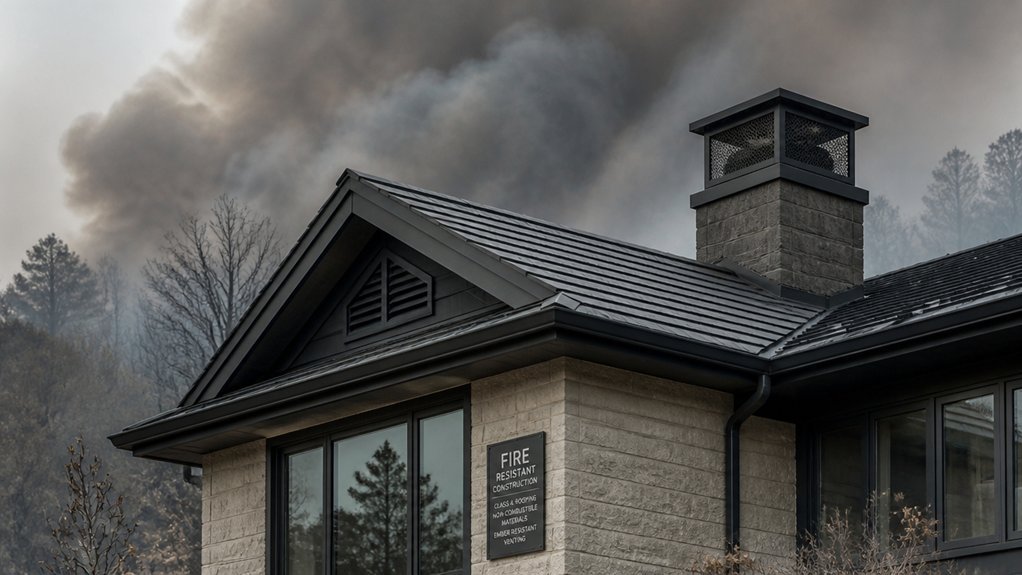
You can protect your home from wildfire smoke by sealing leaks around windows, doors, vents, pipes, and attic or basement openings. Use caulk, weatherstripping, and door sweeps to block gaps, then set your HVAC to recirculate indoor air. Upgrade to a high-MERV filter if your system allows it, and run HEPA purifiers in key rooms. Create a clean room, cut indoor smoke sources, and monitor air quality so you know when more steps are worth taking.
Check Your Home for Air Leaks
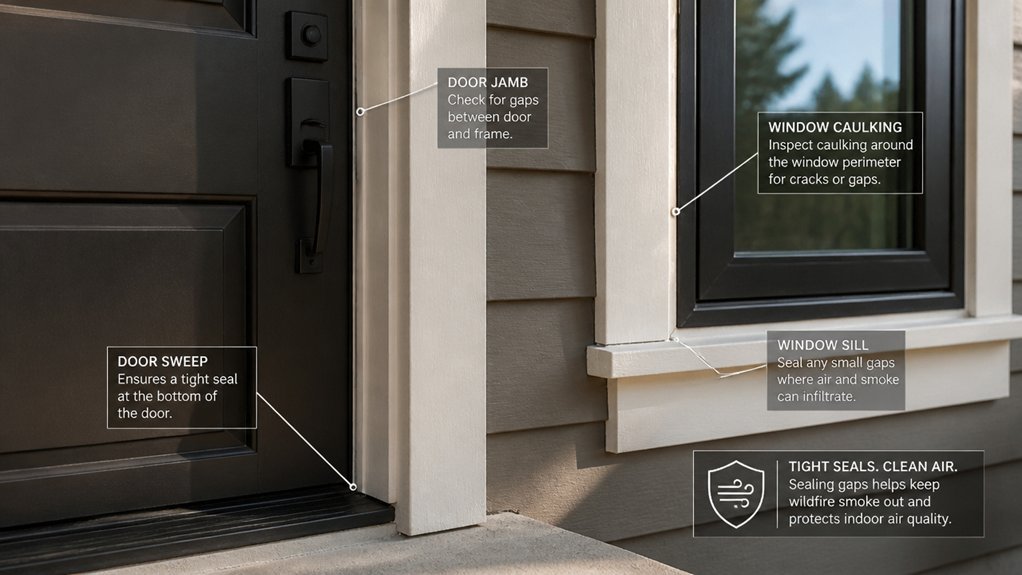
Start by checking for gaps that let smoky air seep inside your home. Walk through each room and look for cracks around walls, vents, pipes, outlets, and attic access points. Feel for drafts near baseboards and behind appliances, where outside air can slip through unnoticed.
Use a flashlight in dim areas to spot openings and damaged caulk, weather stripping, or old sealant. Pay close attention to your basement, crawlspace, and any utility penetrations, since smoke can move through small spaces quickly. Regularly inspecting and replacing these seals Air Leak Prevention can significantly improve your home’s resistance to wildfire smoke infiltration.
If you find visible leaks, note them for repair and keep interior doors closed to limit airflow. A careful inspection helps you understand where your home is vulnerable, so you can reduce smoke intrusion before air quality worsens.
Seal Windows and Doors Against Smoke
You can cut smoke entry fast by tightening window seals and weatherstripping door gaps. Use caulk to seal cracks around frames, trim, and other small openings. Regular maintenance of your humidity monitors can help ensure accurate readings, allowing you to better gauge when additional sealing steps are necessary. These simple fixes help keep wildfire smoke outside where it belongs.
Tighten Window Seals
Seal up gaps around windows and doors to keep wildfire smoke from sneaking inside. Check each window latch and frame for loose spots, cracked caulk, or worn edges.
If you find openings, clean the area first so new sealant sticks well. Then apply a thin bead of exterior-grade caulk along the seams where the frame meets the wall. Press it smooth with a wet finger or tool, and let it cure fully before opening the window.
For sliding windows, make sure tracks close tightly and don’t leave visible daylight. You can also use removable sealants on parts you need to open later.
After sealing, inspect again on a windy day to catch any missed leaks and keep smoky air out. Additionally, consider air quality monitors to help you identify any indoor pollutants that might seep through unsealed gaps.
Weatherstrip Door Gaps
Even small gaps under doors can let wildfire smoke drift inside, so add or replace weatherstripping where needed. Check exterior doors, patio doors, and garage entries, then choose a tight seal that matches each frame.
Use adhesive foam, V-strip, or a door sweep to block drafts at the bottom and sides. Clean the surface first so the strip sticks well, and press it firmly into place. Test the door after installation; it should close easily but feel snug. If you can see light around the edges, adjust the fit.
Replacing worn weatherstripping can make a noticeable difference during smoky conditions, and it’s a quick upgrade you can handle before smoke arrives. Proper sealing can also prevent outdoor pollutants from entering your home, enhancing overall indoor air quality.
Caulk Cracks Effectively
Track down the small cracks that can let wildfire smoke sneak through your windows and doors. Then you can seal them with caulk and cut off another entry point. Use a flashlight to spot gaps around trim, frames, and joints, then clean the surface so the caulk sticks well.
- Scrape away loose paint and old sealant.
- Choose exterior-grade, paintable caulk.
- Cut the tube tip small for control.
- Apply a steady bead along each crack.
- Smooth the line with a damp finger or tool.
- For best results, select a durable, weather-resistant sealing material that can withstand outdoor conditions over time.
Let the caulk cure fully before you close the room up. If you find wider gaps, use backer rod first so the seal stays tight. This simple fix helps block smoke, improves comfort, and supports cleaner indoor air when outdoor conditions get bad.
Set Your HVAC System to Recirculate
Set your HVAC system to recirculate so it keeps indoor air moving without pulling in as smoky outdoor air. You can usually find this setting on your thermostat or control panel. When you switch it on, your system reuses the air already inside your home instead of constantly drawing in outside air through the intake. That helps limit smoke infiltration and can make rooms feel less stuffy during a wildfire event. Using a CO2 monitor can help you gauge indoor air quality and determine when ventilation is needed. Check that your fans and vents are open so air circulates evenly throughout your home. If you notice the system cycling frequently, that’s normal as it maintains comfort. Keep doors and windows closed while recirculation is running, and use this setting until outdoor conditions improve. After the smoke passes, you can return your system to its regular mode.
Upgrade Your HVAC Filter for Smoke
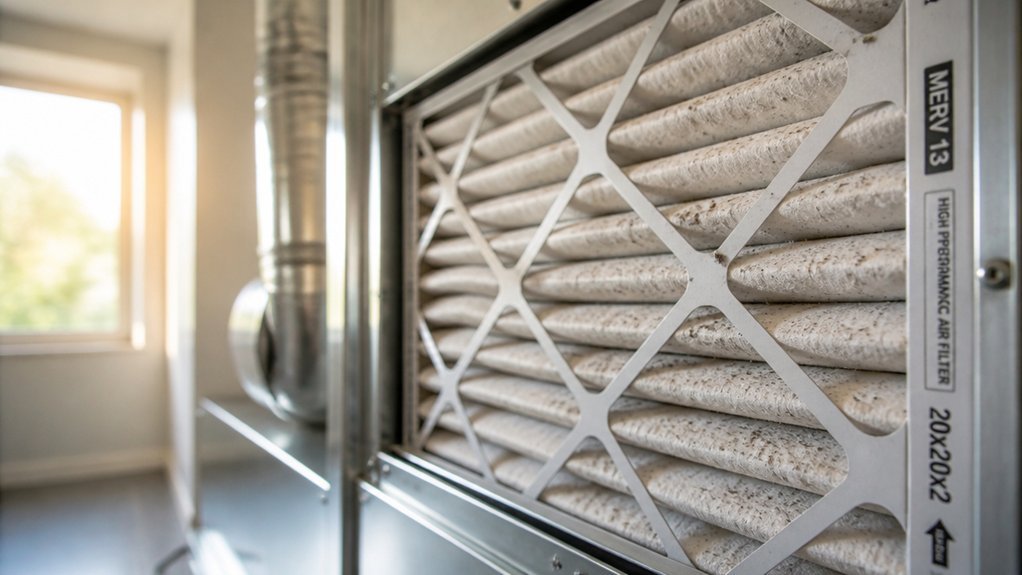
If your HVAC system can handle it, upgrade to a higher-rated filter that’s designed to catch finer smoke particles. Check your system’s recommended MERV range first, then choose the highest safe option. A tighter filter can trap more soot, but it can also restrict airflow if it’s too dense.
- Turn off the system before swapping filters.
- Replace the filter sooner during smoky periods.
- Inspect the filter weekly for gray buildup.
- Seal gaps around the filter slot.
- Mark the change date so you don’t forget.
You should also make sure the filter fits snugly, because leaks let smoky air bypass it.
Additionally, ensuring your filter has proper certifications like MERV ratings can help guarantee its effectiveness against smoke particles; look for models rated 13 or higher for better filtration.
After installation, watch for reduced airflow or strain and step down a rating if needed.
Run HEPA Air Purifiers in Key Rooms
Place a HEPA air purifier in the rooms you use most, like your bedroom or living room, so it can clean the air where you spend the most time. Make sure you use a true HEPA filter to trap fine smoke particles effectively.
Keep the purifier running continuously during smoky conditions so it can keep lowering indoor pollution.
Choose Right Room Placement
When wildfire smoke pushes indoors, focus your HEPA air purifiers on the rooms you use most, especially the bedroom and main living area. Put each unit where it can move air freely and reach the space you occupy, not tucked behind furniture or curtains.
- Place the purifier near the center of the room.
- Keep it a few feet from walls and large objects.
- Close doors to limit smoke drifting in from other rooms.
- Run one unit in your sleeping area overnight.
- Move it to the room where you spend the most time during the day.
If you’ve got only one purifier, rotate it based on your schedule. Better placement helps it work harder for you, so you breathe cleaner air where it matters most.
Use True HEPA Filters
True HEPA filters can make a real difference during wildfire smoke events because they capture tiny particles that can irritate your lungs and eyes. When you place a purifier in the rooms you use most, you help cut smoke exposure where it matters most. Choose a unit sized for the space, and check the filter label so you know it meets true HEPA standards.
| Room | Benefit | Tip |
|---|---|---|
| Bedroom | Cleaner sleep air | Place it near you |
| Living room | Shared comfort | Set it away from walls |
| Office | Better focus | Match it to room size |
You’ll get the best results when you target the spaces you breathe in most often and keep doors closed.
Run Purifiers Continuously
Keep your HEPA purifiers running continuously in the rooms you use most during wildfire smoke events, since smoke levels can change throughout the day and even brief exposure can add up. Let them clean the air in bedrooms, living rooms, and any space where you spend hours.
- Keep doors and windows closed.
- Match purifier size to room square footage.
- Set the fan to a higher speed when smoke is heavy.
- Place units where airflow isn’t blocked.
- Replace filters on schedule so performance stays strong.
You’ll get better protection when the purifier runs before smoke peaks and keeps working through the night.
If you need to conserve energy, focus on occupied rooms first, then move the unit as your routine shifts. Consistent operation gives you steadier indoor air and less irritation.
Set Up a Clean Room During Wildfire Smoke
To limit exposure when wildfire smoke moves indoors, set up one room as your clean room and spend the most time there. Pick the smallest room you can comfortably use, ideally with a door that closes tightly.
Choose the smallest room you can, and use it as your clean room when wildfire smoke moves indoors.
Keep windows and exterior doors shut, and seal obvious gaps with towels or tape if needed. Place your purifier in this room and let it run on high.
Bring water, snacks, chargers, medicines, and anything else you’ll need so you don’t keep opening the door. If you have pets, try to keep them with you there too.
Limit trips in and out, and avoid moving through smoky areas of the house unless you must. This focused space gives your lungs a break until outdoor air improves.
Cut Indoor Smoke Sources Fast
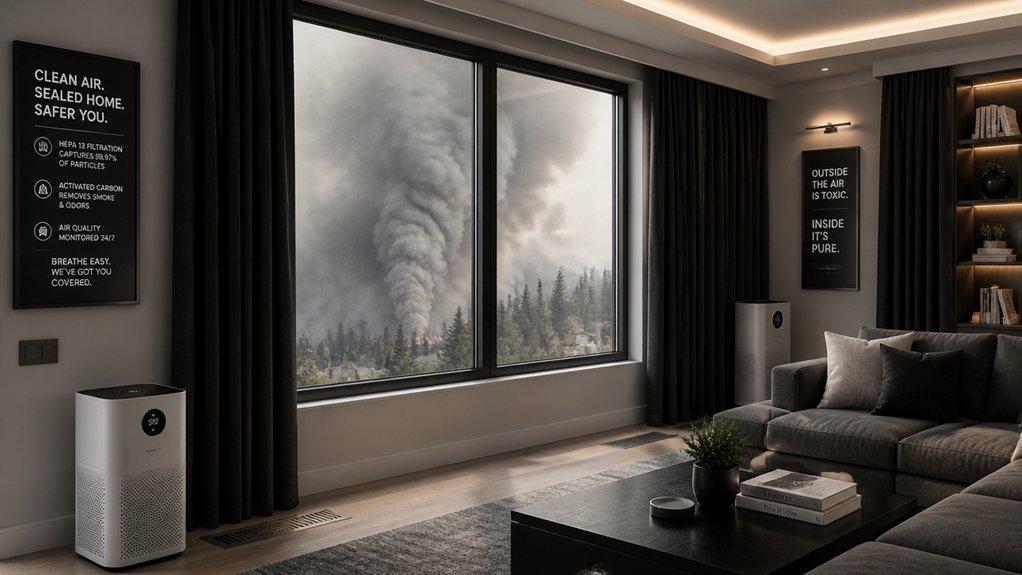
Turn off anything inside that adds smoke or fumes to the air, especially gas stoves, fireplaces, wood-burning stoves, and candles. Shut down the dryer if it vents poorly, skip frying, and avoid incense or aerosol sprays. You’ll lower the smoke load in your home right away.
- Cook simple meals that don’t need high heat.
- Put out scented candles and oil burners.
- Don’t vacuum dry soot; it can stir particles.
- Store smoking materials outdoors if possible.
- Ask visitors to skip vaping or smoking indoors.
Open doors only briefly when you need to move in or out. Keep pets away from smoky rooms, and empty ashtrays outside.
The less you add to the air, the easier it’s to keep indoor smoke under control during wildfire season.
Monitor Indoor Air Quality During Fires
When wildfire smoke is nearby, use a portable air quality monitor or your senses to check whether indoor air is improving or getting worse. Watch PM2.5 readings, because they show how much fine smoke you’re breathing.
If you don’t have a monitor, notice smoky odors, irritation, coughing, or hazy light indoors. Keep windows and doors closed, and compare readings in different rooms so you can spot leaks or trouble areas.
Check often, especially after opening a door, running an exhaust fan, or using a purifier. If levels rise, tighten your room setup, increase filtration, and move everyone to the cleanest space.
Track trends over time so you know which actions help most. Stay alert, because smoke can change fast.
Frequently Asked Questions
How Do I Know When Wildfire Smoke Is Dangerous Indoors?
You know it’s dangerous indoors when you smell smoke, see haze, or feel eye, nose, or throat irritation. Check AQI, and if it exceeds 100, you should limit exposure and clean your air.
Should Pets Stay Indoors During Heavy Wildfire Smoke?
Yes, you should keep pets indoors during heavy wildfire smoke. You’ll reduce their exposure, protect their lungs, and watch for coughing, lethargy, or eye irritation. If symptoms worsen, call your vet right away.
Can I Use a Box Fan With a Filter to Clean Air?
Yes, you can use a box fan with a filter to help clean air. You’ll improve filtration by taping the filter securely, running the fan on low, and replacing the filter when it gets dirty.
What Should I Do if My Home Smells Smoky After Sealing It?
If your home still smells smoky, you should run a HEPA air purifier, replace HVAC filters, wipe surfaces, and check leaks. You can also ventilate briefly when outdoor air improves, then reseal openings.
How Often Should I Replace Smoke-Damaged HVAC Filters?
You should replace smoke-damaged HVAC filters right away, then again after 24–48 hours of heavy use, or sooner if they look gray, clogged, or you still smell smoke. Check them weekly until air clears.
In Summary
Wildfire smoke can sneak into your home fast, but you can stay ahead of it. Check for leaks, seal windows and doors, and keep your HVAC system on recirculate with a better filter. Use HEPA air purifiers, create a clean room, and cut down on indoor smoke sources. Keep an eye on indoor air quality so you know when to act. These simple steps help you breathe easier when smoke rolls in.