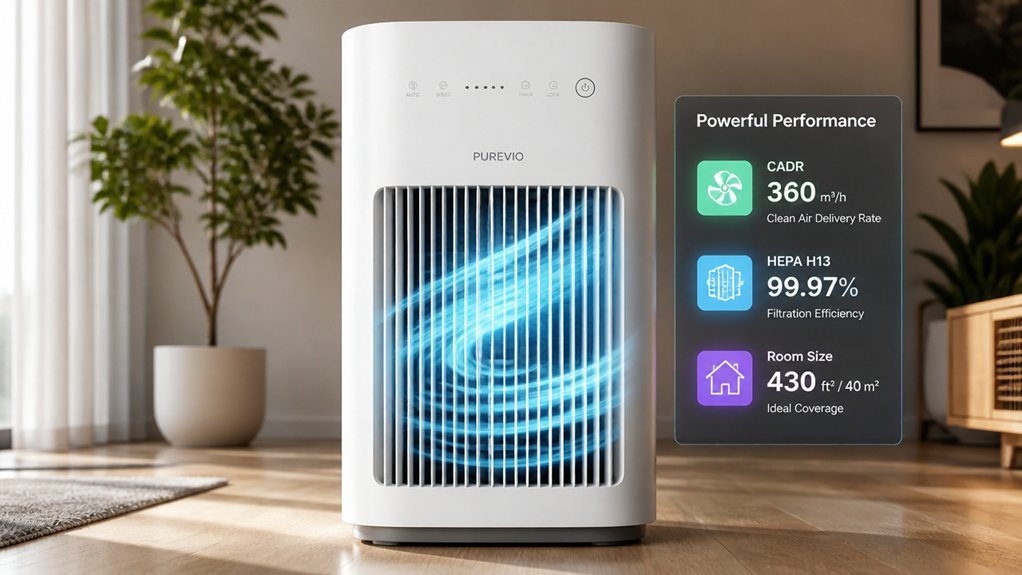
To choose the right air purifier, you need to match CADR, HEPA filtration, and room size. CADR tells you how fast the unit cleans air, so higher ratings suit larger rooms and taller ceilings. True HEPA filters capture dust, pollen, and smoke better than HEPA-type claims. Check smoke, dust, and pollen ratings, plus noise and energy use, so you get strong cleaning without overpaying. Keep going, and you’ll see how to compare them more closely.
What CADR Means for Air Purifiers
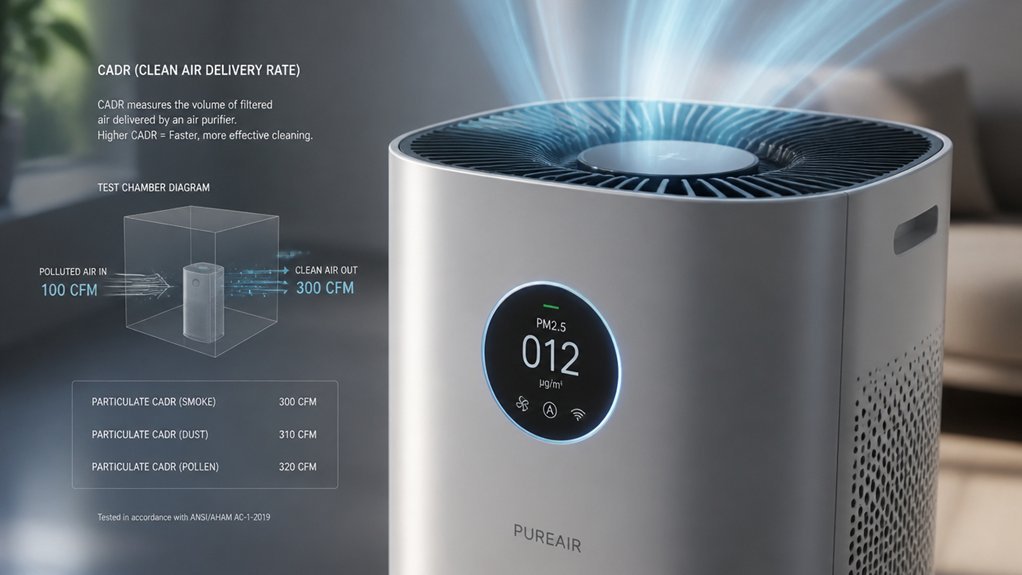
When you compare air purifiers, CADR—clean air delivery rate—tells you how much filtered air the unit can move in a given time. You should read it as a performance score for dust, pollen, and smoke, since each pollutant gets its own rating. A higher CADR usually means the purifier clears a room faster, but only if you match it to the room’s size. If the CADR is too low, you won’t get enough air changes per hour, and the purifier won’t keep up. If it’s too high, you may pay more than you need to. To choose well, compare the CADR with your room’s square footage and pick a model that can circulate the air efficiently without straining. It’s also important to consider filter replacement frequency, as regular maintenance ensures continued optimal performance during active wildfire events.
How HEPA Filters Clean the Air
HEPA filters clean the air by trapping tiny particles as air passes through a dense mesh of fibers. You don’t need to imagine a sieve; the filter uses interception, impaction, and diffusion to catch dust, pollen, pet dander, and smoke. Larger particles collide with fibers and stick. Smaller ones drift unpredictably, so the filter captures them as they zigzag through the material. Because the fibers are packed tightly, the filter can remove most airborne debris without relying on chemicals or ozone. When you replace the filter on schedule, you keep that filtration efficiency strong and consistent over time.
How to Match Room Size to CADR
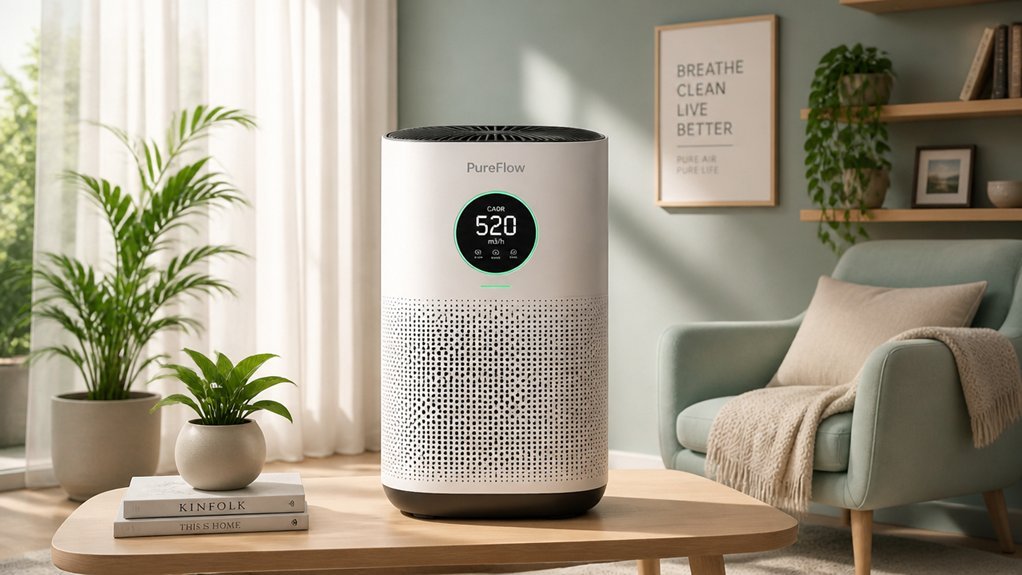
To match room size to CADR, first calculate your room’s volume by multiplying length, width, and height. Then compare that number with the purifier’s CADR so you know whether it can clean your space fast enough. Don’t forget to account for ceiling height, since taller rooms need more cleaning power than the floor area alone suggests. Ensuring your monitor’s sensor accuracy aligns with your needs helps get reliable air quality readings for better decision-making.
Calculate Room Volume
Before you compare air purifier models, figure out the room’s volume in cubic feet, because CADR only tells you how much clean air the unit can deliver for a specific space. Measure the room’s length, width, and ceiling height in feet. Then multiply those three numbers: length × width × height = volume.
For example, a 12-by-15-foot room with 8-foot ceilings equals 1,440 cubic feet. If the room has odd shapes, break it into rectangles, calculate each section, and add the totals. Don’t guess or use floor area alone, since two rooms with the same square footage can have very different air volumes.
Once you know the cubic footage, you can compare it with a purifier’s CADR rating more accurately and avoid choosing a unit that’s too weak. Maintaining proper humidity levels is also essential for optimal indoor air quality in addition to choosing the right air purifier.
Match CADR To Space
Now that you know the room’s cubic feet, you can match it to a purifier’s CADR by checking whether the unit can supply enough clean air for that space.
A higher CADR means the purifier moves more filtered air through the room faster, so you’ll clear smoke, dust, and pollen more effectively. Aim for a CADR that fits your room and gives you a comfortable cleanup rate.
- Check the CADR for smoke, dust, and pollen.
- Compare the rating with the room size on the box.
- Choose a higher CADR if you want faster cleaning or stronger performance.
- Ensure the CADR aligns with proper air circulation to optimize effectiveness.
If the purifier’s CADR is too low, you’ll wait longer for noticeable results. If it’s well matched, you’ll get steadier air cleaning and better comfort day to day.
Account For Ceiling Height
Ceiling height matters because CADR room-size estimates usually assume a standard 8-foot ceiling, so a taller room needs more cleaning power than the same floor space in a lower room. If your room has 9-, 10-, or even 12-foot ceilings, you’re cleaning more air volume, not just more floor space. Using sensors like the Temtop or SwitchBot, which include pressure compensation, can help ensure more accurate air quality readings in rooms with variable ceiling heights. To compensate, choose a purifier with a higher CADR than the box suggests for your square footage. A simple rule is to add about 12.5% CADR for every extra foot of ceiling height above 8 feet. For example, a 200-square-foot room with 10-foot ceilings acts more like a 250-square-foot room. Check the purifier’s recommended room size, then round up if you want faster cleaning and better performance.
Why ACH Matters for Faster Air Cleaning
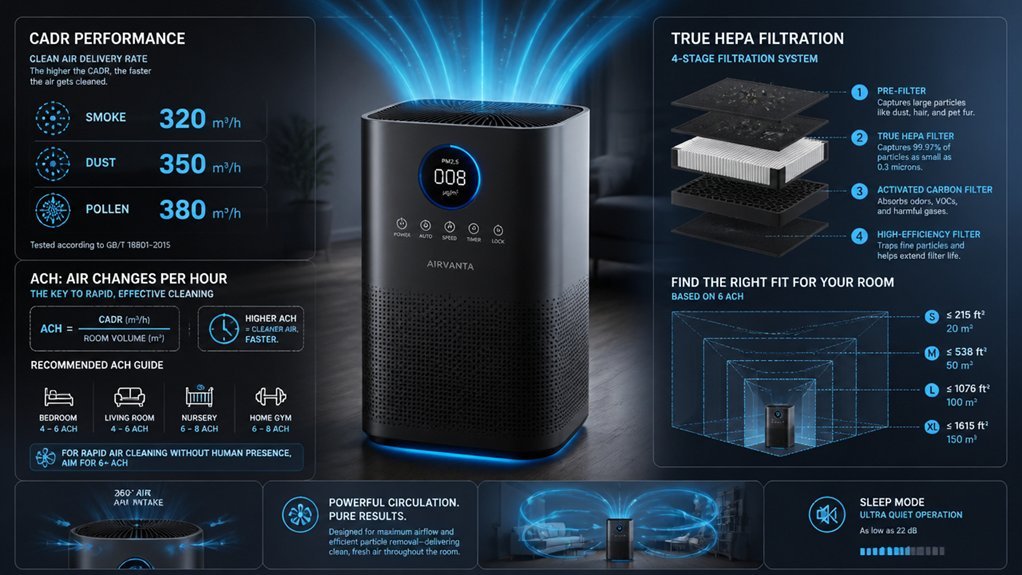
When you look at ACH, you’re really looking at how quickly your air purifier replaces dirty air with cleaner air. A higher air changes per hour rate means faster purification, especially in smaller rooms where the air can cycle more often. If you want cleaner air sooner, ACH helps you judge how hard your purifier can work. Additionally, knowing the sensor detection type in your air purifier can ensure it accurately monitors air quality and responds promptly to pollution.
ACH and Clean Air Speed
ACH tells you how many times an air purifier can filter the air in a room each hour, so it’s one of the clearest ways to judge how fast it can clean your space. When you want cleaner air sooner, you should look for a higher rate because it helps reduce particles more quickly. That matters most in bedrooms, offices, and other spaces where you spend time breathing the same air.
- Faster cleaning means less time waiting for fresher air
- Higher rates usually improve comfort during smoke, dust, or allergy spikes
- Matching the purifier to your room helps you get better results
You’ll also notice that stronger airflow can make a purifier feel more effective, even if the unit itself isn’t larger.
Air Changes Per Hour
Why does ACH matter so much? Air Changes Per Hour tells you how many times your purifier can filter the air in a room each hour.
When you raise ACH, you lower pollutant buildup faster, so smoke, dust, and allergens don’t linger as long. You’ll notice cleaner air sooner because the unit keeps cycling room air through its filter again and again.
A higher ACH also helps you maintain more consistent air quality throughout the day, especially when you’re cooking, cleaning, or opening doors. If ACH is low, contaminants can accumulate between cycles.
Faster Purification, Smaller Rooms
A higher ACH means your purifier can clean the air faster, and that matters even more in smaller rooms.
When you run a unit with a strong air change rate, you don’t just filter pollutants eventually; you reduce them quickly, which helps during cooking, dusting, or allergy flare-ups.
In a compact bedroom or office, that speed can make a noticeable difference in comfort and air quality.
- More air cycles mean quicker pollutant removal.
- Smaller rooms reach cleaner levels sooner.
- Higher ACH supports better performance during short, intense pollution spikes.
You should still match the purifier to the room size, because airflow alone won’t help if the unit is underpowered.
For fast cleaning, aim for a model that delivers frequent air changes in your space.
How to Compare Smoke, Dust, and Pollen Ratings
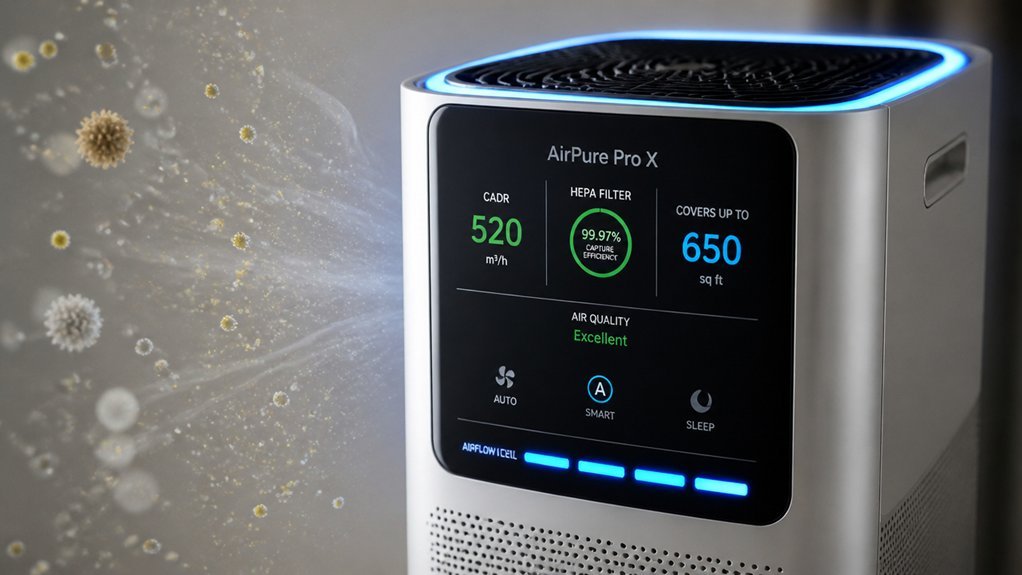
When you compare smoke, dust, and pollen ratings, focus on what each one says about particle size and real-world performance, because the numbers aren’t interchangeable.
Smoke tests tiny particles, so it usually shows the toughest challenge and the best indicator of how well a purifier handles fine pollution. Dust ratings reflect larger particles, which can make a unit look stronger than it really is for everyday air cleaning. Pollen ratings sit in between, so they’re useful if allergies are your main concern.
You should compare all three ratings together, then match them to your needs. If you want broad protection, look for strong performance across the board, not just one high score. That way, you’ll choose a purifier that fits your air quality goals.
What to Know About Noise and Energy Use
Once you’ve compared how well a purifier handles smoke, dust, and pollen, the next thing to check is how it’ll fit into your daily life. Noise matters because you’ll hear it in bedrooms, offices, and living rooms, especially on higher fan speeds.
Look for a purifier that stays quiet enough for sleep or work, yet still moves enough air when you need it. Energy use matters too, since you may run it for hours every day. A model with efficient motors and smart speed settings can cut electricity costs without sacrificing clean air.
- Check decibel ratings at low and high speeds.
- Compare wattage if you plan to run it nonstop.
- Use auto or eco modes when available.
How to Choose the Right Air Purifier Rating
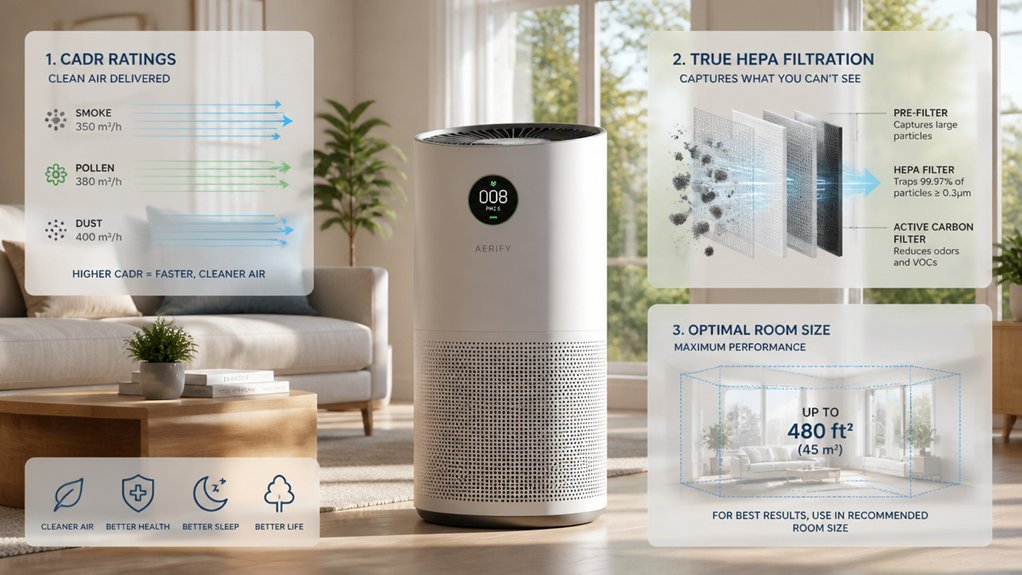
So, how do you choose the right air purifier rating? First, match the CADR to your room size; a higher CADR cleans air faster in larger spaces.
Then check for True HEPA filtration if you want strong removal of fine particles like dust, pollen, and smoke. Don’t stop at the label, though: make sure the purifier can handle your room’s square footage with enough air changes per hour.
If you have allergies, pets, or frequent wildfire smoke, aim higher than the minimum rating. Also consider noise and energy use, because you’ll only benefit if you run it often.
Choose a model that balances performance, coverage, and comfort, and you’ll get cleaner air without overpaying.
Frequently Asked Questions
How Often Should I Replace an Air Purifier Filter?
You should replace your air purifier filter every 6 to 12 months, but check the manufacturer’s guidance and your usage. If you notice odors, reduced airflow, or visible dirt, replace it sooner.
Do Air Purifiers Remove Odors and VOCS?
Yes, you’ll reduce some odors and VOCs if you choose an air purifier with activated carbon or a special gas filter. HEPA alone won’t do much for smells, so you’ll want the right filter type.
Can Air Purifiers Help With Pet Dander Allergies?
Yes, you can reduce pet dander allergies with a good air purifier, especially one with true HEPA filtration. You’ll still need regular vacuuming, bathing pets, and frequent cleaning to lower allergen buildup.
Are Smart Sensors Accurate in Air Purifiers?
Usually, you can trust smart sensors for quick feedback, but they’re not perfect. You’ll see useful trends, yet dust, humidity, and placement can skew readings, so you shouldn’t rely on them alone.
Where Should I Place My Air Purifier for Best Results?
You should place your air purifier where you spend the most time, ideally near the center of the room with clear space around it. Keep it away from walls, corners, and obstructions for better airflow.
In Summary
Now that you know what CADR, HEPA, room size, ACH, and the different particle ratings mean, you can choose an air purifier with more confidence. Focus on the specs that match your space, your air quality needs, and your comfort with noise and energy use. If you pick the right rating for the right room, you’ll get cleaner air faster and avoid overpaying for features you won’t use.