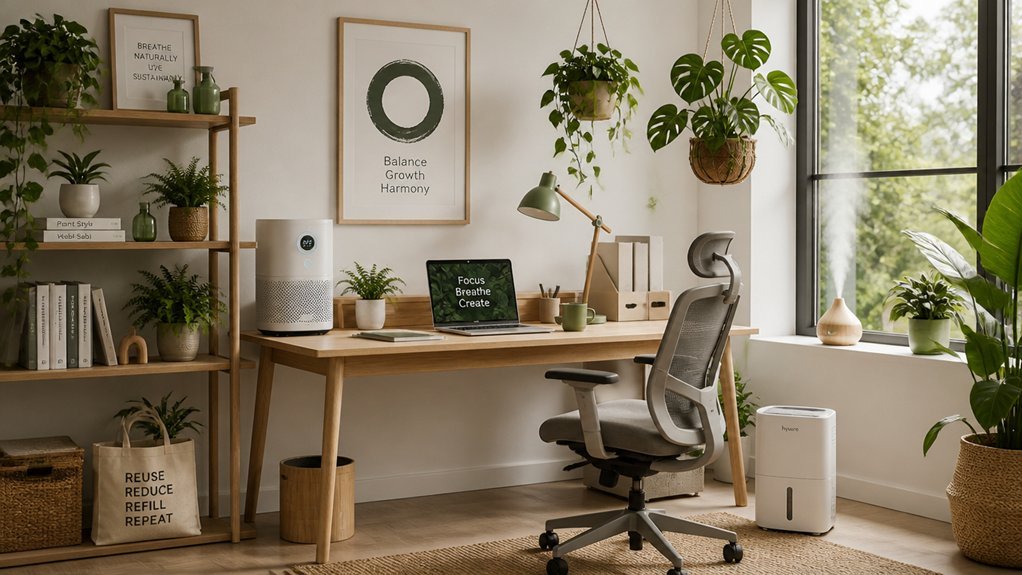
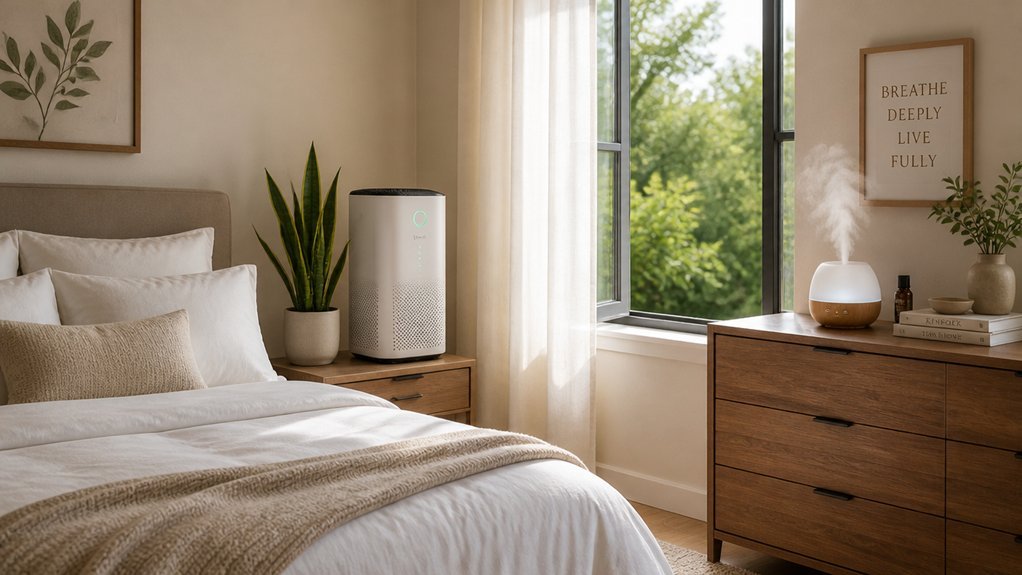
To improve bedroom air quality for better sleep, open windows briefly for fresh air, then use a true HEPA purifier sized for your room. Shake out bedding, vacuum carpets and under the bed, and wipe dusty surfaces with a damp cloth. Keep humidity between 30% and 50%, and choose low-VOC paints and furnishings. Keep pets out when you can, wash bedding weekly, and skip scented products. There’s more to fine-tune for cleaner sleep.
How to Improve Bedroom Air Quality Fast
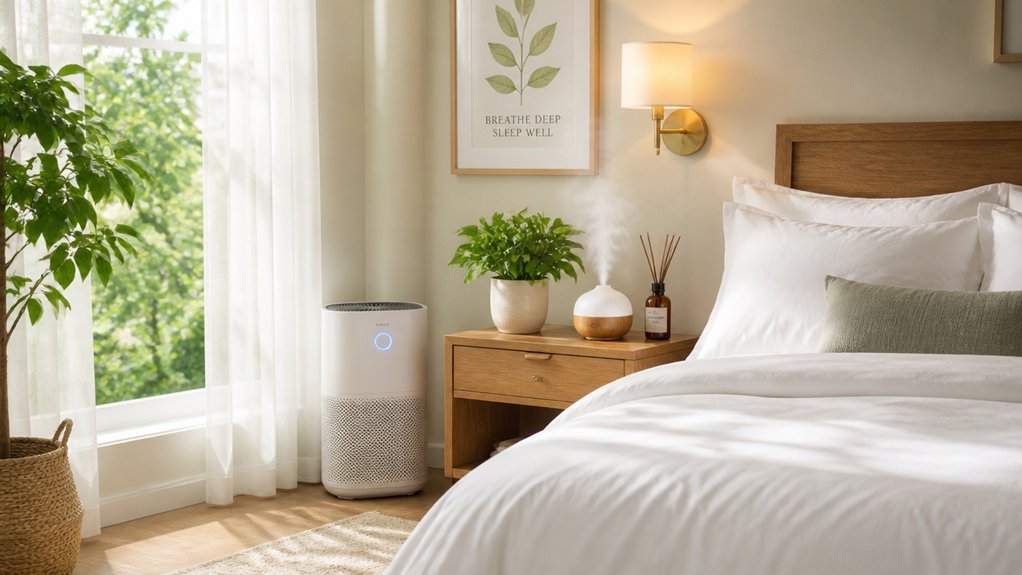
If your bedroom feels stuffy, you can improve the air fast with a few simple changes. Open a window for a few minutes to flush out stale air.
Next, strip the bed and shake out blankets to release trapped dust. Wipe nightstands, shelves, and vents with a damp cloth so you don’t stir particles back up.
Vacuum the floor and under the bed, especially if you have carpet or rugs. Keep pets out of the room for a while, since dander can build up quickly.
Turn on a fan to keep air moving, but aim it away from your face. Finally, avoid strong sprays, candles, and messy clutter that hold dust and odors.
Using an indoor air quality monitor can help you keep track of airborne particles and ensure your room stays fresh and safe. These quick steps can make your room feel fresher tonight.
Choose the Right Bedroom Air Purifier
A good bedroom air purifier can make a big difference, especially if you deal with dust, pet dander, or allergies. You should pick one with a true HEPA filter, quiet operation, and a size matched to your room. Check the CADR rating so it can clean the air efficiently without overworking. Using a purifier with a HEPA filtration ensures that even the smallest allergens are effectively removed from your space.
Open Windows for Fresher Bedroom Air

When outdoor air is clean and the weather allows, opening your bedroom windows can quickly refresh stale indoor air and help reduce buildup from dust, odors, and carbon dioxide. You’ll often feel the room cool down and smell cleaner within minutes.
Try opening windows on opposite sides of your home for cross-ventilation, or crack one window while you sleep if it feels safe and comfortable. Aim for the coolest, least polluted times of day, like early morning or evening. Keep openings modest if noise or insects bother you.
A CO2 monitor can help you determine the best times to ventilate by indicating indoor air quality levels.
- Open windows briefly before bed to swap out stale air
- Use cross-breezes when possible for faster airflow
- Adjust timing to match weather, noise, and comfort
Cut Dust and Allergens at the Source
Because dust and allergens build up fast in bedrooms, you’ll improve air quality most by stopping them at the source. Wash your sheets, pillowcases, and blankets weekly in hot water to remove dust mites and pollen.
Vacuum your mattress, carpet, and baseboards with a HEPA-filter vacuum, and empty the canister outside so particles don’t drift back in. If you have pets, keep them off the bed and brush them regularly to reduce dander.
Store clothes, books, and clutter in closed bins, since open surfaces collect dust quickly. Replace fabric-heavy decor with simpler pieces you can clean easily. If allergies are severe, use allergen-proof covers on your mattress and pillows.
Implementing precision in humidity monitoring ensures you maintain optimal indoor conditions, reducing irritants in the air. These habits lower the amount of irritants you breathe while you sleep.
Choose Low-VOC Bedroom Materials

Once you’ve cut dust and allergens at the source, the next step is to limit chemical pollutants from the materials in your bedroom. Choose low-VOC paint, flooring, and furniture so you’re not breathing in harsh fumes while you sleep.
When you shop, look for third-party labels that verify low emissions and avoid strong odors that signal off-gassing. Natural finishes and solid wood pieces can also help reduce indoor pollution.
- Pick water-based paints and sealants with low chemical emissions.
- Replace pressed-wood furniture with solid wood or verified low-VOC options.
- Air out new items before bringing them into your sleep space.
- Consider using mold-resistant materials in your bedroom to prevent hidden mold growth that can affect air quality.
These choices can make your bedroom feel fresher and help you rest more comfortably each night.
Control Bedroom Humidity
Keeping your bedroom humidity in a healthy range helps prevent mold, dust mites, and that damp feeling that can make air seem stale. Aim for 30% to 50% relative humidity, and check it with an inexpensive hygrometer so you know when conditions drift.
If the air feels muggy, run a dehumidifier, use your bathroom fan after showers, and fix leaks fast. If the air turns dry, especially in winter, add moisture with a humidifier and clean it regularly so it doesn’t spread buildup. You can also keep windows open when outdoor air is mild and dry enough, but close them during humid weather.
Remember to choose a humidifier with easy cleaning features to ensure it stays free of mold and bacteria, maintaining a healthy environment.
Balance matters: too much moisture feeds allergens, while too little can irritate your nose, throat, and skin, making sleep less comfortable.
Keep Pets and Odors Out of the Bedroom
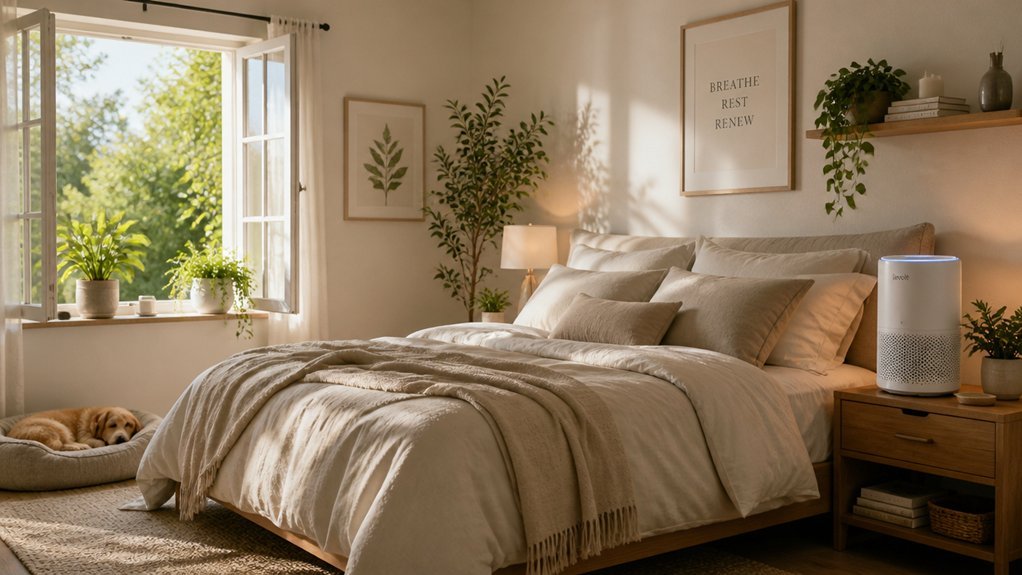
If you let pets sleep in your bedroom, their fur, dander, and tracked-in dirt can quickly worsen air quality, so keep them out of the room when possible and wash bedding often.
Keep pets out of the bedroom when possible, and wash bedding often to reduce fur and dander.
Vacuum carpets, rugs, and upholstered furniture regularly to remove allergens before they circulate. To cut odors, empty trash nightly, avoid scented plug-ins that can irritate you, and let fresh air move through the room whenever weather allows.
If your pet must enter, brush and wipe them down first so they bring in less debris.
Additionally, using a HEPA filter can significantly reduce airborne pet allergens and smoke particles, improving the overall air purity in your bedroom.
- Wash pet bedding weekly
- Use a HEPA air purifier
- Store shoes outside the bedroom
Frequently Asked Questions
How Often Should Bedroom Air Quality Be Tested?
You should test your bedroom air quality at least once a year, and more often if you notice odors, allergies, mold, renovations, pets, or new symptoms. If conditions change, you’ll want to check sooner.
Can Air Quality Affect Snoring or Sleep Apnea?
Yes, poor air quality can worsen your snoring and sleep apnea by irritating your airways, causing congestion, and making breathing harder. You may sleep more poorly, snore louder, and experience more apnea episodes.
Do Ceiling Fans Help or Hurt Bedroom Air Quality?
Ceiling fans usually help your bedroom air quality by circulating air and reducing stuffiness, but they can also stir up dust and allergens if you don’t clean them regularly. Use them with good ventilation for best results.
What Plants Improve Bedroom Air at Night?
Snake plants, spider plants, and peace lilies can improve your bedroom air slightly at night. You’ll get modest benefits, so still ventilate well, avoid overwatering, and clean leaves to keep air fresher.
Are Essential Oils Safe for Bedroom Air Quality?
Not always; you should use essential oils cautiously. Some can irritate your lungs, trigger allergies, or bother pets. If you diffuse them, keep sessions brief, ventilate well, and choose mild options sparingly.
In Summary
Improving your bedroom air quality can make a big difference in how well you sleep. Start with quick wins like opening windows, reducing dust, and controlling humidity. Then choose low-VOC materials, keep pets and odors out, and add an air purifier if you need extra help. Small changes add up fast, helping you breathe easier and wake up more refreshed. Better air means better rest, and better rest helps you feel your best.