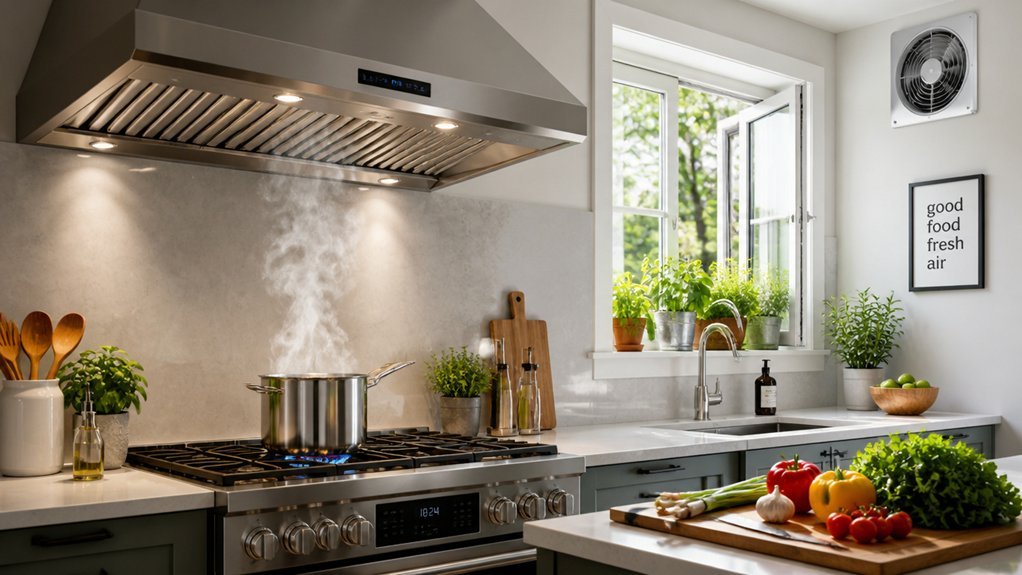
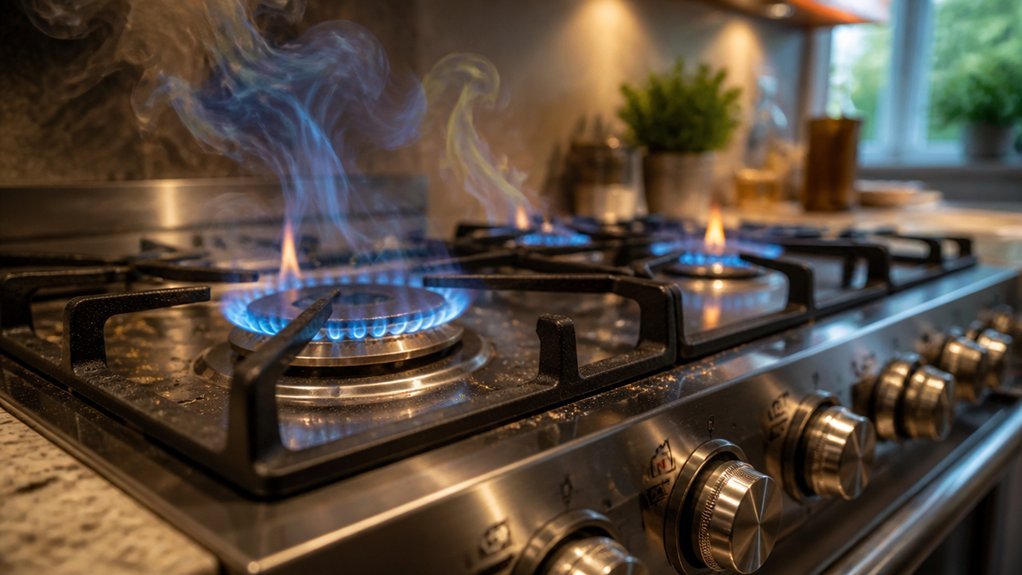
Gas stoves can expose you to nitrogen dioxide, carbon monoxide, formaldehyde, fine particles, lingering odors, and excess humidity that lowers indoor air quality. These pollutants can irritate your lungs, trigger asthma, and cause headaches or dizziness. You can reduce the risk by using a range hood that vents outside, opening windows, running fans, cooking on low heat, keeping burners clean, and maintaining your stove. Keep going, and you’ll see how to cut exposure even more.
Nitrogen Dioxide and Other Gas Stove Pollutants
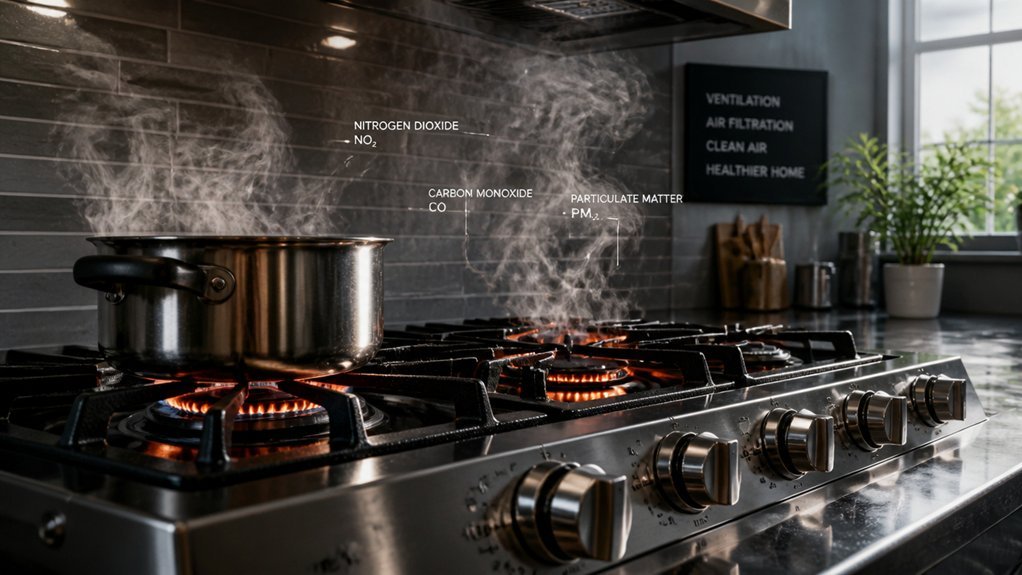
When you cook on a gas stove, it doesn’t just produce heat and flame—it also releases indoor air pollutants, especially nitrogen dioxide (NO2). You’ll also encounter carbon monoxide, formaldehyde, and fine particulate matter, all of which can build up quickly in kitchen air.
These pollutants come from the combustion of natural gas or propane, and they can rise even when you use low heat. Poor ventilation lets them linger longer, while strong burners, long cooking times, and multiple pots increase emissions. High-precision sensors in air quality monitors can help detect these contaminants early, so you can take action before levels become hazardous.
You can reduce exposure by using your range hood, opening windows, and keeping burners clean and well adjusted. If you can, choose back burners and turn on ventilation before you start cooking, not after smoke or odor appears.
What Gas Stove Emissions Can Do to Your Health
When you use a gas stove, nitrogen dioxide can irritate your lungs and make breathing harder, especially if you have asthma.
You can also be exposed to carbon monoxide, which can cause headaches, dizziness, and other serious problems if levels build up indoors. Over time, these emissions can leave your eyes, nose, and throat irritated and make your home’s air less healthy to breathe.
Using sensor detection types can help monitor and reduce exposure to dangerous gases in your home.
Nitrogen Dioxide Effects
Nitrogen dioxide is one of the main pollutants gas stoves release indoors, and it can irritate your airways even at levels you may not notice. When you breathe it in, you may feel throat irritation, coughing, wheezing, or chest tightness, especially if you have asthma or allergies.
Long-term exposure can make your lungs more sensitive and may worsen symptoms during cooking or shortly after. Children, older adults, and people with existing respiratory problems can be more affected because their airways react faster.
Using proper ventilation can significantly reduce indoor nitrogen dioxide levels and improve air quality during cooking. You can lower your exposure by using a strong exhaust hood that vents outdoors, opening windows, and turning on fans while you cook. Limiting burner use and keeping flames low also helps reduce the amount of nitrogen dioxide in your kitchen.
Carbon Monoxide Exposure
Carbon monoxide is another gas stove pollutant that can build up indoors, especially if burners run poorly or your kitchen lacks ventilation. You can’t see or smell it, so you may not notice exposure until you feel unwell. In higher amounts, it can reduce the oxygen your body gets and leave you foggy or weak. Using a CO2 monitor can help you keep track of indoor air quality and detect potential issues early.
| Situation | What it means |
|---|---|
| Blue, steady flame | Better combustion, lower CO risk |
| Yellow, lazy flame | Possible incomplete burning |
| Vent fan on | Helps move pollutants outside |
If you suspect problems, check your stove’s flames, use your exhaust fan, and open windows when you cook. Get any gas appliance inspected if it seems off, because prevention is simpler than dealing with exposure later.
Respiratory Irritation Risks
Even at low levels, gas stove emissions can irritate your airways and make your home feel harder to breathe in. You may notice coughing, throat burning, watery eyes, or a tight chest, especially if you already have asthma or allergies.
Nitrogen dioxide and fine particles can inflame the lining of your nose, throat, and lungs, making breathing feel strained during cooking and for hours afterward. Children, older adults, and anyone with sensitive lungs can react more quickly.
If you smell gas, see smoke, or cook in a poorly ventilated kitchen, your exposure rises. You can lower the risk by running a vent that exhausts outside, opening windows, and keeping burners clean.
Using a digital hygrometer can help monitor indoor humidity levels and reduce the formation of pollutants indoors.
If symptoms keep coming back, talk to a healthcare professional.
Why Kitchen Ventilation Matters
Good kitchen ventilation matters because it helps remove pollutants that gas stoves release every time you cook. When you breathe cleaner air, you lower the buildup of nitrogen dioxide, carbon monoxide, and fine particles in your home. Ventilation also helps heat, smoke, and odors escape faster, so your kitchen feels safer and more more comfortable. A well-ventilated space can also prevent air quality degradation, ensuring the indoor environment stays healthier for you and your family. Without good airflow, contaminants can linger and spread into nearby rooms, raising your exposure over time. That’s why you should treat kitchen ventilation as a core part of indoor air health, not just a convenience.
How to Reduce Gas Stove Exposure
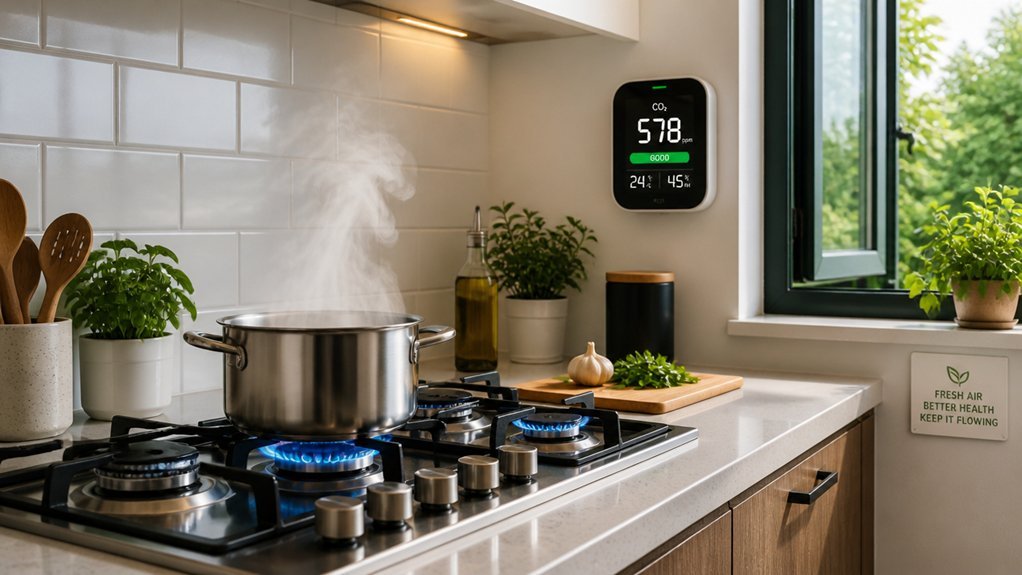
You can reduce gas stove exposure by combining better ventilation with smarter cooking habits. Turn on your range hood before you light a burner, and keep it running until the air clears. If your hood vents outdoors, use it every time you cook. Open windows when weather allows, and create cross-breezes to move fumes out faster.
Keep burners clean and adjust flames so they stay blue, steady, and efficient. Cover pots to shorten cooking time and limit emissions. Simmer instead of boiling hard when you can. Don’t let food burn or smoke. If a burner won’t light quickly, shut off the gas and try again.
When you’re not cooking, turn the stove off completely and check that knobs and pilots aren’t leaking.
Best Ways to Cut Kitchen Air Pollution
You can cut kitchen air pollution by improving ventilation every time you cook. Run your range hood, open windows when you can, and use exhaust fans to move smoke and fumes outside. A small dehumidifier can also help reduce excess moisture that traps pollutants in the air. You can also choose cleaner cooking methods, like using lower heat, lids, or electric appliances, to keep pollutants down.
Ventilation Strategies
When cooking with a gas stove, the fastest way to reduce exposure is to remove pollutants at the source with strong, well-timed ventilation. Turn on your range hood before you light the burner, and keep it running until the air clears.
Use the hood’s highest effective setting, but make sure it vents outdoors, not back into the kitchen. If you don’t have a hood, open windows on opposite sides of the room to create cross-breezes. Place a fan near a window to push polluted air out.
Avoid blocking airflow with lids or clutter around the cooktop. Run the ventilation whenever you sear, boil, or broil, since those tasks release more fumes. Good ventilation won’t eliminate all exposure, but it can sharply lower the pollutants you breathe.
Cleaner Cooking Methods
Even with strong ventilation, the cleanest way to lower kitchen air pollution is to cook in ways that create fewer fumes in the first place. You can switch to induction or electric appliances, which don’t burn gas and won’t release nitrogen dioxide or carbon monoxide indoors.
When you do use a stove, choose back burners, keep flames low, and match the pan size to the burner so you don’t waste fuel. Cover pots to shorten cooking time and reduce steam and smoke. You can also boil, steam, bake, or use a slow cooker more often instead of charring or high-heat frying.
Keep pots from boiling over, and clean burners so they run efficiently. These small changes cut emissions, protect your air, and make cooking safer daily.
When to Replace a Gas Stove
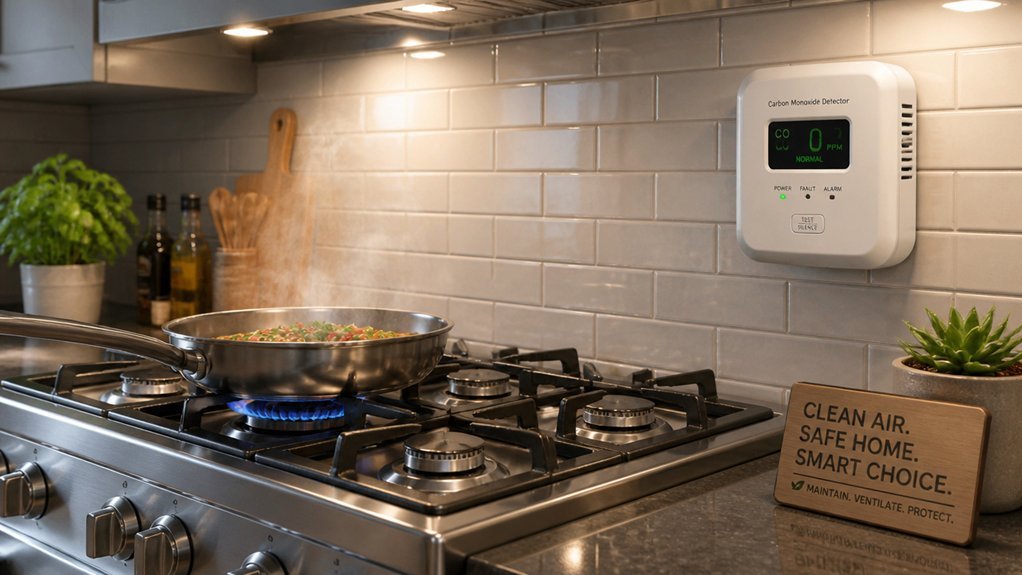
A gas stove may be ready for replacement sooner than you think if it shows persistent issues like uneven flames, frequent ignition problems, or a damaged burner that no longer heats efficiently.
You shouldn’t keep repairing a stove that leaks gas, smells odd, or leaves soot on cookware. Those signs can mean unsafe combustion and rising indoor air pollution.
Don’t keep repairing a stove that leaks gas, smells odd, or leaves soot—those signs can mean unsafe combustion.
Replace it when repairs cost too much, parts are hard to find, or performance keeps slipping.
- You deserve safer air for your family.
- You can stop worrying about hidden leaks.
- You may finally cook without frustration.
- You’ll feel relief knowing your kitchen’s healthier.
If your stove’s old, inefficient, or unreliable, upgrading can protect your home and reduce daily stress.
Frequently Asked Questions
Can Gas Stoves Affect Indoor Air Quality in Other Rooms?
Yes, gas stoves can affect air quality in other rooms because fumes and fine particles spread through your home’s air. You’ll reduce exposure by using ventilation, closing doors, and maintaining good airflow throughout.
Do Gas Stoves Emit Pollutants When Turned Off?
Yes, they can. You may still get small leaks of methane, nitrogen dioxide, or other gases from fittings and pilot lights when the stove’s off, especially if connections aren’t sealed well or maintained properly.
Are Certain Cookware Materials Safer With Gas Stoves?
Yes, you’ll do best with stainless steel, cast iron, or enameled cookware, which won’t react with heat or fumes. You should avoid scratched nonstick pans and choose well-maintained, fully coated pieces instead.
How Do Gas Stove Risks Compare With Electric Stoves?
You’ll usually face more indoor air pollution with gas stoves because they release nitrogen dioxide and fine particles, while electric stoves don’t. You can reduce risk by improving ventilation, using exhaust fans, and maintaining appliances.
Can Houseplants Help Reduce Gas Stove Pollution?
Not much—you shouldn’t rely on houseplants to meaningfully reduce gas stove pollution. You’ll get far better results by using a vented range hood, opening windows, and keeping your burners clean and well maintained.
In Summary
Gas stoves can add nitrogen dioxide, fine particles, and other pollutants to your kitchen air, but you can lower your exposure with simple steps. Turn on a vent that exhausts outside, open windows when you cook, use back burners, and choose lower-heat methods when you can. If your stove is old or poorly vented, consider replacing it. Small changes can help protect your indoor air and support your health every day.