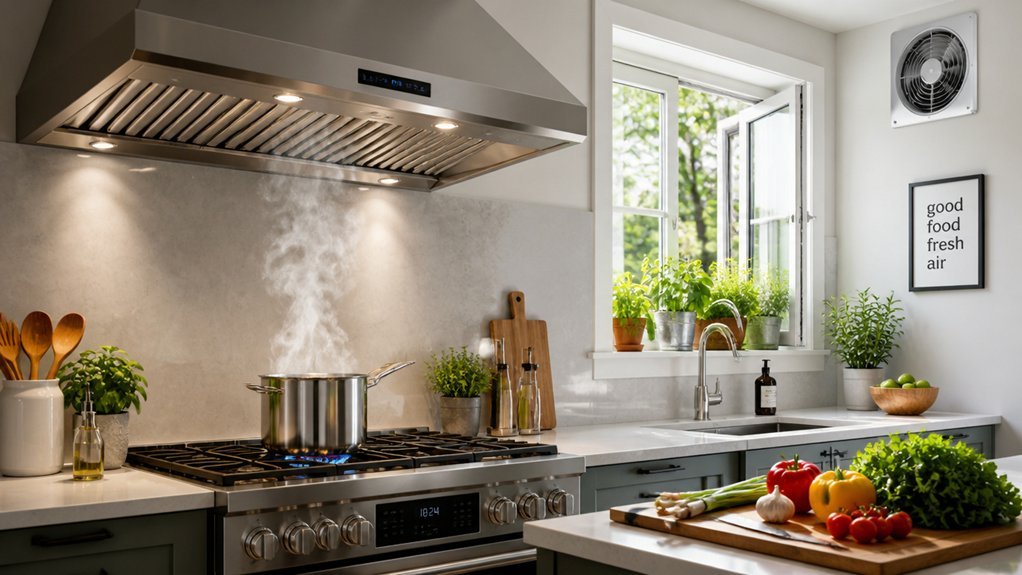
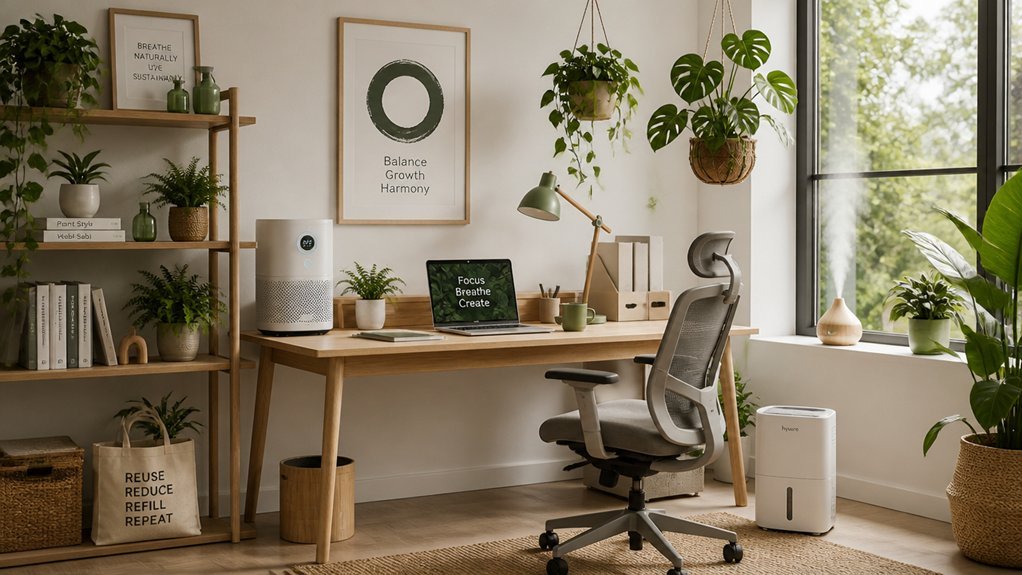
You can improve home office air quality by opening windows for cross-breezes, using fans, and keeping vents clear so fresh air moves through the room. Add a true HEPA air purifier sized for your space, and replace its filters on schedule. Keep humidity between 30% and 50%, choose low-VOC paints and furnishings, and dust often. Houseplants can help too. If you keep going, you’ll pick up a few more easy fixes.
Improve Home Office Air Quality With Better Ventilation
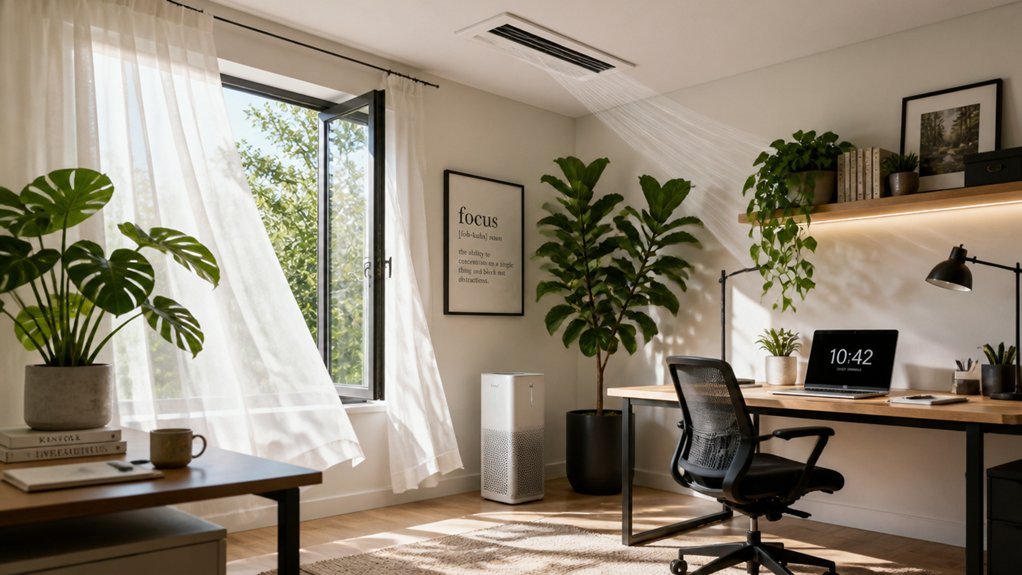
Better ventilation can quickly improve the air in your home office by replacing stale indoor air with fresh outdoor air. You can open windows on opposite sides of the room to create a cross-breeze that helps remove stuffy air and bring in cleaner air.
If weather or noise limits that option, run your exhaust fan or use a small desk fan to keep air moving. You should also check that vents and returns aren’t blocked by furniture, curtains, or boxes, since trapped airflow can make the room feel heavy.
When you ventilate regularly, you reduce lingering odors and help your workspace feel fresher, lighter, and more comfortable throughout the day. Try airing out the room before you start work and during breaks for best results. Using a high-quality air quality monitor can help you keep track of indoor pollutants and ensure your ventilation efforts are effective.
Choose the Right Air Purifier for Dust
When you choose an air purifier for dust, look for true HEPA filtration so it can trap fine particles effectively.
Make sure the unit matches your home office size, since a purifier that’s too small won’t clean the air well. The right fit helps you reduce dust without wasting energy or money. Additionally, selecting a model with adjustable fan speeds and filter maintenance features ensures consistent performance and longevity of the purifier.
HEPA Filtration Efficiency
To tackle dust effectively in your home office, choose an air purifier with a true HEPA filter, since it can capture at least 99.97% of particles as small as 0.3 microns. You’ll notice cleaner surfaces and easier breathing when the filter traps fine dust, pollen, and lint before they recirculate. Compare filters like this:
| Filter type | Particle capture | Best use |
|---|---|---|
| True HEPA | 99.97% | Dust-heavy spaces |
| HEPA-like | Varies | Light cleanup |
| Pre-filter | Large particles | Extends HEPA life |
Check the seal, too; air can leak around a loose fit and weaken performance. Replace the filter on schedule so efficiency stays high. With consistent maintenance, you’ll keep your workspace fresher and reduce the dust that settles on your desk, keyboard, and shelves. Regular filter checks align with filter replacement recommendations to maintain optimal air quality.
Room Size Matching
Even the best HEPA purifier won’t control dust well if it’s too small for your office, so match the unit to your room size before you buy. Check the purifier’s recommended square footage and compare it with your office dimensions, not just the label. If your room is open to a hallway, choose a higher-capacity model to handle the extra air.
- Measure length and width
- Calculate square footage
- Match CADR to room size
- Add capacity for open doors
- Place it near dust sources
When you size it right, the purifier can circulate air often enough to trap more dust, pollen, and pet dander. That means cleaner air, less buildup on surfaces, and fewer irritants while you work. Incorporating a high-accuracy hygrometer into your space can help monitor humidity levels that influence dust collection and overall air quality.
Reduce Off-Gassing From Furniture and Supplies
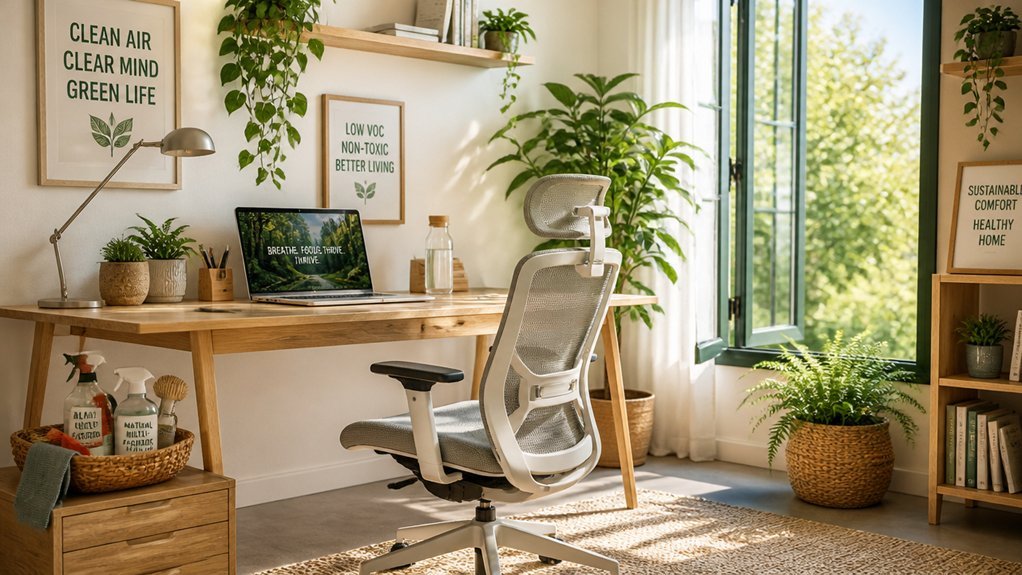
You can cut down on off-gassing by choosing low-VOC furniture, paint, and office supplies whenever you can. When you bring in new items, open windows and run fans to help clear the air faster. These small choices can make your home office feel cleaner and easier to breathe in. Using an air purifier or humidifier with filter-free or easy-to-clean features from the best humidifiers for bedrooms can also help maintain better air quality.
Choose Low-VOC Materials
Low-VOC materials can make a big difference in your home office because furniture, paint, adhesives, and even some supplies can slowly release chemicals into the air. You can cut that exposure by choosing certified low-emission products whenever you buy desks, shelves, rugs, or wall finishes. Look for labels that verify reduced VOC content and skip strong-smelling items when possible. Using sensor accuracy to monitor indoor air quality can help you identify and address off-gassing from these materials more effectively.
- Pick solid wood with water-based finishes.
- Use low-VOC paint on walls and trim.
- Choose water-based glues and sealants.
- Buy printers and markers with low emissions.
- Replace old particleboard pieces when you can.
These choices help you keep the air cleaner, so you can work with fewer irritants and a more comfortable space every day.
Ventilate New Furniture
Fresh off the factory floor, new furniture and office supplies can release fumes for days or even weeks, so give them time to air out before bringing them into your workspace. Unbox desks, chairs, shelves, and accessories in a garage, porch, or spare room with strong airflow.
If you can, keep windows open and run a fan to speed up off-gassing. Wipe surfaces with a damp cloth before setup, since dust and residues can linger on packaging. Avoid sealing items in closed rooms right away, because trapped VOCs can build up and irritate your eyes, nose, and throat.
When possible, buy pieces early so they can ventilate longer before you use them. This simple step helps you breathe easier and keeps your home office fresher.
Keep Home Office Humidity in the Healthy Range
Keeping your home office humidity in the healthy range helps you breathe easier and protects both your health and your workspace. Aim for 30% to 50% humidity so dry air doesn’t irritate your throat or skin, and excess moisture doesn’t encourage mold or stale odors.
Use a hygrometer to check levels, then adjust with a humidifier or dehumidifier as needed. Keep windows cracked when weather allows, and fix leaks fast to prevent dampness. Clean devices regularly so they don’t spread buildup. For larger spaces or persistent humidity issues, consider crawl space dehumidifiers, which can effectively control moisture levels in difficult areas.
- Track humidity weekly
- Run a humidifier in winter
- Use a dehumidifier in muggy weather
- Ventilate after showers nearby
- Repair leaks and damp spots
Add Houseplants That Help Freshen the Air
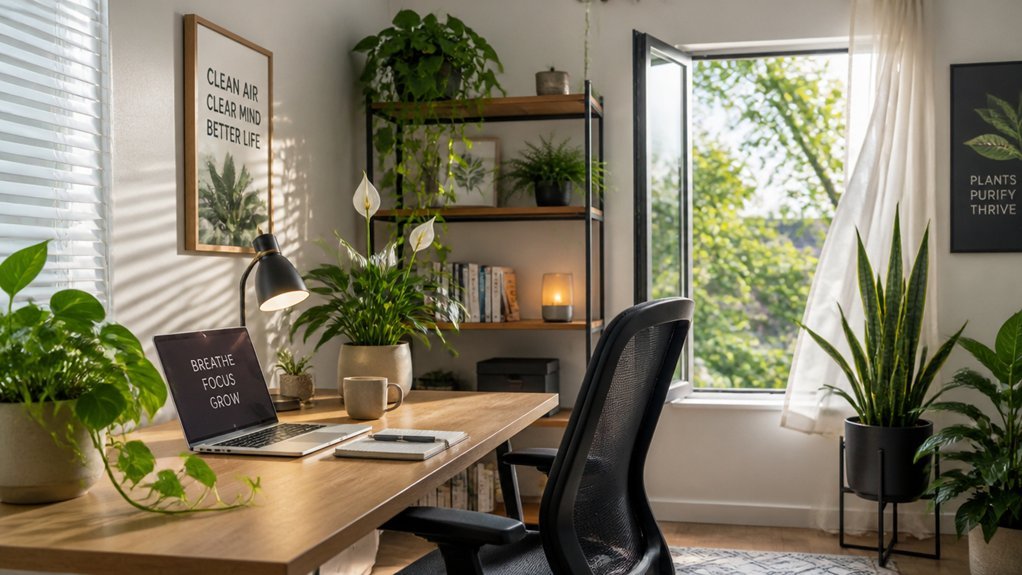
Bringing a few well-chosen houseplants into your home office can help improve air quality and make the space feel calmer.
You can choose hardy options like snake plants, pothos, spider plants, or peace lilies, since they adapt well to indoor conditions and don’t need constant attention. Place them near your desk, on a shelf, or by a window where they’ll get the light they need. Water them only when the soil starts to dry, and trim yellow leaves so they stay healthy.
Plants won’t replace good ventilation, but they can add natural beauty and may help reduce the stale feel of a closed room. Plus, caring for them gives you a quick, rejuvenating break from screen time and helps you reset.
Clean Dust and Replace Filters on Schedule
Dust builds up fast in a home office, so regular cleaning can make a noticeable difference in air quality. You can reduce irritation and stale odors by wiping surfaces, vacuuming carpets, and dusting shelves every week.
Don’t forget vents, fan blades, and under your desk, where debris hides and circulates. Replace HVAC and purifier filters on schedule so they keep trapping particles instead of pushing them back into the room.
- Set a weekly dusting day
- Vacuum with a HEPA filter
- Clean keyboard and monitor edges
- Check air filters monthly
- Follow replacement dates exactly
If you keep a simple routine, you’ll breathe easier and spend less time fighting dust.
Use Low-VOC Paints and Materials

When you paint or update your home office, choose low-VOC paints, sealants, and furniture materials to limit chemical fumes that can linger in the air. You’ll cut exposure to irritating compounds and make the room feel cleaner right away. Look for labels that clearly list low or zero VOC content, and skip products with strong odor or vague ingredient claims.
| Material | Better Choice |
|---|---|
| Paint | Low-VOC or zero-VOC |
| Sealant | Water-based, low-VOC |
| Furniture | Solid wood or certified composite |
| Adhesives | Low-emission formulas |
You can also ask suppliers for emission certifications before you buy. Small choices add up fast, and they help you build a healthier workspace without sacrificing style or durability.
Take Natural Light and Fresh Air Breaks
Even with low-VOC materials, your home office can still feel stale if you stay inside it all day. Step outside for a few minutes to reset your lungs and mind. Open a window when weather and outdoor air quality allow, so fresh air can circulate through the room.
Even with low-VOC materials, your home office can feel stale—step outside and let fresh air in.
Sunlight also helps you feel alert, so move your desk near a window if you can. Short breaks reduce stuffiness and give indoor pollutants time to dissipate.
- Crack a window during work blocks.
- Take a quick balcony or porch break.
- Sit near natural light when possible.
- Air out the room between meetings.
- Check local air quality before opening up.
Frequently Asked Questions
How Often Should I Test Indoor Air Quality in My Home Office?
You should test your home office air quality at least twice a year, and more often if you notice odors, allergy symptoms, or renovations. Regular checks help you catch problems early and stay healthier.
What Indoor Plants Are Safest for Pets and Allergies?
You should choose spider plants, Boston ferns, areca palms, and parlor palms; they’re generally safer for pets and many allergy sufferers. Avoid lilies, pothos, and snake plants, since they can irritate or harm animals.
Can an Air Quality Monitor Detect Carbon Monoxide or Radon?
Yes, you can, but only if your monitor includes those sensors. Most air quality monitors don’t detect carbon monoxide or radon, so you’ll need dedicated CO and radon detectors for accurate protection.
How Do I Reduce Printer and Electronics Fumes in My Office?
You can reduce printer and electronics fumes by improving ventilation, moving devices farther away, using low-emission equipment, and keeping printers maintained. Don’t run them continuously, and place a HEPA/activated-carbon air purifier nearby for extra protection.
Are Essential Oil Diffusers Safe to Use While Working?
Yes, you can use them, but you should be cautious. You may irritate your nose, lungs, or allergies, and they can bother pets. Try unscented air cleaning first, or use very lightly and ventilate well.
In Summary
By improving ventilation, choosing the right air purifier, and reducing off-gassing, you can make your home office feel fresher and healthier. Keep humidity in check, add a few helpful houseplants, and stay on top of dusting and filter changes. When you use low-VOC materials and take breaks for natural light and fresh air, you support better comfort and focus. Small changes add up, so start with one step today.