
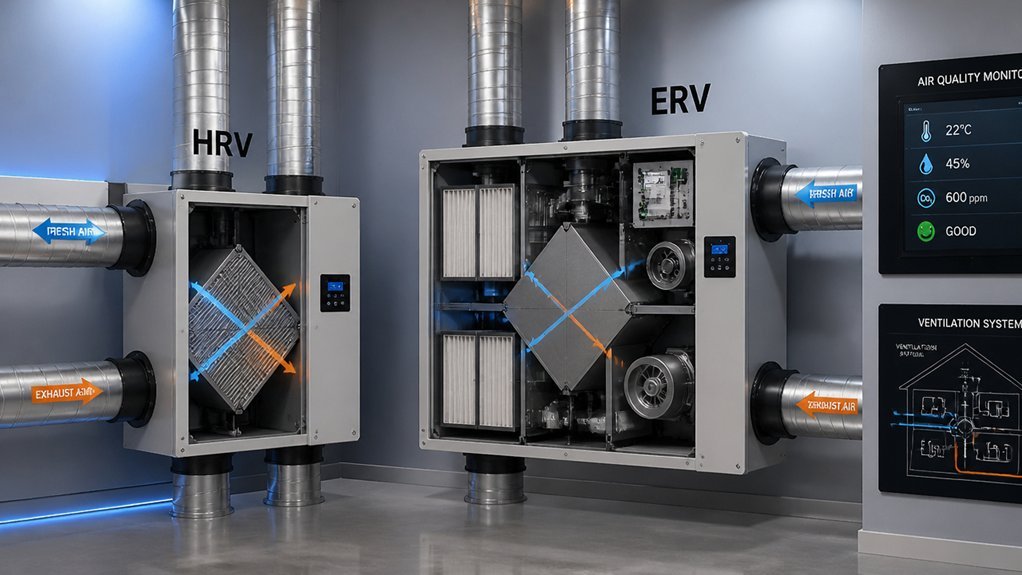
An HRV and an ERV both bring in fresh air while exhausting stale air, but they differ in six key ways. HRVs transfer heat only, while ERVs transfer heat and some moisture. HRVs suit cold, dry climates; ERVs work better in hot, humid ones. HRVs help cut heating loss, while ERVs ease cooling loads. Both improve air quality, but ERVs also balance humidity, so your comfort may depend on your climate and home. There’s more to unpack ahead.
HRV vs. ERV: What’s the Difference?
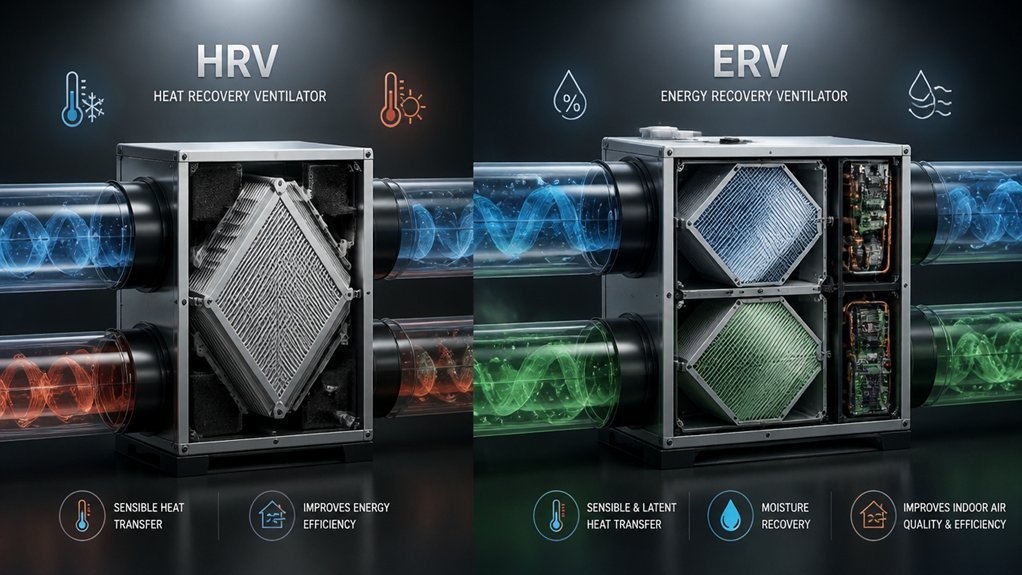
If you’re comparing HRV and ERV systems, the main difference is simple: an HRV, or heat recovery ventilator, transfers heat between incoming and outgoing air, while an ERV, or energy recovery ventilator, transfers both heat and some moisture. You choose an HRV when you want strong fresh-air exchange without adding extra humidity control. You choose an ERV when you need better balance in homes where indoor moisture can swing higher or lower through the seasons. Both systems improve indoor air quality by bringing in outdoor air and exhausting stale air, but they suit different comfort needs. Your climate, home design, and ventilation goals will help you decide which option fits best. In either case, you get a more efficient alternative to opening windows all the time. Incorporating advanced sensors can further enhance the effectiveness of ventilation systems by providing real-time air quality data.
How HRV and ERV Handle Heat and Moisture
As air passes through an HRV, it transfers heat from the outgoing air to the incoming fresh air, helping reduce how much energy it takes to condition that air. You still lose very little indoor warmth, but the system doesn’t move much moisture.
An ERV does both jobs differently: it exchanges heat and also transfers some humidity between the air streams, so you keep more balanced indoor air. That means you can choose based on how much control you want over comfort and moisture.
Furthermore, ERVs often include pressurization and pressure/altitude compensation features to ensure accurate sensor readings and reliable performance in various environments.
- HRV recovers heat.
- HRV moves minimal moisture.
- ERV recovers heat and moisture.
- ERV helps stabilize indoor humidity.
Which Climate Fits HRV or ERV Best?
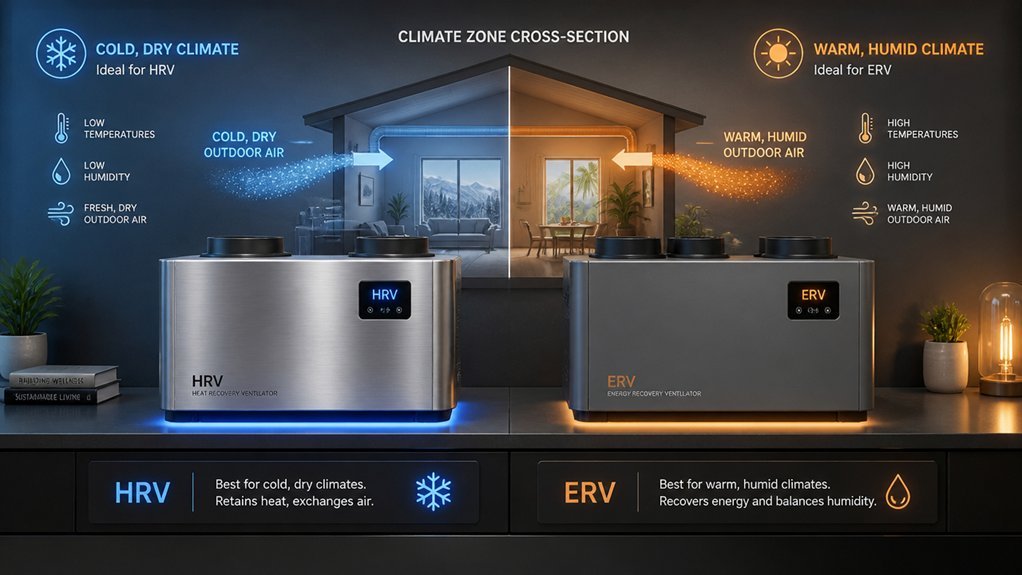
Which system suits your climate best? If you live in a cold, dry climate, you’ll usually prefer an HRV because it exchanges stale indoor air for fresh outdoor air without adding much moisture. That helps keep your home from feeling damp in winter.
If you live where summers are hot, humid, or you battle sticky indoor air, an ERV often fits better. It transfers some moisture along with heat, so it can help reduce that muggy feeling when you ventilate.
You should also think about your seasons, not just your region. Mixed climates can work with either system, but your comfort goals matter. When you want to manage humidity more directly, choose the option that matches your local weather patterns and daily indoor conditions.
Additionally, understanding the differences in ventilation efficiency and how each system interacts with your specific climate can help you make a more informed decision.
HRV vs. ERV Energy Savings
When it comes to energy savings, both HRVs and ERVs can lower your heating and cooling costs by recovering energy from outgoing air before it leaves your home.
You’ll usually see the biggest savings when your system runs continuously and matches your climate and home tightness. An HRV often performs best in cold seasons, while an ERV can reduce the load on your air conditioner in humid weather.
To compare them effectively, focus on:
- Your local heating demand
- Your cooling demand
- Your home’s airtightness
- Your operating schedule
If you install the right unit, you’ll waste less conditioned air and rely less on your furnace or AC. Additionally, understanding the airflow capacity of your ventilation system ensures optimal efficiency and performance. Still, the exact savings depend on installation quality, maintenance, and how often you ventilate.
How HRV and ERV Affect Indoor Air Quality
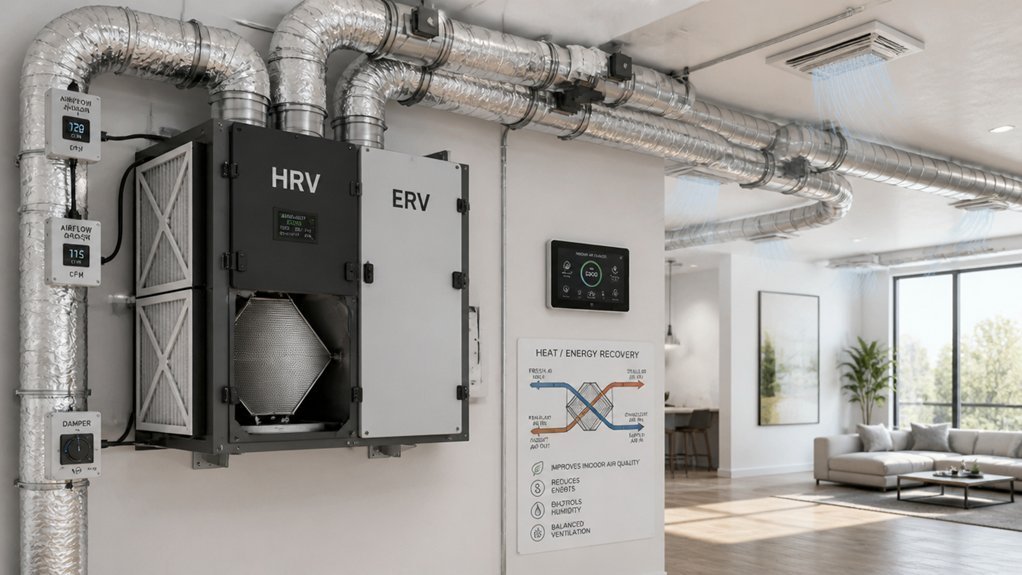
Energy savings matter, but indoor air quality is just as important because both systems constantly exchange stale indoor air with fresh outdoor air. You’ll notice that this continuous ventilation helps dilute carbon dioxide, odors, and airborne pollutants from cooking, cleaning, and daily living.
An HRV removes indoor air and brings in outdoor air while transferring heat, so it can improve freshness without wasting much energy. An ERV does the same, but it also exchanges some moisture, which can help you keep indoor humidity more stable. That matters if your home feels too dry in winter or too damp in summer. HEPA filtration is often used in conjunction with these systems to further improve air purity by trapping pet hair, dander, and allergens.
Either system can reduce stuffiness and support a healthier indoor environment when it runs properly and gets regular maintenance.
How to Choose HRV or ERV for Your Home
To choose between an HRV and an ERV, start with your climate and your home’s humidity needs.
If you live in a cold, dry region, an HRV can recover heat while helping you dump excess moisture. If you face hot, humid weather, an ERV can transfer both heat and some moisture, easing the load on your cooling system.
Ask yourself: does your home feel too dry in winter or too damp in summer? Then weigh these factors:
- Local climate
- Indoor humidity
- Energy bills
- Existing HVAC setup
You should also consider humidity management to maintain a healthy indoor environment. If you’re unsure, get a load calculation and ask a qualified installer which system fits your home best.
Frequently Asked Questions
How Often Do HRV and ERV Filters Need Replacement?
You should replace HRV and ERV filters every 3 to 6 months, though you may need to swap them sooner if you run the system often, have pets, or notice reduced airflow or dust buildup.
Can HRV and ERV Systems Be Installed in Existing Homes?
Yes, you can install HRV and ERV systems in existing homes, and you’ll often retrofit them into attics, basements, or utility rooms. You may need ductwork adjustments, but installers can usually fit them efficiently.
Do HRV and ERV Units Require Professional Maintenance?
Yes, you should schedule professional maintenance for HRV and ERV units. You can clean filters yourself, but technicians inspect fans, ducts, and cores, helping your system run efficiently, quietly, and reliably over time.
How Noisy Are HRV and ERV Ventilation Systems?
They’re usually quiet, but you’ll hear a low hum or airflow noise, especially on higher speeds. Proper installation, clean filters, and insulated ducts help keep them quieter, so you won’t notice much during daily use.
What Size HRV or ERV Unit Does My Home Need?
You need an HRV or ERV sized for your home’s square footage, number of bedrooms, and occupancy. Calculate airflow in CFM, then choose a unit that meets your required ventilation rate with some extra capacity.
In Summary
Choosing between an HRV and an ERV comes down to your home and climate. If you want to bring in fresh air while managing heat, moisture, and energy use, both systems can help. An HRV works well in colder, drier areas, while an ERV is often better where humidity matters. Think about your comfort, indoor air quality, and local weather, then pick the system that fits your needs best.