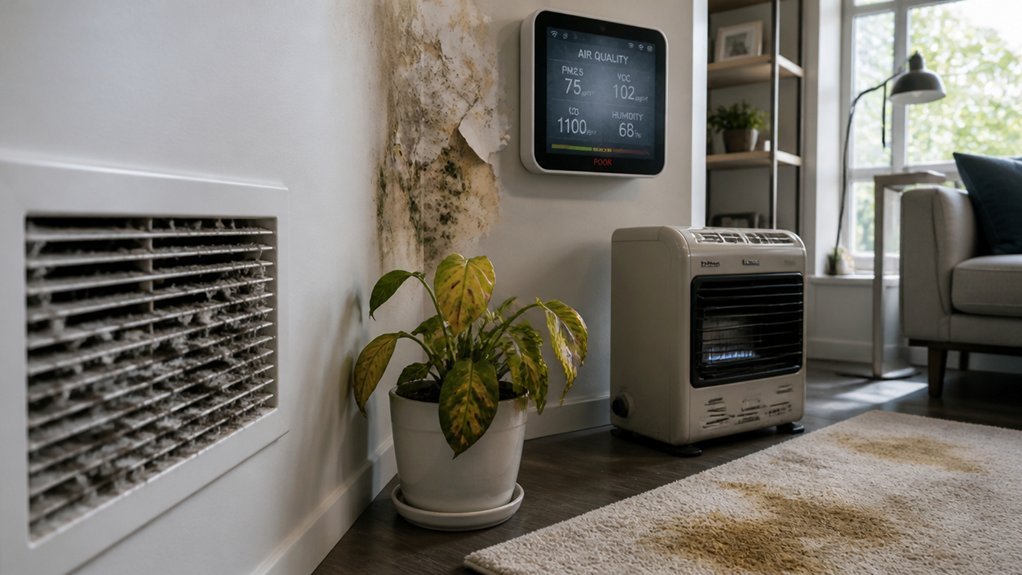
Newly renovated homes can hide six indoor air quality problems you’ll want to watch for: dust from sanding and demolition, VOCs from paint and adhesives, hidden mold from trapped moisture, lingering odors from chemicals, airflow issues from blocked vents or HVAC changes, and old contaminants like lead or asbestos in older materials. You may notice coughing, headaches, eye irritation, or stuffy rooms. If you keep going, you’ll see how to spot each problem and fix it.
Why Renovations Hurt Indoor Air Quality
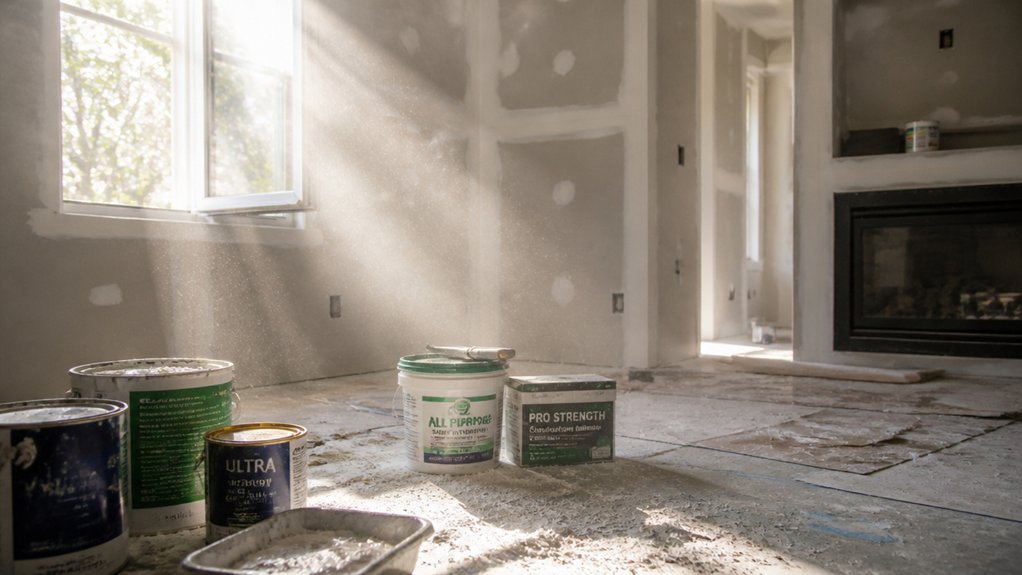
Renovations can quickly worsen indoor air quality because they stir up dust, release chemical fumes, and disturb hidden contaminants in your home. When you sand walls, tear out flooring, or cut wood, you release tiny particles that stay airborne and settle on surfaces.
Fresh paint, sealants, adhesives, and new cabinetry can off-gas volatile compounds for days or weeks, and you breathe them in without noticing. Older homes may also contain lead dust, asbestos fibers, or mold spores that construction can expose.
If you block vents or run tools indoors, you can trap pollutants and reduce fresh airflow. You need to control these sources early, or every upgrade can leave your home feeling less healthy than before. Additionally, understanding HEPA filtration can help you better remove airborne particles and improve indoor air quality during and after renovations.
Signs of Poor Indoor Air Quality After Remodeling
After the work wraps up, poor indoor air quality often shows up in ways you can feel and smell right away. You might notice:
| Sign | What you may feel |
|---|---|
| Stale odors | The air smells harsh or chemical-like |
| Coughing | Your throat gets scratchy indoors |
| Headaches | You feel pressure or fogginess |
| Eye irritation | Your eyes burn or water |
You may also feel unusually tired, congested, or short of breath after spending time inside. Dust that keeps returning, lingering smells, and stuffy rooms all point to trouble. If symptoms ease when you leave home and return when you come back, your indoor air likely needs attention. Pay close attention after painting, flooring, cabinetry, or drywall work, since these projects often leave behind the clearest warning signs. Being aware of air quality monitoring options can help you track and address these issues more effectively.
How VOCs Affect New Renovation Air
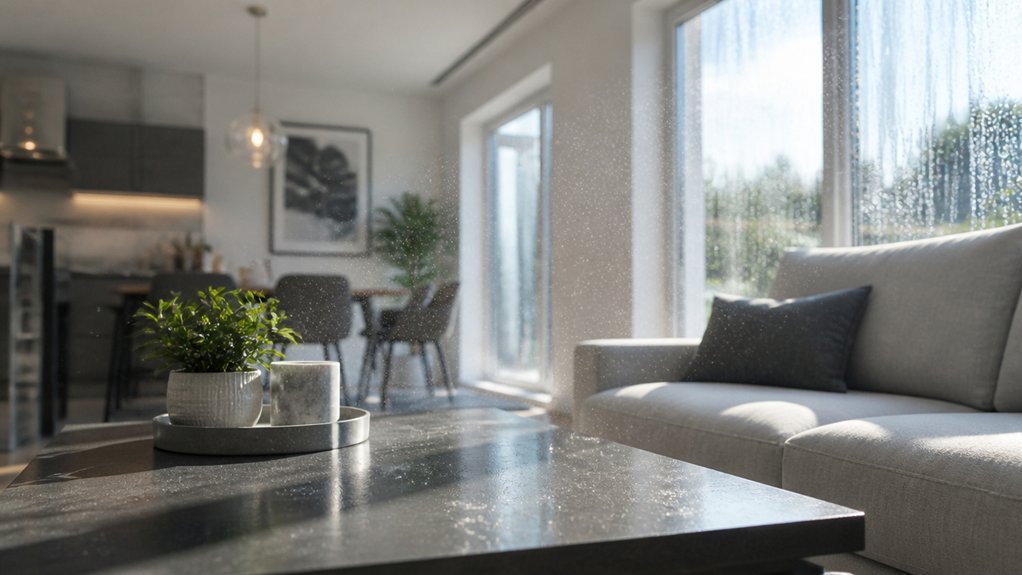
Volatile organic compounds, or VOCs, often build up in newly renovated spaces because fresh paint, adhesives, sealants, flooring, and cabinetry can keep releasing gases into the air for weeks or even months. You may notice headaches, eye irritation, throat discomfort, dizziness, or a chemical smell that lingers after contractors leave.
These emissions can also make your home feel stuffy and less comfortable, especially when windows stay closed and ventilation is limited. You lower your exposure by airing out rooms, running exhaust fans, and choosing low-VOC products during future projects. If you’re sensitive, spend less time in freshly finished rooms until odors fade.
Using a CO2 monitor can help you track indoor air quality levels and ensure proper ventilation is maintained. Good airflow helps clear VOCs faster and supports healthier indoor air after remodeling.
Common Dust, Mold, and Moisture Risks
Even when chemical odors start to fade, renovation can still leave behind dust, hidden moisture, and mold-friendly conditions. You may find fine drywall dust on shelves, vents, and floors, and it can keep irritating your eyes, nose, and throat long after the work ends.
Hidden leaks, damp insulation, and wet subfloors can also trap moisture where you can’t easily see it. When those spots stay humid, mold can start growing behind walls, under cabinets, or around trim. You should inspect renovated areas for staining, warping, soft spots, and musty odors.
If you notice condensation or lingering dampness, dry the area quickly and fix the source. Cleaning often, using a HEPA vacuum, and controlling humidity help reduce these risks and protect your indoor air.
How HVAC Changes Spread Pollutants
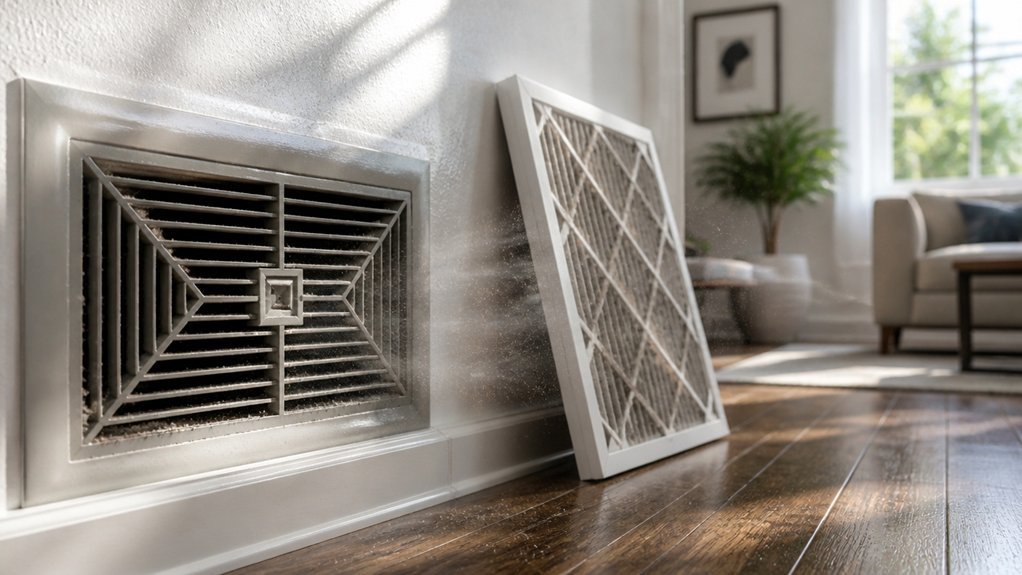
When renovation changes your HVAC system, it can spread pollutants more easily through the whole house. You may notice dust, drywall debris, paint fumes, and old moisture moving from one room to another because ducts, returns, and vents now push air differently.
Renovation can change airflow, letting dust, fumes, and moisture spread through your whole home.
If workers open walls or ceilings, your system can pull in particles and recirculate them fast. Leaks, disconnected ducts, and altered airflow can also carry contaminants into rooms you thought were clean.
One way to monitor and improve indoor air quality during this time is by using a Radon Detector, which can identify hidden airborne pollutants and help you take prompt action.
That means your indoor air can feel stale, irritating, or musty long after crews leave, even if surfaces look clean.
How to Improve Indoor Air Quality After Renovation
Start by airing out the home and removing the main sources of contamination. Open windows and run exhaust fans for several days after work ends. Replace or clean HVAC filters so dust, paint fumes, and fine particles don’t recirculate.
If you used low-VOC products, keep ventilating anyway, because emissions can linger. Vacuum with a HEPA filter, damp dust hard surfaces, and mop floors to capture residue.
Check for moisture problems, since leaks and damp materials can trigger mold growth fast. Bring in houseplants only after the air clears; they won’t fix the problem alone.
Use a portable air purifier in bedrooms and living areas if odors remain. A high-quality air purifier with HEPA filtration can effectively remove pet dander and other fine allergens from indoor air. Finally, test the air if symptoms continue so you can address hidden contaminants quickly and safely.
Frequently Asked Questions
How Long Should I Wait Before Moving Back After Renovations?
You should wait until odors fade, surfaces dry, and ventilation clears fumes, usually 24 to 72 hours, but longer for paint or adhesives. Test humidity and air quality before you move back in.
Are Air Purifiers Enough to Remove Renovation-Related Pollutants?
No, you shouldn’t rely on air purifiers alone. You’ll still need ventilation, source removal, and time for materials to off-gas. Purifiers help with particles, but they don’t fully remove VOCs or lingering chemical odors.
Which Renovation Materials Emit the Fewest Pollutants?
You’ll emit fewer pollutants with solid wood, low-VOC paints, formaldehyde-free cabinets, ceramic tile, natural stone, and low-emission adhesives. Choose products with GreenGuard or FloorScore labels, and you’ll cut off-gassing while improving your indoor air.
Can Houseplants Improve Air Quality After Remodeling?
Yes, you can use houseplants, but they won’t substantially clean the air after remodeling. You’ll get better results from ventilation, filtration, and reducing pollutant sources. Plants may help a little, though not enough alone.
Should I Test for Radon After Completing Home Renovations?
Yes, you should test for radon after renovations, especially if you disturbed foundations or changed ventilation. You can’t see or smell it, and testing helps you catch dangerous levels early and protect your family.
In Summary
After a renovation, you might love the fresh look, but your air can still carry hidden problems. You can reduce exposure by ventilating well, cleaning dust often, controlling moisture, and checking your HVAC system. If you notice lingering odors, headaches, or damp spots, act fast before the issue grows. With a few smart steps, you can enjoy your обновized home and breathe easier every day.