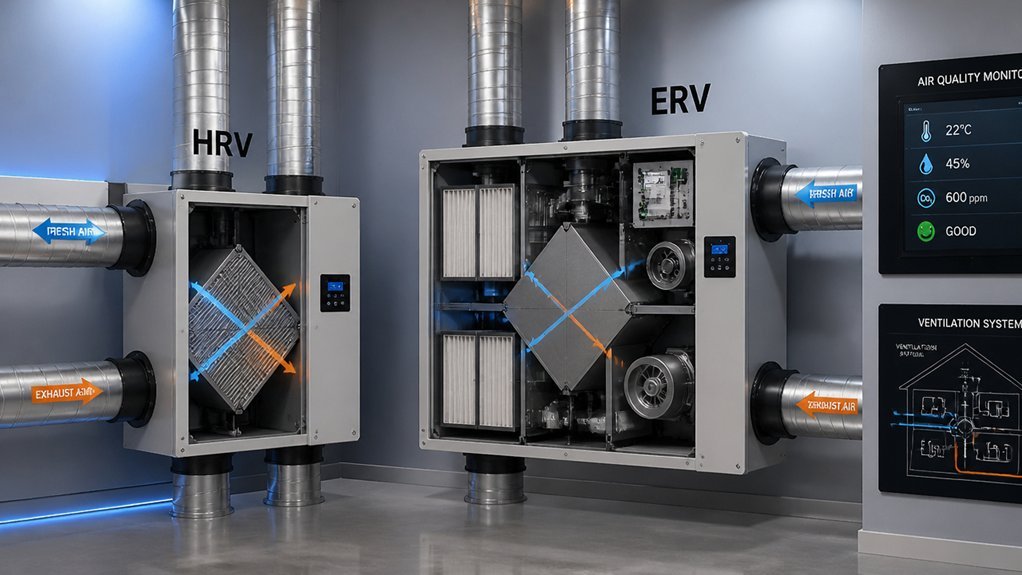
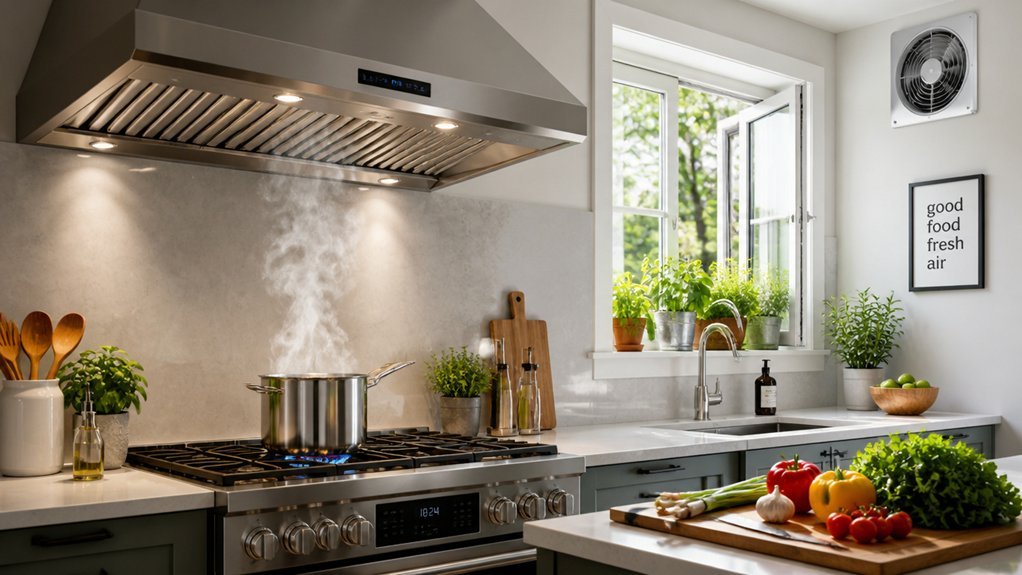
Use your range hood before you start cooking, then match the fan speed to the task so it catches smoke, steam, and odors early. Keep exhaust fans running during and after cooking, and open opposite windows for cross-ventilation when needed. Clean filters and vents on a schedule so airflow stays strong. You can also cut smoke at the source by using medium heat, drying food, and avoiding overcrowded pans, which helps your kitchen stay fresher.
Understand Why Kitchen Ventilation Matters
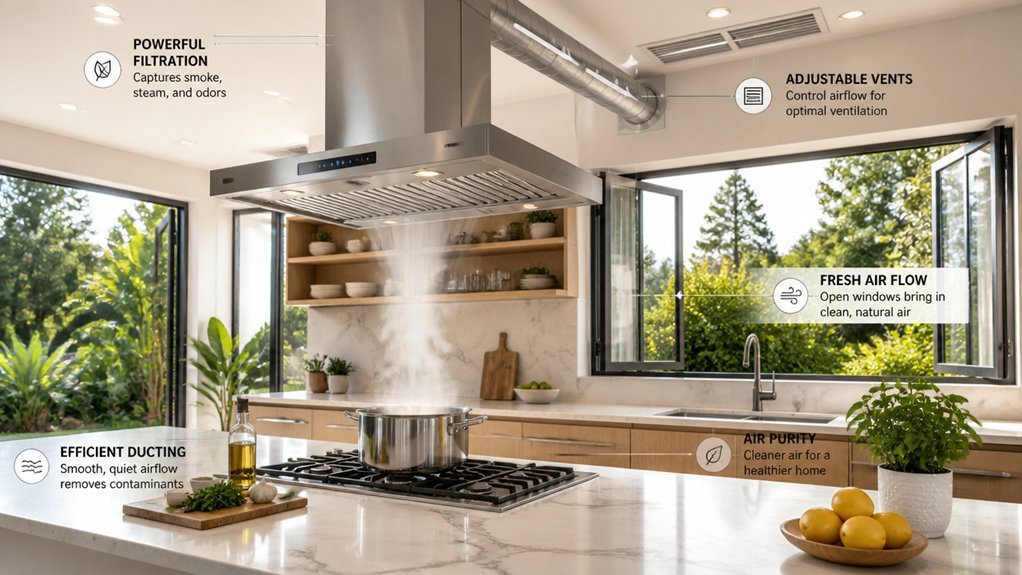
Good kitchen ventilation matters because it clears out smoke, steam, grease, and lingering odors before they build up and affect your cooking space. You protect your comfort when you keep air moving, since trapped heat and moisture can make cooking feel stuffy and unpleasant.
Fresh airflow also helps you see better, so you can monitor pans without squinting through haze. It reduces residue on cabinets, walls, and ceilings, which means less scrubbing later. You may also notice fewer lingering smells in fabrics and nearby rooms.
When you ventilate well, you create a healthier environment for yourself and anyone else in the home. That matters most when you cook often, use high heat, or handle strongly scented ingredients.
Use Your Range Hood The Right Way
Use your range hood on the right fan speed for the meal you’re cooking, so it can handle steam, smoke, and odors effectively. Turn it on before you start cooking to help capture pollutants as soon as they appear. Keep the filters clean so your hood keeps working efficiently and vents air properly. Regularly inspecting and maintaining your exhaust fan ensures optimal performance and energy efficiency, especially if it includes features like humidity sensors for automatic adjustment.
Select Proper Fan Speed
Dial in the fan speed to match what you’re cooking, and your range hood will work much better. Use a low setting for simmering soups, boiling pasta, or warming leftovers, since light steam and odors don’t need maximum airflow.
Increase to medium when you’re sautéing vegetables or cooking fish, where more smoke and aroma build up.
Switch to high for searing, frying, or any time grease and heavy smoke rise fast. If your hood has boost mode, reserve it for the messiest tasks.
Don’t leave the fan on a level that’s too weak, or it won’t capture pollutants well. Don’t crank it higher than needed, either, because excess noise and energy use can make you avoid using it consistently. Using an appropriately powered air quality monitor can help you determine the best fan setting for your cooking situation.
Turn Hood On Early
Once you’ve matched the fan speed to the meal, start the hood before the kitchen fills with smoke or steam. Turn it on before you heat the pan, boil water, or broil food, so it can catch odors and grease at the source. A HEPA filtration system in your range hood or air purifier can further improve the removal of airborne particles during cooking. If you wait until the air is already thick, the hood has to work harder and won’t clear the room as quickly. Keep it running while you cook and for a few minutes after you finish, so lingering fumes can escape. This simple habit helps you breathe easier, reduces buildup on walls and cabinets, and keeps your kitchen more comfortable. Make early activation part of your cooking routine, and you’ll get cleaner air with less effort every time you cook.
Keep Filters Clean
Clean filters are essential if you want your range hood to work at its best. When grease and dust build up, airflow drops, and your hood can’t pull smoke, steam, or odors out of the kitchen as well.
Check the filter regularly, and clean or replace it based on the manufacturer’s instructions. If you cook often, you may need to wash metal filters more frequently. Remove them carefully, soak them in hot soapy water, scrub away residue, then dry them fully before reinstalling.
For charcoal filters, replace them when they stop absorbing odors. A clean filter helps your hood run quietly, move air efficiently, and keep your kitchen fresher. It also reduces strain on the motor, which can extend the life of your ventilation system. Regularly monitoring airflow efficiency with a CO2 monitor can help identify when ventilation performance is declining.
Open Windows For Cross-Ventilation
Open two windows on opposite sides of your kitchen to let fresh air sweep through and carry cooking smells, steam, and excess heat outside. You’ll create a simple cross-breeze that replaces stale air with cleaner air fast.
For best results, open them wider when weather allows and adjust them to match the breeze.
- Crack both windows before you start cooking.
- Choose opposite walls or rooms for stronger airflow.
- Keep window screens in place to block debris.
- Close nearby doors if they stop the draft.
- Use the breeze to cool the room after cooking.
- Ensure good airflow by selecting windows with high CADR ratings for more efficient air exchange.
If outdoor air feels dusty or humid, open the windows briefly and then close them once the kitchen clears. This habit helps you breathe easier and keeps your cooking space more comfortable every day.
Keep Exhaust Fans On While You Cook
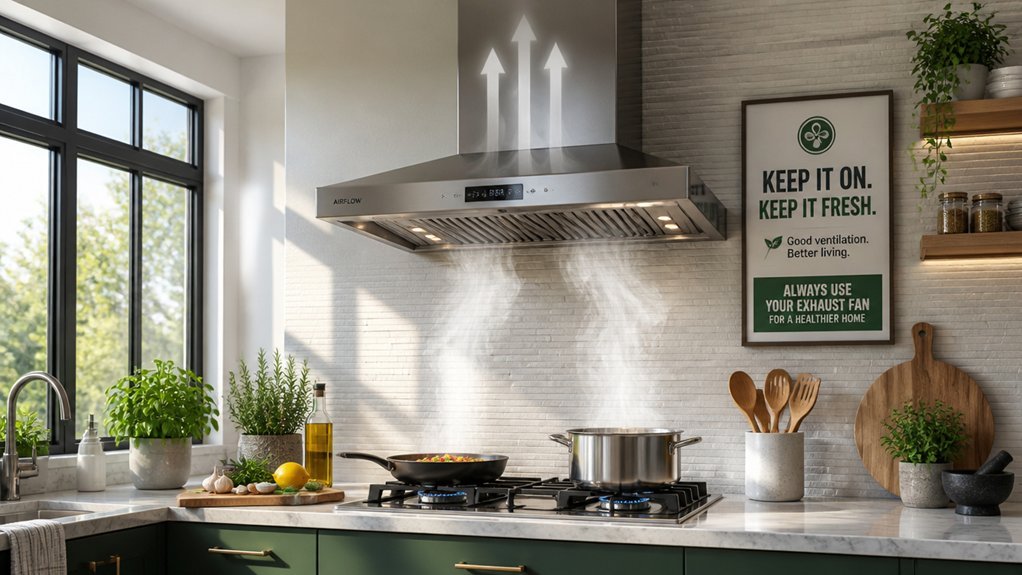
Even with windows open, your exhaust fan should stay on while you cook so it can pull smoke, steam, and odors straight out of the kitchen. Run it from the first sizzle until a few minutes after you finish, so lingering air keeps moving. You’ll notice less haze, less lingering smell, and a fresher room. Additionally, selecting a fan with a noise level of around 28 to 40 dB ensures it operates quietly without disturbing your cooking or relaxation.
| Cooking Task | Fan Setting | Result |
|---|---|---|
| Boiling pasta | Low | Removes steam |
| Frying eggs | Medium | Clears odors |
| Searing meat | High | Pushes out smoke |
If your fan has a light, use it to remind yourself it’s working. Clean filters and vents regularly so airflow stays strong. When you keep the fan on, you help your kitchen breathe better every time you cook.
Cut Smoke And Grease At The Source
Start by reducing smoke and grease at the source, so less of it ever reaches your kitchen air. You can do that by cooking smarter and choosing methods that stay cleaner. Use these habits:
- Preheat pans properly before adding food
- Pat meat and vegetables dry
- Cook at lower, steadier temperatures
- Cover pans when splatter starts
- Choose baking, steaming, or simmering more often
When you fry or sear, monitor heat closely so oil doesn’t smoke. Trim excess fat from meat, and use oils with higher smoke points for hot cooking. Incorporating sensor detection technology can also help alert you to hidden carbon monoxide or smoke buildup in your cooking space.
Clean spills from burners and pans right away, because burned residue makes the air worse. If you keep smoke down at the pan, you’ll need less effort to keep your kitchen comfortable and fresh.
Clean Vents And Filters On Schedule

You should clean your filters on a regular schedule so airflow stays strong and grease doesn’t build up.
Check your vent hood often and wipe it down before residue hardens. A simple maintenance routine helps your kitchen stay safer and work more efficiently.
Filter Cleaning Schedule
Keeping your kitchen vents and filters on a regular cleaning schedule helps them work efficiently and reduces grease buildup, smoke, and odors. You should check your filter weekly if you cook often, and monthly if you use the stove less.
Wipe loose residue first, then wash or replace the filter as needed.
- Inspect for sticky grease after heavy meals
- Soak washable filters in warm, soapy water
- Rinse thoroughly and let them dry fully
- Replace disposable filters when airflow drops
- Mark reminders on your calendar or phone
If you stay consistent, you’ll keep air moving smoothly and cut down on lingering smells. A simple routine also helps you spot when your filter needs extra attention before it starts affecting your kitchen comfort or cooking experience.
Vent Hood Maintenance
A clean filter is only part of the job, so your vent hood needs regular attention too. Wipe the hood’s exterior weekly to remove grease, dust, and splatter before buildup hardens.
Check the fan, lights, and controls so you can catch weak airflow or electrical issues early. If you notice rattling, poor suction, or lingering odors, inspect the ducts and call for service if needed.
Clean grease from seams, buttons, and the underside with a nonabrasive degreaser. Replace or wash filters on schedule, and follow the manufacturer’s care instructions.
Keeping the hood clean helps it pull smoke and steam away from your kitchen more efficiently, so your air stays fresher and your cooking space feels more comfortable every day.
Adopt Habits That Reduce Kitchen Smoke
Start by adjusting how you cook, since a few small habits can sharply cut the smoke your kitchen produces. Use medium heat instead of high whenever possible, and preheat pans only as long as needed.
Pat foods dry before searing, because excess moisture splatters and steams. Choose oils with higher smoke points for frying, and don’t overcrowd the pan, or food will trap heat and release more fumes.
- Trim fat that drips and burns.
- Clean spills before they smoke.
- Cover pots loosely to control splatter.
- Stir food often for even cooking.
- Open windows when strong odors build.
You’ll also reduce smoke by baking, steaming, or simmering more often. These habits work with your hood and ventilation, so your kitchen stays clearer and easier to breathe in.
Frequently Asked Questions
How Do I Choose the Right Range Hood Size for My Kitchen?
Measure your cooktop and choose a hood at least as wide, or slightly wider, than it. Match capture power to your stove’s output, kitchen size, and ducting. You’ll get better smoke removal and quieter operation.
What Vent Type Works Best for Apartments Without Exterior Ducts?
A ductless, recirculating range hood works best for your apartment, since it filters grease and odors without exterior vents. You’ll need to replace filters regularly, and you can boost results with window fans or portable purifiers.
How Often Should I Replace Carbon Filters in My Hood?
You should replace carbon filters every 3 to 6 months, depending on how often you cook. If you fry, sear, or smoke food a lot, you’ll need to change them sooner for better odor control.
Can Kitchen Ventilation Reduce Cooking Odors From Spices and Fish?
Yes, you can cut spice and fish smells with good ventilation. Run your hood while cooking, open a window, and vent outdoors if possible. Clean filters often, and you’ll keep odors from lingering much longer.
Are Smart Sensors Useful for Improving Kitchen Air Quality?
Yes, you can use smart sensors to improve kitchen air quality because they detect smoke, humidity, and VOCs, then trigger fans or alerts. You’ll respond faster, save energy, and keep your air cleaner overall.
In Summary
Good kitchen ventilation helps you breathe easier and keeps your home fresher every time you cook. When you use your range hood, crack open a window, and keep exhaust fans running, you cut smoke and odors before they spread. Cleaning vents and filters regularly also helps your system work better. By making these small habits part of your routine, you can enjoy cleaner air, less grease, and a healthier kitchen overall.