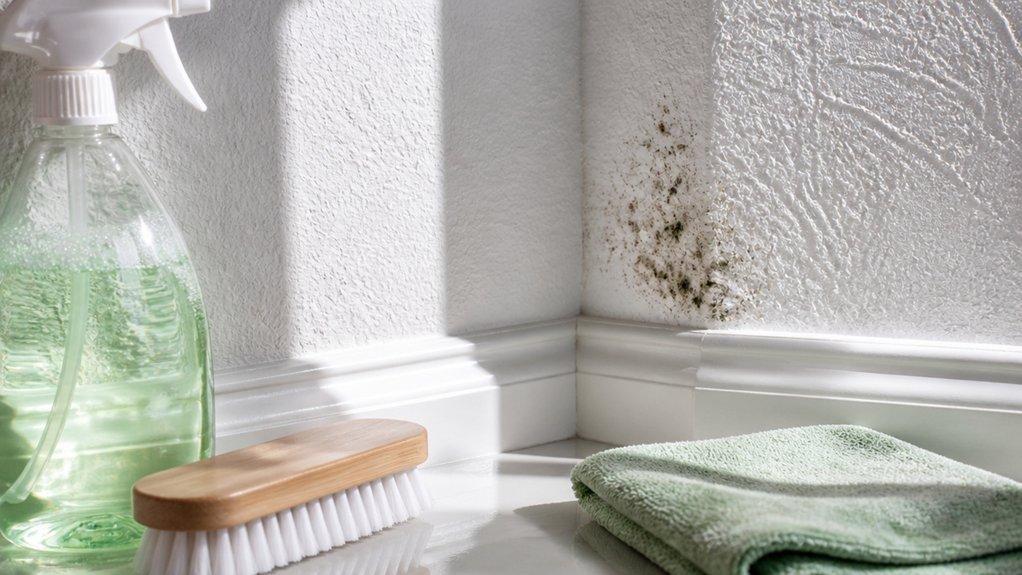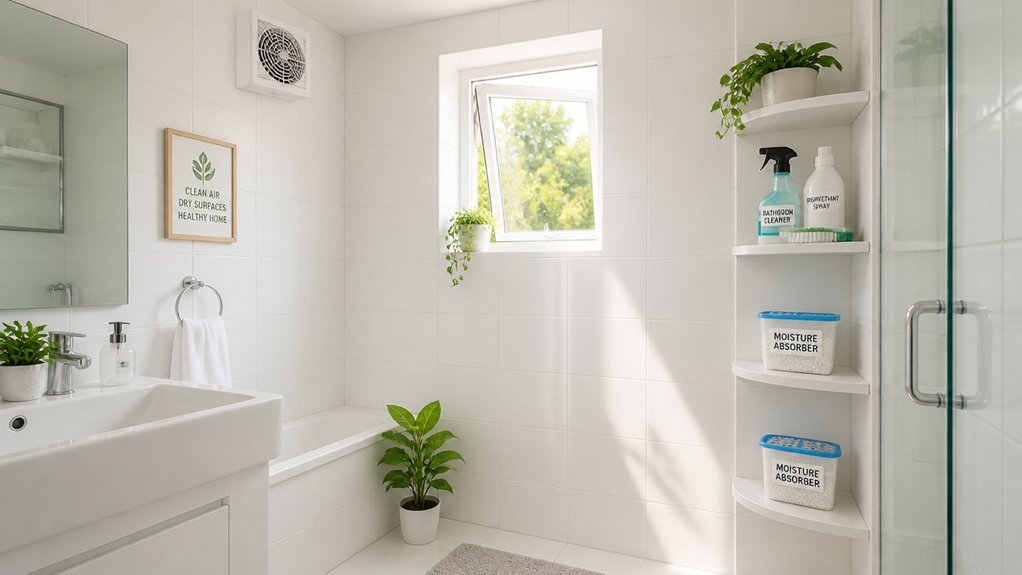
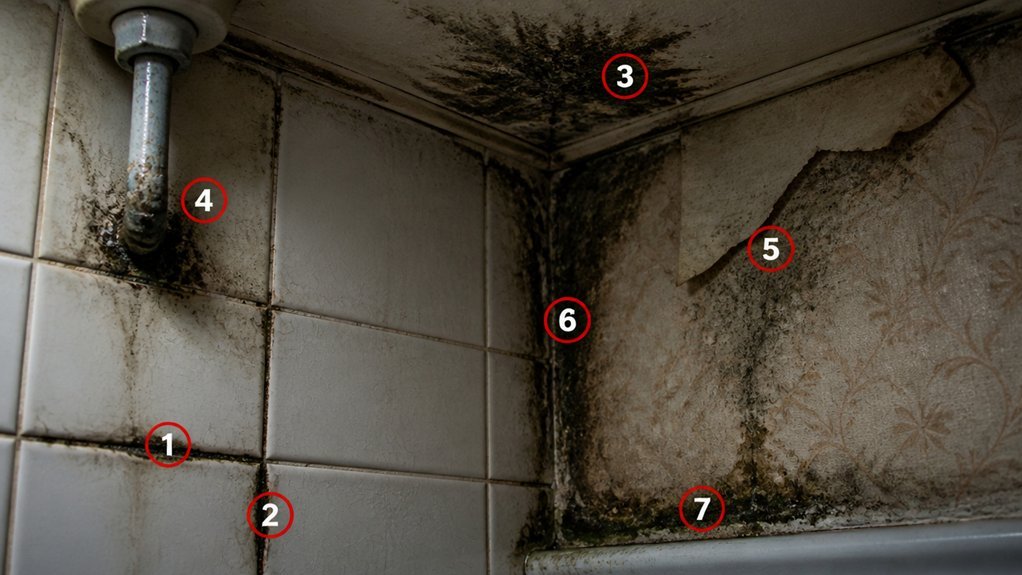
Mold often hides where moisture lingers in your home. Check bathrooms and showers for growth in grout, caulk, tile corners, and drains. Look under sinks and inside cabinets for leaks, stains, and swelling. Inspect behind walls, baseboards, windows, and sills for peeling paint or dark spots. Don’t forget basements, crawl spaces, HVAC vents, and laundry rooms around washers, dryers, and hoses. Spotting these trouble areas early can save you a bigger cleanup, as you’ll see next.
Mold in Bathrooms and Showers
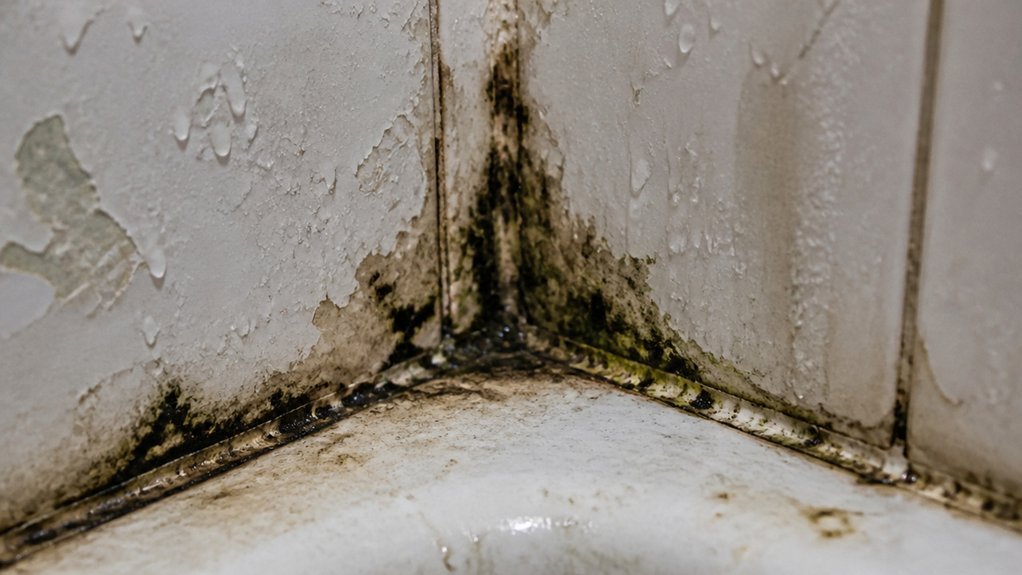
Bathrooms and showers give mold exactly what it wants: constant moisture, warmth, and plenty of hidden surfaces to cling to. You’ll often spot it on grout, caulk, tile corners, shower curtains, and around drains where water lingers after use.
Steam settles on walls and ceilings, then mold feeds on the damp film left behind. If you let wet towels, bath mats, or closed doors trap humidity, growth can spread fast.
You can slow it by running the fan during and after showers, wiping down surfaces, and keeping the room dry between uses. Clean any dark spots quickly, because mold can stain surfaces and return if you only scrub the visible patch instead of drying the area thoroughly. Regular inspection and testing with mold test kits can help detect hidden mold growth that’s unseen to the naked eye.
Mold Under Sinks and Cabinets
You should check under sinks for leak signs like damp spots, water stains, or a musty smell. Look for cabinet floor damage such as swelling, soft wood, or peeling finish, since these often point to mold growth. A moisture meter can help identify concealed dampness that isn’t visible to the naked eye. Material Compatibility is essential to ensure accurate readings and avoid false negatives. Hidden moisture sources like loose pipes, dripping traps, and slow leaks can keep feeding the problem even when you don’t see standing water.
Leak Signs
Under sinks and inside cabinets, even a slow leak can create the damp, hidden conditions mold needs to spread. You should watch for telltale signs like a musty odor, water stains, peeling caulk, or swollen areas near pipes and connections.
If you notice a dripping trap, loose supply line, or damp shelf liner, don’t ignore it. Check the space after running the faucet and again later, since moisture can hide behind stored items. You can also feel for cool, wet surfaces with a dry hand or paper towel. Even small leaks can keep the area wet enough for mold to grow.
Regularly inspecting and monitoring humidity levels with small dehumidifiers can help prevent moisture buildup in these hidden areas.
Fix the source quickly, dry the space completely, and keep cabinet doors open briefly to improve airflow.
Cabinet Floor Damage
What if the real damage isn’t the leak you see, but the floor it leaves behind? When water sneaks under your sink, it can soak the cabinet base, swell the wood, and trap moisture where you can’t easily spot it.
You may notice a musty smell, dark staining, soft spots, or peeling laminate before you see mold. Don’t ignore warped shelves or bubbling finish; those signs mean the material’s already breaking down.
Check along seams, corners, and the toe kick, where water lingers and mold can spread fast. If you catch damage early, you can dry the area, replace ruined boards, and stop the problem from getting worse. A damaged cabinet floor often means mold has already found a quiet place to grow, especially in areas with hidden moisture control issues.
Hidden Moisture Sources
Even when the sink itself looks dry, hidden leaks can keep feeding mold under cabinets and along the back wall. You might miss slow drips from supply lines, a loose drain fitting, or condensation on cold pipes, but mold won’t. It thrives in darkness, trapped humidity, and wet wood.
Check these trouble spots often:
- Under the P-trap for moisture, stains, and odor.
- Around caulk and seams where water can seep into cabinets.
- Behind stored cleaners or sponges that can hold dampness against surfaces.
Monitoring moisture absorption levels regularly helps detect elusive leaks early, preventing mold growth. If you spot swelling, discoloration, or a musty smell, dry the area fast and fix the leak. The sooner you act, the less chance mold has to spread into walls, flooring, and nearby cabinets.
Mold Behind Walls and Baseboards
You mightn’t see mold behind your walls, but you can spot signs like a musty smell, peeling paint, or warped drywall.
Hidden leaks often feed this growth, especially when water slips in behind walls and baseboards. If you notice discoloration, swelling, or stains near the baseboards, you should check for mold right away.
Signs of Hidden Growth
Sometimes the first signs of hidden mold show up long before you see any growth, especially behind walls and along baseboards. You might notice a musty smell, peeling paint, or soft, discolored trim that doesn’t look right. These clues often mean moisture has been trapped in a hidden space, letting mold spread out of sight.
Pay attention to rooms that feel damp, especially after heavy use or poor airflow.
- Check for dark staining near baseboards or wall corners.
- Watch for bubbling paint, warped drywall, or crumbling caulk.
- Notice allergy symptoms that worsen when you spend time nearby.
- Regularly monitoring indoor air quality with the right sensors can help detect early signs of mold issues before physical symptoms or visible growth occur.
If you spot these warning signs, act quickly and inspect the area before the problem grows.
Water Leaks Behind Walls
Water leaks behind walls are a common reason mold starts growing behind baseboards and trim. When a pipe drips or a roof leak runs down inside the cavity, moisture can soak the drywall and wood framing. You might not see the problem right away, but mold can spread quietly in the dark. Using reliable digital hygrometers can help monitor humidity levels and detect hidden moisture early.
| Leak source | Hidden path | Likely result |
|---|---|---|
| Supply pipe | Inside wall | Damp insulation |
| Window frame | Wall edge | Wet drywall |
| Bathroom line | Baseboard area | Musty odor |
If you notice soft walls, peeling paint, or a persistent smell, act fast. Shut off the water, dry the area, and call a professional if the leak is hard to reach. Quick repairs help stop mold before it damages more of your home.
Baseboard Discoloration Issues
Baseboards often show the first visible sign of mold behind walls, especially after a hidden leak has seeped into the drywall or trim. You might notice dark streaks, swelling, peeling paint, or a musty smell near the floor.
If you ignore these changes, mold can spread into framing and insulation fast. Check for soft spots, warped wood, and recurring stains after cleaning.
- Inspect corners and seams where moisture lingers.
- Pull back loose trim if you suspect trapped water.
- Fix leaks, dry the area, and replace damaged materials quickly.
You should also watch for discoloration that returns after wiping, since that often means moisture remains behind the wall.
Mold Around Windows and Sills
If you notice dark spotting or a musty smell near your windows, mold may be growing around the frame or sill. You’ll often see it where condensation lingers, paint peels, or caulk cracks. Wipe the area dry, then inspect the corners, tracks, and wood trim for soft spots.
| Sign | What it means |
|---|---|
| Dark specks | Surface mold |
| Peeling paint | Moisture damage |
| Soft wood | Ongoing growth |
| Foggy glass | Condensation buildup |
| Musty odor | Hidden moisture |
Clean small spots with soap and water, then dry everything well. Improve airflow, fix leaks, and re-caulk gaps so moisture can’t return. If mold keeps coming back, you may need to replace damaged materials and address the source quickly.
Mold in Basements and Crawl Spaces
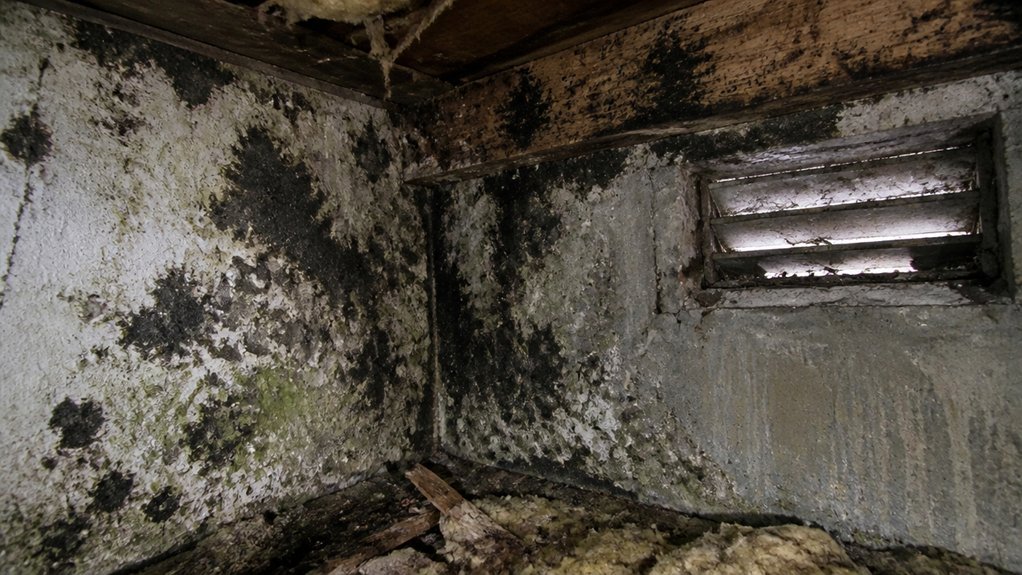
Basements and crawl spaces often trap the damp, stale air that mold loves, especially after leaks, flooding, or poor drainage. You should check these spaces often because hidden moisture can spread fast and stain wood, insulation, and concrete.
Mold may grow behind stored boxes, along foundation walls, or under vapor barriers where you can’t easily see it. Use a dehumidifier, fix leaks quickly, and keep gutters draining away from your home.
- Inspect corners, joists, and floor edges for musty odors.
- Keep humidity low and improve ventilation when you can.
- Remove wet materials and clean affected surfaces promptly.
If you notice recurring growth, you may need to address grading, sealing, or drainage problems before mold returns.
Mold Inside HVAC Vents and Ducts
Mold can spread through your HVAC vents and ducts when moisture builds up inside the system, especially if condensation, leaks, or a dirty filter give it a place to grow. You may notice a musty smell when the system runs, along with dark spots around registers or dust that looks clumped and damp.
Because air moves through every room, spores can travel quickly and settle elsewhere in your home. To reduce the risk, replace filters on schedule, keep drip pans clear, seal duct leaks, and have a technician inspect wet or damaged parts.
If you spot visible growth inside vents, don’t ignore it; clean the area promptly and fix the moisture source so the problem doesn’t return.
Mold in Laundry Rooms and Around Washers/Dryers
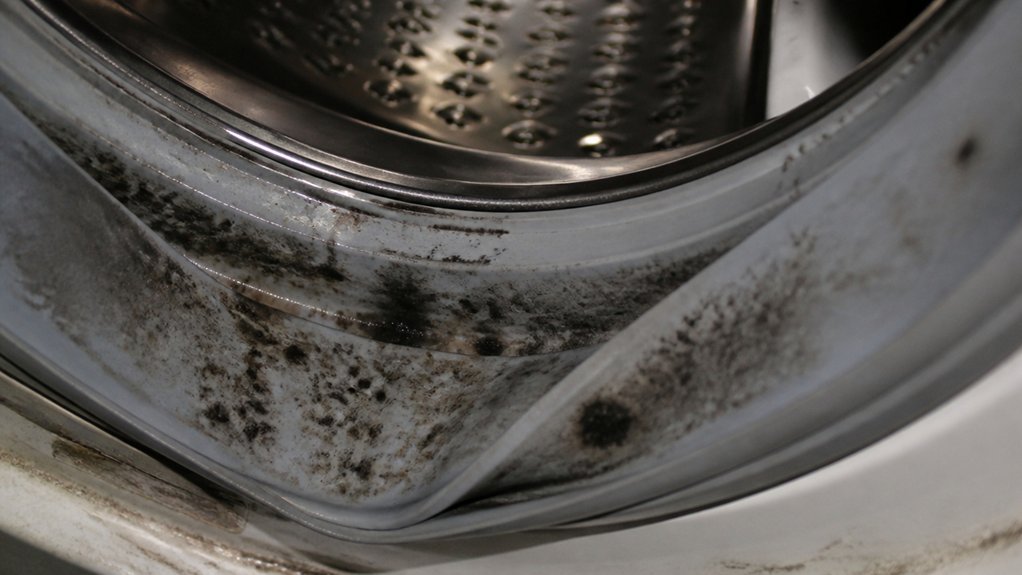
Even a well-used laundry room can become a mold hotspot when humidity stays high and water lingers around washers, dryers, utility sinks, or floor drains. You can stop growth by drying spills fast, fixing leaks, and keeping airflow strong.
Check behind the washer, under detergent shelves, and around door gaskets, where damp lint and soap residue collect. Clean the drain pan and hoses regularly, and leave appliance doors open after loads so moisture escapes.
If your dryer vents poorly, warm wet air can spread mildew and stain walls.
- Wipe standing water right away.
- Run a dehumidifier or fan.
- Wash towels, mats, and seals often.
Frequently Asked Questions
How Quickly Can Mold Spread After a Leak Starts?
Mold can start spreading within 24 to 48 hours after a leak begins, especially if you don’t dry things quickly. You’ll reduce growth by stopping the water, drying materials fast, and improving airflow immediately.
Can Mold Grow Inside Electrical Outlets and Light Fixtures?
Yes, you can find mold inside electrical outlets and light fixtures if moisture gets in. You shouldn’t inspect them yourself; turn off power, call a qualified electrician, and have them check safely for hidden damage.
What Health Symptoms Suggest Hidden Mold Exposure?
You might notice sneezing, coughing, wheezing, headaches, itchy eyes, skin rashes, fatigue, or sinus congestion. If you’ve got these symptoms at home, hidden mold could be irritating you, so get checked promptly.
Should I Test for Mold Before Buying a House?
Yes, you should test for mold before buying a house, especially if you notice odors, stains, or moisture. You’ll avoid costly surprises and can negotiate repairs or walk away if testing shows serious issues.
Can Mold Return After Professional Remediation?
Yes, mold can return after professional remediation if you don’t fix the moisture source. You should keep humidity low, repair leaks quickly, and inspect hidden areas regularly so spores can’t regrow.
In Summary
Mold can hide in places you don’t check every day, but you can stay ahead of it. Keep an eye on bathrooms, sinks, walls, windows, basements, vents, and laundry areas for dampness or musty odors. If you spot moisture, clean it up fast and fix the source right away. Regular inspections and good ventilation can make a big difference. By staying alert, you’ll help protect your home and your health from mold.