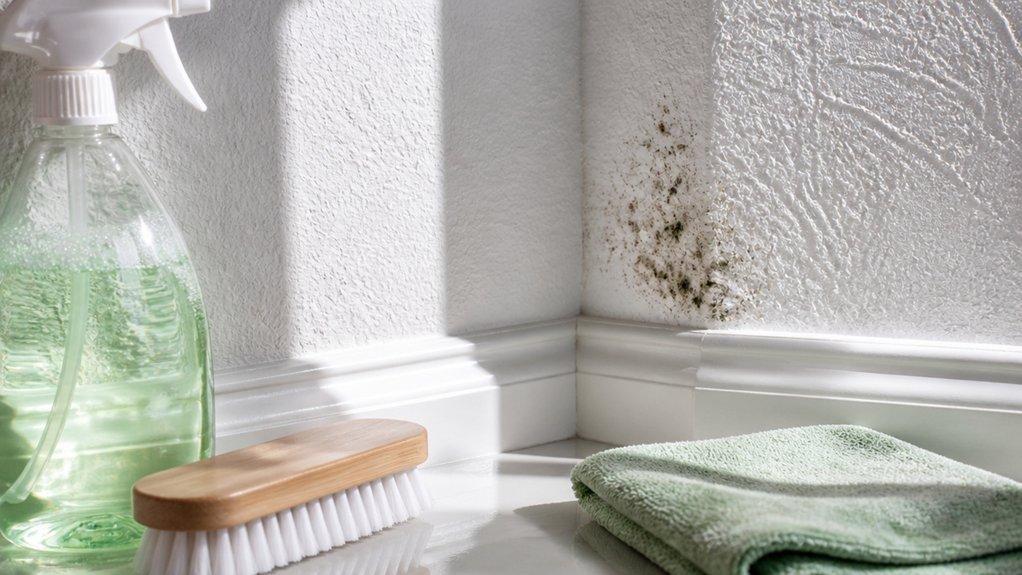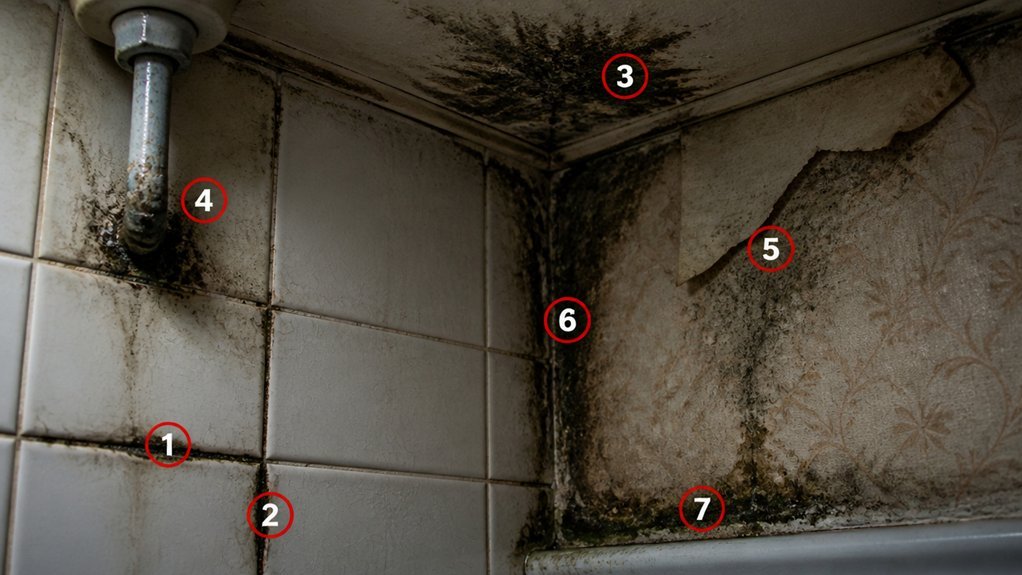
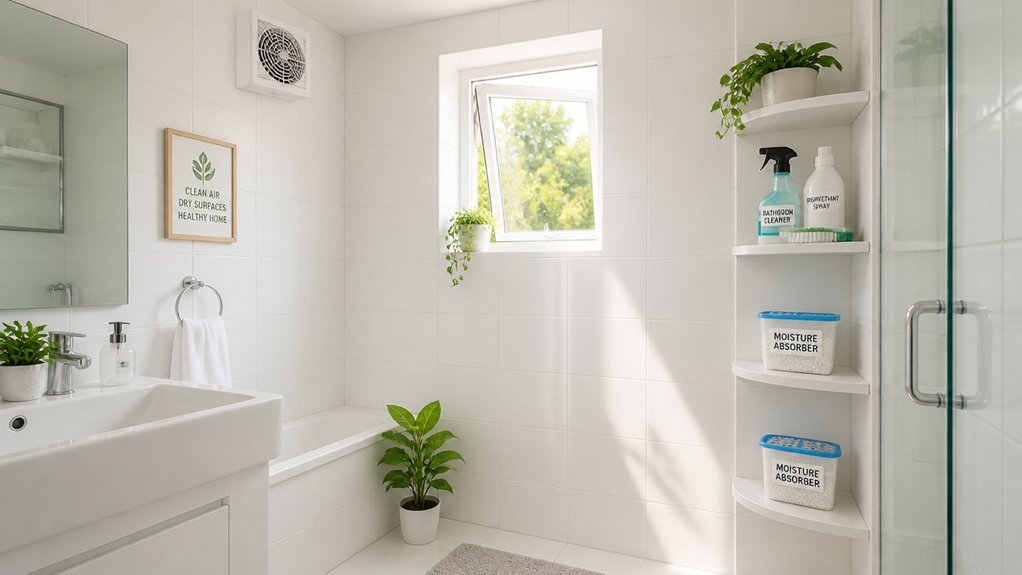
Prevent bathroom mold by fixing leaks fast and wiping up standing water after every shower. Turn on the exhaust fan before you bathe, keep it running for 20 minutes after, and open a window if you can. Dry towels, mats, and surfaces so moisture doesn’t linger. Choose mold-resistant paint, tile, and sealed fixtures. Check grout, caulk, and under sinks weekly for damp spots, because a few simple habits can stop mold before it starts and show you more.
Prevent Bathroom Mold at the Source
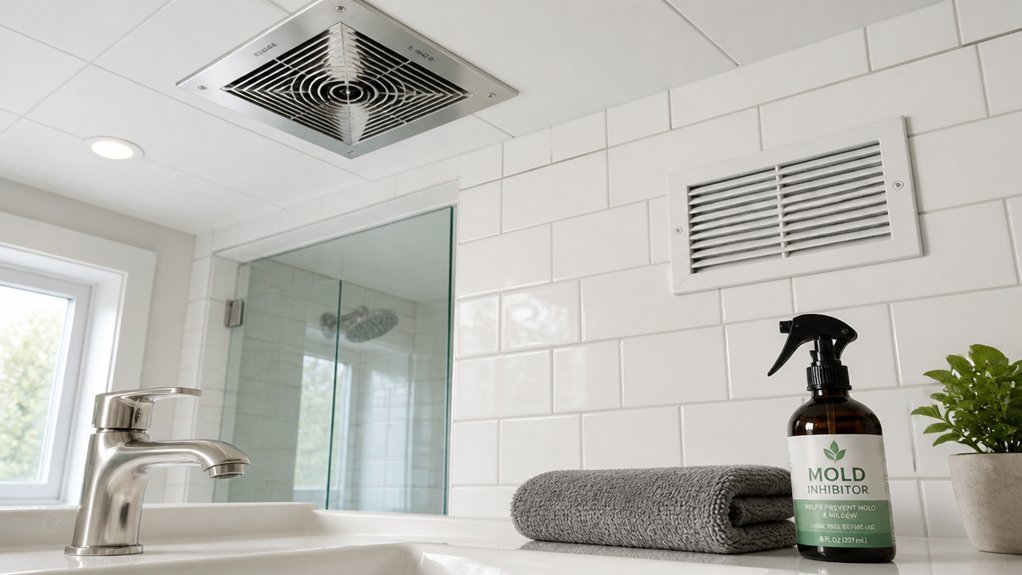
The best way to prevent bathroom mold is to stop moisture before it has a chance to settle in. You can do this by fixing leaks quickly, wiping up standing water, and keeping damp towels from piling up.
Stop bathroom mold by controlling moisture early: fix leaks, wipe up water, and keep damp towels from piling up.
After showers, squeegee glass, tile, and walls so water doesn’t linger in corners or grout lines. Keep bath mats dry, and wash them often so they don’t trap moisture.
You should also seal cracked caulk and regrout worn areas, since hidden gaps let water seep behind surfaces. Choose mold-resistant paint and materials when you can, because they help reduce buildup.
If you notice condensation on mirrors or fixtures, dry those areas right away. Small habits like these cut off mold’s food source before it starts. Dehumidifier models can effectively reduce moisture levels in your bathroom, preventing mold from thriving.
Run the Exhaust Fan the Right Way
Even with good cleanup habits, humid air can still linger after a shower, so use the exhaust fan to pull that moisture out fast. Turn it on before you step in or as soon as you start the water, and leave it running for at least 20 minutes after you’re done.
That extra time helps remove steam from walls, ceilings, mirrors, and towels before it settles into surfaces where mold can grow. Check that the fan actually vents outside, not into an attic or crawlspace. Clean the cover and blades regularly so dust doesn’t slow airflow. If the fan sounds weak or rattles, fix it quickly. Choosing a fan with the proper airflow capacity ensures effective moisture removal, especially in larger bathrooms.
A well-used fan keeps moisture from hanging around long enough to feed mildew and mold in your bathroom.
Improve Ventilation to Cut Humidity
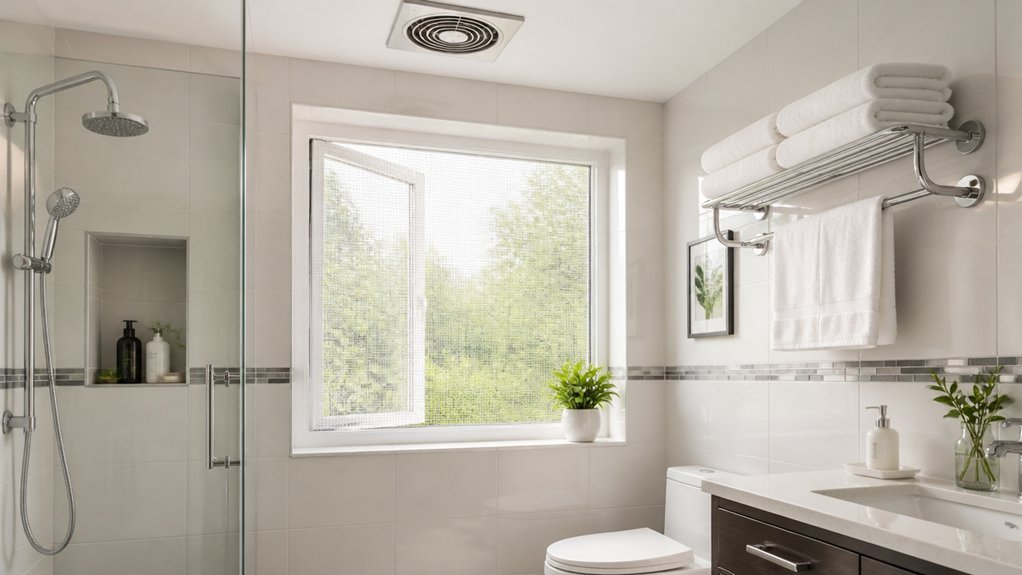
Better airflow helps keep bathroom humidity from building up in the first place. Open a window during and after showers when weather allows, and let fresh air move through the room. If your bathroom has a window fan, use it to pull damp air outside.
Keep the door slightly open after use so trapped moisture doesn’t linger. Check that vents aren’t blocked by dust, paint, or storage items, because a clear path lets air circulate better. You can also improve circulation by adding a small fan near the doorway or choosing a bathroom door with a louvered design.
When air keeps moving, steam clears faster and mold has fewer chances to settle. Good ventilation works best when you make it part of your daily bathroom routine. For optimal moisture control, consider incorporating dehumidifiers designed specifically for the space to prevent lingering dampness.
Dry Wet Surfaces Before Mold Starts
After every shower or sink use, you should wipe down counters, tiles, and the shower walls so water doesn’t sit there. Don’t forget hidden spots like behind the toilet, under bath mats, and around fixtures, since trapped moisture can fuel mold. A quick dry-down after each use helps keep your bathroom cleaner and mold-free. Regular inspection and testing with mold test kits can also help you catch any hidden mold before it becomes a bigger problem.
Wipe Down Surfaces
Wiping down bathroom surfaces is one of the easiest ways to stop mold before it starts. After every shower or bath, grab a microfiber cloth or squeegee and remove water from counters, walls, glass, and fixtures. Don’t let droplets sit and linger, because mold loves damp surfaces.
Pay extra attention to sinks, tub edges, and around the faucet where splashback collects. If you share the bathroom, make this a quick habit for everyone, so moisture doesn’t build up throughout the day. Keep a dedicated cloth nearby so you’re more likely to use it.
Drying surfaces only takes a minute, but it can make a big difference in keeping your bathroom cleaner, fresher, and less inviting to mold.
Target Hidden Moisture
Don’t overlook the spots you can’t see at a glance, because hidden moisture can feed mold just as quickly as standing water. Check behind the toilet, under the sink, around the base of the tub, and along grout lines where water lingers.
Run your hand along cabinets, walls, and fixtures to find dampness that a towel might miss. If you spot condensation on pipes or a drip from a loose connection, dry the area right away and fix the source.
Use a small fan, open a window, or keep the exhaust running long enough to clear trapped moisture from corners and crevices. Pay attention to shower curtains, mats, and other items that stay wet against surfaces, since they can trap dampness and give mold an easy place to grow. Additionally, utilizing a moisture meter can help identify hidden dampness behind walls or within materials where moisture cannot be easily seen or felt.
Dry After Every Use
Once you’ve checked for hidden moisture, make it a habit to dry every wet surface right away so mold doesn’t get a chance to settle in.
After each shower or bath, wipe the tub, tiles, glass, and faucet with a towel or squeegee. Don’t leave puddles on the floor, and dry the sink, countertop, and shower caddy too. Pay extra attention to corners, grout lines, and around drains, where water lingers longest. If you use washable bath mats, hang them up so they can dry fully instead of staying damp. Regularly monitoring your bathroom’s humidity levels with a digital hygrometer can help you catch excess moisture early and prevent mold growth. Keep a microfiber cloth nearby to make cleanup quick and easy. When you remove moisture immediately, you cut off mold’s best chance to grow, smell, and spread throughout your bathroom.
Use Materials That Resist Mold
You can cut mold growth by choosing mold-resistant paint that stands up to bathroom moisture.
You should also use nonporous materials for surfaces, since they’re easier to clean and won’t absorb water as readily. For added protection, pick fixtures made for humid spaces so your bathroom stays drier and easier to maintain. Incorporating proper ventilation can also significantly reduce humidity levels and prevent mold development.
Mold-Resistant Paint Choices
When it’s time to repaint, choose a mold-resistant bathroom paint that’s made to handle humidity and frequent moisture. You’ll get better protection if you select a high-quality latex paint with antimicrobial additives, because it helps slow mold growth on damp walls and ceilings.
Look for products labeled for bathrooms, kitchens, or high-moisture rooms, since they’re formulated to stand up to steam and splashes. Before you paint, clean the surface well, remove any existing mildew, and let everything dry completely.
Then apply a stain-blocking primer if the wall has marks or past moisture damage. Use two even coats, and keep the room ventilated while the paint cures. With the right paint and proper prep, you’ll make it harder for mold to take hold.
Nonporous Surface Materials
Paint helps, but the surfaces you choose matter just as much. You’ll limit mold when you pick nonporous materials that don’t soak up moisture or give spores a place to settle. Use smooth ceramic tile, glass, and solid-surface panels in wet zones, then seal joints well so water can’t creep in.
| Material | Benefit | Best use |
|---|---|---|
| Ceramic tile | Resists moisture | Walls, showers |
| Glass | Won’t absorb water | Doors, accents |
| Solid surface | Easy to wipe clean | Countertops, surrounds |
You should also avoid rough, absorbent finishes that trap grime. Clean these surfaces regularly with a mild cleaner, and dry them after use. When you choose materials that stay slick and stable, you make mold growth much harder and keep your bathroom easier to maintain overall.
Humidity-Friendly Fixtures
Even the best walls and tile can’t prevent mold if the fixtures themselves hold moisture. Choose humidity-friendly fixtures made from materials that resist water and microbial growth. You should favor stainless steel, glazed ceramics, solid-surface composites, and treated wood only where it stays dry. These materials don’t absorb spills or trap condensation, so they dry faster and stay cleaner.
Swap out fabric shower curtains for vinyl or washable mildew-resistant liners, and pick sealed vanity tops that won’t swell. When you install towel bars, shelves, and shower caddies, look for corrosion-resistant finishes that won’t peel. You’ll reduce hiding spots for mold and make routine cleaning easier. If a fixture feels damp for hours, replace it with one that sheds moisture quickly.
Keep Mold Out With Routine Checks
Routine checks help you catch moisture problems before mold can take hold.
Each week, scan grout, caulk, corners, and under sinks for dark spots, peeling sealant, or soft drywall. Run your hand along walls and around the tub to feel for dampness. If you spot condensation, improve airflow right away by opening a window or running the fan longer. Wipe standing water from counters, shower doors, and floors after each use.
Scan grout, caulk, and corners weekly, and wipe away moisture before mold can spread.
Test for leaks at faucets, supply lines, and toilet bases, then tighten or replace worn parts quickly. Clean exhaust fan covers so they move air efficiently. Keep towels and bath mats dry between uses.
These small inspections take minutes, but they help you stop mold before it spreads.
Frequently Asked Questions
How Often Should Bathroom Grout Be Resealed?
You should reseal bathroom grout every one to two years, depending on wear and moisture. Check it yearly, and reseal sooner if you notice staining, cracking, or water soaking in after cleaning.
Can Dehumidifiers Help in Small Bathrooms?
Yes, you can use a dehumidifier in a small bathroom, and it’ll help reduce excess moisture. You’ll limit dampness, slow mold growth, and keep surfaces drier, especially if ventilation isn’t enough.
What Shower Curtain Material Resists Mold Best?
You’ll get the best mold resistance from a polyester or PEVA shower curtain; both dry quickly and resist mildew better than fabric. You can still wash it regularly and keep your bathroom ventilated.
Are Anti-Mold Paints Effective Long-Term?
Yes, they can help, but you shouldn’t rely on them alone long-term. You’ll still need good ventilation, quick drying, and regular cleaning, because moisture eventually defeats even the best anti-mold paint.
When Should Bathroom Caulk Be Replaced?
You should replace bathroom caulk when it cracks, peels, shrinks, or grows mold. If you notice gaps or water sneaking behind fixtures, remove it and reapply fresh caulk to keep your bathroom sealed and protected.
In Summary
By making a few simple changes, you can keep mold from taking over your bathroom. Run the exhaust fan, boost airflow, and wipe down wet surfaces before moisture has time to settle. Choose mold-resistant materials when you can, and stay ahead with quick routine checks. When you tackle humidity at the source and keep things dry, you make your bathroom cleaner, fresher, and a lot harder for mold to grow.