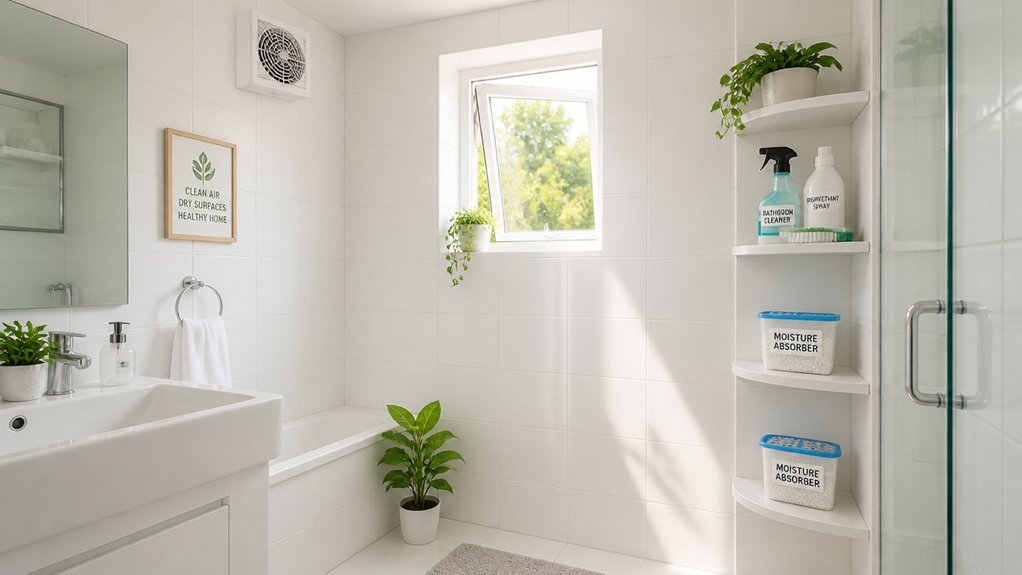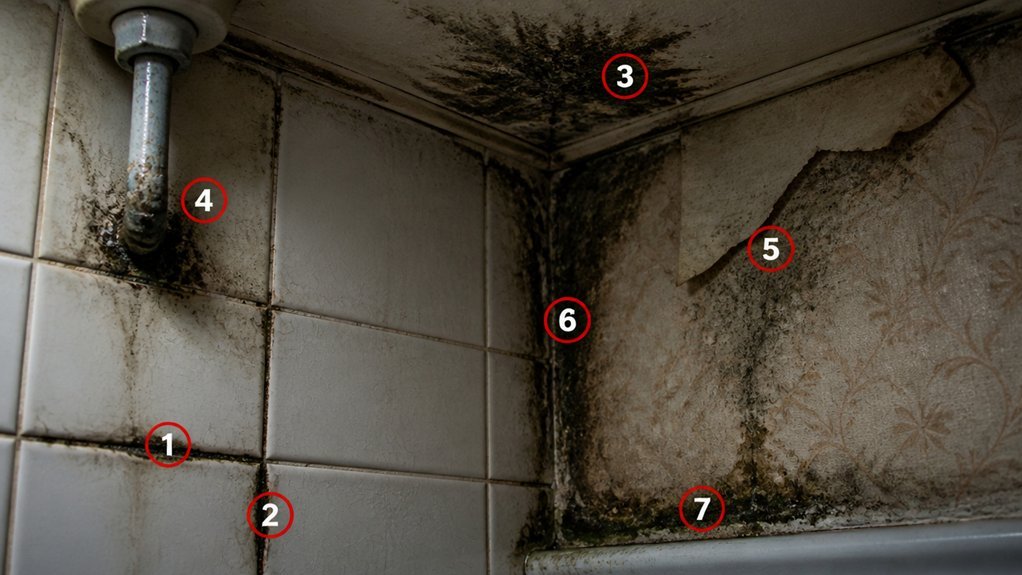
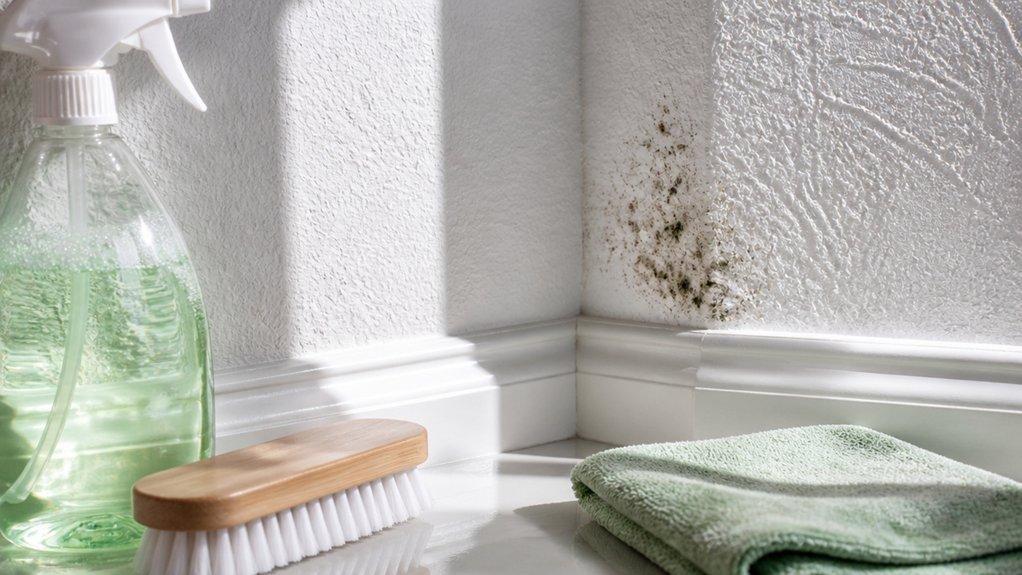
If the mold patch is under 10 square feet and isn’t from sewage or spread through drywall, you can clean it yourself. Gather soap, water, a scrub brush, cloths, trash bags, and an N95, gloves, goggles, and long sleeves. Mist the spot, scrub gently, and bag waste right away. Dry the area fully, fix leaks, keep humidity below 60%, and check hidden corners for new growth; there’s more to know if you keep going.
See If the Mold Is Safe to Clean
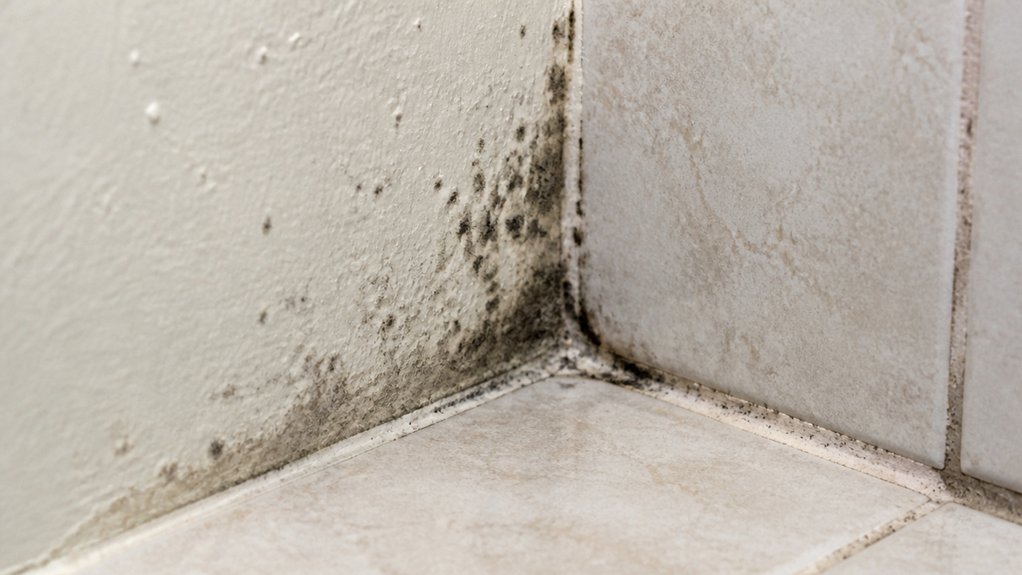
Before you start scrubbing, make sure the mold is small enough to handle safely. Check the affected spot first. If it covers more than about 10 square feet, don’t clean it yourself.
Also stop if you see mold spreading through drywall, ceilings, or flooring, because hidden growth can mean a bigger problem. Look for signs of water damage, soft material, or a musty smell that keeps coming back. If the area is from a sewage leak, don’t touch it.
You should also avoid cleaning if you have asthma, allergies, or a weakened immune system. When the mold looks limited to a small, dry surface, you can usually handle it yourself.
Trust your judgment, and if you’re unsure, call a professional before you start. Using mold testing kits can help determine the extent of mold issues accurately before attempting cleanup.
Get the Right Cleaning Supplies
Before you start, gather the right cleaning supplies, like soap, water, a scrub brush, microfiber cloths, and a trash bag for waste.
You should also wear protective gear, including gloves, goggles, and an N95 mask, so you don’t breathe in mold spores or touch them directly.
With these basics ready, you can clean the area more safely and efficiently.
Ensure your humidity levels are monitored using a reliable digital hygrometer to prevent future mold growth.
Essential Cleaning Supplies
Grab the right supplies before you start scrubbing. You’ll work faster and cleaner if you gather everything first. Use a bucket for mixing, clean rags for wiping, and a scrub brush with stiff bristles for textured surfaces. Choose a detergent or mold cleaner that’s labeled for household use, and keep a spray bottle handy for targeted application.
A sponge helps lift residue from smooth areas, while paper towels let you remove damp waste quickly. Using small dehumidifiers can help reduce moisture levels in the room, creating an environment less conducive to mold growth.
Keep supplies separate from regular cleaning tools so you don’t spread debris elsewhere. Once you’ve set them out, you can move smoothly through each step and clean the spot thoroughly.
Protective Gear Checklist
Protective gear matters just as much as your cleaner, since it helps keep spores, dust, and splashes off your skin and out of your lungs. Wear an N95 respirator or better, and make sure it fits snugly over your nose and cheeks. Put on nonporous gloves, such as nitrile or rubber, so you don’t touch mold directly. Use safety glasses or goggles if you’ll scrub, spray, or disturb dry material. Choose long sleeves, long pants, and closed-toe shoes so you limit exposed skin. If you’re working overhead, add a disposable head cover. Keep a trash bag nearby for used cloths and gear. When you’re done, remove equipment carefully, wash your hands well, and clean reusable items before storing them. Regular cleaning of your tools and gear helps prevent air quality issues that could worsen mold problems or affect your health.
Protect Yourself From Mold Exposure
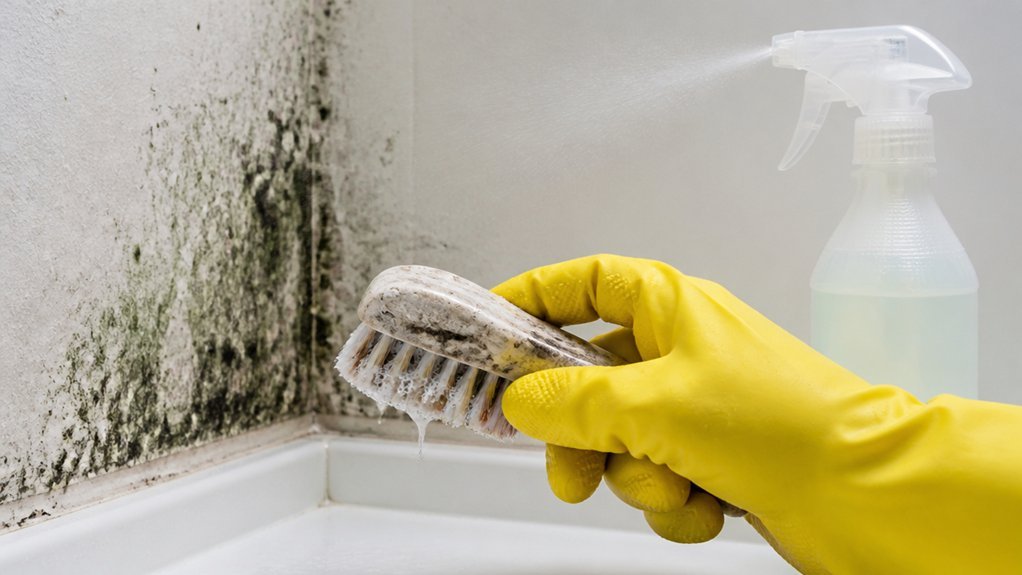
Before you clean, you should wear gloves, goggles, and a mask to reduce direct contact with mold. Keep windows open and use gentle methods so you don’t stir spores into the air. Employing proper moisture control can also prevent mold from returning after cleaning.
Wear Proper Protective Gear
Even for a small mold cleanup, you shouldn’t skip protective gear, because mold spores can irritate your skin, eyes, and lungs when they’re disturbed. Wear gloves, a snug mask, goggles, long sleeves, and closed-toe shoes before you start. Choose disposable or washable gear that you can remove without touching contaminated surfaces. Check that your gloves fit well and your mask seals comfortably over your nose and mouth.
If you have sensitive skin or allergies, add extra coverage to reduce contact. After cleaning, take off gear carefully, bag disposable items, and wash reusable items right away.
- Gloves protect your hands from direct contact
- Goggles shield your eyes from splashes and dust
- A mask helps you avoid breathing irritation
- Long sleeves reduce skin exposure
- Closed-toe shoes keep mold off your feet
- Ensuring proper ventilation during cleanup helps disperse mold spores and prevents accumulation indoors.
Limit Airborne Exposure
To keep mold from spreading through the air, work gently and avoid actions that kick up spores. Don’t scrub hard, sweep dry debris, or rip out materials quickly. Instead, mist the area lightly with water or a cleaning solution before you touch it, so dust stays down.
Use an air purifier during and after cleaning to help remove remaining spores and prevent their recirculation.
Keep doors and windows closed if opening them would spread contamination to other rooms, but do use ventilation that directs air outside when possible. Turn off fans that blow across the mold, since they can scatter spores around the space.
Seal removed materials in plastic bags right away, and carry them out carefully. If you must move items, lift slowly and keep them close to the floor. Afterward, wipe surrounding surfaces so lingering particles don’t resettle.
Clean Small Mold Spots Safely
When you’re dealing with a small mold spot, act quickly and keep the cleanup contained so the problem doesn’t spread. Put on gloves, a mask, and eye protection, then mist the area lightly to reduce dust.
Scrub the mold with soap and water, or use a cleaner labeled for mold on nonporous surfaces. Wipe the spot with disposable cloths, and place used materials in a sealed bag right away.
If the surface is porous and the mold has penetrated deeply, you may need to remove and replace it instead of scrubbing.
- Work in a well-ventilated space.
- Use separate tools for the affected area.
- Avoid mixing cleaners.
- Check nearby surfaces for hidden spots.
- Wash your hands after cleanup.
Dry the Area Completely
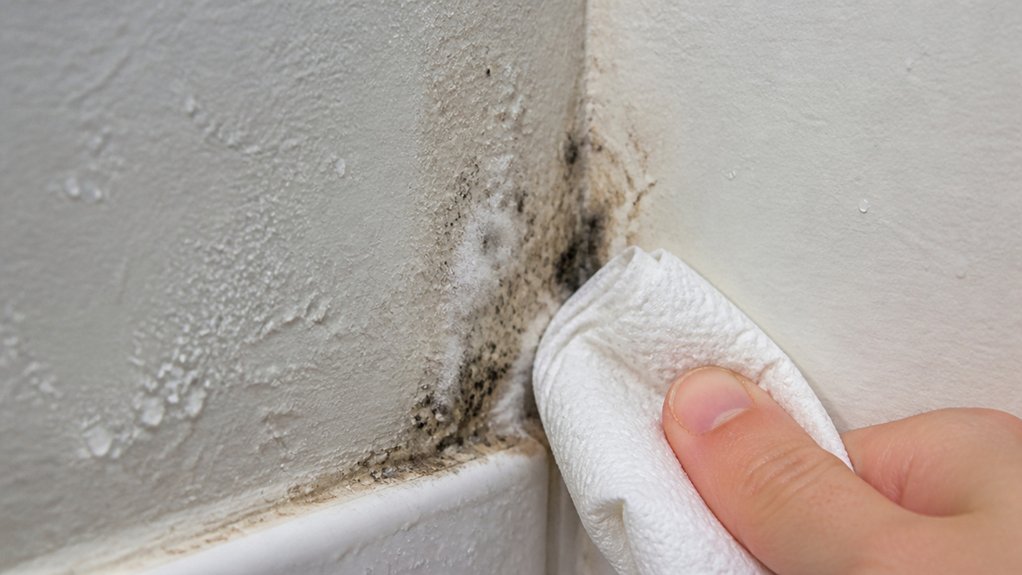
After cleaning, dry the area completely so any remaining moisture doesn’t let mold return. Open windows if you can, and run a fan to move air across the spot.
If the surface is hard, wipe it with a clean, dry cloth to remove leftover dampness. For carpet, upholstery, or drywall, press with dry towels to absorb water without rubbing the material apart.
Check corners, seams, and behind nearby objects, because hidden moisture can linger there. Keep the area ventilated until it feels dry to the touch and looks dry in good light.
Don’t cover or store items against the surface yet. If you notice it still feels damp later, dry it again right away. Careful drying helps you finish the job safely and keep the mold from coming back.
Fix Moisture and Humidity Problems
If you don’t fix the moisture source, mold can come back even after a thorough cleaning. Check for leaks, seepage, and condensation, then repair them quickly so dampness doesn’t linger.
You should also control indoor humidity, because mold thrives when air stays too wet. Use a dehumidifier in muggy rooms, run exhaust fans during showers and cooking, and keep air moving with proper ventilation.
Adjust your habits to reduce extra moisture, like covering wet materials and drying spills right away.
- Seal window and pipe leaks
- Empty dehumidifier tanks often
- Keep bathroom fans running
- Vent clothes dryers outside
- Maintain humidity below 60%
Check Hidden Spots for New Mold
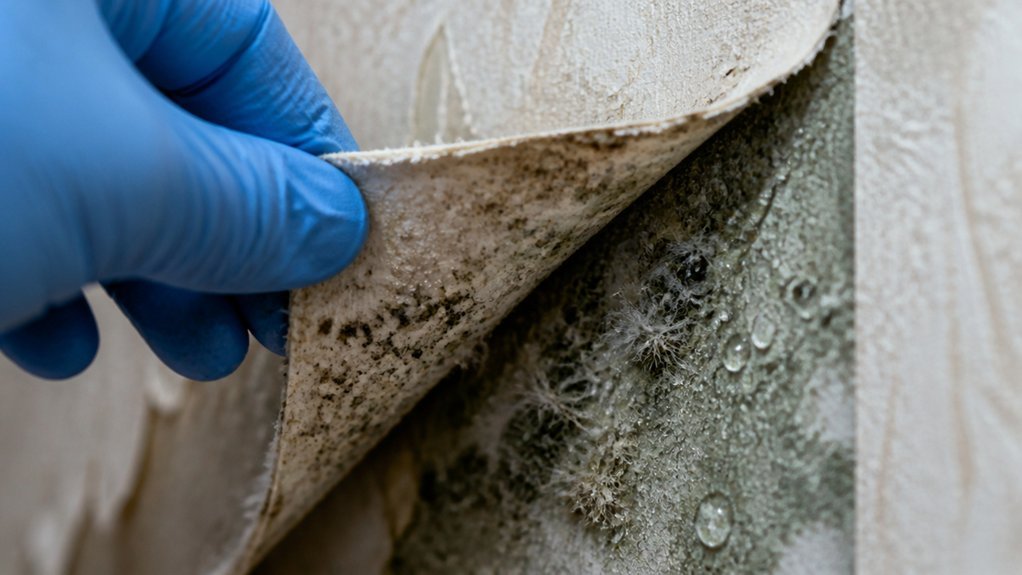
Next, check hidden spots where mold can return, since it often grows out of sight before you notice it. Inspect behind furniture, under sinks, around windows, and inside closets for dampness, staining, or a musty smell.
Use a flashlight to look into corners, baseboards, vents, and behind appliances where air doesn’t move well. If you find peeling paint or soft drywall, test the area carefully, because mold may be growing underneath. Lift rugs and check the backing, too.
After cleaning, revisit these spots over the next few days to catch any new growth early. If you see mold spreading beyond a small patch, or if it keeps coming back, call a professional so you can avoid bigger damage and health risks.
Frequently Asked Questions
Can I Clean Mold on Painted Drywall Myself?
Yes, you can clean small mold spots on painted drywall yourself if it’s less than about 10 square feet, the paint isn’t damaged, and you wear protection, ventilate well, and fix the moisture source first.
How Do I Know if Mold Is Toxic?
You usually can’t tell by sight alone, so you should assume it’s potentially harmful. If you notice strong odors, water damage, or health symptoms, you’ll want professional testing before you handle it yourself.
Should I Throw Away Items Touched by Mold?
Not always; you can often save hard, nonporous items if you clean them well. You should discard porous things like drywall, carpet, or soaked fabrics, because mold can hide inside and keep spreading.
How Long Does Cleaned Mold Take to Stop Smelling?
Usually, you’ll notice the smell fade within a few hours after thorough cleaning and drying, but lingering odor can last days if moisture remains. You’ll need to dry the area completely and improve airflow.
When Should I Call a Mold Remediation Professional?
Call a mold remediation professional when the mold covers more than 10 square feet, keeps returning, follows water damage, or affects HVAC, walls, or health. You shouldn’t handle large, hidden, or toxic growth yourself.
In Summary
By following these steps, you can clean small mold spots safely and help keep them from coming back. Start by checking whether the mold is something you can handle yourself, then use the right supplies and protect yourself before you clean. Make sure the area dries completely, fix any moisture problems, and keep an eye on hidden spots for new growth. Staying alert now can help you protect your home and health later.