
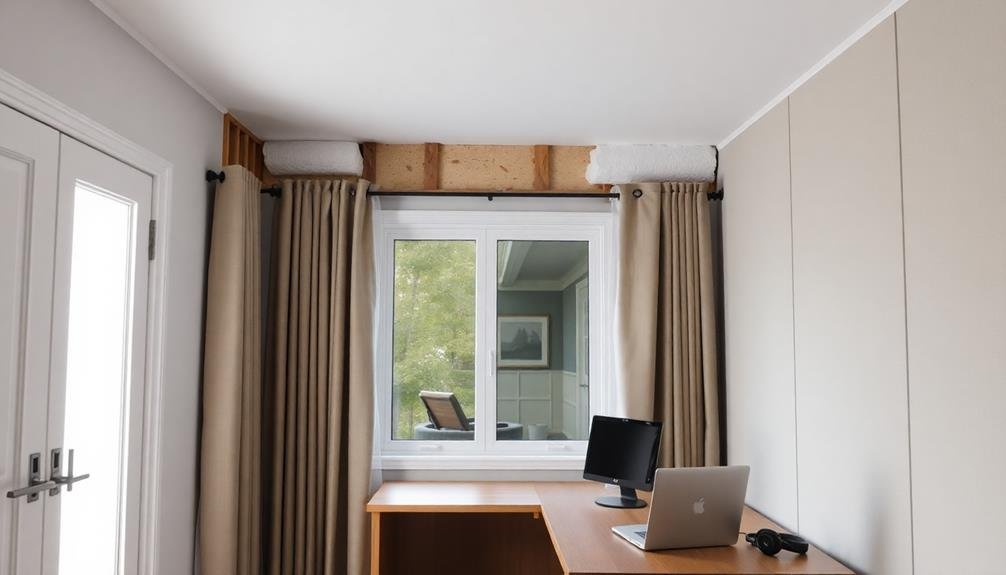
To soundproof your home office, start by evaluating your specific noise issues. Seal gaps around doors and windows with weatherstripping, and use acoustic caulk for wall and ceiling cracks. Install acoustic panels on walls and corners to absorb sound waves. Add mass-loaded vinyl barriers for enhanced sound blocking. Don't forget the floor; thick rugs can greatly reduce noise. For windows, consider creating double-pane inserts using acrylic sheets. If you need flexible solutions, construct portable sound barriers. These DIY hacks will help create a quieter workspace, boosting your productivity and focus. Dive deeper to discover more advanced techniques for ideal sound insulation.
Assessing Your Office Noise Issues
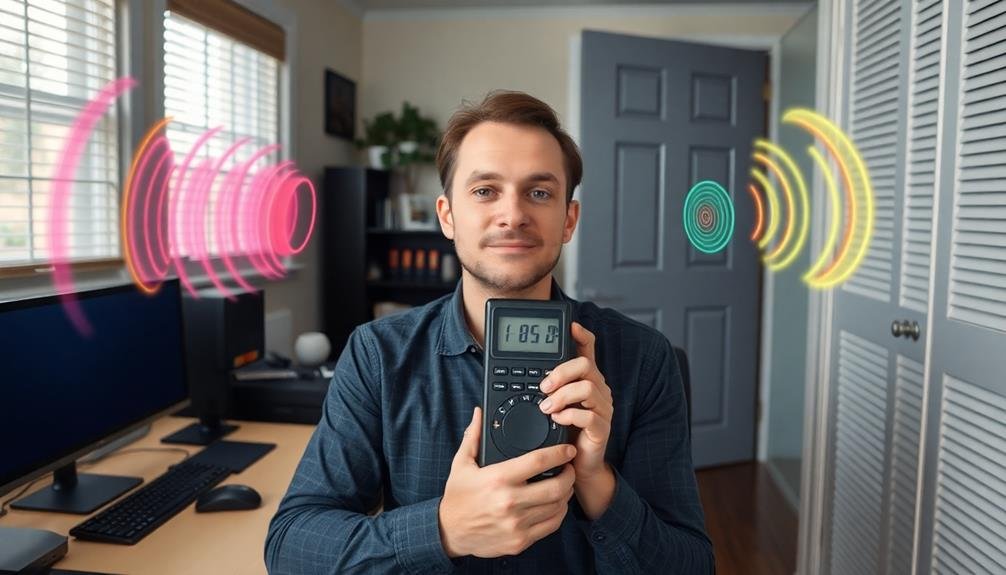
Before diving into soundproofing solutions, it's crucial to identify the specific noise issues plaguing your home office.
Start by listening carefully to the sounds that disrupt your work. Are they coming from outside, like traffic or neighbors? Or are they internal noises from other rooms in your house?
Next, determine the type of noise you're dealing with. Is it airborne sound, like voices or music, or structure-borne vibrations from footsteps or appliances? This distinction will help you choose the most effective soundproofing methods.
Consider the frequency of the noise as well. Low-frequency sounds, such as bass or rumbling, require different treatment than high-frequency noises like birds chirping or children playing.
Take note of when the noise occurs most often. Is it constant throughout the day or only at specific times? This information will help you prioritize your soundproofing efforts.
Weatherstripping Doors and Windows
When weatherstripping doors and windows for soundproofing, you'll need to choose the right materials for maximum noise reduction.
You can select from options like adhesive-backed foam tape, V-strip weather stripping, or door sweeps, depending on your specific needs.
To guarantee effectiveness, follow proper installation techniques, such as cleaning surfaces thoroughly before applying and ensuring a snug fit around all edges.
Choose Right Materials
For effective soundproofing, choosing the right materials is essential, especially when it comes to weatherstripping doors and windows. You'll want to select options that create a tight seal and absorb sound effectively. Consider these popular weatherstripping materials:
| Material | Pros | Cons |
|---|---|---|
| Foam Tape | Inexpensive, easy to install | Less durable, may compress over time |
| Vinyl | Durable, water-resistant | Slightly more expensive, can be stiff |
| Rubber | Excellent sealing, flexible | May deteriorate in sunlight |
| Felt | Inexpensive, easy to cut | Less durable, absorbs moisture |
When selecting weatherstripping, consider the gap size you're trying to seal and the amount of wear the area will experience. For doors, choose durable materials like vinyl or rubber for the bottom, and foam tape for the sides and top. For windows, felt or foam tape often work well, especially for those you don't open frequently.
Don't forget to measure your doors and windows accurately before purchasing materials. It's better to buy slightly more than you need to guarantee complete coverage. With the right materials, you'll notably reduce sound transmission and improve your home office's acoustics.
Installation Tips and Tricks
Installing weatherstripping for doors and windows can be a straightforward DIY project with the right approach. Begin by thoroughly cleaning the surfaces where you'll apply the weatherstripping. Measure the gaps around your doors and windows to determine the appropriate size and type of weatherstripping needed. For doors, focus on the sides and top, while for windows, target the areas where the sash meets the frame.
When installing adhesive-backed weatherstripping, remove the backing gradually as you apply it to guarantee a smooth, even application. Press firmly to create a strong bond. For compression weatherstripping, use a hammer and nails or a staple gun to secure it in place. Always cut the weatherstripping slightly longer than needed, then trim for a perfect fit.
Here are some additional tips to improve your weatherstripping installation:
- Apply weatherstripping when the temperature is above 50°F for better adhesion
- Use a utility knife to make clean, precise cuts
- Test the door or window closure after installation to confirm proper sealing
Remember to replace weatherstripping every few years or when you notice signs of wear. By properly installing and maintaining weatherstripping, you'll considerably reduce noise infiltration and improve your home office's soundproofing.
Installing Acoustic Panels
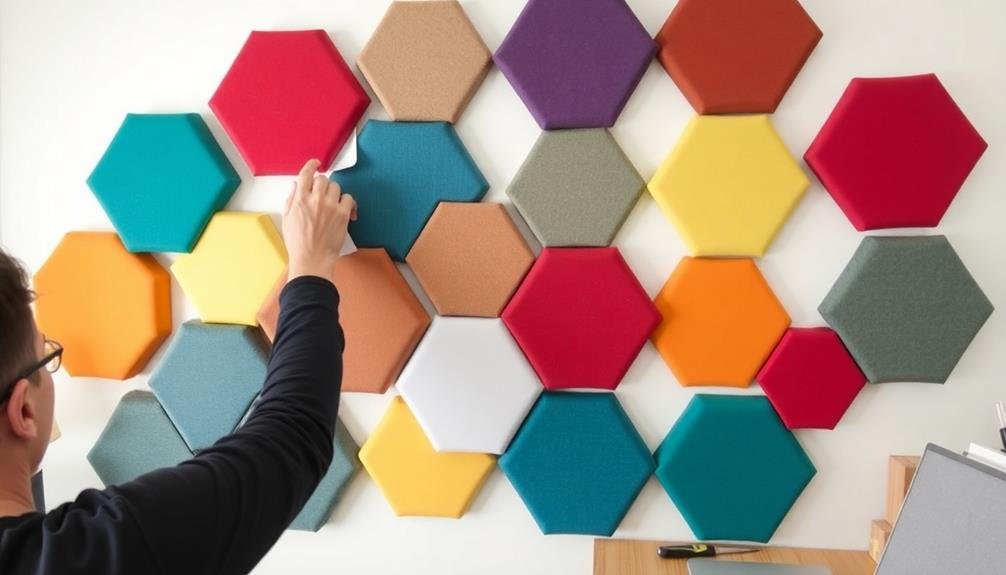
When installing acoustic panels in your home office, strategic placement is key for ideal sound absorption.
You'll want to focus on areas where sound waves first reflect, such as walls opposite your workstation and corners of the room.
While store-bought panels offer convenience, you can also create DIY versions using materials like insulation, fabric, and wooden frames for a more budget-friendly and customizable option.
Placement for Optimal Absorption
Strategic placement of acoustic panels is essential for maximizing sound absorption in your home office. Start by identifying the main sources of sound reflection, typically flat, hard surfaces like walls and ceilings.
Focus on placing panels at the first reflection points, where sound waves bounce off surfaces before reaching your ears. To find these points, sit in your usual work position and have someone move a mirror along the walls. Where you can see the sound source (like speakers) in the mirror, that's a first reflection point. Install panels there for best results.
Consider these key areas for panel placement:
- Behind your desk or workstation
- On the wall opposite your desk
- On the ceiling above your workspace
Don't forget to address corner bass traps, which help manage low-frequency sounds. Place panels in room corners, extending from floor to ceiling if possible.
For a balanced sound environment, aim to cover about 20-30% of your wall space with acoustic panels.
DIY vs. Store-Bought Panels
Now that you know where to place your acoustic panels, you'll need to decide whether to make them yourself or purchase pre-made options. DIY acoustic panels can be cost-effective and customizable, but they require time and effort. Store-bought panels offer convenience and professional quality, but they're often more expensive.
If you're handy and have some spare time, creating your own panels can be a rewarding project. You'll need materials like wooden frames, insulation, fabric, and adhesive. The process involves building frames, filling them with insulation, and wrapping them in fabric. This approach allows you to match your office decor perfectly.
Pre-made panels, on the other hand, come in various sizes, shapes, and colors. They're ready to install and often include mounting hardware. While pricier, they save time and guarantee consistent quality.
Here's a comparison of DIY vs. store-bought panels:
| Aspect | DIY Panels | Store-Bought Panels |
|---|---|---|
| Cost | Low to moderate | Moderate to high |
| Time | Time-consuming | Quick installation |
| Customization | Highly customizable | Limited options |
| Quality | Varies | Consistent |
| Ease of installation | Moderate | Easy |
Consider your budget, time constraints, and desired aesthetic when choosing between DIY and store-bought acoustic panels for your home office.
Sealing Wall and Ceiling Gaps
To effectively soundproof your home office, you'll need to address any gaps in your walls and ceiling. These small openings can allow sound to travel freely, compromising your efforts to create a quiet workspace.
Start by inspecting your room thoroughly, paying close attention to areas around windows, doors, and electrical outlets.
Once you've identified the gaps, use acoustic caulk to seal them. This specialized sealant remains flexible after drying, allowing for minor structural movements without cracking.
For larger openings, consider using expanding foam insulation. Apply it carefully, as it expands considerably and can be messy if overused.
Don't forget to check your ceiling, especially if you have recessed lighting or vents. Use weatherstripping tape around these fixtures to minimize sound leakage.
For ideal results, combine gap sealing with other soundproofing methods like:
- Adding mass to walls with soundproof panels or drywall
- Installing door sweeps and weatherstripping
- Using window inserts or heavy curtains
Adding Mass-Loaded Vinyl Barriers
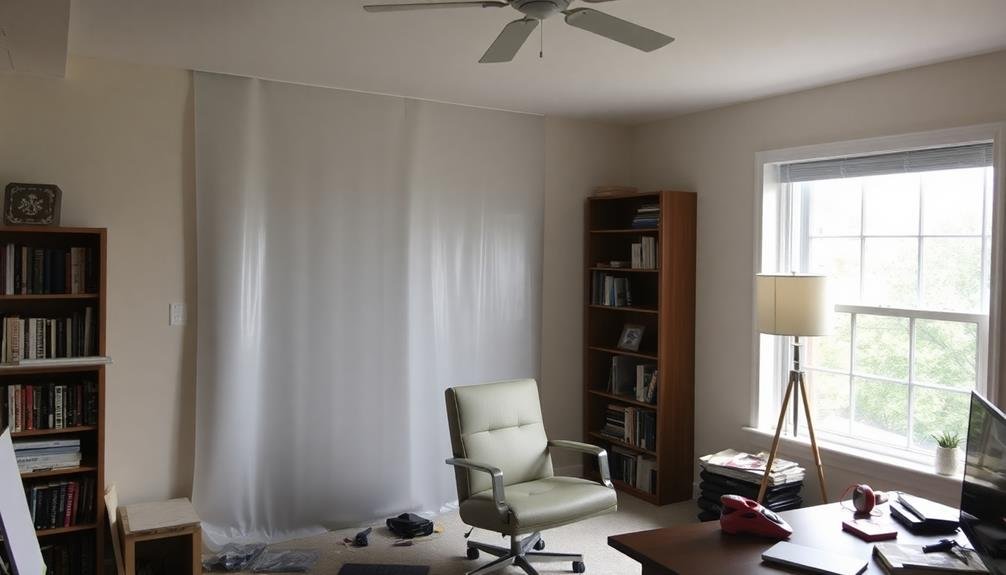
One of the most effective ways to soundproof your home office is by adding mass-loaded vinyl (MLV) barriers. MLV is a dense, flexible material that's excellent at blocking sound transmission. You can install it on walls, ceilings, or floors to greatly reduce noise.
To add MLV barriers, start by measuring the area you want to cover. Purchase MLV sheets that are slightly larger than your measurements to guarantee full coverage. Begin installation by attaching the MLV to your wall studs or ceiling joists using staples or screws with washers. Overlap the seams by at least 2 inches and seal them with acoustic caulk for maximum effectiveness.
For best results, sandwich the MLV between two layers of drywall. This creates a decoupled system that further enhances sound isolation. If you're working with an existing wall, you can still add MLV by removing the existing drywall, installing the barrier, and then replacing the drywall.
Remember to wear gloves and a dust mask when handling MLV, as it can be heavy and may contain particles that irritate your skin and lungs.
With proper installation, MLV barriers can dramatically improve your home office's acoustics.
Soundproofing Floors With Rugs
Rug soundproofing can be an effective and aesthetically pleasing way to reduce noise in your home office. By adding thick, dense rugs to your floor, you'll create an extra layer of sound absorption that helps minimize both impact noise and airborne sound.
Choose rugs made from materials like wool, which naturally absorb sound waves better than synthetic fibers.
When selecting rugs for soundproofing, consider the following:
- Size: Opt for larger rugs that cover most of the floor space
- Thickness: Thicker rugs provide better sound insulation
- Backing: Look for rugs with rubber or foam backing for added sound absorption
To maximize the soundproofing effect, place a high-quality rug pad underneath your rug. This not only enhances comfort but also adds another layer of sound insulation.
If you're dealing with significant noise issues, consider using multiple rugs or layering them for even better results.
Don't forget to treat other surfaces in your home office as well. Combine rug soundproofing with wall treatments, window coverings, and door seals for a thorough approach to noise reduction.
Creating Double-Pane Window Inserts
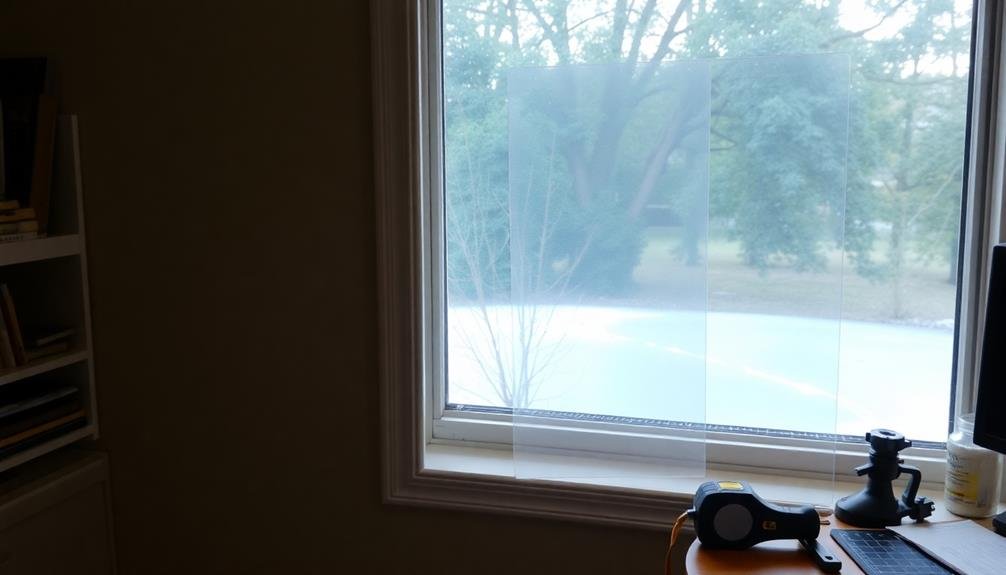
While rugs can help with floor soundproofing, windows often remain a weak point for noise intrusion. Creating double-pane window inserts can greatly reduce outside noise without replacing your existing windows. To make these inserts, you'll need acrylic sheets, weatherstripping, and magnetic tape.
First, measure your window frame carefully. Cut the acrylic sheet to fit snugly inside the frame, leaving a small gap for weatherstripping. Apply weatherstripping around the edges of the acrylic sheet to guarantee a tight seal.
Next, attach magnetic tape to the window frame and corresponding spots on the acrylic insert. Install the insert by pressing it against the window frame, allowing the magnets to hold it in place. This creates an additional air gap between your existing window and the insert, effectively doubling your window's soundproofing capabilities.
For even better results, use two acrylic sheets with a small air gap between them. Remember to clean both sides of your windows and the insert regularly to maintain visibility.
You can easily remove the insert when you want to open the window or during warmer months when noise reduction isn't as vital.
Constructing Portable Sound Barriers
Portable sound barriers offer a flexible solution for managing noise in your home office. These DIY panels can be moved around as needed, allowing you to adapt to changing noise sources. To construct your own, start with a wooden frame and fill it with sound-absorbing materials like acoustic foam or mineral wool. Cover the frame with fabric for a polished look.
When designing your portable barriers, consider these factors:
- Size: Make them large enough to block sound effectively but small enough to move easily.
- Weight: Use lightweight materials to guarantee maneuverability.
- Aesthetics: Choose fabrics that complement your office decor.
Place these barriers strategically to maximize their effectiveness. Position them near noisy equipment or between your workspace and common areas. You can also use them to create a temporary enclosed space for important calls or video conferences.
For added versatility, consider adding wheels to the bottom of your barriers. This will make it even easier to reposition them as needed.
With these portable sound barriers, you'll have a customizable solution to combat noise in your home office, allowing you to maintain focus and productivity throughout your workday.
Frequently Asked Questions
Can I Soundproof My Home Office if I'm Renting?
Yes, you can soundproof your rented home office without permanent changes. Use removable solutions like acoustic panels, door seals, and heavy curtains. You'll also find success with rugs, bookshelves, and white noise machines to reduce sound transmission.
How Much Does Professional Soundproofing Typically Cost?
You'll find professional soundproofing costs vary widely, typically ranging from $1,000 to $3,000 per room. Factors affecting the price include room size, materials used, and the level of soundproofing desired. It's best to get multiple quotes for accuracy.
Are There Any Plants That Can Help Reduce Noise in My Office?
Yes, you can use plants to reduce noise in your office. Try large, leafy plants like peace lilies, rubber plants, or ficus trees. They'll absorb sound waves and improve air quality. Place them strategically around your workspace for best results.
Will Soundproofing Affect My Home's Wi-Fi or Cell Phone Signal?
You needn't worry about Wi-Fi or cell signals. Most soundproofing materials won't greatly affect them. However, if you're using metal-based insulation or thick concrete, you might notice a slight reduction in signal strength. It's usually not a major concern.
Can I Use Egg Cartons for Soundproofing Instead of Acoustic Panels?
While you've likely heard this myth, egg cartons aren't effective for soundproofing. They don't have the density or mass to block sound. You're better off using actual acoustic panels or other materials designed specifically for sound absorption.
In Summary
You've now learned several effective DIY methods to soundproof your home office. By implementing these techniques, you'll greatly reduce noise intrusion and create a more peaceful work environment. Remember, soundproofing is often a combination of multiple strategies. Don't be afraid to experiment and adjust until you find the perfect balance for your space. With these hacks, you're well on your way to a quieter, more productive home office. Keep tweaking and enjoy the silence!

Leave a Reply