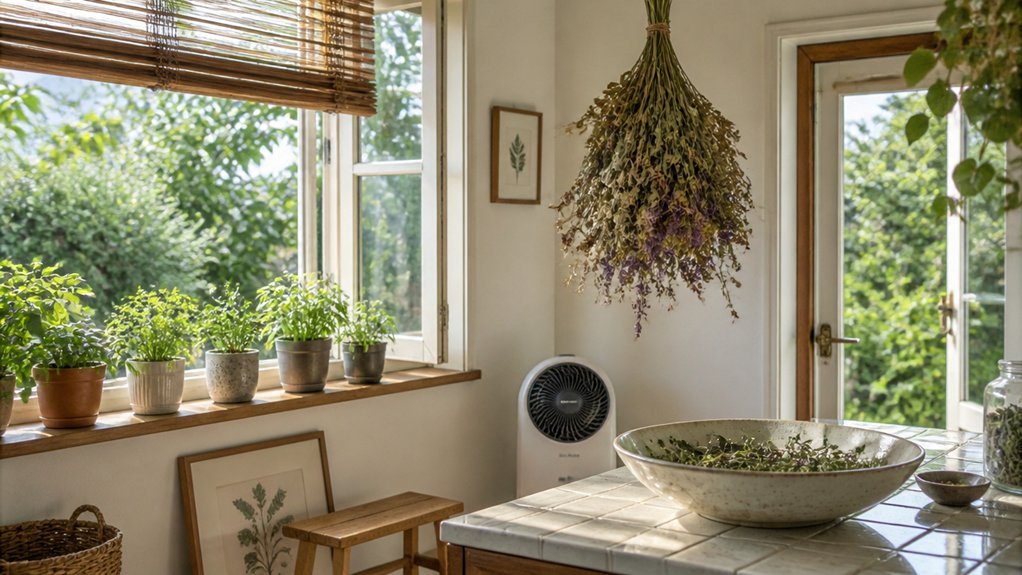
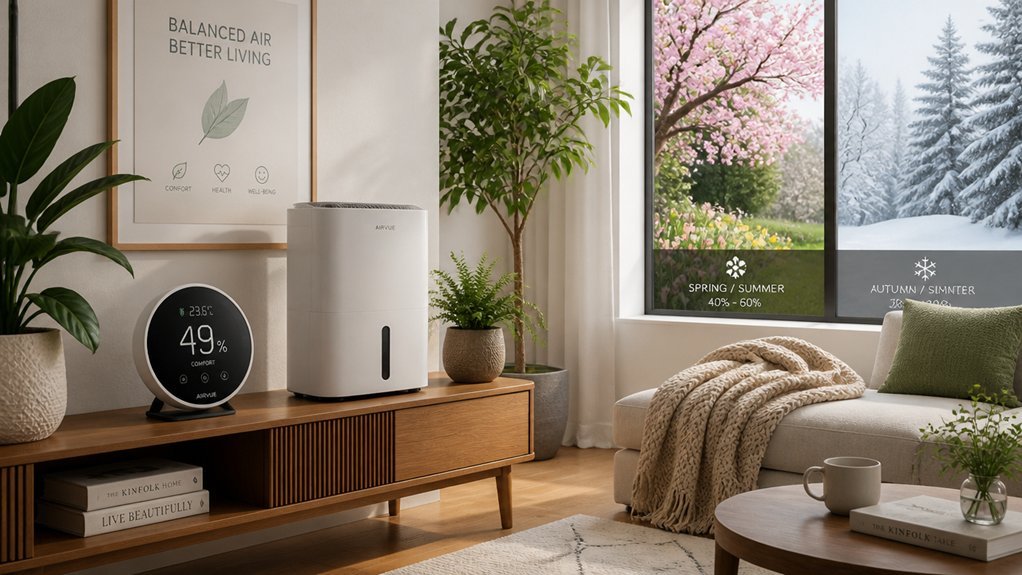
Keep your indoor humidity between 30% and 50% year-round, then adjust it with the seasons. In winter, aim for 30% to 40% to offset dry furnace air. In spring and fall, 40% to 50% usually works best, but check often because weather shifts fast. In summer, stay around 30% to 45% to reduce stickiness, mold, and dust mites. Use a hygrometer to monitor levels, and you’ll see how easy small tweaks can be.
What Is the Ideal Indoor Humidity Range?
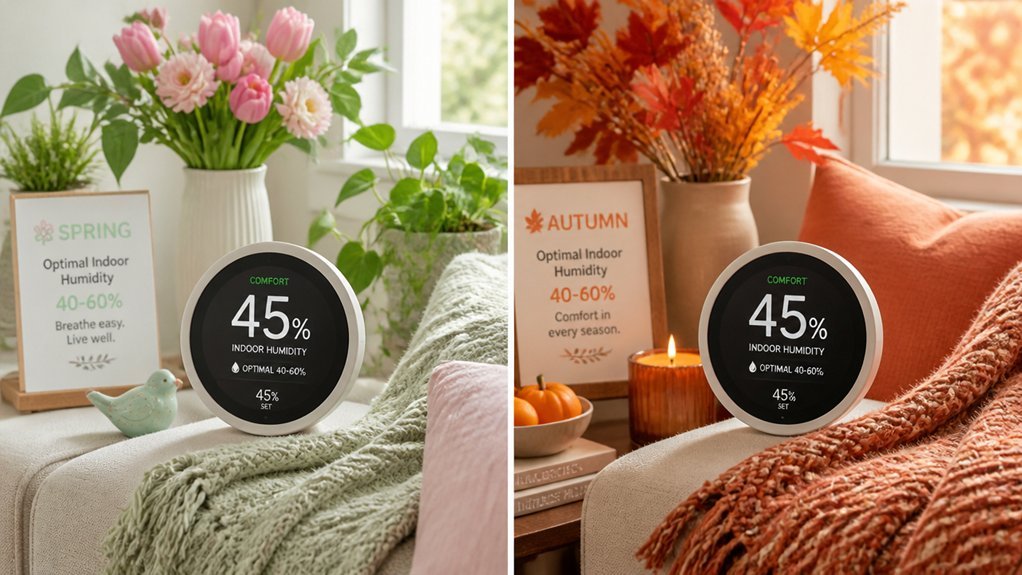
The ideal indoor humidity range is usually between 30% and 50%. You can aim for that band in most homes because it keeps the air from feeling too dry or too damp.
When humidity stays within this range, you’ll usually notice a more comfortable indoor environment and steadier conditions for wood, paint, and fabrics. Use a hygrometer to check levels in different rooms, since humidity can vary from one area to another.
If readings drop below 30%, you may need a humidifier. If they climb above 50%, a dehumidifier can help bring them back down. Adjusting your thermostat and ventilation also helps you maintain balance throughout the year without constant guesswork.
Why Indoor Humidity Matters
Because indoor humidity affects how you feel and how your home holds up, it’s worth keeping an eye on it year-round. When air is too dry, you may notice itchy skin, scratchy throats, static shocks, and irritated sinuses. Dry conditions can also make wood floors, furniture, and trim shrink or crack.
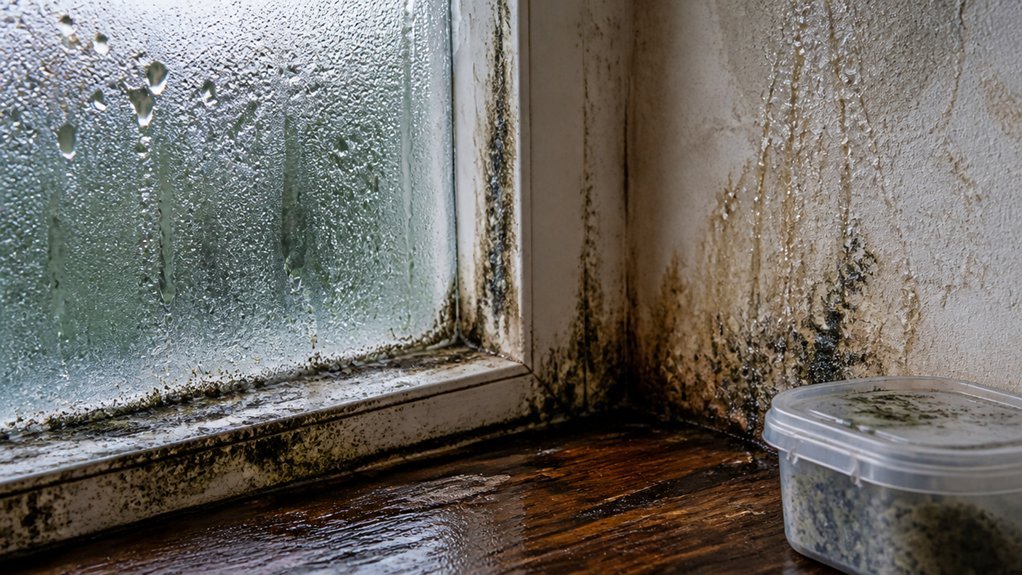
When humidity runs too high, you can feel sticky and sleep poorly, and moisture can encourage mold growth and dust mites. That extra dampness can also damage paint, wallpaper, and stored belongings.
Monitoring humidity accuracy with reliable hygrometers ensures you maintain optimal levels. Balanced humidity helps you breathe easier, protects finishes, and makes your rooms feel more comfortable in every season. By paying attention to it, you reduce wear on your home and create a healthier environment for everyone living there.
How to Measure Indoor Humidity
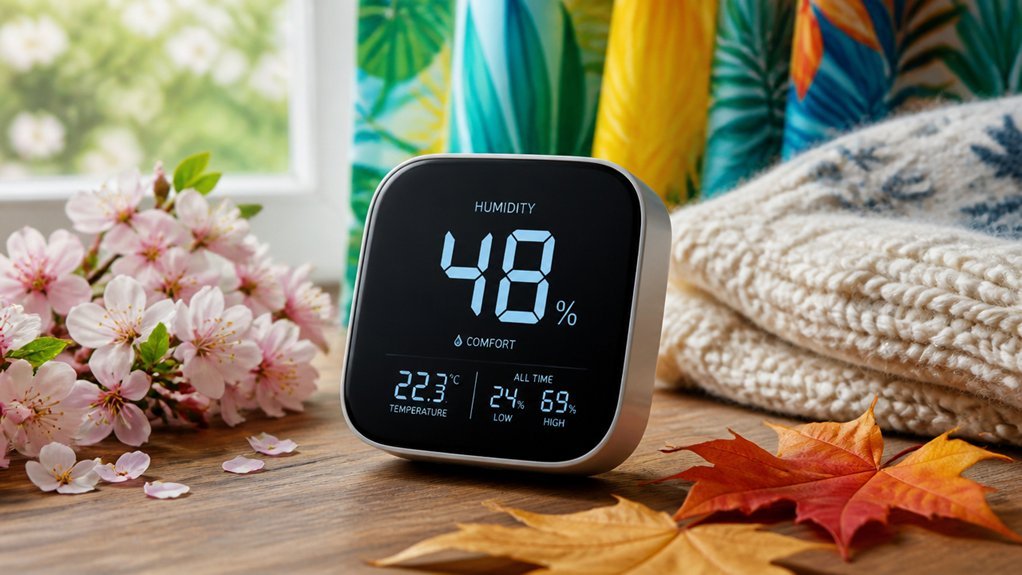
To know whether your indoor air feels too dry or too damp, you need a reliable way to measure humidity. Use a hygrometer or a smart thermostat with a built-in sensor to check the relative humidity in your home.
Place the device in a central room, away from windows, vents, kitchens, and bathrooms, so you get a true reading. For the most accurate results, take readings at different times of day and in several rooms. Aim to compare those numbers with seasonal comfort ranges, since outdoor conditions affect indoor moisture.
If your device shows wildly different readings from room to room, you may need to investigate drafts, leaks, or poor airflow. Regular checks help you spot problems early and keep your indoor environment comfortable year-round. Additionally, choosing a small dehumidifier with features like auto shut-off and quiet operation can help maintain optimal humidity levels efficiently.
How to Control Indoor Humidity Year-Round
To control indoor humidity year-round, set seasonal targets that keep your home comfortable and protect it from mold or dryness. You can adjust your HVAC settings to add or remove moisture as the weather changes, then use hygrometers to check whether conditions stay in range. Monitoring humidity levels regularly helps ensure that your indoor environment remains healthy and stable throughout the seasons.
Seasonal Humidity Targets
Seasonal humidity targets help you keep your home comfortable and protect it from moisture-related problems year-round.
In winter, aim for 30% to 40% indoor humidity to reduce dry air without causing condensation on cold surfaces.
In spring and fall, you can usually stay near 40% to 50%, which balances comfort and helps prevent mold growth.
During hot, humid summers, keep levels around 30% to 45% so you don’t encourage dampness, sticky air, or mildew.
Check your readings regularly with a hygrometer, since weather changes can shift indoor moisture quickly.
If you notice foggy windows, musty smells, or static shock, your target may be off.
Small adjustments through daily habits and routine monitoring help you stay within a healthy range.
Using a humidifier or dehumidifier can assist in maintaining these optimal humidity levels depending on the season.
Adjust HVAC Settings
You can keep indoor humidity steadier year-round by adjusting your HVAC settings as the weather changes.
- Set your fan to run longer in humid months so air moves through the system and dries faster.
- Raise the thermostat a little in summer; cooler surfaces can sweat and add moisture, so moderate cooling helps.
- In winter, avoid overheating rooms, since warm air can feel dry and push humidity lower than you want.
- Use built-in dehumidify or humidify modes, if your system has them, to fine-tune comfort without constant tweaking.
You’ll get better results when you make small seasonal changes instead of big swings.
Also, close leaks around ducts and vents so conditioned air works efficiently.
Keep airflow balanced across rooms, and your home should feel more comfortable all year.
Adding humidity control features to your system can further enhance indoor comfort and maintain ideal levels throughout the seasons.
Monitor With Hygrometers
Even small HVAC changes work best when you can see how they affect your air, and that’s where a hygrometer helps. You can place one in the living room, bedroom, and basement to track moisture where you actually spend time.
Check readings at different times of day, because cooking, showers, and weather shifts can change them fast. Aim for about 30% to 50% indoors, adjusting higher in dry winter air and lower in muggy summer months.
If numbers drift, use a humidifier, dehumidifier, ventilation, or HVAC tweaks to correct them. Digital models make monitoring simple, while analog versions work well too. When you watch trends instead of guessing, you protect comfort, reduce mold risk, and keep your home balanced year-round. Proper pressure and altitude compensation in monitors helps maintain accurate readings across different environments.
How Humidity Changes by Season
You’ll notice humidity swings with the seasons, rising in damp months and dropping when cold, dry air moves in. A moisture absorption capacity need varies depending on these fluctuations to keep your home comfortable. Those changes can make your home feel stuffy, sticky, or dry, so you’ll need to adjust your indoor air settings accordingly. By tracking seasonal shifts, you can keep your home comfortable and balanced year-round.
Seasonal Humidity Swings
As the seasons shift, indoor humidity usually rises and falls with the weather outside, and each change affects how comfortable your home feels.
In winter, cold air holds less moisture, so your rooms can feel dry and scratchy. Spring often brings wetter air, which can make your home feel sticky. Summer usually pushes humidity higher, especially during heat waves and rainy stretches. Fall tends to swing back and forth as temperatures drop and storms pass through.
- Winter air dries out quickly.
- Spring moisture can climb fast.
- Summer often feels muggy indoors.
- Fall brings uneven shifts day to day.
When you notice these swings, you can better understand why your comfort changes with the calendar, and you can plan ahead for each season without overthinking every weather shift.
Indoor Air Adjustments
When indoor humidity shifts with the seasons, you can make small adjustments to keep your home more comfortable year-round. In winter, you may need a humidifier to offset dry furnace air, protect wood furniture, and ease scratchy skin.
In summer, you can run a dehumidifier or air conditioner to cut stickiness and discourage mold growth. Spring and fall often bring unpredictable changes, so check your hygrometer often and adjust settings as the weather changes.
You should also seal drafts, use exhaust fans in kitchens and bathrooms, and open windows only when outdoor air feels balanced. By matching your indoor air to seasonal conditions, you’ll reduce discomfort, protect your home, and maintain healthier humidity levels without overcorrecting.
Best Ways to Adjust Humidity Indoors

Keeping indoor humidity in the right range starts with small, consistent adjustments. You can raise moisture in dry months and reduce it when air feels sticky. Use these simple strategies to stay comfortable and protect your home:
- Run a humidifier in bedrooms or living areas when humidity drops below 30%.
- Use exhaust fans in kitchens and bathrooms to vent excess moisture outside.
- Open windows briefly on mild days to refresh air without overdoing it.
- Watch a hygrometer so you can adjust fast before problems develop.
You’ll notice less dry skin, fewer static shocks, and better comfort when you balance humidity well.
Clean equipment regularly, too, so it works efficiently and doesn’t spread dust or mold.
Frequently Asked Questions
Can Indoor Humidity Affect Sleep Quality?
Yes, indoor humidity can affect your sleep quality. Too much moisture can make you feel stuffy, while too little can dry your throat and skin. You’ll usually sleep better when air stays comfortable and balanced.
Does Humidity Impact Wooden Furniture Damage?
Yes—humidity can warp, crack, or swell your wooden furniture. You’ll protect it by keeping moisture steady, avoiding extremes, and using a humidifier or dehumidifier when needed. Wipe spills quickly and let air circulate.
Are Humidifiers Safe for Babies’ Rooms?
Yes, you can use a humidifier in your baby’s room if you keep it clean, set it correctly, and avoid over-humidifying. You’ll help prevent dry air, but you should monitor moisture and follow pediatric guidance.
Can Houseplants Raise Indoor Humidity Naturally?
Yes, you can raise indoor humidity naturally with houseplants, though the effect’s usually modest. You’ll get the most benefit from grouping plants, watering them well, and choosing leafy varieties that release more moisture.
Does High Humidity Worsen Allergy Symptoms?
Yes, high humidity can worsen your allergy symptoms because it helps mold and dust mites thrive. You’ll likely notice more congestion, sneezing, and itching, so keeping humidity balanced can ease your discomfort.
In Summary
Keeping your indoor humidity in the right range helps you feel more comfortable and protects your home, too. You can use a hygrometer to check levels, then add moisture in winter or reduce it in summer as needed. Small changes make a big difference for your air quality, health, and belongings. When you stay aware of seasonal shifts, you can keep every room feeling just right all year long.