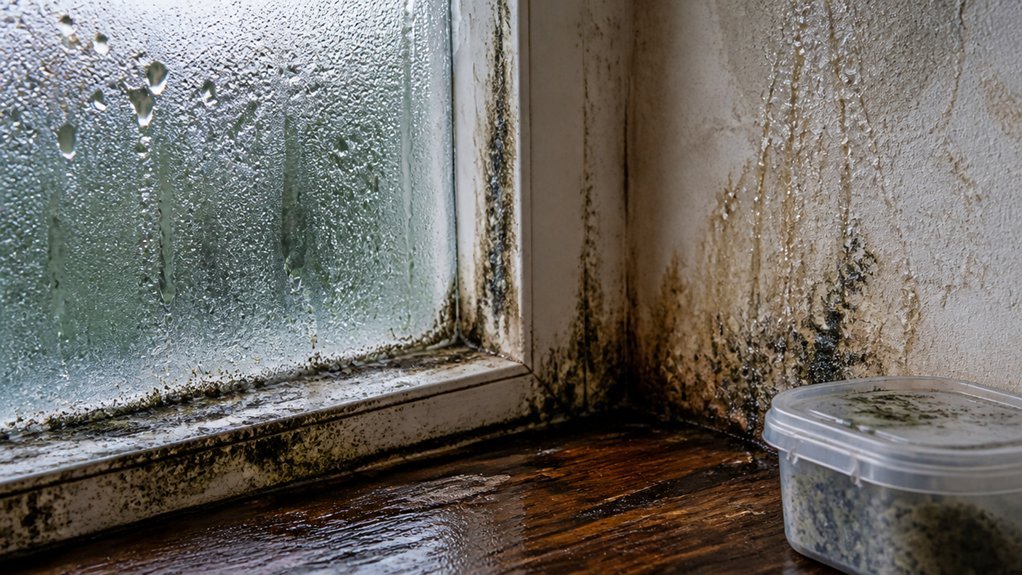
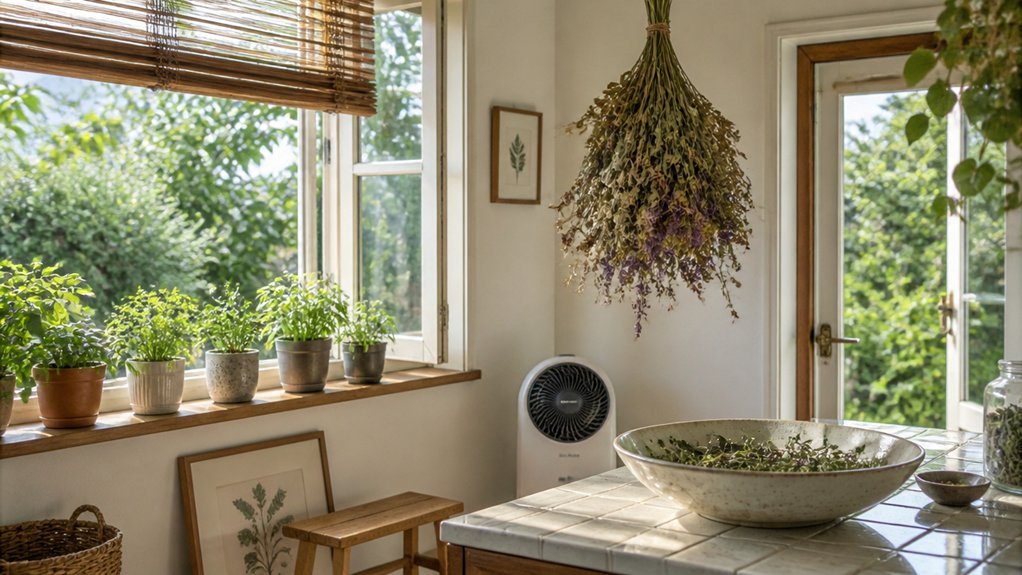
You can lower humidity in your home without a dehumidifier by opening windows on opposite sides for a short cross-breeze, running kitchen and bathroom exhaust fans, and using ceiling or box fans to keep air moving. Cut moisture at the source by covering pots, shortening showers, wiping spills fast, and drying laundry outdoors or in a vented dryer. Seal leaks, clear gutters, and let sunlight dry damp rooms, then you’ll see even more ways to help.
How to Reduce Indoor Humidity

If your home feels damp or sticky, you can lower indoor humidity by cutting off the moisture at its source and improving air circulation.
Fix leaks under sinks, around windows, and in the roof so water doesn’t keep seeping in. Cover pots while cooking, use exhaust fans in the kitchen and bathroom, and run them long enough to clear steam. Dry laundry outside or use a vented dryer, and don’t leave wet towels or mops lying around. Keep gutters clear so rain moves away from your walls.
Inside, arrange furniture to let air move freely, and use ceiling fans to keep rooms from feeling stale. Wipe condensation from windows and walls quickly, because lingering moisture raises humidity fast. Understanding the importance of proper coverage and moisture removal capacity can help optimize your efforts.
Open Windows to Let Damp Air Out
Crack open your windows when the outdoor air is cooler and drier than the air inside to help moisture escape. You can create a quick cross-breeze by opening opposite windows and doors, which helps stale, humid air move out faster. Aiming for optimal airflow capacity enhances this process, as higher airflow can clear moisture more swiftly.
Crack open opposite windows to let cooler, drier air flush out stale indoor moisture fast.
Aim for the driest parts of the day, like early morning or late evening, and keep openings modest if pollen or pollution is a concern.
- Open windows on opposite sides of your home.
- Let air flow for 10 to 20 minutes.
- Close windows once the indoor air feels fresher and less sticky.
If the weather turns muggy, shut them again to avoid bringing in more dampness. Used wisely, this simple habit lowers humidity without adding extra equipment.
Run Exhaust Fans in Kitchens and Baths

Run your exhaust fan while you cook, especially when steam from pots and pans starts to build up.
In the bathroom, switch it on during showers to pull out moisture before it spreads. Let the fan run for a few extra minutes after you’re done so it can clear the remaining humid air.
A moisture absorption capacity can also help manage excess humidity in small spaces, complementing the use of exhaust fans.
Kitchen Cooking Steam
When you cook, steam from pots, pans, and boiling water can quickly raise the humidity in your home, especially in smaller kitchens. You can keep that moisture in check by turning on your range hood or kitchen exhaust fan before heat builds. This pulls damp air outside instead of letting it settle on cabinets, walls, and windows.
- Use high fan speed when you boil, fry, or simmer.
- Keep lids on pots to reduce escaping steam.
- Crack a window nearby if your fan vents weakly.
- Regularly check and maintain your exhaust fan to ensure optimal humidity control.
You should also wipe down damp surfaces after cooking and avoid overcrowding burners, which traps more moisture. If you run the fan for a few extra minutes after you finish, you’ll clear lingering steam and help your kitchen dry faster.
Bath Shower Moisture
Bathrooms can add a lot of moisture to your home too, especially after hot showers and baths. When you shower, warm vapor spreads through the room and can drift into nearby hallways and bedrooms if you don’t control it.
Turn on your bathroom exhaust fan before you step in, and let it pull damp air outside while you bathe. Keep the door mostly closed so the fan works more efficiently and doesn’t have to handle extra air from the rest of the house. If your bathroom has a window, you can crack it open for added airflow when weather allows.
Wipe wet walls, mirrors, and counters after use, since standing water keeps humidity climbing. A dry bathroom helps you protect paint, reduce mildew, and keep your home feeling fresher.
Fan Runtime Tips
How long should you keep exhaust fans going? You should run them while you cook, shower, and for 20 to 30 minutes after moisture stops. That extra runtime helps pull damp air outside before it settles on walls, mirrors, and cabinets. A well-ventilated bathroom with proper air circulation prevents moisture buildup effectively.
- Turn the fan on before steam builds.
- Keep it running after you finish cooking or bathing.
- Clean the grille and check airflow monthly.
If your fan sounds weak or vibrates, inspect the vent path for dust or blockages. In kitchens, use the fan whenever boiling water or simmering sauces adds steam. In baths, let it clear humidity after each shower.
Good runtime habits reduce condensation, discourage mold, and help you keep indoor air drier without extra equipment.
Use Fans to Keep Air Moving

You can use ceiling fans to improve circulation and help moisture evaporate faster.
Set box fans near windows to create a cross-breeze that pushes humid air out and draws fresher air in.
Keep exhaust fans running when you cook or shower so they remove damp air before it settles in your home.
Utilizing proper humidifier coverage can also help you manage excess moisture effectively without relying solely on a dehumidifier.
Ceiling Fans Improve Circulation
Keeping air moving with a ceiling fan can make your home feel less stuffy and help humidity build up more slowly. You don’t lower moisture directly, but you do stop damp air from settling in one area. A well-placed fan can also improve overall air circulation, which supports indoor air quality and can help reduce pollutants that contribute to discomfort. That helps sweat evaporate from your skin, so the room feels cooler and drier.
That’s why pairing fans with good ventilation strategies—like opening windows or using exhaust fans—is especially effective. Keep the blades clean, too, because dust can reduce airflow and make the fan less effective.
Box Fans Cross-Breeze
A box fan can help create a simple cross-breeze by pulling fresh air in from one side of the room and pushing stale, humid air out the other. Place one fan near an open window facing inward, and set another across the room facing out.
You’ll move air faster, which helps your space feel less heavy and sticky. If you only have one fan, aim it toward the door or window to keep air circulating through the room. Keep interior doors open so air doesn’t get trapped in one area.
Run the fan during the warmest, most humid parts of the day, then adjust its position as needed. You don’t need high speed all the time; steady airflow often works best and can make your home feel more comfortable.
Exhaust Fans Remove Moisture
Exhaust fans help pull moisture-laden air out of your home before it can settle on walls, ceilings, and surfaces. You should run them during and after showers, cooking, and laundry to move damp air outside fast. This simple habit cuts condensation and helps your rooms feel fresher.
- Turn on the bathroom fan before you start showering.
- Use the kitchen hood while boiling, frying, or steaming.
- Keep laundry area fans running until clothes and air feel dry.
You’ll get the best results when you pair exhaust fans with open doors or cracked windows, so fresh air can replace humid air.
Check that each fan vents outdoors, not into an attic or crawl space, or you’ll trap moisture somewhere else.
Reduce Everyday Sources of Indoor Moisture
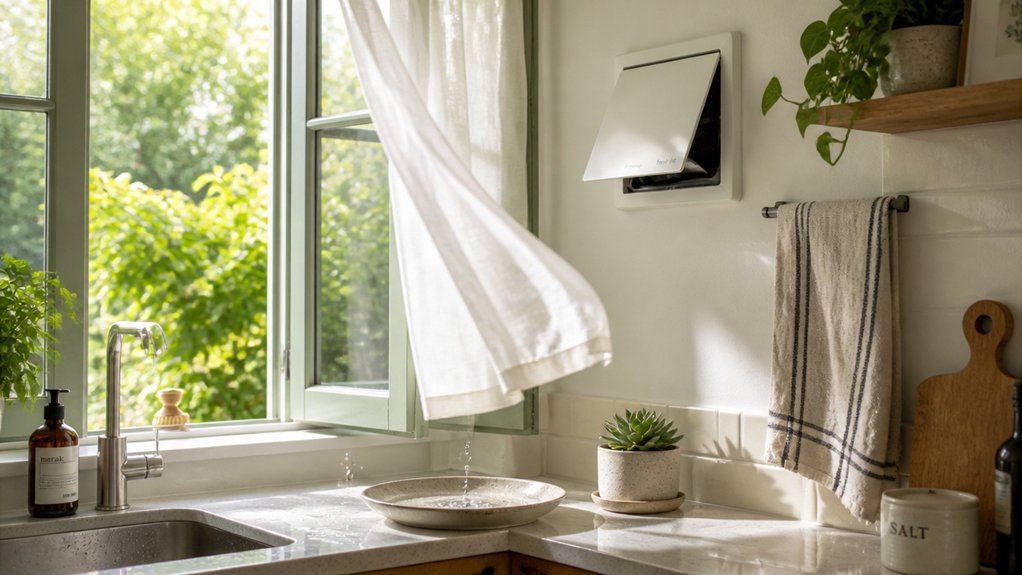
Start by cutting back on the small, everyday habits that add moisture to your air. You can lower indoor humidity by changing how you cook, clean, and dry clothes. Keep lids on pots, run the smallest kettle you need, and use short showers. If you air-dry laundry inside, place it in a ventilated room or outdoors instead. Wipe wet counters, mop spills quickly, and empty sink basins after use.
| Habit | Moisture Source | Better Choice |
|---|---|---|
| Boiling water | Steam | Cover pots |
| Long showers | Warm vapor | Shorten time |
| Indoor laundry | Evaporation | Dry outside |
| Wet cleanup | Standing water | Dry surfaces |
| Open containers | Released moisture | Keep sealed |
These simple changes help your home feel drier, fresher, and more comfortable every day.
Seal Leaks That Add Hidden Humidity
Even when you control daily moisture, hidden leaks can keep humidity high by letting damp air seep in from outside or crawlspaces. Inspect windows, door frames, baseboards, and plumbing penetrations for gaps, then seal them with caulk, weatherstripping, or expanding foam. You’ll stop moist air from slipping in and help your home hold a steadier indoor climate.
Focus on these priorities:
- Check attic hatches and rim joists.
- Seal cracks around pipes, vents, and wires.
- Replace worn door sweeps and window seals.
You should also look for signs of past water intrusion, like staining or soft trim, because those spots often leak again. Tightening these weak points reduces hidden humidity, eases strain on your HVAC system, and makes every room feel drier.
Dry Clothes Outside or on a Line

Another big source of indoor moisture is laundry, so whenever the weather allows, dry clothes outside or on a clothesline instead of indoors. You’ll keep gallons of water vapor out of your living spaces and help your home feel less sticky.
If you can’t dry outside, use a laundry room with a vented fan or open windows to move moist air away quickly. Space garments apart so they dry faster, and shake out heavy items before hanging them. Avoid draping wet clothes over chairs, doors, or radiators, because that traps moisture inside.
Try to wash smaller loads so you’re not bringing extra dampness into the house at once. When you make outdoor drying a habit, you’ll cut indoor humidity and reduce the strain on your home’s air.
Let Sunlight Help Dry Damp Rooms
Open curtains and blinds during the day to let sunlight warm damp rooms and speed up drying. Sunlight helps evaporate moisture from walls, floors, and fabrics, so you can reduce clamminess without extra equipment.
Focus on rooms that trap humidity, like bathrooms, laundry areas, and basements.
- Pull back heavy drapes early to maximize light.
- Move rugs, cushions, or wet towels near bright spots.
- Keep windows cracked if the air outside is drier.
You’ll get better results when you combine sunlight with airflow. Turn on ceiling fans, open interior doors, and wipe up standing water right away.
At night, close shades to keep heat in and prevent cool surfaces from collecting condensation again. Consistent daytime exposure can make a noticeable difference in comfort and moisture control.
Frequently Asked Questions
How Can I Tell if Indoor Humidity Is Too High?
You can tell if it’s too high when you notice condensation on windows, a musty smell, mold spots, sticky air, or lingering dampness. If you feel uncomfortable, use a hygrometer to check.
What Humidity Level Is Ideal for Most Homes?
You’ll usually want your home’s humidity between 30% and 50%. That range feels comfortable, helps you breathe easier, and reduces mold risk. Aim for about 40% if you can keep it steady year-round.
Can Houseplants Increase Indoor Moisture?
Yes, some houseplants can raise your indoor moisture because they release water vapor through transpiration. You’ll notice a bigger effect with many plants, frequent watering, and poor ventilation, though most homes won’t see huge changes.
Does Using an Air Conditioner Help Lower Humidity?
Yes, your air conditioner helps lower humidity by cooling air and condensing moisture from it. You’ll notice drier rooms when it runs regularly. Keep filters clean and size it properly for best results.
When Should I Call a Professional for Moisture Problems?
Call a professional if you spot persistent mold, peeling paint, musty odors, water stains, warped floors, or recurring dampness. You shouldn’t wait if leaks or condensation keep coming back; they’ll diagnose hidden moisture sources fast.
In Summary
Lowering humidity in your home doesn’t have to be complicated. By opening windows, running exhaust fans, using circulating fans, and cutting back on everyday moisture, you can make your space feel drier and more comfortable. Don’t forget to seal leaks, dry clothes outside, and let sunlight help out when you can. Small changes add up fast, so start with a few of these tips and you’ll notice the difference in no time.