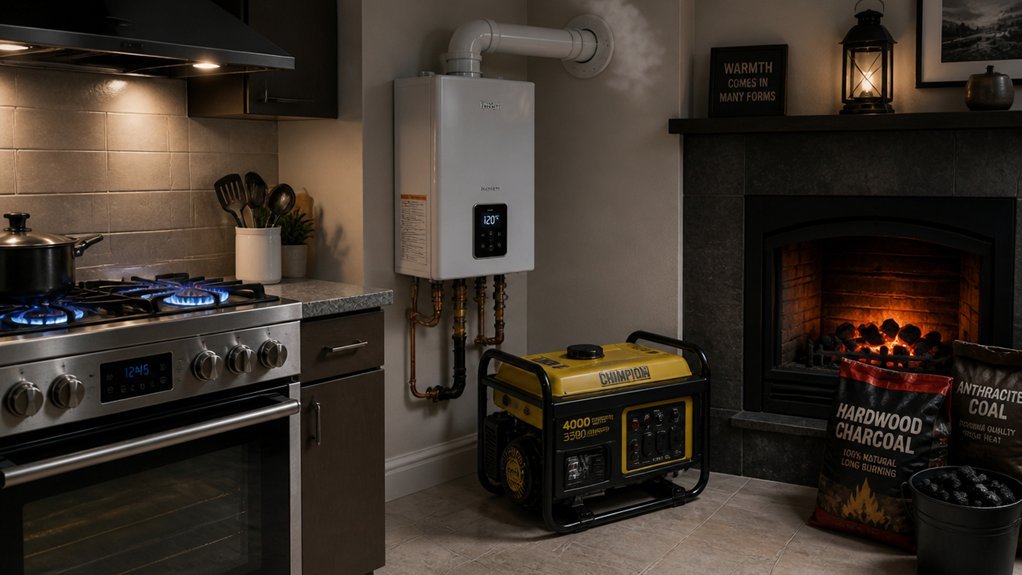
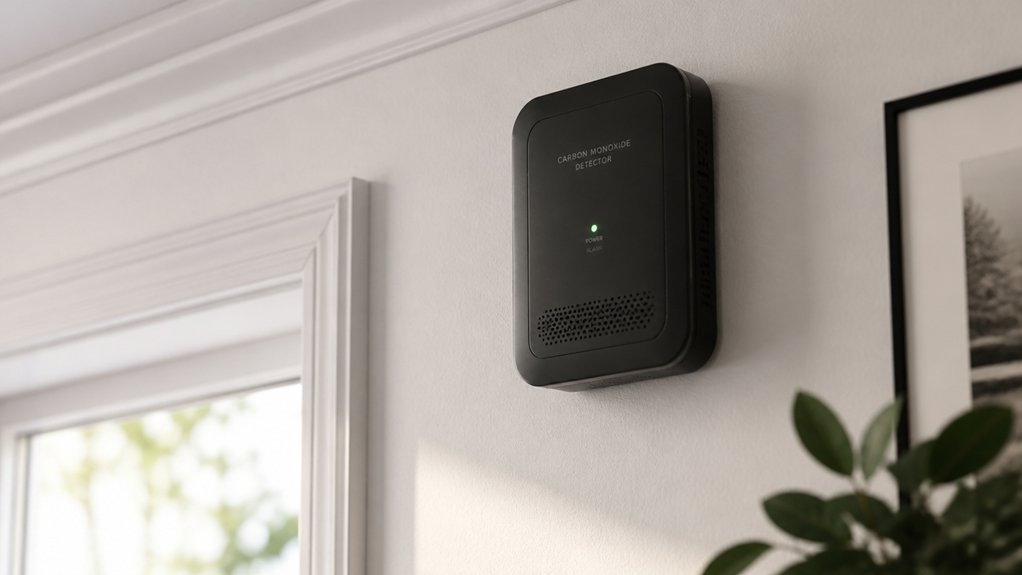
Place carbon monoxide detectors on every floor of your home, especially near sleeping areas and hallways outside bedrooms. Keep them close enough to catch leaks early, but not so close to stoves, furnaces, bathrooms, vents, or windows that steam, fumes, or airflow throw them off. Mount them at the height your model recommends, and keep them out of dead-air corners and blocked spots. Test them monthly and replace batteries and expired units, and you’ll uncover a few smart placement details next.
Choose the Best CO Detector Locations
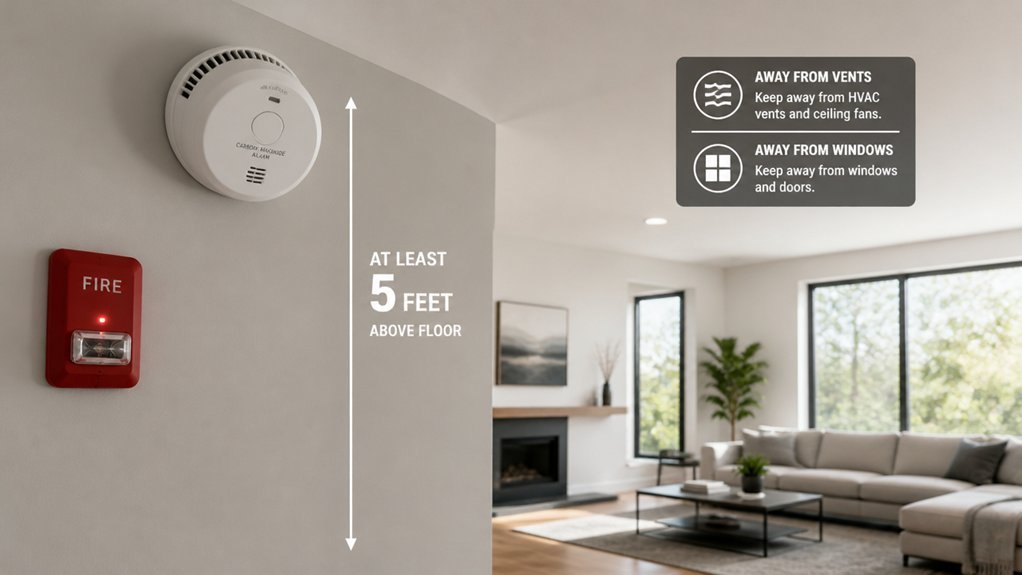
When you choose carbon monoxide detector locations, place them where CO is most likely to build up and where you’ll hear the alarm easily. Put detectors near sleeping areas, because you need warning while you’re resting.
Install them close to fuel-burning appliances, such as furnaces, water heaters, fireplaces, and attached garages, but keep them out of direct dead-air spots and away from vents, windows, and ceiling corners. Mount each unit at the height the manufacturer recommends, since placement affects how well it senses gas.
Avoid kitchens and bathrooms if steam or cooking fumes could trigger false alarms. Check that nothing blocks the sensor or speaker. Ensuring the placement respects the sensor detection types and accuracy, including electrochemical sensors, helps maintain reliable detection.
Test the detector regularly, replace batteries as needed, and follow the manufacturer’s instructions so you keep reliable coverage throughout your home.
Install a Carbon Monoxide Detector on Every Floor
You should place a carbon monoxide detector on your main floor so you can catch a leak where your family spends the most time.
Add detectors upstairs and in the basement, too, because CO can spread through every level of your home.
With coverage on each floor, you’ll improve your chances of hearing an alarm quickly.
For reliable detection, choose devices with accurate measurement ranges that can identify low to high levels of carbon monoxide.
Main Floor Coverage
Even if you already have one detector in the hallway or near bedrooms, every main floor still needs carbon monoxide coverage because CO can build up wherever fuel-burning appliances, attached garages, or fireplaces are located.
Place at least one detector where people spend time most often, such as a living room or family room, so it can alert you quickly if gas starts collecting. Don’t hide it behind furniture, curtains, or vents, and keep it at the height recommended by the manufacturer.
If your main floor has an attached garage entry or a room with a furnace, water heater, or stove, make sure the detector isn’t too far away. You want reliable warning before CO spreads through the rest of your home.
Proper placement ensures early detection and prompt response to potential carbon monoxide leaks.
Upstairs and Basement Coverage
Upstairs and basements need protection too, not just the main floor. You should install a carbon monoxide detector on every level of your home, because CO can travel and spread beyond the source.
Put one outside sleeping areas upstairs so it can wake you if danger builds overnight. In the basement, place a detector near fuel-burning appliances, but not right next to them, so it can catch leaks without false alarms. If your basement connects to a garage or furnace room, this coverage matters even more. Don’t assume one unit downstairs protects everyone above.
Regular calibration of detectors helps maintain accuracy and ensures reliable warnings in case of CO buildup.
Test each detector monthly, replace batteries as needed, and follow the manufacturer’s placement guidelines so every floor gets reliable warning when it matters most.
Place Detectors Near Bedrooms
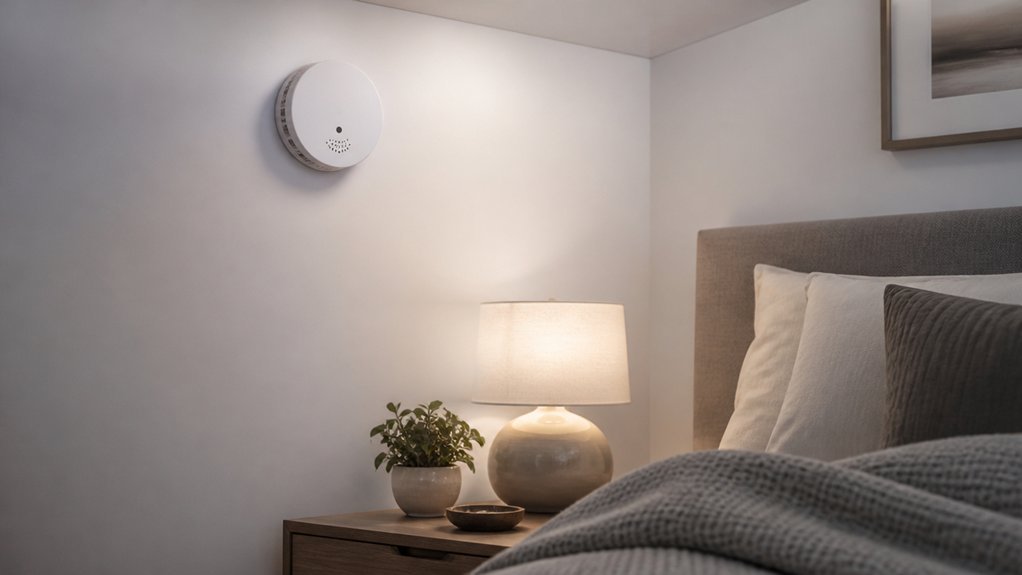
You’ll want carbon monoxide detectors close to bedrooms so they can wake you if gas builds up while you’re asleep.
A hallway outside sleeping areas often gives you the best coverage without crowding the room. If you have multiple sleeping areas, place a detector near each one so everyone gets warned in time.
For added peace of mind, ensure your detectors are EPA-listed to confirm they meet safety standards and provide reliable alerts.
Bedroom Proximity Matters
Place carbon monoxide detectors close to the bedrooms so they can wake you if a leak starts while you’re asleep. You need that alarm within earshot because carbon monoxide can build up without warning and steal your awareness before you notice symptoms.
Put a detector on each level that serves sleeping areas, and make sure the sound carries clearly into every bedroom. If you sleep with doors shut, test whether you can still hear the alarm from inside.
Don’t hide the unit behind furniture or curtains, and don’t place it so far away that it’s easy to miss. By keeping detectors near where you rest, you give yourself and your family a better chance to react quickly and get to fresh air. Ensuring effective placement also involves understanding the noise level considerations to guarantee the alert can be heard clearly.
Hallway Placement
Mount a carbon monoxide detector in the hallway just outside the bedrooms so its alarm can reach sleeping areas quickly. You want the warning close enough that you’ll hear it before dangerous gas builds up while you sleep. Place the unit at the proper height for the model you buy, and keep it away from vents, fans, and windows that can dilute or redirect airflow. If your hallway has doors, test how sound carries when they’re closed, because you need the alarm to stay noticeable through the night. Check the detector regularly, replace batteries as needed, and follow the manufacturer’s instructions for installation and maintenance. A hallway location gives you a strong chance of early warning without putting the detector in a room where it may miss the risk. Ensure the detector is properly certified for safety to guarantee reliable operation.
Multiple Sleeping Areas
If your home has more than one sleeping area, put a carbon monoxide detector near each bedroom or group of bedrooms so everyone gets an early warning. You don’t want one alarm tucked far from a guest room, basement bedroom, or upstairs hall where sleepers may not hear it.
Place each detector outside the rooms, close enough for sound to carry, but not right next to vents, windows, or appliances. If you have separate sleeping wings, treat each one as its own zone.
Test every unit monthly, replace batteries when needed, and follow the manufacturer’s height and spacing guidance. This setup helps you catch carbon monoxide quickly, even when some rooms sit far from the others.
It’s a simple step that can protect every person who’s sleeping.
Avoid Dead-Air Corners
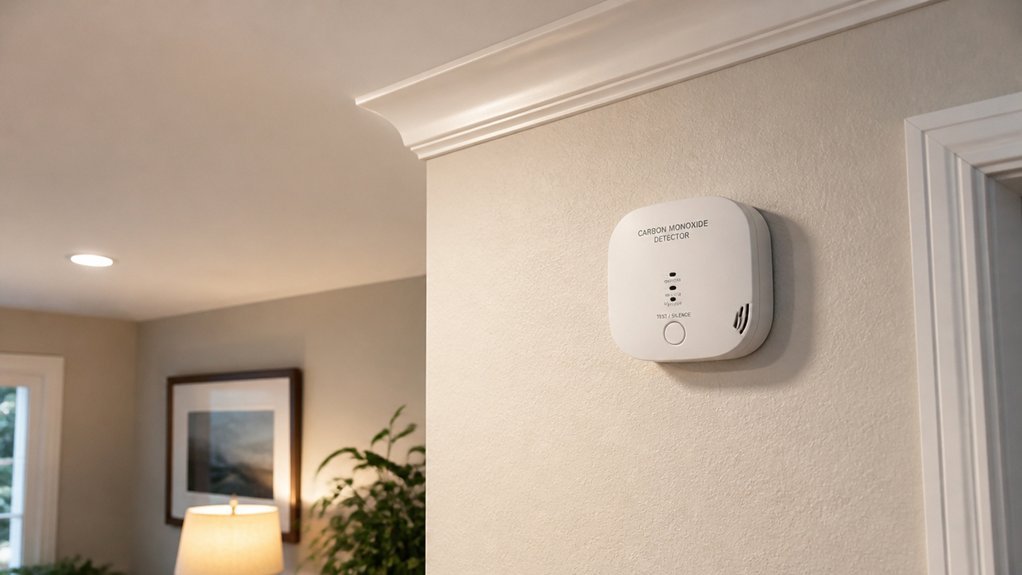
Dead-air corners can prevent carbon monoxide from reaching a detector quickly, so you should avoid tucking units into tight, stagnant spots. You want to mount detectors where air moves freely and can carry gas to the sensor without delay.
Pick a wall or ceiling location that isn’t boxed in by deep recesses, tall furniture, or sharp corners that trap still air. If you place a detector in a cramped nook, it may react later than it should. Give each unit enough open space around it so it can sample the room properly.
Check the manufacturer’s instructions for clearance rules, then follow them exactly. Good placement helps the alarm warn you sooner, which gives you more time to respond and leave safely.
Keep Detectors Away From Kitchens, Vents, and Bathrooms
Keep carbon monoxide detectors away from kitchens, bathrooms, and HVAC vents, since steam, cooking fumes, and airflow can trigger nuisance alarms or interfere with normal sensing. You should place detectors where everyday moisture and strong odors won’t reach them, so they can focus on actual carbon monoxide.
Don’t install one right beside a stove, sink, shower, or supply register. Kitchen exhaust, shower humidity, and furnace airflow can all distort readings or make the alarm sound when there’s no danger.
Choose a nearby spot with steadier air and less contamination, then verify that appliances, vents, and doorways won’t blow directly on the unit. That way, you’ll reduce false alarms and improve reliability when a real carbon monoxide threat develops.
Mount Detectors at the Right Height
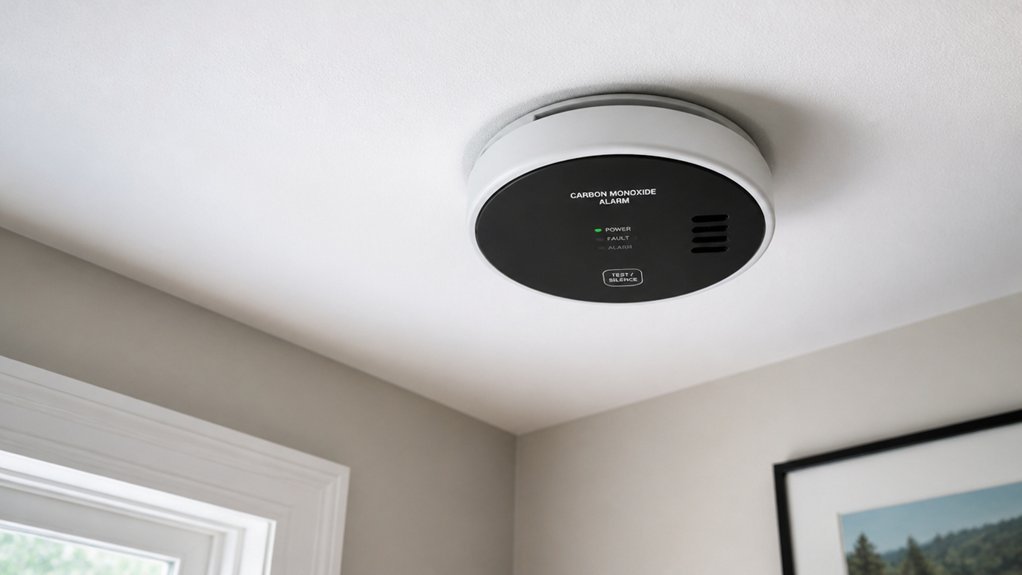
Where should you place a carbon monoxide detector so it can sense danger quickly? Mount it at the height your model specifies, because CO mixes with room air and doesn’t settle like smoke. Most plug-in units work best near outlet level, while hardwired alarms often belong on a wall or ceiling in the manufacturer’s recommended zone. Keep the sensor clear of furniture and curtains.
| Location | Height | Why it helps |
|---|---|---|
| Wall mount | 4-5 ft | Easy access |
| Ceiling mount | Per instructions | Broad coverage |
| Plug-in unit | Outlet height | Simple placement |
| Bedroom wall | Near breathing zone | Faster notice |
| Hallway wall | Mid-height | Shared coverage |
Pick one consistent spot per floor, then follow the label exactly.
Test and Replace Detectors Regularly
Even a well-placed carbon monoxide detector won’t protect you if it isn’t working, so test it every month and replace batteries as soon as the low-battery alert sounds. Press the test button, listen for the alarm, and make sure every unit responds quickly. If one stays silent, replace it right away.
Test carbon monoxide detectors monthly and replace batteries promptly so every unit is ready to warn you.
Keep the manufacturer’s instructions handy, because some models need special care or sensor replacement after a set number of years.
- Test each detector monthly.
- Replace batteries immediately when warned.
- Check the expiration date yearly.
- Swap out expired units promptly.
You should also vacuum dust from vents so sensors can breathe. If you move or repaint, verify the detector still works afterward.
Regular checks take minutes, but they help you catch problems before carbon monoxide can build up unnoticed in your home.
Frequently Asked Questions
How Many Carbon Monoxide Detectors Does My Home Need?
You’ll usually need at least one carbon monoxide detector on each level of your home, including the basement, and near sleeping areas. Check local codes, since your exact number depends on your home’s layout.
Can I Use a COmbination Smoke and CO Detector?
Yes, you can use a combination smoke and CO detector if it meets local code and UL standards. You’ll still need proper placement, and you should install enough units to cover your home effectively.
Do Battery-Powered Detectors Work as Well as Hardwired Ones?
Yes, battery-powered detectors can work just as well as hardwired ones if you maintain them properly. You’ll need to replace batteries regularly, while hardwired units may offer backup power and more consistent reliability.
Should I Install CO Detectors in a Garage or Basement?
You should install CO detectors in your basement, but not in a garage. Place them near sleeping areas and fuel-burning appliances, too. Garages can trigger false alarms from vehicle exhaust and fumes.
What Alarm Sounds Do Carbon Monoxide Detectors Use?
You’ll usually hear a loud, repetitive beeping or chirping alarm, often four beeps, a pause, then repeats. Some detectors also use voice alerts. You should check your model’s manual, since sounds vary by brand.
In Summary
Knowing where to place your carbon monoxide detectors can make all the difference in keeping your home safe. Put one on every floor, near bedrooms, and away from dead-air spots, kitchens, vents, and bathrooms. Mount each detector at the right height, then test it regularly and replace it when needed. If you follow these simple rules, you’ll give yourself and your family a much better chance of catching danger early and staying protected.