You can cut dust naturally by removing shoes, using doormats, and keeping windows closed on windy days. Dust with microfiber cloths, then vacuum or damp mop so particles stay trapped. Wash curtains, bedding, and pet fabrics often, and choose low-pile rugs or smooth floors. Keep humidity around 40% to 50% with a hygrometer, and use fans or exhaust vents to move stale air out. A few simple habits can make your home feel cleaner fast, and there’s more to learn next.
Cut Dust at the Source
To cut dust at the source, start by limiting what brings it in. You can do that by removing shoes at the door and setting up a doormat to catch dirt before it spreads. Keep windows closed on windy days, and use screens when you want fresh air without extra debris.
Wash pet bedding often, since fur and dander quickly build up. Trim clutter that traps dust, like piles of paper, unused blankets, and decorative items you rarely touch. Store clothes, linens, and toys in closed bins or cabinets.
Check vents, baseboards, and filters regularly so dust doesn’t collect and circulate again. When you reduce the amount entering your rooms, you’ll spend less time cleaning and keep your home feeling fresher, naturally every day. Using a high-accuracy air quality monitor can help identify and manage airborne dust and other pollutants more effectively.
Swap in Natural Dust-Cleaning Tools
Once you’ve cut down the dust coming in, make your cleaning tools work harder with simple, natural choices. Swap disposable dusters for microfiber cloths, which trap particles instead of pushing them around. You can also use a slightly damp cloth on shelves, baseboards, and furniture to grab dust fast.
Using a hygrometer to monitor indoor humidity levels can help prevent dust mites and mold growth, further reducing dust and allergens. indoor humidity monitoring and the right balance can create a healthier environment for everyone. Keep your tools clean, too, so they don’t spread dust back into the air. With the right basics, you’ll spend less time chasing dust and more time enjoying a fresher home.
Wash Dust-Trapping Fabrics
You can cut dust fast by washing curtains regularly, since they trap more dirt than you might think. Don’t forget upholstered covers, either, because they collect dust in the fibers and spread it back into the room. A simple cleaning routine keeps these fabrics fresher and helps your home stay naturally dust-free. Using a moisture meter to check for excess humidity can also prevent mold growth, which contributes to dust and allergens in your environment.
Wash Curtains Regularly
Curtains quietly collect dust, pet dander, and pollen, so washing them regularly can make a noticeable difference in your home’s air quality. You can cut buildup by checking the care label and laundering them every few months, or more often if you live with pets or allergies. Using a gentle cycle and mild detergent can help protect fibers and colors.
- Shake curtains outdoors before washing to release loose dust.
- Wash them in cool or warm water, then dry according to the label.
- Rehang them promptly so they don’t pick up extra dust while folded.
- Regularly cleaning or washing window coverings is a key step in maintaining cleaner indoor air.
If your curtains are too delicate for frequent washing, vacuum them with a brush attachment between cleanings. This simple routine helps keep airborne dust lower and your rooms fresher overall.
Clean Upholstered Covers
Upholstered covers can hold onto dust, pet hair, and allergens, so cleaning them regularly helps keep them from circulating back into the air. Vacuum removable covers with a brush attachment before you wash them to lift loose debris.
Check the care label, then launder them in cold or warm water with a gentle detergent to protect the fabric. If the cover isn’t machine-safe, spot-clean it with a mild soap solution and a microfiber cloth. Let covers dry completely before you put them back, since damp fabric can trap more dust and musty odors.
You should also shake out cushions outdoors when possible and rotate them often. These simple habits help you reduce buildup and keep your living space fresher. Incorporating dehumidifier use alongside regular cleaning can further reduce indoor humidity levels, making it more difficult for dust, mold, and allergens to thrive.
Improve Airflow to Move Dust Out
You can open windows strategically to let fresh air carry dust outside instead of letting it settle. Run ceiling fans to keep air moving through your rooms, and use exhaust fans in kitchens and bathrooms to pull dust and moisture out. These simple airflow habits help you clear the air and reduce buildup naturally. Using humidity sensors in exhaust fans can further optimize moisture removal, helping prevent dust from settling and preventing mold growth.
Open Windows Strategically
When outdoor air is cleaner, open windows on opposite sides of your home to create a cross-breeze that pushes dust out instead of letting it settle. You’ll refresh stale rooms faster and help particles escape before they land on shelves, floors, and fabrics.
Check pollen counts, smoke alerts, and humidity first so you don’t trade indoor dust for outdoor irritants. Keep openings modest during windy days to avoid stirring debris back inside.
A well-timed ventilation also helps reduce indoor pollutants like wildfire smoke, especially if you have an air purifier with HEPA filtration running simultaneously.
- Open windows during mild mornings or after rain.
- Close them when traffic, pollen, or smoke rises.
- Use short ventilation bursts to clear rooms quickly.
This simple habit works best when you match it to local conditions and your home’s layout.
Run Ceiling Fans
Turn on ceiling fans to keep air moving so dust doesn’t have time to settle on surfaces. Set them to spin counterclockwise in warmer months so they create a steady downdraft and keep particles suspended long enough for your cleaning routine to catch them.
Run fans in rooms you use often, especially bedrooms and living areas, where dust builds up fast. Choose a moderate speed; too much force can stir debris without helping.
Keep fan blades clean, because dusty blades can spread grime back into the room. Wipe them regularly with a microfiber cloth or a damp duster.
If you have multiple fans, use them to maintain gentle circulation throughout your home, and pair them with routine dusting for better results.
Use Exhaust Ventilation
Exhaust fans help pull dust-filled air out of your home instead of letting it recirculate and settle on surfaces. Use them in bathrooms, kitchens, laundry rooms, and any space that traps moisture or odors.
When you cook, shower, or run the dryer, turn the fan on right away and let it run a few minutes afterward. This helps move airborne particles outdoors before they spread.
Keep vents clean so they work efficiently, and make sure exterior ducts open freely.
- Run bathroom fans during and after showers.
- Use the kitchen hood while cooking.
- Vent laundry areas to reduce lint and dust.
Better airflow lowers indoor dust, cuts damp buildup, and keeps your rooms fresher with less effort.
Keep Humidity in the Dust-Control Zone
Keeping indoor humidity in the 40% to 50% range can make a big difference in how much dust settles and stays in your home. When the air stays too dry, dust particles float longer and spread more easily.
If it’s too humid, you can encourage mold and dust mites, which create their own indoor mess. Use a hygrometer to check moisture levels, and adjust with a humidifier or dehumidifier as needed. You should also run your exhaust fans after showers and cooking to keep moisture from climbing.
Fix leaks quickly, since damp spots can trap dirt and support dust buildup. Aim for steady conditions rather than swings, because stable humidity helps you keep particles heavier and easier to remove when you clean.
Choose Low-Dust Flooring and Decor

Once your humidity is under control, the surfaces in your home matter even more. You can cut dust buildup by choosing flooring and decor that don’t trap particles. Smooth floors like hardwood, tile, or polished concrete are easier to sweep and mop than carpet, which holds onto debris.
Smooth floors like hardwood or tile help reduce dust buildup and make cleaning much easier.
If you love rugs, pick low-pile styles and wash them often. Keep upholstery simple too: leather, microfiber, or tightly woven fabrics shed less dust than bulky, textured materials.
- Use washable slipcovers on sofas and chairs.
- Choose blinds instead of heavy fabric drapes.
- Keep decorative items minimal so dust has fewer places to settle.
You’ll also make cleaning faster when you avoid cluttered shelves and oversized knickknacks. Fewer surfaces mean less dust, less effort, and a fresher-feeling home overall.
Use Houseplants to Filter Air
Bring in a few houseplants to help freshen your air and naturally catch some dust. You can place leafy options like snake plants, pothos, or spider plants around rooms where dust collects fastest. Their leaves trap tiny particles, and they also add moisture to the air, which can help keep dust from floating around as easily.
Set them near windows for healthy growth, but avoid crowding surfaces with too many pots. Wipe the leaves occasionally so they keep working well and don’t become dusty themselves.
Choose plants that fit your light and care routine, so you’ll enjoy the benefits without extra hassle. With the right greenery, you’ll make your home feel cleaner, softer, and more inviting.
Create a Weekly Dusting Routine
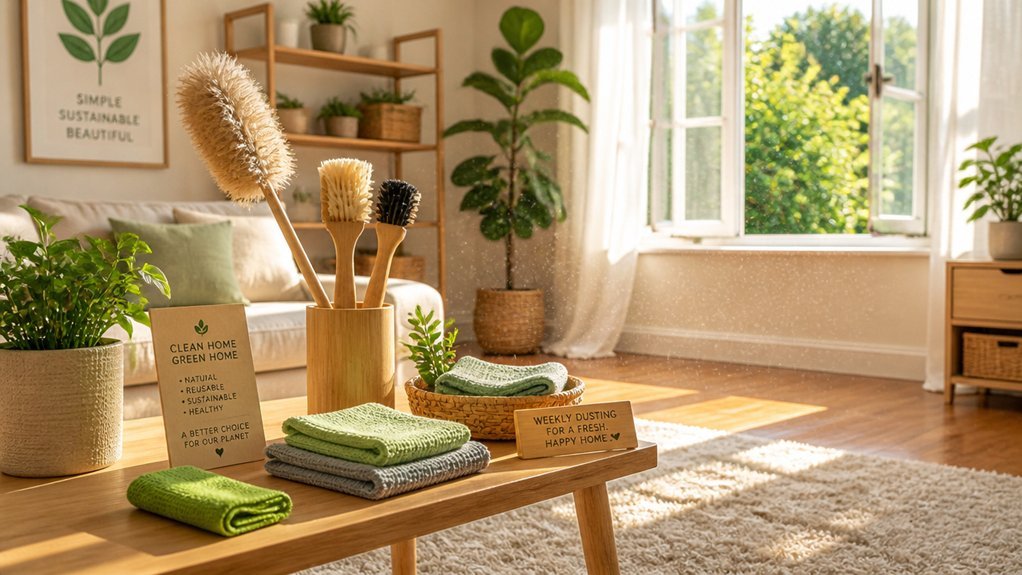
Set aside one day each week to dust the spots that collect it fastest, like shelves, baseboards, ceiling fans, and electronics. When you stay consistent, you stop dust from building up and spreading through your home. Use a microfiber cloth, since it traps particles instead of pushing them around. Work from top to bottom so dust falls onto surfaces you’ll clean next.
Dust weekly with a microfiber cloth, working top to bottom to keep buildup from spreading.
- Dust blinds, vents, and picture frames first.
- Wipe electronics with a dry or lightly damp cloth.
- Finish with floors using a vacuum or damp mop.
Keep your routine short and focused, and you’ll make cleaning easier each week. If you live in a dusty area or have pets, add a quick midweek touch-up to stay ahead of buildup and keep surfaces fresher longer.
Frequently Asked Questions
How Often Should I Replace HVAC Filters to Reduce Dust?
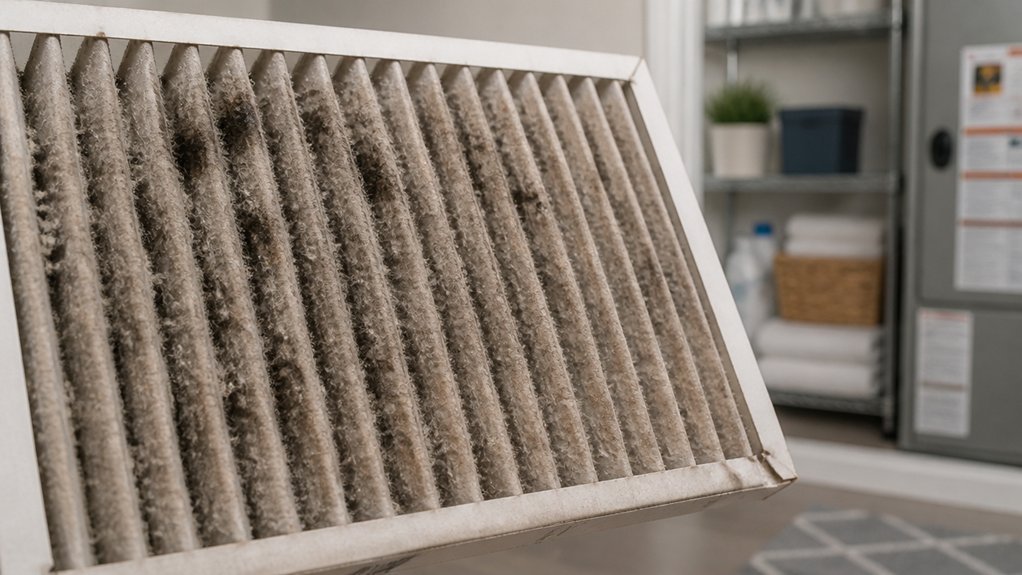
You should replace your HVAC filters every 1 to 3 months, depending on use, pets, and allergies. Check them monthly, and change them sooner if they look dirty or airflow drops noticeably.
Are Robotic Vacuums Effective for Naturally Lowering Indoor Dust?
Yes, you can reduce dust with a robotic vacuum, especially if you run it often on hard floors and low-pile rugs. It won’t replace deep cleaning, but it’ll help you maintain lower dust levels naturally.
Can Pets Make Dust Buildup Worse in the Home?
Yes—your pets can worsen dust buildup by shedding fur, dander, and tracked-in dirt. You’ll notice more particles if they nap on furniture, so brush them regularly and vacuum often to stay ahead.
Which Natural Cleaning Ingredients Help Remove Dust Safely?
You can use vinegar, mild soap, and baking soda to lift dust safely. Mix vinegar with water for surfaces, add soap for grime, and use baking soda on stubborn spots without harsh fumes.
Does Decluttering Really Reduce Dust Accumulation?
Yes, decluttering really does reduce dust buildup because you’ve got fewer surfaces and hiding spots for it. You’ll clean faster, and airflow improves, so dust settles less. Keep only what you use and display.
In Summary
Keeping dust down naturally doesn’t have to feel like a chore. When you cut dust at the source, swap in better tools, wash fabrics often, and improve airflow, you make your home easier to clean day after day. Add the right humidity, low-dust choices, a few houseplants, and a weekly routine, and you’ll notice the difference. Small habits can add up fast, helping you breathe easier and enjoy a fresher home.