Laundry room humidity problems usually come from poor ventilation, leaks, and too much moisture from wet clothes or appliances. You may notice musty odors, condensation, peeling paint, or mold on walls and behind machines. Fix it by running exhaust fans, opening windows, sealing gaps, checking hoses and vents, and leaving washer doors open after use. A dehumidifier can help, too. If you want the easiest ways to keep the room dry, the next steps are worth a look.
Why Laundry Room Humidity Causes Mold
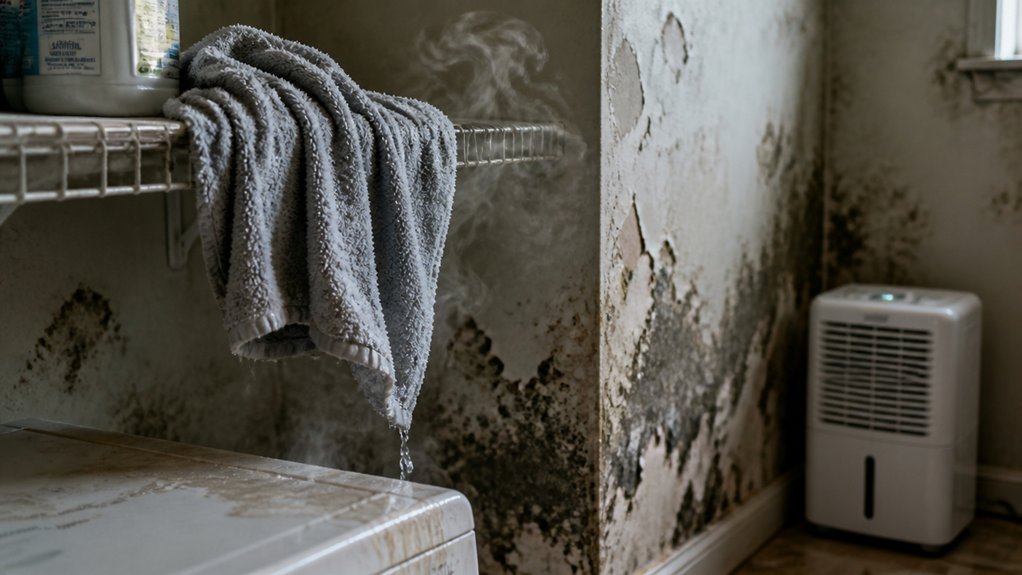
When your laundry room stays damp, you create the perfect conditions for mold to grow. Moist air lingers after you wash and dry clothes, then settles on walls, ceilings, and floors.
If you don’t vent that moisture outside, it feeds mold spores already in the room. Warmth from running appliances can speed the process, and fabric piles hold extra water that evaporates slowly.
Small leaks around hoses, sinks, or vents add even more moisture, so the air never fully dries. Mold thrives when humidity stays high because it needs water, warmth, and organic material to spread. Ensuring proper air circulation can help reduce excess moisture and prevent mold growth.
Signs Your Laundry Room Is Too Humid
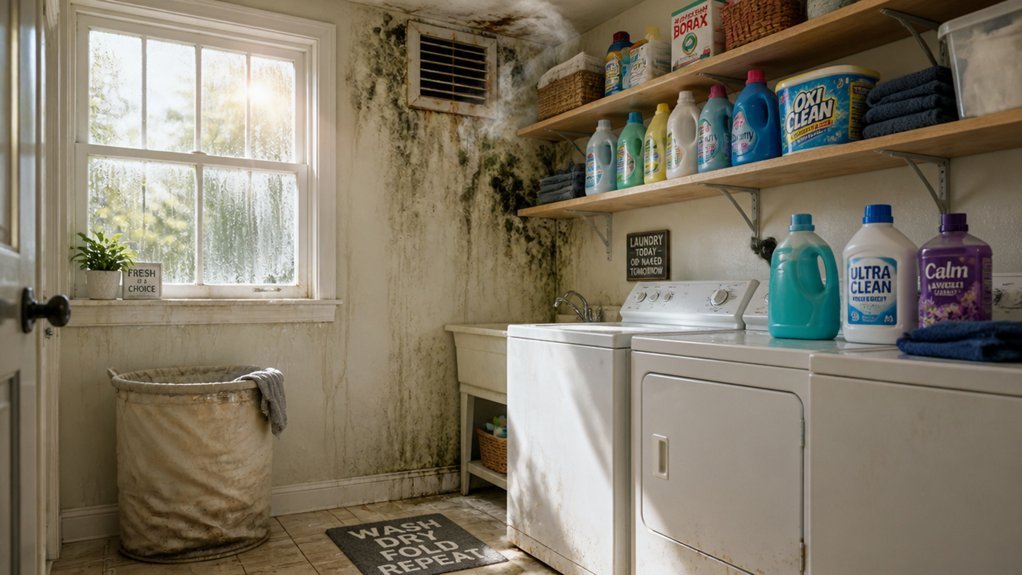
If your laundry room smells musty, feels damp, or shows water droplets on windows and walls, you may have a humidity problem. You might also spot mold growth around baseboards, vents, or behind appliances. These signs mean you need to act before moisture causes bigger damage. Using a small dehumidifier with auto shut-off and quiet operation can help maintain the proper humidity level and prevent these issues.
Musty Odors
A musty smell in your laundry room usually means moisture is lingering longer than it should. You’ll notice it most after washing, when damp towels, baskets, or walls trap stale air and let mildew grow. Don’t ignore it; odors often point to poor airflow and excess humidity. Regularly monitoring the humidity levels with a digital hygrometer can help identify problem spots before odors develop.
| What You Smell | What It May Mean |
|---|---|
| Damp, earthy scent | Moisture is staying in the room |
| Sour fabric odor | Wet laundry sat too long |
| Stale air | Ventilation isn’t clearing humidity |
| Moldy smell near storage | Hidden damp spots may be present |
| Strong odor after use | The room isn’t drying out fast enough |
To fix it, dry laundry promptly, empty the hamper often, and run ventilation during and after chores.
Condensation Buildup
Condensation on windows, cold walls, or even the washer itself is a clear sign your laundry room’s humidity is too high. You’ll often notice water droplets forming after a load finishes, especially when you dry clothes indoors or run hot wash cycles. If you wipe surfaces and they quickly fog up again, moisture’s building faster than your room can release it. That trapped damp air can also make doors, trim, and nearby cabinetry feel slick or cool to the touch. You need to improve airflow right away by opening a window, running a fan, or using a dehumidifier. Venting the dryer properly and leaving the door open after laundry can also help. The goal is to keep moisture from settling on surfaces and lingering in the room. Proper moisture removal capacity is essential to effectively control humidity levels in your laundry space.
Mold Growth Signs
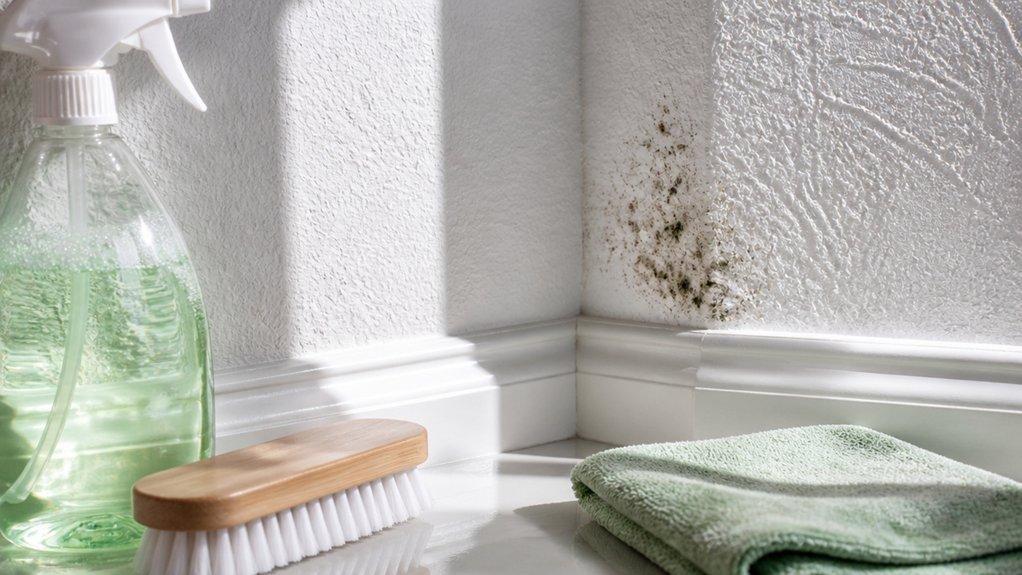
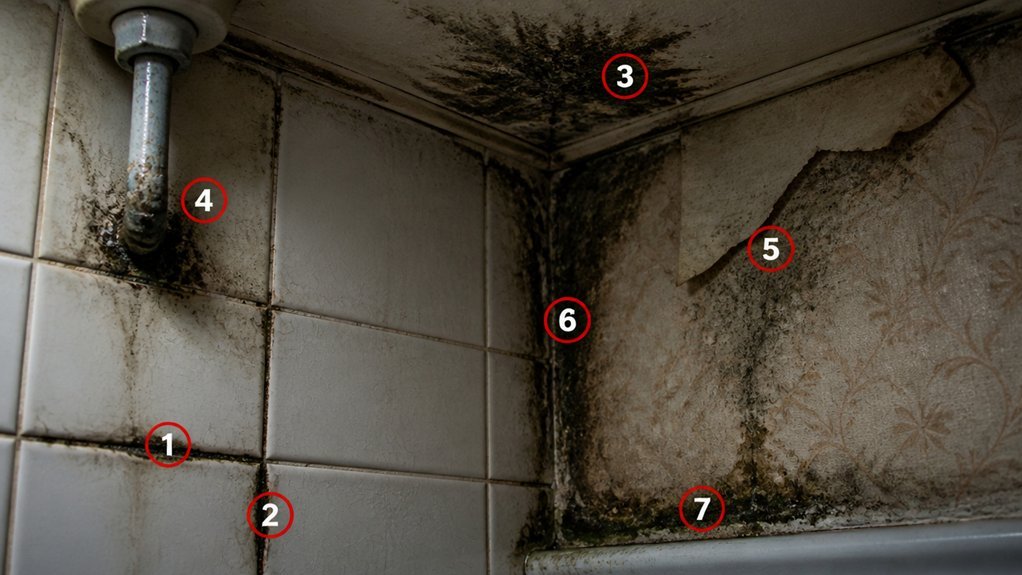
Once moisture keeps hanging around, mold can follow fast in a laundry room. You might notice a musty smell, dark spots on walls, ceilings, or baseboards, and fuzzy growth near the washer, dryer, or window frames. Your paint may bubble, wallpaper can peel, and wood can warp. Using moisture absorbers can effectively trap and remove excess humidity, helping to prevent mold growth. If you spot damp lint, stained grout, or persistent mildew on towels, your room likely stays too humid. You may also feel the air stay sticky after laundry loads finish. Don’t ignore allergy flare-ups, coughing, or watery eyes when you’re in there.
Check hidden areas behind appliances and under shelves, because mold often starts where airflow is weak. Fix the humidity quickly by improving ventilation, drying spills, and running a dehumidifier.
Fix Laundry Room Ventilation Problems
If your laundry room feels damp or musty, poor ventilation is likely part of the problem. Start by checking whether air can move freely through the room. Open a window when you can, and run an exhaust fan during and after laundry tasks.
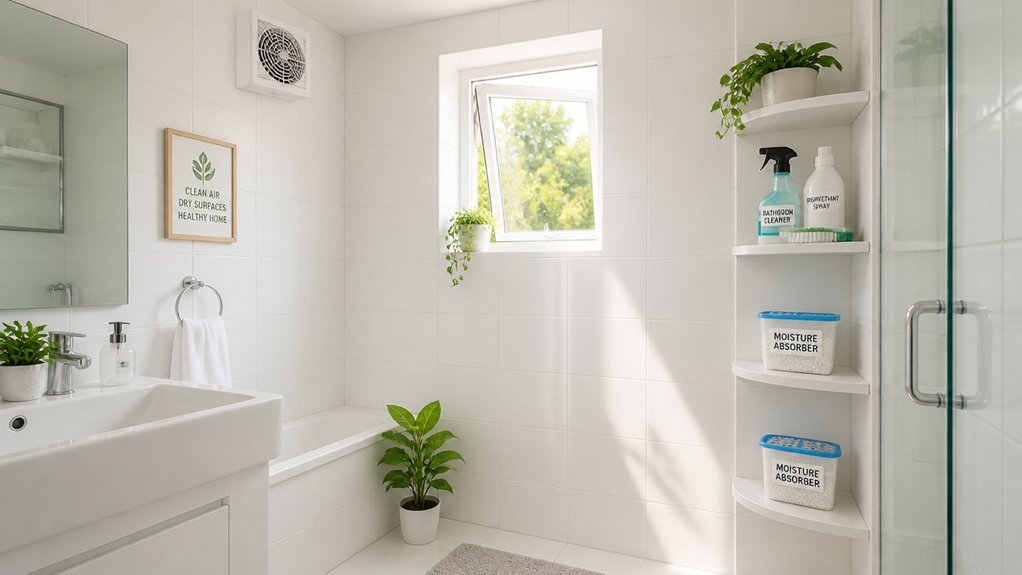
If you don’t have a fan, install one that vents outdoors, not into an attic or another room. Keep interior doors open so stale air doesn’t get trapped. You should also clean vent covers and fan grilles regularly, since dust can weaken airflow. Consider choosing a model with humidity sensors that automatically adjust ventilation based on moisture levels for more effective moisture control.
If the room has a return vent, make sure it isn’t blocked by storage. Good ventilation lowers humidity, helps surfaces dry faster, and reduces the conditions that let odors linger and mold spread.
Stop Moisture at the Washer and Dryer
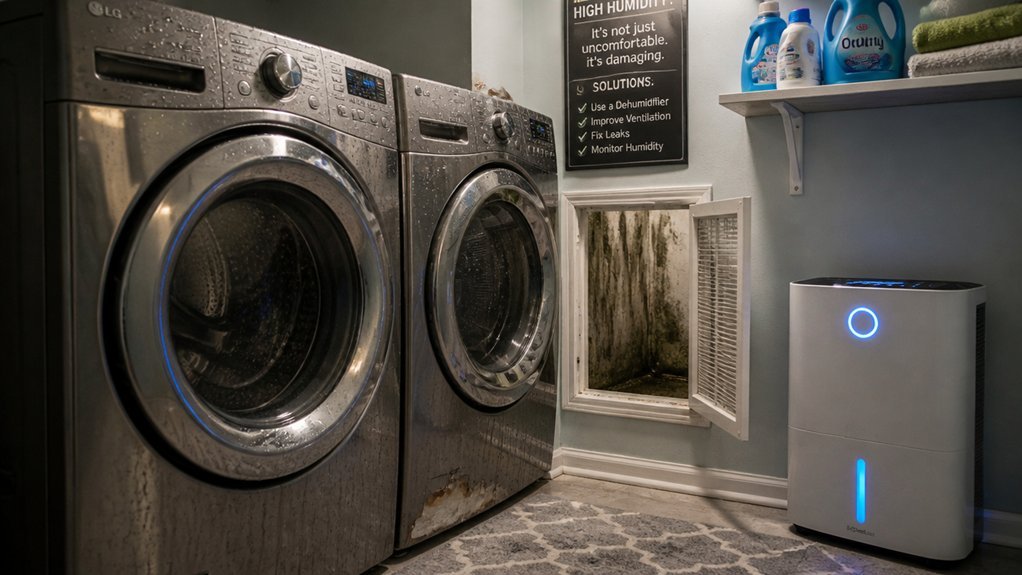
Even with better airflow, moisture can still build up right at the washer and dryer. You can cut it down by checking hoses, seals, and detergent drawers for leaks. Tighten loose connections and replace cracked supply lines before they drip into the floor or wall.
After each load, leave the washer door and detergent tray open so trapped damp air can escape. Wipe the gasket, drum rim, and top of the machine when you finish laundry.
If your dryer uses moisture from wet clothes, clean the lint filter every time and inspect the vent connection for gaps. Also, keep wet baskets, mop heads, and soaked rugs out of this area. The drier the surfaces stay, the less humidity you’ll release into the room.
How to Pick a Laundry Room Dehumidifier?
When moisture keeps hanging in the air, a dehumidifier can help keep your laundry room dry and prevent mold, mildew, and musty odors. Choose a model sized for your room, since a unit that’s too small won’t remove enough dampness.
Look for a dehumidifier with a built-in humidistat, so you can set your target humidity and let it cycle automatically. If you do laundry often, pick one with a large tank or a continuous drain option to reduce emptying.
A washable filter makes upkeep easier, and a quiet model works better in a busy home. Check the energy rating too, because an efficient unit saves money while it keeps the air comfortable and dry. Incorporating high-precision sensors ensures your dehumidifier accurately monitors humidity levels for optimal performance.
Prevent Condensation on Laundry Room Walls
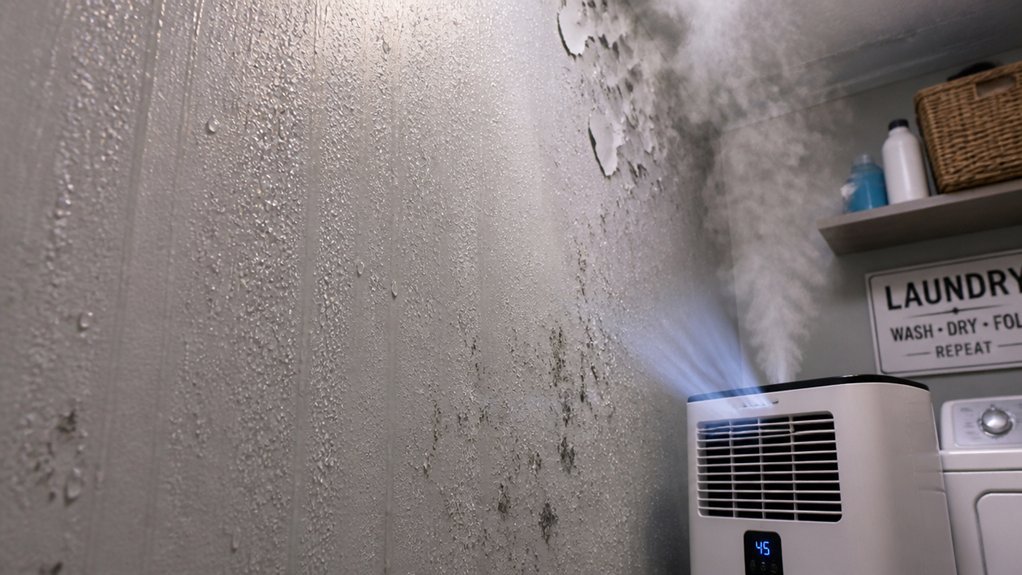
To prevent condensation on laundry room walls, keep moist air from lingering after each wash cycle. You can do this by running the exhaust fan during washing and for several minutes after drying. If your room lacks a fan, crack a window or leave the door open so damp air escapes.
Wipe any water droplets from cold walls, pipes, and windows right away, because leftover moisture can soak into paint and drywall. Make sure your dryer vent sends humid air outdoors, not back into the room. Seal gaps around windows, doors, and utility penetrations to reduce cold surfaces where condensation forms.
If walls still sweat, add insulation behind them or apply a vapor-resistant paint. These steps help you stop moisture from collecting and protect your laundry room finish.
Keep Laundry Room Humidity Low Every Day
You can keep laundry room humidity low every day by running exhaust fans, cracking a window, and leaving the door open after washes.
You should also control moisture by wiping up spills, removing damp clothes quickly, and emptying the dryer lint trap. Check humidity daily with a simple meter so you can catch spikes before they cause problems.
Ventilation Habits
How do you keep laundry room humidity from creeping back up each day? You build simple ventilation habits that move damp air out fast and keep fresh air moving in. Run the exhaust fan before, during, and after every load, and crack the door when you can. If your room has a window, open it briefly after washing to flush out trapped moisture.
Keep lint screens and vents clear so air flows freely and your appliances don’t work harder than they should.
- Leave the door open after use
- Run the fan for 15 to 20 minutes
- Open windows when weather allows
Check the room at different times of day, too. If the air feels heavy, give it another quick airing. Small, steady habits make a big difference.
Moisture Control
Keep laundry room humidity low by stopping moisture at the source and clearing it out fast. Wipe up spills right away, and don’t let wet clothes sit in baskets or on counters.
Remove damp lint from the dryer trap after every load so air can flow freely and moisture can exit efficiently. If you air-dry items, hang them in a separate, well-ventilated spot, not in a cramped laundry room.
Fix leaks under sinks, behind the washer, and around hoses before they soak walls or floors. Use a tight lid on laundry additives and store them dry.
After washing, leave the washer door and detergent drawer open a bit so trapped moisture can escape. Keep rugs, towels, and cleaning cloths dry, because soggy fabrics quickly raise humidity.
Daily Humidity Checks
A quick daily humidity check helps you catch small problems before they turn your laundry room damp and musty. Use a hygrometer each morning and again after laundry runs, so you can spot spikes fast. Keep humidity between 30% and 50% to protect walls, flooring, and stored detergent.
- Empty the lint trap and clear the dryer vent.
- Run the exhaust fan or open a nearby window.
- Wipe up spills, wet floors, and condensation right away.
If readings stay high, shorten drying cycles, avoid overloading machines, and inspect hoses for leaks. You can also leave the door open after use so trapped moisture escapes.
These quick habits help you keep laundry room humidity low every day without extra effort.
Frequently Asked Questions
How Do I Measure Laundry Room Humidity Accurately?
Use a digital hygrometer and place it away from vents, windows, and appliances. You’ll get the most accurate reading by checking it at different times, then averaging the numbers for a reliable humidity level.
Can Humid Clothes Increase Laundry Room Moisture Levels?
Yes, they can. When you bring in damp clothes, you release moisture as they dry, so your room’s humidity rises. You’ll notice more condensation, and you should improve ventilation or use a dehumidifier.
Should I Run a Dehumidifier While Washing Clothes?
Yes, you should run a dehumidifier while washing clothes if the room feels damp. You’ll reduce moisture buildup, help drying, and prevent mold. Keep doors closed and empty the tank regularly for best results.
How Often Should Laundry Room Vent Filters Be Cleaned?
You should clean laundry room vent filters every 1 to 3 months, or sooner if you notice lint buildup, weak airflow, or extra moisture. Check them monthly, and wash or replace them as needed.
Does Basement Laundry Placement Worsen Humidity Problems?
Yes, basement placement can worsen humidity problems because you’re already in a cooler, less ventilated space. You’ll trap moisture more easily, so you should improve airflow, dehumidify, and vent dryers outdoors.
In Summary
Keeping your laundry room humidity under control helps you protect your walls, appliances, and air quality. When you fix ventilation problems, stop leaks, and use a dehumidifier when needed, you can prevent mold and condensation before they start. Make it a habit to check for damp spots, run fans, and keep moisture in check after every load. Small changes can make a big difference in keeping your laundry room dry, clean, and comfortable.