You can raise humidity in a dry winter home by using a properly sized humidifier, adding houseplants like peace lilies or spider plants, and letting shower steam linger with the bathroom door closed. You can also simmer water on the stove, dry laundry indoors, and place bowls of water near heat sources. Keep an eye on humidity with a hygrometer and aim for 30% to 50%. These simple fixes work best when you know how to use them well.
Use a Humidifier
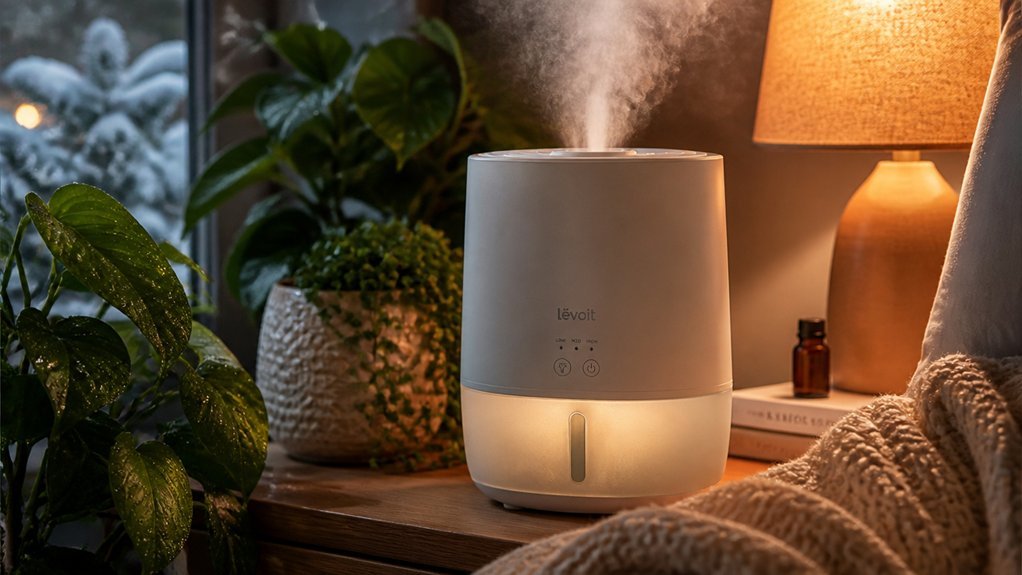
A humidifier is one of the easiest ways to add moisture back into a dry home, especially during cold months when indoor air gets uncomfortable fast. You can place one in the bedroom, living room, or any space where you spend the most time. Using a humidifier with an appropriate room size coverage ensures efficient moisture distribution without wastage. Run it long enough to keep humidity comfortable, but don’t overdo it, since too much moisture can create problems. Clean the tank and parts regularly so you don’t spread mold or mineral buildup into the air. Use distilled water if your model allows it, because it can reduce white dust and maintenance. Choose a size that fits your room, and adjust the output based on how dry your home feels. A simple setup can make winter air feel far easier to breathe.
Add Moisture With Houseplants
You can boost indoor humidity by adding houseplants that naturally release moisture into the air, like peace lilies, spider plants, and ferns.
These plants work best when you group them together and keep their leaves healthy with regular watering. For the best results, place them in bright, indirect light and avoid letting the soil dry out completely. Regular monitoring with a Digital Hygrometer, like those with high accuracy and quick refresh rates, can help you maintain the optimal humidity levels for your plants.
Best Plants for Humidity
Leafy humidity helpers can do more than decorate a room—they can also release moisture into the air through transpiration. You’ll get the most benefit from plants with broad, lush leaves, like Boston ferns, peace lilies, areca palms, and spider plants. Their leaf surfaces give water more chances to evaporate, which can slightly boost humidity around them. Additionally, incorporating small dehumidifiers can help maintain optimal humidity levels without removing too much moisture, especially in colder months. Place a few throughout your home instead of crowding one corner, so the moisture spreads more evenly. If you want a low-fuss option, pothos and philodendrons also work well and add greenery fast. Choose plants that fit your light and space, and you’ll create a fresher, softer-feeling room while improving your winter indoor environment naturally.
Care Tips for Moisture
To help houseplants add as much moisture as possible, keep their leaves clean, water them consistently, and avoid letting the soil dry out completely. A well-maintained watering routine ensures optimal moisture levels and supports healthy growth. You’ll get better results when you mist leafy plants lightly, especially in the morning, so water can evaporate gradually. Place pots close together to create a more humid microclimate around them. Use trays filled with pebbles and water, but make sure the pot bottoms sit above the water line. Choose plant species that naturally transpire more moisture, like ferns, peace lilies, and palms. Rotate plants occasionally so all sides get even light and airflow. If you notice drooping or crispy edges, adjust your watering routine right away. Healthy, well-cared-for plants can quietly support a more comfortable indoor environment, especially when paired with high-precision sensors that monitor humidity levels accurately.
Let Shower Steam Linger
After you shower, keep the bathroom door closed so the steam stays inside and adds moisture to the air. You can also open a window briefly to let out excess dampness once the room feels humid enough. This simple routine helps you boost humidity without extra effort. To maximize effectiveness, consider using a dehumidifier with a pump to manage excess moisture more precisely.
Keep Bathroom Door Closed
Keep the bathroom door closed after you shower so the steam stays in that small space a little longer and can add moisture to the air nearby. This simple habit helps the room hold damp air instead of letting it escape right away.
You can also leave the shower running on warm for a minute before you step out, then turn it off and let the heat work. After bathing, towel off quickly, hang wet towels inside the bathroom, and keep the exhaust fan off if the room doesn’t feel overly steamy.
The trapped moisture may briefly raise humidity in adjacent hallways or bedrooms. Just be mindful of excess condensation on mirrors, paint, and tile, and wipe surfaces if they start to collect too much water.
Open Window Briefly
If the bathroom feels overly humid, crack the window for just a few minutes after your shower instead of leaving it wide open right away. Let the steam hang around long enough to share some moisture with nearby air, then vent excess condensation before it settles on walls or mirrors. You’ll keep a little humidity in the home without trapping mildew. Proper humidity sensor settings can help automate this process for more effective moisture control.
Simmer Water on the Stove
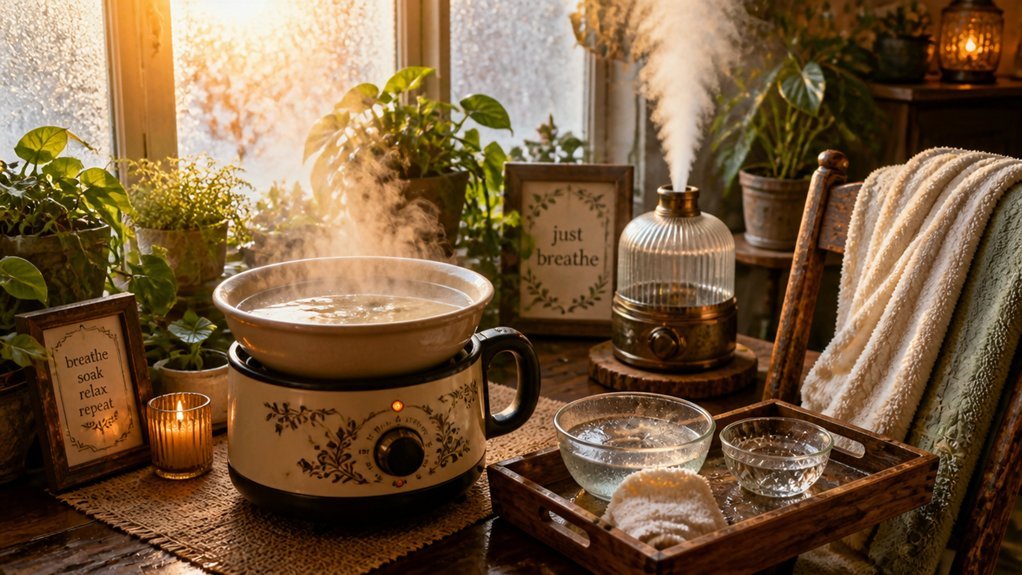
Set a pot of water to a gentle simmer on the stove, and let the steam drift into the room to boost humidity. You can do this while you cook, or keep the burner low for a steady release of moisture. Add a splash of water when the level drops, and watch the pot so it never boils dry.
Using a humidifying method like simmering water can complement your home’s existing moisture levels and help reduce dryness effectively.
Use a stable pot, keep the handle turned inward, and stay nearby to prevent spills or accidents. If you want a light scent, you can add citrus peels or a cinnamon stick, but skip anything that may scorch.
This simple habit works well in small spaces and gives your home a little extra comfort on cold, dry days without much effort.
Dry Laundry Indoors
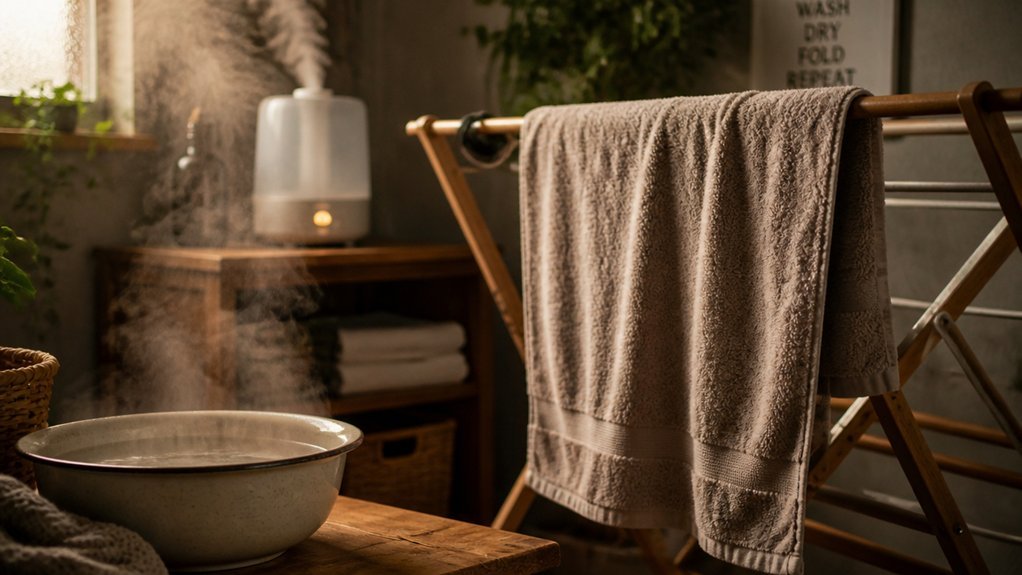
Hang your freshly washed clothes on a drying rack or clothesline indoors so the water in the fabric can evaporate into the air. You’ll add moisture to the room while you handle a basic chore, and you won’t need any special equipment beyond a rack, line, or sturdy hangers.
Place the laundry in a room you use often, but leave space around each item so air can move freely and drying doesn’t turn musty. If possible, choose thicker fabrics or larger loads when the air feels especially dry.
Check the clothes regularly and turn them as needed to help them dry evenly. This simple habit can boost indoor humidity and make winter air feel a little less harsh on your skin, throat, and nose.
Place Bowls of Water Near Heat
Another simple way to add moisture is to place shallow bowls or pans of water near heat sources like radiators, vents, or sunny windowsills. As the water warms, it evaporates and sends extra moisture into the air without much effort on your part.
You can use ceramic bowls, baking pans, or small trays, and you don’t need to fill them to the brim. Set them where they won’t tip over, and keep them away from pets and children.
For a little more effect, put out several containers in different rooms, especially the ones that feel driest. Check them every day and top them off as needed. This low-cost trick works best in spaces that already get steady warmth, so the water can evaporate more steadily.
Monitor Indoor Humidity Levels
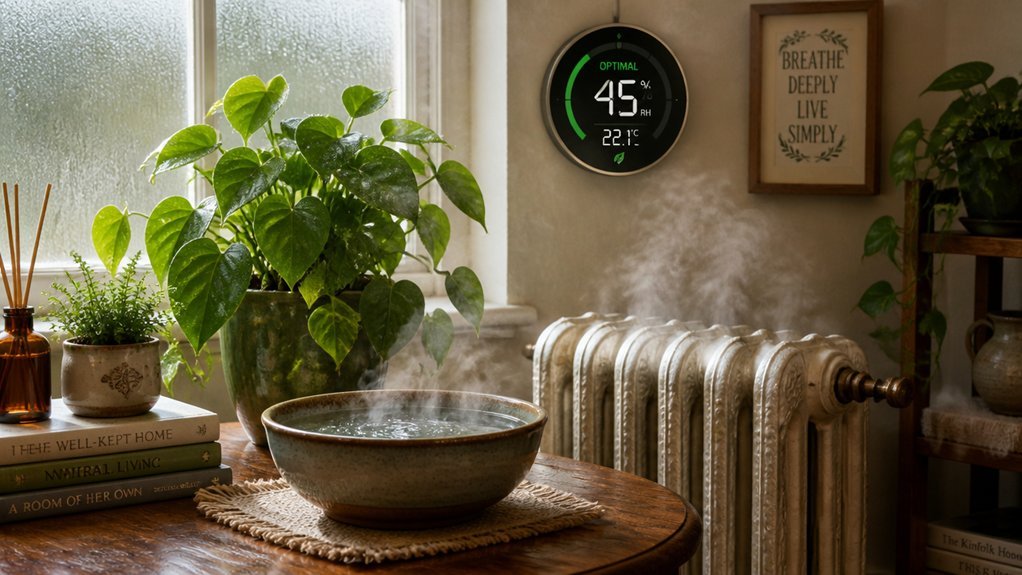
Keeping an eye on indoor humidity helps you know whether your efforts are actually working. Buy a simple hygrometer and place it in the rooms you use most, especially bedrooms and the living room.
Aim for a humidity level between 30% and 50%, which usually feels comfortable and helps prevent dry skin, static shocks, and irritated sinuses. Check readings at different times of day because heating systems can change moisture levels fast.
If the air stays too dry, add moisture with your other methods. If humidity climbs too high, reduce it by lowering water sources or increasing ventilation. Watching the numbers lets you adjust quickly, so you don’t guess.
With regular monitoring, you can keep your home balanced and comfortable all winter long.
Frequently Asked Questions
How Do I Know if My Home Humidity Is Too Low?
You’ll notice too-low humidity if you get dry skin, scratchy throat, static shocks, curled wood, or brittle plants. If your indoor reading stays below 30%, your air’s probably too dry.
Can Low Humidity Damage Wooden Furniture and Floors?
Yes—low humidity can dry out wood, causing furniture and floors to shrink, crack, or warp. You’ll also notice gaps and squeaks. Keeping indoor humidity balanced helps protect finishes and extend their lifespan.
What Humidity Level Is Healthiest for Winter Indoor Air?
You’ll usually feel best when you keep indoor humidity between 30% and 50% in winter. You can aim for about 40% to balance comfort, reduce dryness, and limit mold growth.
Are Pets Affected by Dry Indoor Air in Winter?
Yes, you’ll notice pets can suffer from dry indoor air in winter. You may see itchy skin, cracked paws, or irritated noses, so you should keep their environment comfortably humid and hydrated.
Can Humidifiers Help Reduce Winter Respiratory Irritation?
Yes—humidifiers can help reduce winter respiratory irritation by adding moisture that soothes dry nasal passages, throat, and airways. You’ll breathe more comfortably if you clean it regularly and keep humidity moderate.
In Summary
Keeping your home comfortable in winter doesn’t have to be complicated. By using a humidifier, adding houseplants, letting shower steam linger, simmering water, drying laundry indoors, and setting bowls of water near heat, you can boost moisture naturally. Just remember to monitor indoor humidity so you stay in a healthy range. With a few simple habits, you’ll make your home feel warmer, cozier, and easier to breathe in all season long.