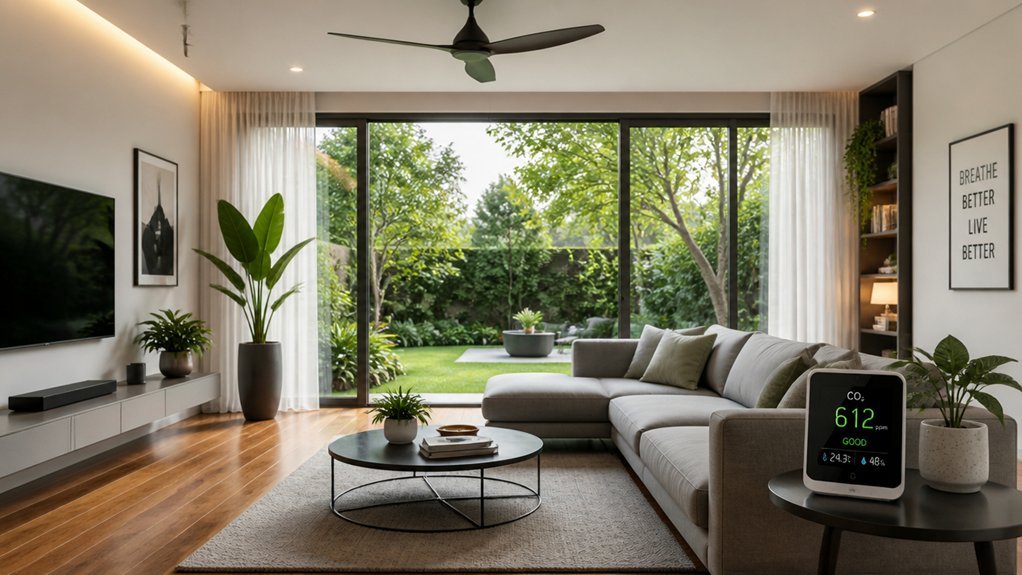
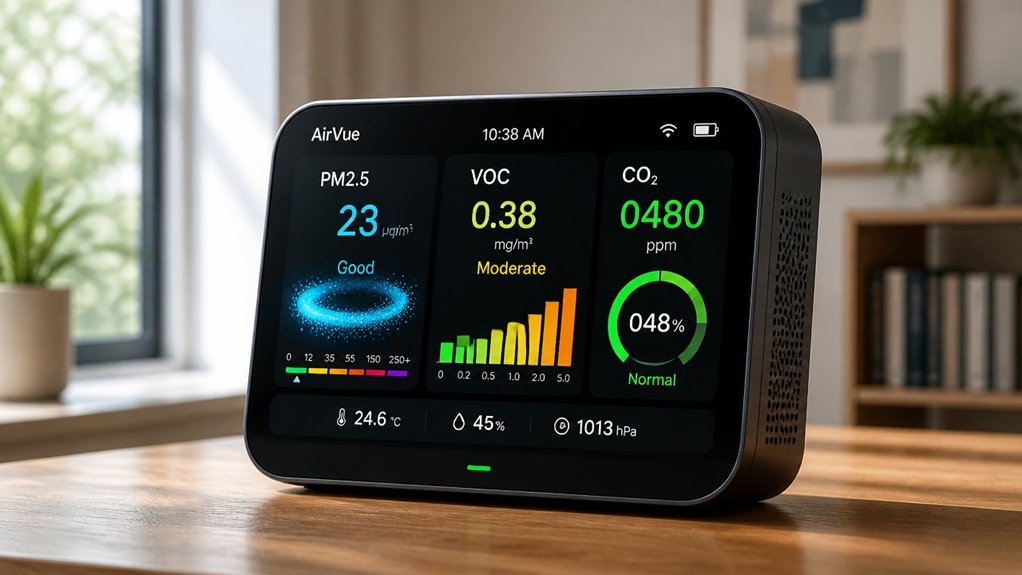
You can read indoor air quality by checking what each sensor measures, the unit, and the room conditions around it. PM2.5 shows fine smoke-like particles, PM10 shows dust and pollen, VOCs reveal gases from cleaners or materials, and CO2 tells you if fresh air is low. Humidity and temperature shape comfort and pollutant behavior. Formaldehyde can rise from new materials or poor airflow. Watch trends over time, and you’ll quickly see what needs fixing next.
How to Read Indoor Air Quality Readings
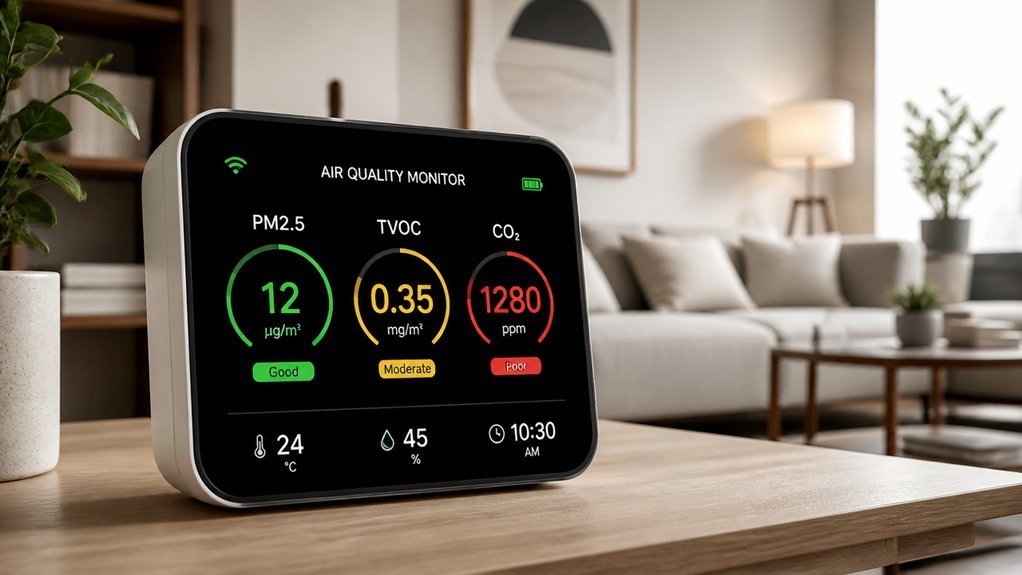
When you read indoor air quality readings, focus first on what each number measures and how it compares with recommended levels.
You should check the unit, the time span, and the sensor’s placement before you draw conclusions. A reading by itself tells you little; a trend across several hours or days shows whether conditions are improving or worsening. Use the device’s reference range to judge if a value sits low, moderate, or high.
If the screen shows an alert, note which threshold it crossed and for how long. You can then decide whether to open windows, adjust ventilation, or inspect a possible source indoors. Always compare readings in the same room under similar conditions, so you’re reacting to real changes, not temporary spikes. Regular calibration and proper placement of sensors are also crucial for ensuring sensor accuracy over time.
What Do PM2.5 Readings Tell You?
PM2.5 readings tell you how much fine particulate matter is floating in the air, and that matters because these tiny particles can get deep into your lungs.
PM2.5 readings show how much fine particulate matter is in the air, and these tiny particles can reach deep into your lungs.
When the number rises, you’re likely breathing smoke, combustion byproducts, or other microscopic pollutants that can irritate airways and strain your body. Lower readings usually mean cleaner air and less exposure risk.
You should watch for spikes when you cook, burn candles, vacuum, or bring in outdoor smoke. If your monitor shows elevated PM2.5 for long periods, increase ventilation, run a HEPA purifier, and reduce the source if you can.
Monitoring sensor accuracy helps ensure you’re getting reliable data on air quality, allowing for better decisions on ventilation and purification.
Treat this reading as a direct clue about air cleanliness, not just a number on a screen.
How to Interpret PM10 and Dust?
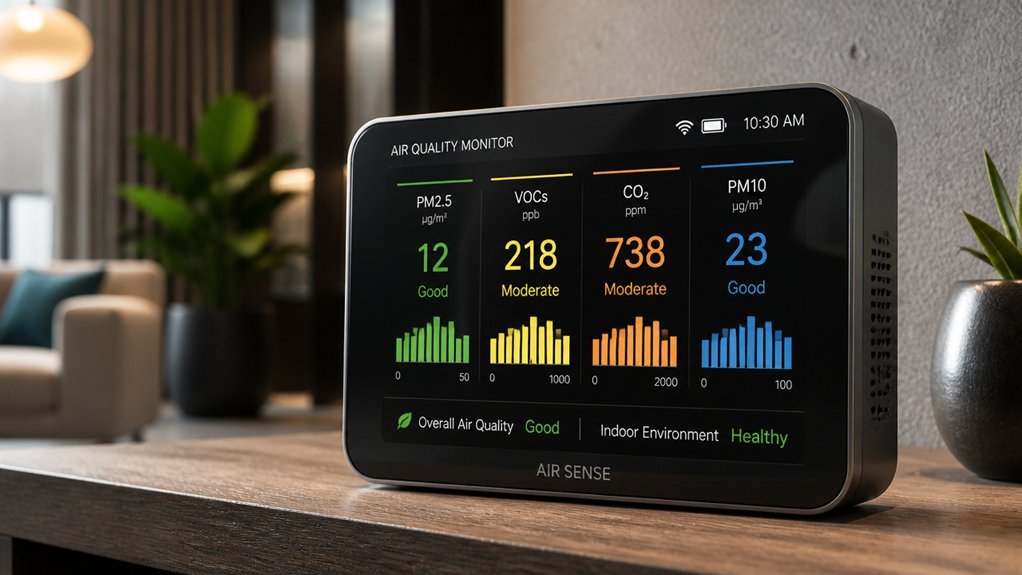
PM10 readings show you the amount of larger airborne particles in your space, including dust, pollen, pet dander, and bits of debris that can irritate your nose, throat, and eyes.
When the number climbs, you’re likely seeing more settled dust being stirred up by walking, cleaning, HVAC airflow, or open windows. Higher PM10 doesn’t always mean a serious health risk, but it can signal poor filtration or a dusty environment.
If you notice repeated spikes, check for clogged filters, dirty vents, carpets, or tracked-in dirt. You can lower readings by vacuuming with a HEPA filter, dusting with damp cloths, changing HVAC filters regularly, and improving ventilation during cleaning.
Stable, lower PM10 levels usually mean your air feels cleaner and less irritating.
Additionally, using humidity sensors in ventilation fans can help maintain optimal moisture levels, preventing mold and reducing airborne dust particles that thrive in damp environments.
How to Read VOC Levels Indoors?
VOC readings show how much gas from everyday products and building materials is floating in your indoor air. You’ll usually see them in parts per billion or as an index, and lower numbers generally mean less off-gassing. Readings often rise after cleaning, painting, cooking, or opening new furniture, so watch for patterns instead of one spike. Use this quick guide:
| Reading | What it suggests |
|---|---|
| Very low | Air likely has little chemical odor |
| Low | Normal background levels |
| Moderate | Some product emissions are present |
| High | Stronger indoor sources may be active |
| Very high | You may notice irritation or odor |
If your number stays elevated, cut emissions at the source, increase ventilation, and keep materials sealed until odors fade. Regular testing can help monitor indoor air quality and ensure your home remains safe.
What Do CO2 Levels Mean for Fresh Air?
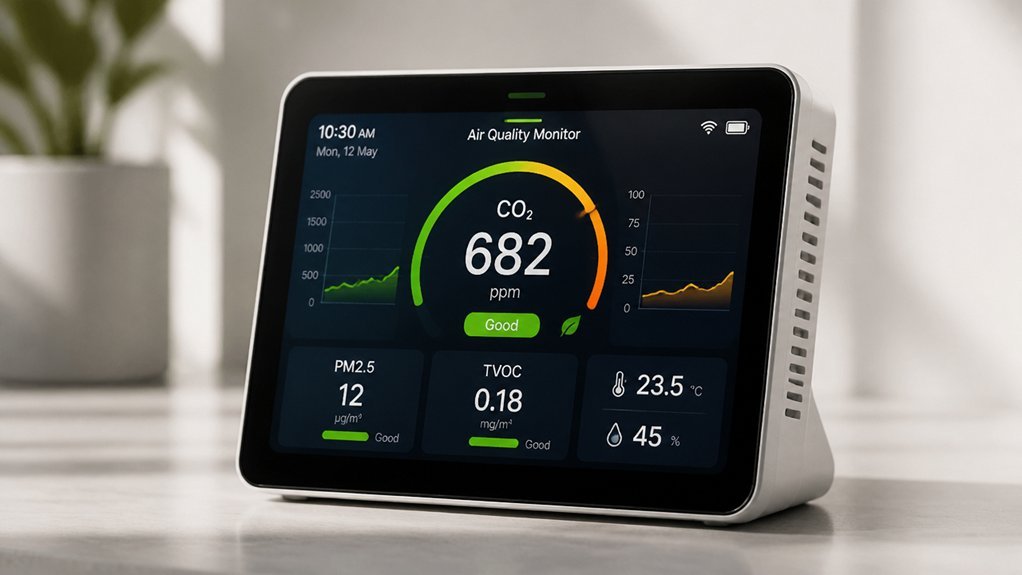
CO2 levels are a useful stand-in for how well fresh air is moving through a space: when the number climbs, exhaled air is building up, which usually means ventilation is weak or the room is crowded.
CO2 levels show how well fresh air is moving through a space; rising numbers usually mean weak ventilation.
In a well-ventilated room, you’ll usually see lower readings because outdoor air keeps diluting what people breathe out. If your monitor stays high for long periods, you may need to open windows, run exhaust fans, or increase outdoor air from your HVAC system.
You don’t need a perfect number, but trends matter. A sudden rise during meetings, sleep, or cooking can show you that air exchange isn’t keeping up.
Use CO2 as a practical signal, not a complete measure of air quality, because it reflects freshness, not every indoor pollutant. Sensor technology in radon detectors demonstrates the importance of continuous, accurate monitoring to easily identify changes in indoor air conditions.
Why Humidity and Temperature Matter?
Humidity affects more than comfort, because it can shape how well air feels and how indoor pollutants behave. You’ll also notice that temperature changes how comfortable a room feels, even when air quality readings look normal. Together, these two factors help you judge whether your indoor space really supports healthy living. Regular monitoring with a digital hygrometer can help maintain optimal levels and support overall wellness.
Humidity’s Air Quality Role
Even if your air doesn’t look dirty, humidity and temperature can still change how it feels and how safe it is to breathe. Humidity affects how particles and pollutants linger, so your readings can shift even when sources stay the same. When moisture stays balanced, you may notice less irritation and fewer conditions that let irritants spread. Use your monitor’s data alongside this quick guide:
| Humidity | What it can mean | What you should do |
|---|---|---|
| Low | Air may feel dry | Watch for irritation |
| Moderate | Conditions stay steadier | Keep monitoring |
| High | Pollutants may persist | Improve ventilation |
You’ll get better context when you track humidity with PM2.5, VOCs, and CO2 together. Regularly monitoring humidity capacity can help optimize your indoor air quality management strategies.
Temperature’s Comfort Impact
Temperature shapes how comfortable your indoor air feels, and it can change how you experience the same air quality reading from one day to the next. When it’s too warm, you may feel sluggish, sweaty, and less able to focus, even if PM2.5, VOCs, and CO2 stay unchanged.
When it’s too cool, you might notice dry skin, chilled muscles, and a space that feels unpleasant despite clean air. You usually judge comfort by both temperature and humidity together, because they affect how your body cools itself.
If the air feels stuffy, you’ll likely open windows, adjust vents, or change settings to make the room feel balanced. Watching temperature alongside other readings helps you understand why a room can seem healthy but still feel off.
What Do Formaldehyde Readings Reveal?
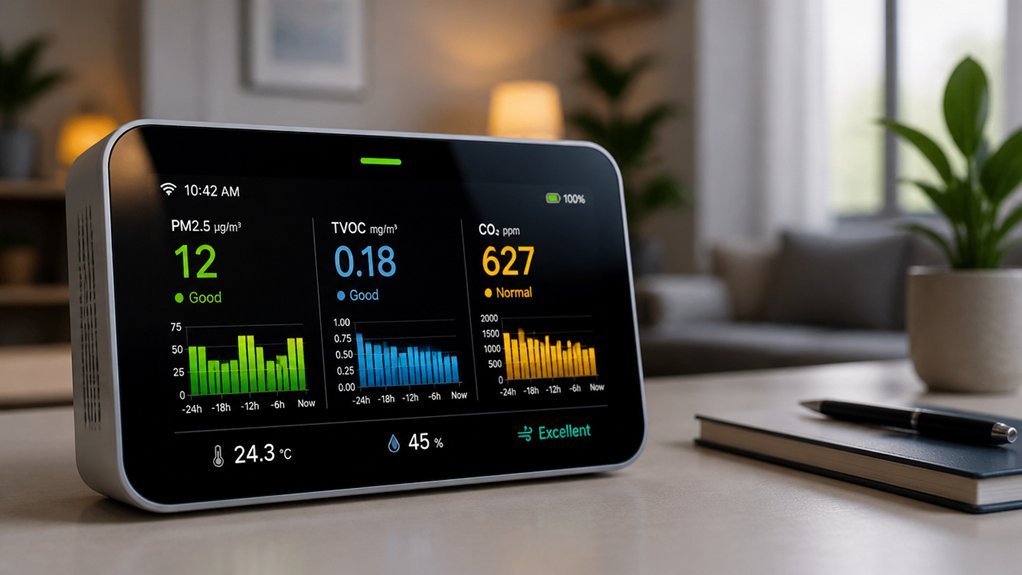
Formaldehyde readings show how much of this common indoor pollutant is in your air and whether levels may be low, moderate, or high enough to warrant action. You can use the number to spot off-gassing from furniture, flooring, paint, or cleaners.
If your reading stays elevated, you may notice eye, nose, or throat irritation, especially in closed rooms. Use it to:
- Compare rooms and see where buildup happens.
- Check whether ventilation is helping.
- Track changes after new materials enter your home.
- Confirm improvements after you reduce sources.
Lower readings usually mean less chemical stress, but you should still look at the whole indoor environment. Formaldehyde often rises with warmth and poor airflow, so small changes can make a noticeable difference.
Which Indoor Air Quality Reading Should You Fix First?
Start with the reading that points to the biggest health risk or the clearest source problem in your home, not just the one that looks highest.
If PM2.5 spikes, act fast: open windows if outdoor air is clean, run your HVAC fan, and stop the source, like cooking smoke or candles.
If CO2 stays high, improve ventilation, especially in bedrooms and crowded rooms, because stale air affects comfort and focus.
If VOCs climb, look for fresh paint, cleaners, fragrances, or stored chemicals, then remove or seal them.
If humidity is too high, control it to slow mold growth.
If formaldehyde appears elevated, ventilate and check pressed-wood furniture or new materials.
Fix the source first, then retest, so you know your changes actually work.
Frequently Asked Questions
How Often Should Indoor Air Quality Be Tested?
You should test indoor air quality at least once a year, and more often if you notice odors, mold, allergies, renovations, or new occupants. You’ll catch problems early and keep your space healthier.
Do Air Purifiers Reduce All Indoor Pollutants Equally?
No, you won’t get equal reduction. You’ll improve particles, dust, and some allergens, but many purifiers barely affect gases, odors, or CO2. To cover more pollutants, you’ll need ventilation and source control too.
Can Cooking Change Indoor Air Quality Readings Quickly?
Yes—cooking can spike your readings fast. You’ll often see PM2.5, VOCs, and CO2 rise within minutes, especially with frying or gas stoves. Ventilation helps lower them, but sensors can react almost immediately.
Are Smart Air Quality Monitors Accurate Enough for Home Use?
Yes, you can rely on smart air quality monitors for home trends, but you shouldn’t treat them as lab-grade. You’ll get useful alerts and patterns, though sensor quality and placement can affect accuracy.
What Seasonal Factors Affect Indoor Air Quality Most?
Seasonal weather changes affect you most: winter’s sealed windows trap pollutants and humidity, summer’s heat boosts ozone and mold, and pollen spikes in spring and fall can raise allergens indoors quickly.
In Summary
Now that you know how to read indoor air quality readings, you can make smarter choices about your home’s air. Start with the biggest risks, like high PM2.5, VOCs, or CO2, and then adjust ventilation, filtration, or humidity as needed. Don’t ignore temperature and formaldehyde, either, since they can affect comfort and health. Check your monitor regularly, and use what it tells you to keep your indoor air cleaner and safer every day.