High indoor CO2 levels tell you your home isn’t getting enough fresh air, which usually means ventilation is too weak for how you live. It can signal stale, stuffy rooms, more humidity, and trapped odors, dust, or cooking fumes. CO2 often rises fastest in closed bedrooms, bathrooms, and small offices when people stay inside for long periods. If you want to know what else your air is telling you, the clues get even more useful from here.
What High Indoor CO2 Levels Mean
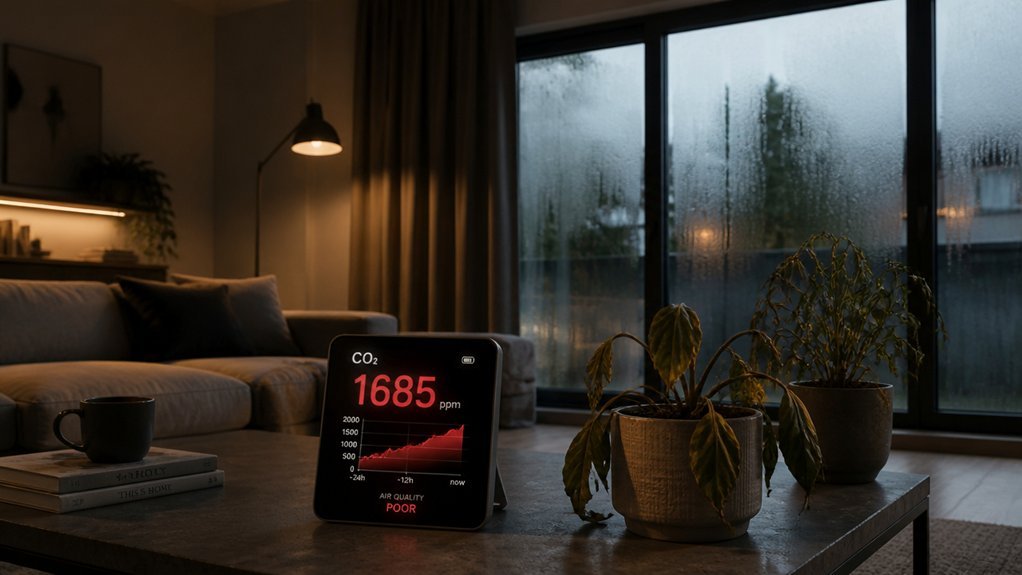
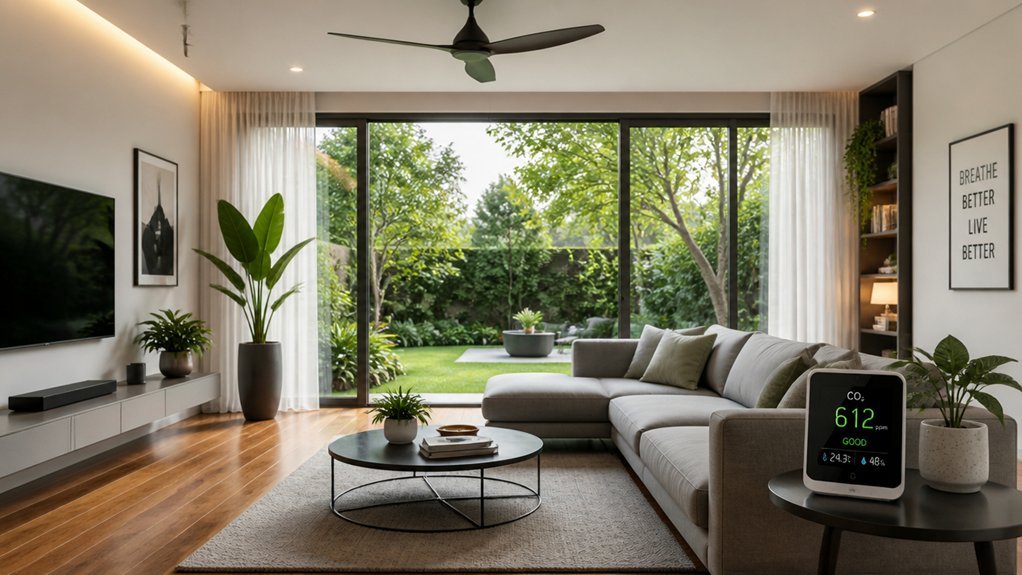
When indoor CO2 levels run high, it usually means the air in the space isn’t being exchanged enough with fresh outdoor air. You’re likely breathing air that’s been shared by people, pets, and combustion sources for longer than it should be.
High indoor CO2 usually means your space isn’t getting enough fresh outdoor air.
That doesn’t automatically mean danger, but it does tell you your home’s air quality is slipping. You may notice stuffy rooms, lingering odors, or a heavy feel indoors.
High readings can also point to crowded spaces or closed windows during long stretches. If you track CO2 over time, you can spot patterns tied to daily routines, occupancy, or sealed-up rooms.
In short, the number gives you a clear clue: your indoor air needs attention, and your home isn’t renewing itself enough.
Understanding sensor accuracy and proper calibration can help ensure the readings reflect your actual indoor environment more reliably.
Why Your Home Needs More Ventilation
If your home doesn’t get enough ventilation, stale air builds up and makes rooms feel stuffy.
That trapped air can hold onto pollutants, odors, and excess moisture that linger longer than they should.
Fresh air exchange helps clear out those contaminants and keeps your indoor air healthier.
Using a high-precision sensor can ensure you accurately monitor CO2 levels and determine when ventilation is needed.
Stale Air Buildup
Even in a clean home, air can grow stale fast when you don’t replace it with fresh outdoor air. When you shut windows, run heat or AC, and spend time inside, your rooms trap exhaled CO2 and lose that crisp, invigorating feel. A digital hygrometer can help monitor indoor humidity levels and alert you to when ventilation needs to be increased. You may notice it as heaviness, stuffiness, or a lack of airflow. That’s a sign your home isn’t breathing well, and you’re likely recycling the same air for hours. More ventilation helps you refresh the indoor environment, lower CO2 buildup, and make your space feel more comfortable. Open windows when weather allows, use exhaust fans, and let outdoor air move through your rooms. Small changes can break up stagnant air and keep your home from feeling closed in.
Hidden Pollutant Trap
Poor ventilation doesn’t just trap stale air—it lets indoor pollutants build up where you live and breathe. When air can’t move freely, dust, cooking fumes, cleaning sprays, pet dander, and off-gassing from furniture linger longer.
You may notice your home feels heavy, your eyes sting, or your head feels foggy because contaminants aren’t leaving the room.
- Your kitchen holds onto smoke and grease.
- Your bathroom keeps humidity and odors trapped.
- Your bedroom collects dust and allergens overnight.
- Your living room stores chemicals from carpets, paint, and cleaners.
If you ignore this buildup, you keep breathing the same polluted air. Better ventilation helps your home release what shouldn’t stay inside, so your air feels cleaner and your space feels healthier. Humidity sensors in exhaust fans can automatically adjust airflow to prevent excess moisture and improve overall air quality.
Fresh Air Exchange
Fresh air exchange helps clear out the stale, polluted air that builds up indoors and replaces it with cleaner outdoor air. When you open windows, run exhaust fans, or use balanced ventilation, you lower CO2 and dilute odors, moisture, and airborne irritants. That extra airflow can help you think more clearly and feel less sluggish.
| Action | Result |
|---|---|
| Open windows | Refreshes rooms |
| Use fans | Moves stale air out |
| Seal leaks wisely | Controls drafts |
| Vent kitchens | Removes smoke and steam |
| Service HVAC | Supports steady exchange |
If your home feels stuffy, your ventilation’s probably too weak. Better air exchange won’t fix every indoor problem, but it’s one of the simplest ways to improve comfort, health, and air quality every day.
How Poor Ventilation Raises Indoor CO2
When indoor air doesn’t circulate well, the CO2 people exhale builds up quickly instead of being replaced by outdoor air. You may notice the level rising because your home traps stale air and slows dilution.
Closed windows, weak fans, and blocked vents all limit the fresh air that should sweep through your rooms. As a result, every breath adds more CO2 than your space can remove.
One effective way to monitor this is with sensor detection types that accurately measure CO2 levels and alert you when ventilation is inadequate.
- You breathe, and the gas lingers.
- Rooms feel stuffier over time.
- Shared spaces raise levels faster.
- Longer stays make the buildup worse.
If you keep doors shut and ventilation weak, CO2 climbs even when you aren’t doing anything unusual. Better airflow helps your home clear exhaled air before it accumulates.
Where CO2 Builds Up Fastest
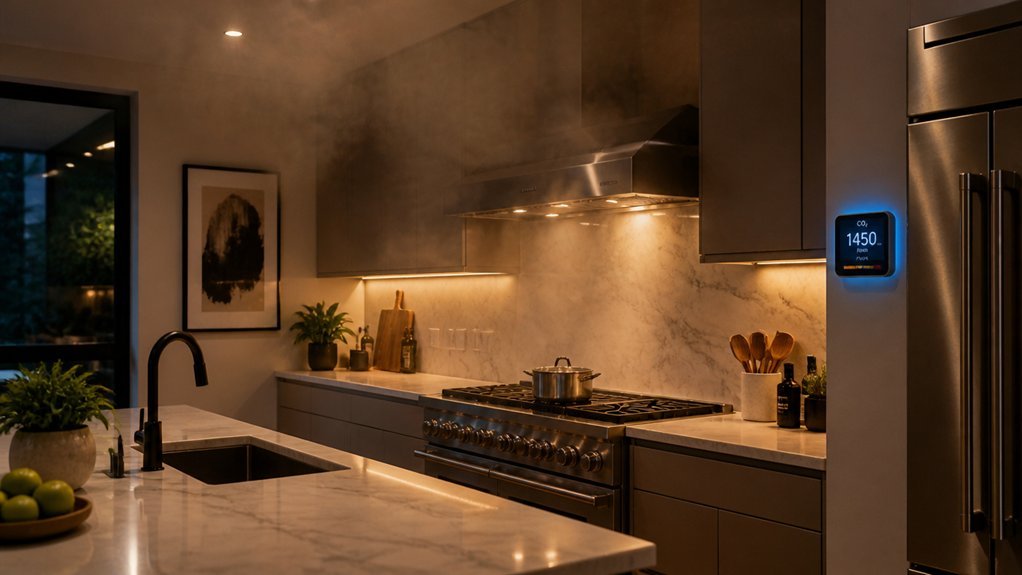
You’ll usually see CO2 build up fastest in spaces with little airflow, like closed bedroom doors, tight-seal bathrooms, and small windowless offices. A lack of proper ventilation can accelerate this process and make the indoor air feel more stagnant. When you shut out fresh air, your own breathing can raise levels quickly. That’s why these rooms often feel stuffy first.
Closed Bedroom Doors
Closed bedroom doors can trap exhaled air surprisingly quickly, especially overnight when breathing stays constant and ventilation drops. When you shut the door, you’re also slowing the room’s ability to mix with the rest of the house, so CO2 can rise before you notice. A high concentration of indoor air pollutants can develop rapidly in such conditions, contributing to discomfort and potential health issues. You might wake up groggy, stuffy, or with a dull headache, which often means the air got stale while you slept.
- Open the door a crack if you can.
- Run a fan to move air.
- Check your CO2 monitor near the bed.
- Notice if sleep feels better with more airflow.
A closed room doesn’t cause the problem by itself, but it can make poor airflow show up faster. If your readings climb overnight, your bedroom is probably the first place to adjust.
Tight-Seal Bathrooms
Tight-seal bathrooms can spike CO2 fast because they’re small, enclosed, and often used with the fan off or only briefly on. When you shower, shave, or get ready in a sealed space, your exhaled air has nowhere to go, so the reading climbs quickly.
If the number rises sharply in just a few minutes, that doesn’t mean your home is failing; it usually means the room traps air too well. You can lower the buildup by running the exhaust fan before you enter, keeping it on after you leave, and cracking the door when privacy allows.
If your bathroom stays stuffy, check for weak ventilation, clogged vents, or an undersized fan. Good airflow clears CO2 and moisture together, so the room feels fresher and recovers faster.
Small Windowless Offices
Small, windowless offices can be the fastest places for CO2 to build up because people spend long stretches breathing in a compact space with little fresh air coming in.
If you work there, you may feel tired, foggy, or oddly sleepy even when the temperature seems fine.
High readings usually mean ventilation can’t keep pace with how many people are using the room.
- Crack the door when you can.
- Run the HVAC fan or supply vent.
- Take short breaks in fresh air.
- Use a CO2 monitor to track spikes.
If your office stays above normal levels, add more airflow or reduce occupancy.
You’ll think more clearly, and the room will feel less stale.
How Occupancy Raises Indoor CO2
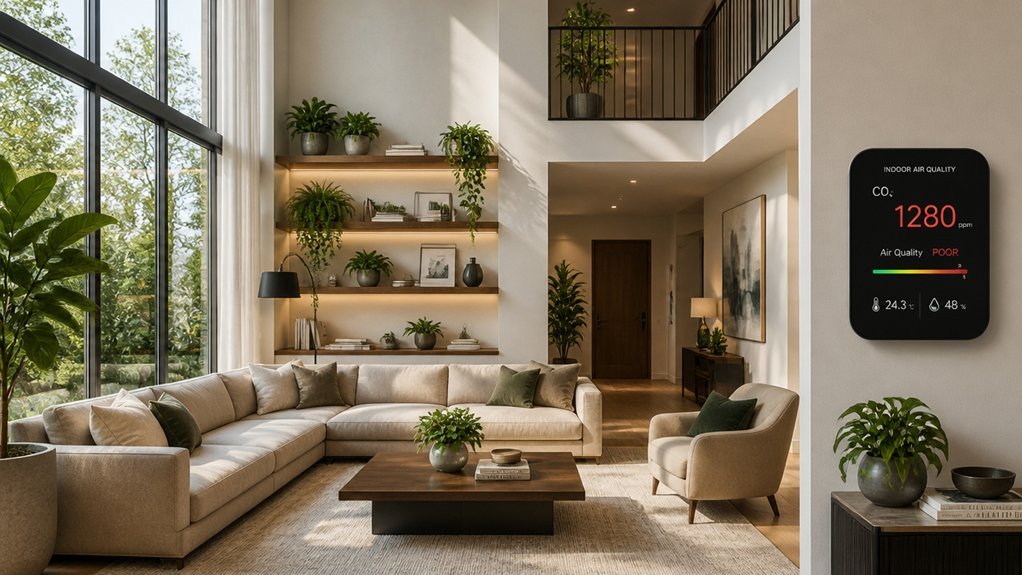
As people occupy a room, they exhale carbon dioxide continuously, and the more people present, the faster indoor CO2 builds up. You’ll notice levels climb quickest in closed rooms where airflow can’t keep pace with breathing. One person working alone may raise CO2 slowly, but a family movie night, meeting, or dinner can push it higher in a short time. The table below shows the pattern:
| Occupants | Activity | CO2 Trend |
|---|---|---|
| 1 | Quiet work | Slow rise |
| 3 | Conversation | Moderate rise |
| 6 | Group gathering | Fast rise |
When you see repeated spikes, your home likely needs more fresh air, fewer people in one space, or better ventilation. High occupancy doesn’t mean a problem by itself; it tells you how quickly your indoor air gets used up.
Why Humidity Often Rises With CO2
When CO2 climbs in a room, humidity often does too because the same people exhaling carbon dioxide are also releasing water vapor. You’re seeing two signs of shared occupancy: each breath adds moisture, and more people usually means more of both.
CO2 and humidity often rise together because people exhale both carbon dioxide and water vapor.
That’s why a stuffy bedroom, crowded living room, or busy home office can feel damp and heavy at the same time.
- Sleep adds hours of steady exhalation.
- Cooking and conversation raise both signals.
- Closed doors trap warm, moist air.
- Plants and drying laundry can add extra moisture.
Ways to Lower Indoor CO2 Levels
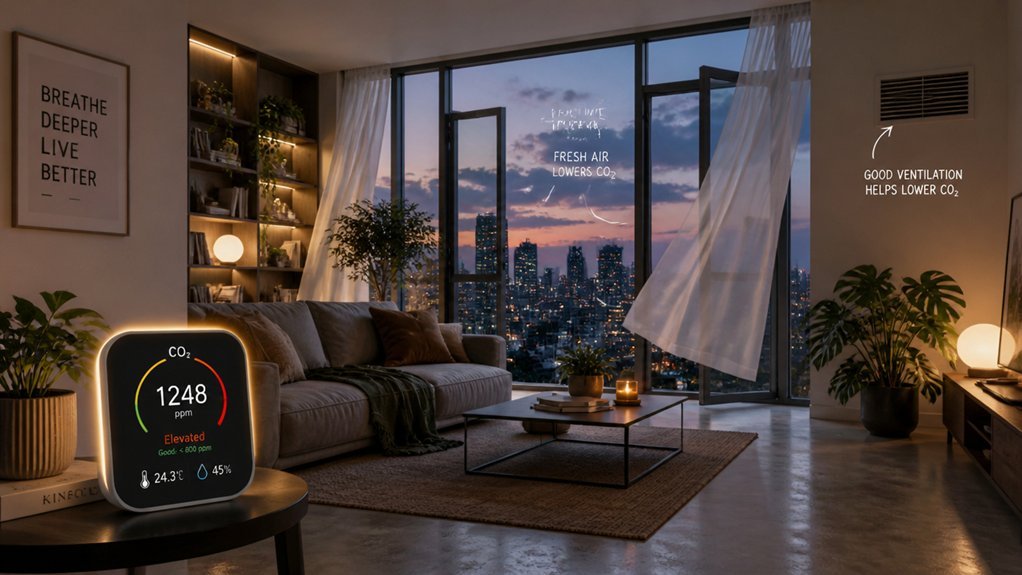
The fastest way to lower indoor CO2 is to bring in fresh outdoor air and let stale air out. Open windows on opposite sides, run kitchen and bath fans, and use your HVAC fan with outdoor air intake when possible. If you’re cooking, showering, or hosting guests, boost ventilation right away. You should also reduce sources that add CO2 by spacing out people, taking short breaks outside, and avoiding sealing up rooms for long periods.
| Action | Why it helps | When to do it |
|---|---|---|
| Open windows | Replaces stale air | Mild weather |
| Use exhaust fans | Pushes indoor air out | Cooking or showering |
| Run ventilation | Adds steady fresh air | Anytime occupancy rises |
If levels stay high, inspect your system, clean filters, and consider a carbon dioxide monitor to track changes.
Frequently Asked Questions
How Do I Know if My CO2 Meter Is Accurate?
You can verify your CO2 meter by comparing it outdoors in fresh air, where it should read about 400 ppm, or against a known calibrated meter. Check the manufacturer’s calibration instructions too.
Can Indoor Plants Significantly Reduce CO2 Levels?
Not considerably. You can use plants for modest CO2 uptake, but you’ll need ventilation or fresh-air exchange to meaningfully lower indoor levels. A few houseplants won’t offset normal occupancy, cooking, or sleeping emissions.
What Is a Safe Indoor CO2 Level for Sleeping?
You should aim for under 1,000 ppm while sleeping, and ideally closer to 600–800 ppm. Above 1,500 ppm, you may feel stuffy or sleep poorly, so increase ventilation if needed.
Do Air Purifiers Lower Carbon Dioxide in Rooms?
No, you usually won’t lower carbon dioxide with an air purifier. You need fresh air, not filtration, because purifiers clean particles while CO2 comes from breathing, so open windows or use ventilation.
How Often Should HVAC Filters Be Replaced?
You should replace HVAC filters every 1 to 3 months, depending on usage, pets, and dust. Check monthly, and change them sooner if they look dirty or airflow drops.
In Summary
High indoor CO2 levels tell you your home needs better airflow, better ventilation, and maybe a closer look at how many people spend time in each room. When CO2 rises, stale air can build up fast, especially in bedrooms and crowded spaces. You can lower it by opening windows, using fans, and improving ventilation. If you also notice higher humidity, that’s another sign your home needs more fresh air.