You may need to change your HVAC filter if you notice weak or uneven airflow, dusty vents and furniture, higher energy bills, musty indoor odors, or longer heating and cooling cycles. A clogged filter makes your system work harder, which can hurt comfort and efficiency. If your rooms feel stuffy or your HVAC runs more often than usual, it’s probably time for a new filter, and a few more signs can help you spot the problem sooner.
Signs Your HVAC Filter Is Clogged

If your HVAC filter is clogged, you’ll usually notice it fast: weaker airflow, more dust around your home, higher energy bills, or even a musty smell when the system runs. You may also hear your system working harder than usual as it strains to push air through the blockage.
Dust can settle on furniture sooner, and allergy symptoms might flare up when indoor air quality drops. In some cases, your HVAC unit may cycle more often or run longer to keep your home comfortable. Using an Indoor Air Quality Monitor can help detect these issues early before they become more serious.
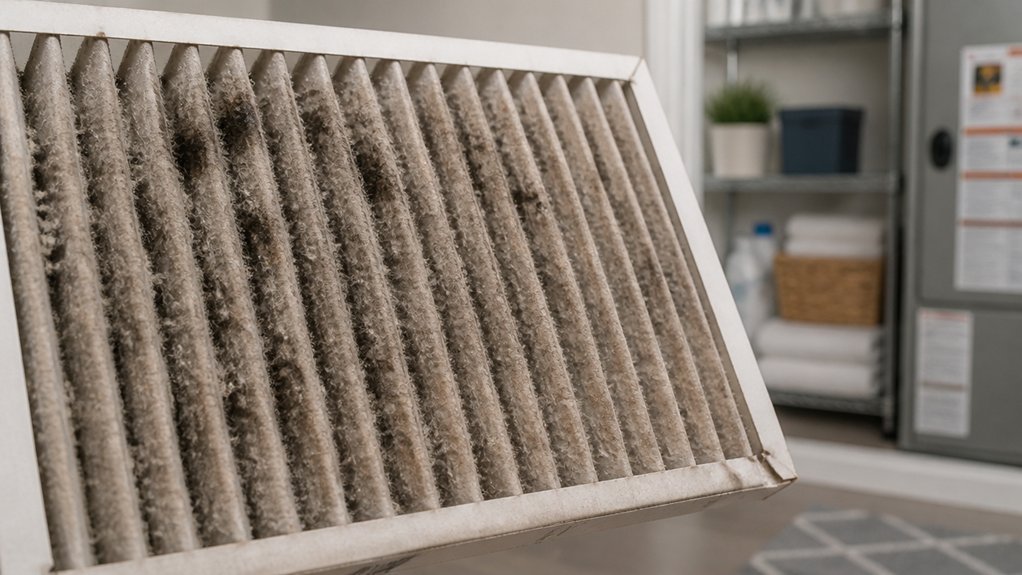
Check the filter if it looks gray, packed with debris, or caked with pet hair. A dirty filter can’t trap particles well, so replacing it promptly helps your system run more efficiently and keeps your indoor air cleaner and healthier overall.
Weak or Uneven Airflow at the Vents
When the airflow at your vents feels weak or varies from room to room, your HVAC filter may be restricting the air your system needs to circulate properly.
A dirty filter makes your blower work harder, slows circulation, and can leave some areas of your home feeling noticeably less comfortable than others. If you turn up the thermostat but still feel little air coming through the vents, check the filter first. A quick replacement can often restore stronger, more balanced airflow and help your system run more efficiently.
You might also notice longer heating or cooling cycles when the filter is overdue for a change. Replacing it on schedule keeps air moving freely and helps your HVAC system deliver the performance you expect.
Additionally, regular monitoring of indoor humidity levels with digital hygrometers can assist in assessing overall air quality and comfort inside your home.
More Dust Around Your Home
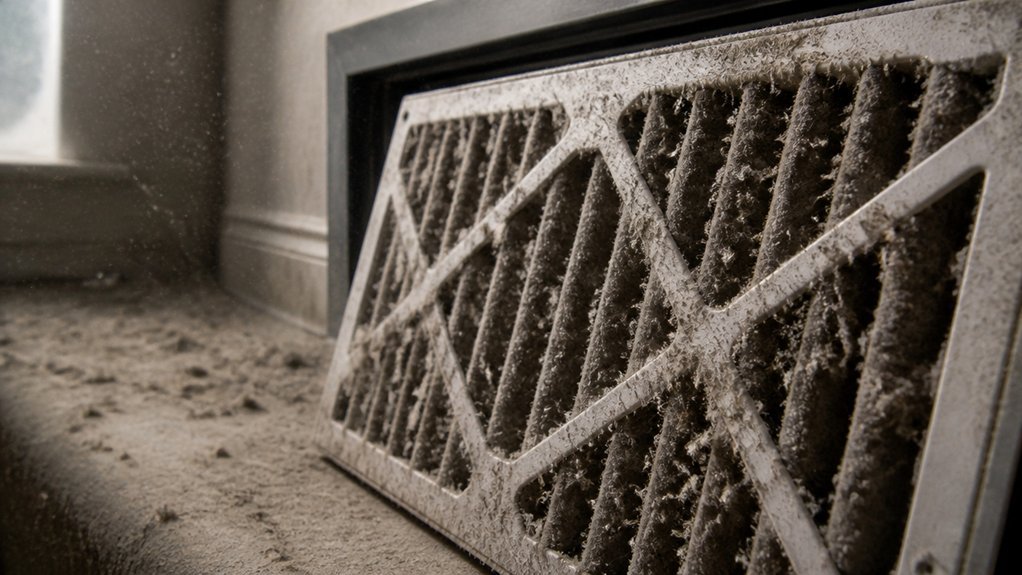
More dust settling on your furniture, floors, or vents can be a sign that your HVAC filter is no longer catching particles effectively. When the filter gets clogged, it can’t trap airborne dust as well, so more debris circulates through your home. You may notice surfaces collecting grime faster than usual, even soon after you clean. Using a mold testing kit to regularly check for mold presence can also help identify if your indoor air quality is declining due to filter issues. Dust can also build up around supply registers, on baseboards, and in rooms you use most often. If you’re seeing these signs, check your filter and replace it if it looks dirty or overloaded. A fresh filter helps capture more particles, improves indoor air quality, and keeps dust from spreading through your living spaces. Don’t wait until buildup becomes obvious everywhere.
Higher Energy Bills
If your utility bills are creeping up, a dirty HVAC filter could be part of the problem.
When airflow gets restricted, your system has to work harder and use more energy. That reduced efficiency can quickly show up in higher monthly costs.
Rising Utility Costs
Have your utility bills been creeping up even though your heating and cooling habits haven’t changed? A clogged HVAC filter can make your system work harder to push air through the blockage, and that extra strain can show up on your monthly statement.
When airflow gets restricted, your unit may run longer to reach the temperature you want, so you end up paying more for the same comfort. If you notice a steady rise in energy costs without a clear reason, check your filter first. Replacing it can help restore normal airflow and keep your bills from climbing unnecessarily.
Don’t wait until the increase becomes obvious; a simple filter change could save you money and keep your home’s temperature more consistent throughout the season.
Reduced System Efficiency
A dirty HVAC filter can do more than raise your utility bill—it can reduce your system’s overall efficiency. When dust and debris clog the filter, your system has to work harder to push air through, which wastes energy and strains key components.
You may notice longer run times, weaker airflow, and uneven temperatures throughout your home. That extra effort doesn’t just drive up costs; it can also shorten your HVAC system’s lifespan.
If your heating or cooling seems sluggish, check the filter first. Replacing it lets air move freely again, helps your system operate as designed, and can improve comfort right away.
In many cases, a simple filter change restores efficiency and keeps your equipment from working overtime.
Stale or Musty Indoor Air
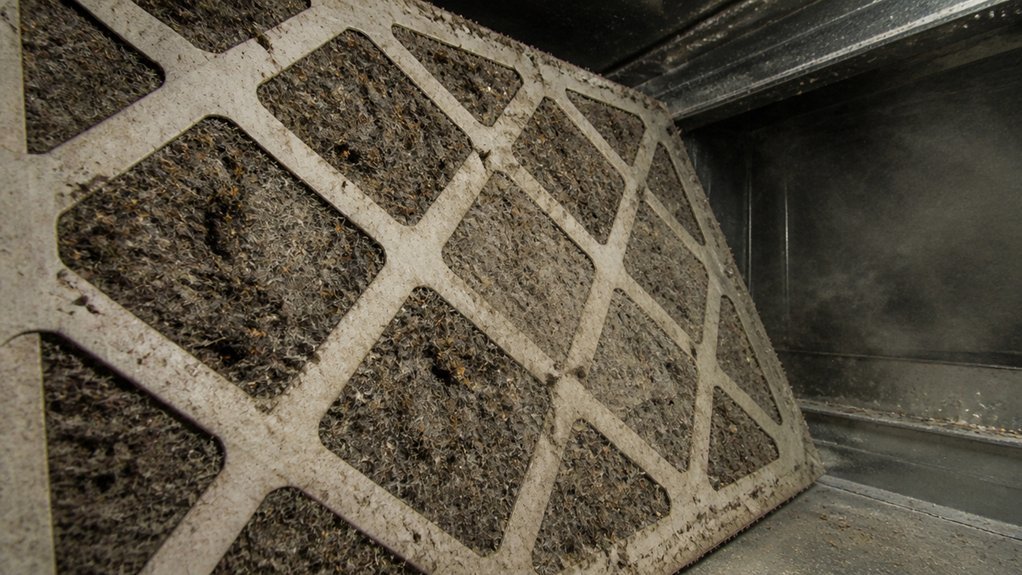
If your home starts smelling stale or musty, your HVAC filter may be overdue for a change.
A clogged filter can trap dust and moisture, which can cause odors to linger indoors. It can also restrict airflow, making your system work harder to keep air fresh.
Musty Odors Indoors
Musty or stale indoor odors often mean your HVAC filter is clogged and can’t trap dust, mold spores, and other particles effectively. When you notice that smell lingering, check your filter first.
A dirty filter lets odor-causing debris circulate through your home, so the air feels less fresh and more stagnant. Replacing it can help you breathe easier and keep your space smelling cleaner.
- Smells linger after cleaning
- Odors return when the system runs
- Rooms feel less fresh than usual
- Dust seems to settle faster
- Pets and moisture smells seem stronger
- An overused filter can reduce overall system airflow, making odors more noticeable.
Restricted Airflow Effects
When your HVAC filter gets clogged, it can restrict airflow and leave your home feeling stale or stuffy. You may notice weak air coming from vents, rooms that never feel comfortable, or longer run times as your system struggles to push air through the blockage.
That reduced circulation lets odors linger and can make indoor air feel heavy or musty. It can also create uneven temperatures, so one room feels fine while another stays warm or cold.
If you ignore the problem, your system works harder, wastes energy, and may wear out faster. Check your filter regularly and replace it when it looks dirty. A fresh filter helps air move freely, keeps your home feeling clean, and supports better comfort. Using high-quality filters with advanced sensor detection can further improve indoor air quality and prevent issues related to poor filtration.
When to Change Your HVAC Filter
A good rule of thumb is to change your HVAC filter every 1 to 3 months, but the right timing depends on your system, filter type, and household conditions.
You’ll need to replace it sooner if you have pets, allergies, smokers, or heavy dust. Check it monthly so you can catch buildup before it hurts airflow or efficiency.
Some high-efficiency filters last longer, while basic fiberglass ones may need more frequent changes. Watch for visible dirt, higher energy bills, and uneven heating or cooling.
- Pets shed dander and hair fast.
- Allergy season can clog filters quicker.
- Construction dust loads filters early.
- Longer runtimes collect more debris.
- Manufacturer guidance should override guesswork.
- HEPA filtration can significantly improve allergen removal, especially for pet dander and fine particles.
Frequently Asked Questions
How Do I Find the Right Filter Size for My HVAC System?
You’ll find the right size on your current filter’s frame, your system manual, or the return vent slot. Measure length, width, and thickness if needed, then buy the exact match for a proper fit.
Can a Dirty Filter Damage My HVAC Equipment?
Yes—if you keep a dirty filter in place, you can strain your HVAC system, reduce airflow, overwork components, and cause breakdowns. You’ll also waste energy and may shorten your equipment’s lifespan.
How Often Should I Check My Filter in High-Pollen Seasons?
You should check your filter every 2 to 4 weeks during high-pollen seasons, and more often if you’ve got allergies or pets. Heavy pollen can clog it fast, so inspect it regularly to keep airflow strong.
Are Washable HVAC Filters as Effective as Disposable Ones?
No, not usually. You’ll often get lower filtration from washable HVAC filters than from quality disposable ones, especially for fine particles. You can save money, but you’ll need to clean them carefully and regularly.
What MERV Rating Is Best for My Home?
You’ll usually want a MERV 8 to 11 filter for most homes; it balances airflow and filtration well. If you’ve got allergies or pets, choose MERV 11 or 13, but check your HVAC system’s specs first.
In Summary
If you notice weak airflow, extra dust, rising energy bills, or stale air, your HVAC filter may be due for a change. Checking it regularly helps your system run efficiently and keeps your home more comfortable. Don’t wait until airflow drops or your air feels dirty. Replace the filter as needed, and you’ll help protect your HVAC system, improve indoor air quality, and save money over time.